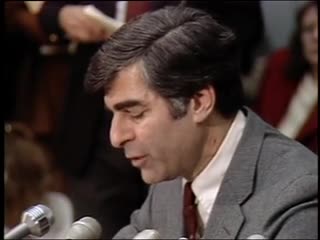
Description: MICHAEL DUKAKIS IN PC AT STATE HOUSE ON PRESUMPTIVE SENTENCING FOR VIOLENT CRIMES
Collection: Ten O'Clock News
Date Created: 10/30/1984
Description: Preview of issues & approaches in presidential campaign debate between Michael Dukakis & Richard Gephardt. Jesse Jackson.
Collection: Ten O'Clock News
Date Created: 08/07/1987
Description: One-liners and rebuttals are suggested for the presidential candidates in second debate and remainder of campaign. Dukakis power walking, riding in tank, standing in front of flags.
Collection: Ten O'Clock News
Date Created: 10/10/1988
Description: Judy Stoia interviews James Kelly (South Boston Information Center) about resistance to busing and his decision not to attend the Procession Against Violence. Kelly says that he has appealed to African American parents to put pressure on the NAACP to stop busing. Kelly says that many African American parents agree that "forced busing is the problem." Following interview is silent footage of helicopter and security detail among rooftops of City Hall Plaza. A WGBH camera crew overlooks City Hall Plaza and records the Procession Against Violence. Thomas O'Neill, Jr. (Lieutenant Governor of Massachusetts), Kitty Dukakis, Michael Dukakis (Governor of Massachusetts), Kathryn White, Kevin White (Mayor, City of Boston), Charles Barry (State Secretary of Public Safety), Dr. Charles Glenn (Massachusetts State Department of Education), Ann Landers (advice columnist), Joseph Kennedy, Edward Kennedy (US Senator), and Edward Brooke (US Senator) are among those at the front of the procession. Footage includes overhead shots of the crowd and audio of hecklers jeering at White and Kennedy. Reverend Robert Golledge and John Colburn address the crowd. Tape 1 of 3.
1:00:15: Visual: Judy Stoia sets up an interview with James Kelly (South Boston Information Center) near City Hall Plaza. Stoia asks Kelly about a message he delivered to African American parents. Kelly says that he urged African American parents to use their influence with the NAACP to stop forced busing; that both white and African Americans know that "forced busing is the problem"; that African American parents have encouraged the South Boston Information Center to continue the fight against busing. Kelly says that he made the plea to African American parents in order to help restore sanity to the city. Kelly says that he will not participate in today's Procession Against Violence because it will do nothing to remedy forced busing; that the mayor, state officials and "the liberals" need to take a stand against forced busing. Stoia probes Kelly's motives in boycotting the march. Kelly says that his statement to African American parents will be more effective than a march around the city by "the liberal establishment." Kelly says that white parents want a good education for their children in neighborhood schools; that the "liberal establishment" and the media need to realize that "good education for all kids" is more important than "quality integrated education." Kelly says that he hopes white parents and African American parents can work together to solve some of the problems in the city. Stoia thanks Kelly. The crew takes some cutaway shots of Stoia asking questions. 1:05:09: V: A small crowd begins to gather for the procession against violence at City Hall Plaza. A few people look down on the plaza from rooftops. Helicopters circle above City Hall Plaza. A crowd mills about on the plaza. A small crowd is gathered around some seating. A marching band plays. 1:07:44: V: Groups of people walk toward City Hall Plaza. Police officers are visible. One officer directs traffic. The music of a marching band is audible, then it stops. Marchers begin to fill the street, moving toward the plaza. Four men in uniform lead the march, carrying an American flag and a Massachusetts state flag. A crowd of people stream into the plaza. A woman yells, "Kevin, stop forced busing." A man yells, "Hey, you hypocrite." Thomas O'Neill (Lieutenant Governor of Massachusetts), Michael Dukakis (Governor of Massachusetts), Kitty Dukakis, Kathryn White, Kevin White (Mayor, City of Boston), Charles Barry (State Secretary of Public Safety), Dr. Charles Glenn (Massachusetts State Department of Education) and Ann Landers (advice columnist) are among those visible at the front of the marchers. Some of the crowd jeers. A man yells, "Kennedy, you faker." The officials at the front of the march greet Elma Lewis and others informally as they proceed to the front of the plaza. A woman yells, "Stop forced busing. A large crowd continues to stream into the plaza. Shots of the assembled crowd. The WGBH crew tries to locate and identify public figures. A helicopter circles overhead. 1:15:25: V: A marching band begins to play. The stream of marchers continues into the plaza. Shots of assembled crowd. A woman yells, "Stop forced busing. A voice is heard addressing the crowd, calling for "a peaceful community in Boston." Shot of the crowd. O'Neill, Joseph Kennedy, Edward Kennedy (US Senator) and Edward Brooke (US Senator) are visible. Audio is difficult to hear. Reverend Robert Golledge (Vicar, Old North Church) addresses the crowd from the podium. Golledge introduces the band from the St. William's School in Dorchester. Assembled in front of the podium, the band strikes up the national anthem. Shots of the media photographing the event; of the crowd filling the plaza; of officials at the front of the crowd. John Colburn (Episcopal Archdiocese) leads the crowd in prayer.
Collection: Ten O'Clock News
Date Created: 04/23/1976
Description: Participants in the Procession Against Violence are assembled on City Hall Plaza. WGBH camera crew records the gathering from a rooftop above City Hall Plaza. Thomas O'Neill, Jr. (Lieutenant Governor of Massachusetts), Edward Kennedy (US Senator), Joseph Kennedy, Edward Brooke (US Senator) Michael Dukakis (Governor of Massachusetts), Kitty Dukakis, Kevin White (Mayor, City of Boston), Kathryn White and Ann Landers (advice columnist) are visible in the front of the crowd. Robert Golledge (Vicar, Old North Church) introduces the speakers. Humberto Cardinal Medeiros (Archdiocese of Boston) and Michael Haynes (Twelfth Street Baptist Church) lead the crowd in prayer. John Colburn (Episcopal Archdiocese), Roland Gittelsohn (Temple Israel), Michael Germinal Rivas (Chaplain, Boston University), and John Zanetos (Greek Orthodox Cathedral) are heard addressing the crowd. Paula Lyons (aide to Mayor Kevin White) leads the crowd in singing "God Bless America." Crowd breaks up and departs among marching band accompaniment. Tape 2 of 3
0:58:14: Visual: A crowd is assembled at City Hall Plaza for the Procession Against Violence. John Colburn (Episcopal Archdiocese) leads a prayer. Shot of the crowd. Thomas O'Neill (Lieutenant Governor of Massachusetts), Edward Kennedy (US Senator), Edward Brooke (US Senator), Michael Dukakis (Governor of Massachusetts) and Kitty Dukakis are visible. Kevin White (Mayor, City of Boston), Kathryn White, and Ann Landers (advice columnist) are visible. Reverend Robert Golledge (Vicar, Old North Church) introduces Rabbi Roland Gittelsohn (Temple Israel). Gittelsohn addresses the crowd and condemns violence. Shots of crowds at City Hall Plaza. Marchers continue to stream into the plaza. 1:00:54: V: Michael Haynes (Twelfth Street Baptist Church) leads the crowd in prayer for peace. Overhead shot of massive crowd filling the plaza; of O'Neill, Joseph Kennedy, Edward Kennedy, Brooke, Michael Dukakis and Kitty Dukakis. 1:03:06: V: Golledge leads the crowd in the "Our Father." Shots of crowd; of Kennedy and Brooke. Golledge introduces Humberto Cardinal Medeiros (Archdiocese of Boston), who leads the crowd in prayer. The crowd applauds for Medeiros. Golledge introduces Reverend Michael Germinal Rivas (chaplain, Boston University). Rivas leads a prayer. Shots of the crowd. 1:06:32: V: Reverend John Zanetos (Greek Orthodox Cathedral) addresses the crowd. Shots of crowd; of Kevin White and Kathryn White. Golledge introduces Paula Lyons (aide to Mayor Kevin White). Lyons leads the crowd in singing"God Bless America". Shots of O'Neill, Joseph Kennedy, Edward Kennedy, and Brooke; of crowd in the plaza. Crowd slowly breaks up. Edward Kennedy and Joseph Kennedy make their way out with the crowd. Michael Dukakis and Edward Kennedy shake hands with White. Edward Brooke makes his way out of the plaza. The crowd breaks up and leaves the plaza. The marching band plays.
Collection: Ten O'Clock News
Date Created: 04/23/1976
Description: Participants in the Procession Against Violence are assembled at City Hall Plaza. A WGBH camera crew records the event from the back of the crowd. Edward Brooke (US Senator), Michael Dukakis (Governor of Massachusetts), Kevin White (Mayor, City of Boston), and Kathryn White are visible at the front of a large crowd gathered on City Hall Plaza. Robert Golledge (Vicar, Old North Church) introduces the speakers and is heard leading the crowd in the Lord's Prayer. Michael Haynes (Twelfth Street Baptist Church) and Humberto Cardinal Medeiros (Archdiocese of Boston) lead the crowd in prayers. Michael Germinal Rivas (Chaplain, Boston University) and John Zanetos (Greek Orthodox Cathedral) are heard addressing the crowd. Paula Lyons (aide to Mayor Kevin White) leads the crowd in singing "God Bless America." The crowd breaks up and departs. Judy Stoia and Pam Bullard ask white, Asian American and African American attendees why they attended the Procession Against Violence. Interviewees speak out against violence and talk about the importance of the march. Tape 3 of 3.
0:58:46: Visual: Paricipants in the Procession Against Violence are gathered at City Hall Plaza. A WGBH crew is on the ground with the crowd. Audio of the police leading a man away from the crowd. The media and the members of the St. William's School band mix with the crowd. Shots of crowd members. 0:59:49: V: Michael Haynes (Twelfth Street Baptist Church) addresses the crowd from the podium. Shots of Haynes at podium; of assembled speakers behind him. Haynes leads the crowd in a prayer for peace. Shot of Edward Brooke (US Senator) from behind. The Reverend Robert Golledge (Vicar, Old North Church) leads the crowd in the Lord's Prayer. Shots of Kevin White (Mayor, City of Boston) and Kathryn White reciting the Lord's Prayer; of Michael Dukakis (Governor of Massachusetts) from behind; of Brooke. Golledge introduces Humberto Cardinal Medieros (Archdiocese of Boston), who leads the crowd in prayer. Shots of Medeiros at podium; of speakers assembled behind Medeiros; of marching band in front of podium; of crowd. Sirens wail during Medeiros' prayer. A fire truck is visible, passing by the plaza. Golledge announces Reverend Germinal Rivas (Chaplain, Boston University). Rivas leads the crowd in prayer. Shots of crowd; of police strolling through crowd; of media documenting the procession; of Kevin White and Kathryn White listening to Rivas. 1:08:21: V: John Zanetos (Greek Orthodox Cathedral) addresses the crowd. Traveling shot through assembled crowd. Shots of crowd at far edge of plaza, listening to the prayer. Golledge announces that Paula Lyons (aide to Mayor Kevin White) will lead the crowd in singing "God Bless America." Shots of crowd singing "God Bless America." The crowd applauds. The crowd breaks up and begins to leave the plaza. Shots of people leaving the plaza. Stoia is heard interviewing a man about why he marched. The man says he is concerned about the violence and he thinks it is important to support non-violent action. 1:13:41: V: The crowd breaks up. Pam Bullard interviews members of the crowd. An Asian American woman says that she is a student at the University of Massachusetts; that she is concerned about violence and felt it was important to support the march. A white male student says he is glad that a lot of people came out for the march; that he thinks it is important for the people of Boston to show that they do not support violence. A female student says that she came because she opposes violence; that the march was important. An older white male from Cambridge says that he came out to support peace. Bullard asks a young boy why he came to the march. He says that he came because his mother said so. A young African American man says that the march is "a black and white thing." A young white man says that he feels badly about the violence; that he hopes to help find a solution. Another young white man says that the march promotes unity; that he is glad that there was a good turnout. An African American woman says that she hopes the march helps to stop the violence; that she wants her nieces to be able to go to school safely; that she does not think the march will help the situation. Bullard interviews an African American family about the march. The mother says that she does not support violence. The father says that a lot of people attended the march; that it should help the situation; that he marched in order to express his objection to violence. One of their sons says that he marched because his parents did. 1:18:25: V: Bullard asks an older white man why he participated in the march. The man says that the city must be saved; that it is important for residents to show solidarity with one another; that the march will not solve the problem, but it can help. An older woman says that the violence in the city is getting worse; that the march was important because it brought citizens, city officials, and the clergy together; that the judicial system must be improved; that the courts must punish perpetrators of violence.
Collection: Ten O'Clock News
Date Created: 04/23/1976
Description: Dedication of Quaker Meadows Apartments in Lynn, developed by Corcoran Mullins Jennison, for low and moderate income residents. Sen. Paul Tsongas, Gov. Michael Dukakis, communities and development secretary Amy Anthony speak. Ribbon cutting.
Collection: Ten O'Clock News
Date Created: 09/12/1983
Description: Marcus Jones reports that the Massachusetts State Legislature has passed a bill designating the city of Quincy as the location for the new headquarters of the Massachusetts Water Resources Authority (MWRA). Parcel 18 in Roxbury had been chosen as the initial site for the headquarters. Speaker of the House George Keverian and House leadership in the chambers of the House of Representatives. Mayor Ray Flynn , City Councilor Bruce Bolling, and Parcel 18 supporters at a press conference outside of the Massachusetts State House. Flynn and Bolling express their support for Parcel 18. Flynn says that the legislature's decision has undermined public confidence in the government. Governor Michael Dukakis has vetoed the bill designating Quincy as the MWRA site at a press conference. Interview with Reverend Tony Bethel of the Parcel 18 Task Force, who says that he and his supporters will continue to fight for economic justice for Roxbury. Footage of the building in Quincy proposed to house the MWRA.
1:00:12: V: Footage of Bruce Bolling (Boston City Council) at a press conference outside of the Massachusetts State House. Bolling says that state legislators need to stand with the supporters of Parcel 18; that the supporters of Parcel 18 are on the "correct side." Shots of a crowd of Parcel 18 supporters gathered outside of the State House for the press conference. The supporters hold signs reading, "Parcel-to-parcel linkage" and "Roxbury equals economic opportunity." Marcus Jones reports that the Massachusetts state legislature has passed a bill which designates the city of Quincy as the location for the new headquarters of the Massachusetts Water Resources Authority (MWRA). Jones notes that the bill overrules the MWRA's initial decision to build their headquarters on Parcel 18 in Roxbury. V: Footage of George Keverian (Speaker of the Massachusetts House of Representatives) and the House leadership at the front of the chambers of the Massachusetts House of Representatives. Shots of the exterior of the Ruggles MBTA station in Roxbury; of the Boston skyline from Parcel 18 in Roxbury. Jones reports that Quincy legislators pushed for the MWRA to settle in an aging industrial building near the site of a sludge facility. V: Shots of officials climbing the stairs of an industrial building in Quincy; of the interior of the building. Shots of the sludge facility in Quincy. Jones notes that Parcel 18 supporters say that the battle is not yet over. V: Shots of demonstrators at the press conference outside of the State House. Shot of a sign reading, "Keep the MWRA in Roxbury." Footage of Ray Flynn (Mayor of Boston) saying that the legislature's decision jeopardizes the citizens' confidence government. Flynn says that the legislature has not shown a commitment to "straightforward, honest government." Shot of Michael Dukakis (Governor of Massachusetts) signing a piece of paper at a press conference. Members of the media photograph him. Jones reports that Dukakis vetoed the legislature's MWRA bill yesterday; that the legislature will vote next week on Dukakis's veto. Jones reports that Parcel 18 supporters will lobby for the Roxbury site over the next week. V: Shot of the press conference outside of the State House. Shots of demonstrators and audience members at the press conference. A demonstrator holds up a sign reading, "Fairness equals a vote for Roxbury." Footage of Bolling saying that Quincy was not chosen to be the initial site because Quincy did not have the best proposal.The crowd applauds for Bolling. Footage of the Reverend Tony Bethel (Parcel 18 Task Force) being interviewed by Jones outside of the State House. Bethel says that he and his supporters will continue to fight for economic justice for the Roxbury area, even if Dukakis' veto is overruled. Jones reports that Parcel 18 supporters have vowed to continue the fight to bring the MWRA to Roxbury.
Collection: Ten O'Clock News
Date Created: 07/11/1989
Description: MICHAEL DUKAKIS PLEASED WITH REGENTS' DECISION TO REOPEN CHANCELLOR SEARCH PROCESS
Collection: Ten O'Clock News
Date Created: 08/05/1986
Description: Christy George reports that critics have charged George Bush's presidential campaign with exploiting racial fears among white voters. George notes that there is controversy over the Bush campaign's Willie Horton advertisement, which criticizes Democratic nominee Michael Dukakis's furlough program in Massachusetts. George's report includes footage of the Horton advertisement and footage of Jesse Jackson criticizing the advertisement. George interviews Dr. Alvin Poussaint (psychiatrist) about racism in the campaign and in Bush's political advertisements. Poussaint says that white voters see Horton as the "universal" African American criminal and that African Americans are associated with crime in the minds of whites. George reports that the Bush campaign advertisement does not use the face of William Horton (furloughed prisioner), but that campaign advertising by Bush supporters has used Horton's face. George notes that Bush has disassociated himself from the groups producing these ads. George's report includes footage from a political advertisement produced by "Americans for Bush." Poussaint says that the "Americans for Bush" advertisement is racist. He adds that Dukakis may lose white votes if he complains too much about racism because Americans do not like to be called racist. George notes that Poussaint believes that Horton's face triggers associations with other negative images of African Americans. Poussaint goes on to analyze race in US pop culture and in US politics. George's report is accompanied by images of African American figures in US politics, sports, and culture and by footage from Saturday Night Live of a satirical campaign advertisement. George's report is also accompanied by footage of Dukakis at a campaign rally.
1:00:12: Visual: Footage from WBZ-TV of Jesse Jackson (African American political leader) speaking from a podium. Jackson says that the Willie Horton advertisement has been used to conjure up "psycho-sexual fears" of African American men among whites voters. Shot of a black and white photo of William Horton (furloughed prisoner). Christy George reports that critics have charged George Bush's presidential campaign with exploiting racial fears among white voters. V: Footage of Dr. Alvin Poussaint (psychiatrist) being interviewed by George. Poussaint says that white voters see Horton as the "universal" African American criminal. George reports that Poussaint had supported Jackson for president; that Poussaint now supports Michael Dukakis (Democratic US presidential nominee). V: Footage of Poussaint saying that African Americans have long been associated with crime in the minds of whites. Poussaint notes that the rape of white women by African American men has always been a sensitive issue. Footage of the Bush campaign's Willie Horton advertisement. George notes that Horton's face is not shown in the Bush campaign advertisement about Dukakis's furlough program in Massachusetts. George notes that many of the prisoners shown in the Bush campaign ad are white. George adds that the Bush campaign is asking a legitimate questions about the Massachusetts' furlough program. V: Footage of Poussaint saying that Bush would have raised the issue of the furlough program even if Horton were white. Shots of George Bush (Republican US presidential nominee) speaking from a podium. George reports that Bush supporters have not been cautious about using Horton's face in their campaign literature. V: Footage of Dukakis addressing a crowd at a campaign rally on October 19, 1988. Dukakis holds up a piece of Bush campaign literature. Dukakis says that the campaign literature is "garbage." The crowd applauds for Dukakis. George reports that Dukakis has attacked the race-baiting campaign literature of a group of Bush supporters from Illinois. George notes that Bush has disassociated himself from the group's literature. V: Footage of Poussaint being interviewed by George. Poussaint says that Dukakis may gain minority votes by complaining about the subliminal racism of the Bush campaign; that Dukakis may lose white votes if he complains. Poussaint says that Americans do not like to be called racist. George talks about a campaign ad paid for by a group called "Americans for Bush." George notes that many have called the advertisement racist; that the advertisement has been running for months in key states. V: Footage of the "Americans for Bush" campaign advertisement. Footage of Poussaint saying that the Horton case can be used to exploit the association of African Americans with crime and drugs. George notes that the campaign's subliminal racial messages have become the subject of satire. V: Footage of a satirical campaign advertisement from Saturday Night Live. George reports that Poussaint believes that Horton's face triggers other negative associations with African Americans. V: Shot of a black and white photo of an African-American man in the custody of white police officers. Shots of the Reverend Louis Farrakhan (leader of the Nation of Islam) and Tawana Brawley (New York State resident); of the Reverend Al Sharpton (African American community figure); of a group of white people moving through a crowd; of Bernard Goetz (New York City resident) walking down a street. George reports that Poussaint is a consultant to the Cosby Show; that Poussaint advocates positive images of African Americans. V: Footage from The Cosby Show. George reports that The Cosby Show is the most popular show among white South Africans. George adds that Poussaint does not believe that an abundance of positive African American role models will change white attitudes. V: Shots of the Los Angeles Dodgers celebrating a win; of Stevie Wonder (pop singer); of Colin Powell (National Security Advisor to Ronald Reagan); of Magic Johnson (basketball player); of Bishop Desmond Tutu (Black South African leader) with Dukakis. Shot of the floor of the Republican Political Convention. George reports that Poussaint believes that whites do not find African American heroes and leaders threatening. George adds that Poussaint believes that whites transfer their fears to African Americans in their proximity. V: Footage of Poussaint saying that white women react to the color of his skin when they meet him on the street at night.
Collection: Ten O'Clock News
Date Created: 10/25/1988