Description:
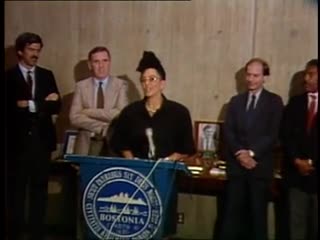
State Senator Jack Backman opens a press conference in support of Mel King (Boston mayoral candidate) in front of the State House. Other participants include Byron Rushing (State Representative from the South End), Mary Jane Gibson (State Representative from Belmont), Susan Schur (State Representative from Newton), Mary Goode (former State Representative from Roxbury), and Barney Frank (US Congressman). Frank voices his support for King's candidacy and discusses the reasons for his endorsement, specifically, Frank talks about King's views on economic development and about his leadership abilities. Frank says that King is a creative leader who will bring "enlightened policy" to the city. Various reporters point out that Frank endorsed Dennis Kearney (candidate for mayor of Boston) in the primary elections. King arrives, shakes hands with Frank, thanks endorsers, and asserts that his administration will focus on employment, education, and the youth of the city.
1:00:10: Visual: Shot of a Mel King campaign sign. Jack Backman (State Senator) opens a press conference in front of the State House. He notes that Mel King (candidate for mayor of Boston) has not yet arrived. He voices his support for King. He introduces Byron Rushing (State Representative from the South End), Mary Jane Gibson (State Representative from Belmont), Susan Schur (State Representative from Newton), Mary Goode (former State Representative from Roxbury). Bachman lists off some state representatives who are due to arrive shortly at the press conference. Shots of Schur; of Rushing. Bachman introduces Barney Frank (US Congressman). 1:02:33: V: Frank says that he will support King for mayor of Boston; that he served with King for eight years in the legislature. Frank says that King is an advocate for enlightened policy for the city of Boston. Frank talks about King's ideas for economic development programs; about the Community Development Corporation. Frank says that King's ideas for development are in tune with the needs of city residents; that King is sensitive to the problems of displacement and the needs of area residents. Frank says that King can speak effectively on behalf of a diverse group of people; that King was an effective and respected legislator. Frank says that King will make an excellent mayor. A reporter asks Frank about his previous endorsements for mayor. Frank says that he is not always good at picking the winning candidate; that he speaks out on behalf of candidates who have good ideas and programs. A reporter notes that Frank endorsed Dennis Kearney (State Representative) in the primary election. He asks Frank how Kearney would have been a better mayor than King. Frank says that he endorsed Kearney in the primary because he thought Kearney was a good candidate with a good chance of winning. Frank says that Kearney and King take similar positions on the issues. Shot of King supporters standing behind Frank. Shot of Christy George (WGBH reporter). Audio is muffled. 1:07:45: V: Frank says that the many of the candidates in the race had similar positions on the issues; that King has helped shape the debate on the issues; that King was one of the first people to talk about the adverse effects of development on the elderly and the poor. Frank says that King is responsible for focusing the attention of the city on the management of economic development in a compassionate and effective manner. Frank says that he respects Ray Flynn (candidate for mayor of Boston); that King is more creative, thoughtful and consistent candidate; that King has proven himself to be an effective leader. Frank refuses to speculate on who he would have endorsed if King were not in the race. Frank says that he is endorsing a candidate because he is an elected official with an opinion; that he does not know what effect his endorsement has on a candidate's chances. A reporter asks Frank about the differences between King and Flynn. Frank says that the differences between the candidates stem from their past records; that King has proven himself to be a consistent and effective leader on economic issues for many years; that King has the capacity to stay with these issues. Frank notes that he does not agree with King on a mayor's role in foreign policy. A reporter asks Frank if King needs to highlight the issues on which he differs from Flynn. Frank says that King has stuck with the same issues for ten years; that his leadership has brought attention to these issues. Frank says that this has been a good mayoral campaign; that it has focused on issues. 1:13:15: V: Frank jokes with the reporters about his endorsement bringing in the voters from Brookline and Newton. A reporter asks Frank how King can get white liberal voters to support him instead of Flynn. Frank says that King can win voter support by focusing on the issues; that his positions on economic development may win over voters from traditionally "conservative" neighborhoods. A reporter asks Frank about his campaign advice for King. Frank says that King is doing the right thing by focusing on the issues; that King has proven his ability to be a leader on the issues. 1:16:32: V: King's supporters clap as he arrives at the State House. King and Frank shake hands. King thanks Frank and the assembled state representatives for their endorsements and support. King says that his administration will make the city open and accessible; that his administration will focus on employment, education, and the youth of the city.
1:00:10: Visual: Shot of a Mel King campaign sign. Jack Backman (State Senator) opens a press conference in front of the State House. He notes that Mel King (candidate for mayor of Boston) has not yet arrived. He voices his support for King. He introduces Byron Rushing (State Representative from the South End), Mary Jane Gibson (State Representative from Belmont), Susan Schur (State Representative from Newton), Mary Goode (former State Representative from Roxbury). Bachman lists off some state representatives who are due to arrive shortly at the press conference. Shots of Schur; of Rushing. Bachman introduces Barney Frank (US Congressman). 1:02:33: V: Frank says that he will support King for mayor of Boston; that he served with King for eight years in the legislature. Frank says that King is an advocate for enlightened policy for the city of Boston. Frank talks about King's ideas for economic development programs; about the Community Development Corporation. Frank says that King's ideas for development are in tune with the needs of city residents; that King is sensitive to the problems of displacement and the needs of area residents. Frank says that King can speak effectively on behalf of a diverse group of people; that King was an effective and respected legislator. Frank says that King will make an excellent mayor. A reporter asks Frank about his previous endorsements for mayor. Frank says that he is not always good at picking the winning candidate; that he speaks out on behalf of candidates who have good ideas and programs. A reporter notes that Frank endorsed Dennis Kearney (State Representative) in the primary election. He asks Frank how Kearney would have been a better mayor than King. Frank says that he endorsed Kearney in the primary because he thought Kearney was a good candidate with a good chance of winning. Frank says that Kearney and King take similar positions on the issues. Shot of King supporters standing behind Frank. Shot of Christy George (WGBH reporter). Audio is muffled. 1:07:45: V: Frank says that the many of the candidates in the race had similar positions on the issues; that King has helped shape the debate on the issues; that King was one of the first people to talk about the adverse effects of development on the elderly and the poor. Frank says that King is responsible for focusing the attention of the city on the management of economic development in a compassionate and effective manner. Frank says that he respects Ray Flynn (candidate for mayor of Boston); that King is more creative, thoughtful and consistent candidate; that King has proven himself to be an effective leader. Frank refuses to speculate on who he would have endorsed if King were not in the race. Frank says that he is endorsing a candidate because he is an elected official with an opinion; that he does not know what effect his endorsement has on a candidate's chances. A reporter asks Frank about the differences between King and Flynn. Frank says that the differences between the candidates stem from their past records; that King has proven himself to be a consistent and effective leader on economic issues for many years; that King has the capacity to stay with these issues. Frank notes that he does not agree with King on a mayor's role in foreign policy. A reporter asks Frank if King needs to highlight the issues on which he differs from Flynn. Frank says that King has stuck with the same issues for ten years; that his leadership has brought attention to these issues. Frank says that this has been a good mayoral campaign; that it has focused on issues. 1:13:15: V: Frank jokes with the reporters about his endorsement bringing in the voters from Brookline and Newton. A reporter asks Frank how King can get white liberal voters to support him instead of Flynn. Frank says that King can win voter support by focusing on the issues; that his positions on economic development may win over voters from traditionally "conservative" neighborhoods. A reporter asks Frank about his campaign advice for King. Frank says that King is doing the right thing by focusing on the issues; that King has proven his ability to be a leader on the issues. 1:16:32: V: King's supporters clap as he arrives at the State House. King and Frank shake hands. King thanks Frank and the assembled state representatives for their endorsements and support. King says that his administration will make the city open and accessible; that his administration will focus on employment, education, and the youth of the city.
Collection:
Ten O'Clock News
Date Created:
10/21/1983