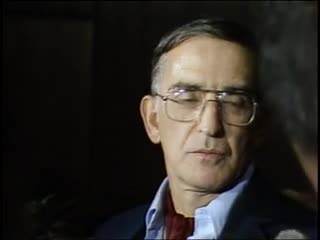
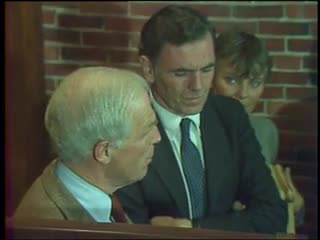
Description: INSPECTIONAL SERVICES PC AT CITY HALL, RAY FLYNN IN ATTENDANCE
Collection: Ten O'Clock News
Date Created: 08/21/1985
Description: HIGH % OF BOSTON'S WORKING POOR LACK HEALTH INSURANCE. RAY FLYNN.
Collection: Ten O'Clock News
Date Created: 06/30/1987
Description: Ray Flynn explains he opted not to implement sprinkler ordinance for Boston rooming houses in favor of providing more units of affordable housing. Exterior+interior of rooming houses+code violations.
Collection: Ten O'Clock News
Date Created: 08/11/1989
Description: Bulger and Flynn correspond coolly on incinerator site. Citizens advisory committee on solid waste disposal arrive at no consensus either.
Collection: Ten O'Clock News
Date Created: 08/11/1987
Description: Report on an alarming increase in the infant mortality rate in Boston. Review of the statistics noting that the infant mortality rate among African Americans is 2.5 times the infant mortality rate among whites and that the increase was most pronounced in the Roxbury neighborhood. Interview with Dr. Bailus Walker, the Commissioner of Public Health, who says that the increase in the infant mortality rate is the result of a cutback in social programs from 1982 to 1984. Mayor Ray Flynn talks about the effects of cutbacks in social programs. The state has put $15 million toward reducing the infant mortality rate. Marian Wright Edelman, the Director of the Children's Defense Fund, speaks at a press conference, saying that the US has one of the highest infant mortality rates of any industrialized nation. The video cuts to black for 45 seconds during this story, from 00:01:34 to 00:02:15, presumably for graphics that weren't added to this copy. Following the edited story is additional b-roll footage of health care workers, parents and children at the Codman Square Health Center.
1:00:05: Visual: Footage of a doctor examining a non-white baby with a stethoscope. Hope Kelly reports that the infant mortality rate in Massachusetts is nine out of 1,000 infants; that 22 of every 1,000 African American babies die; that the infant mortality rate for African Americans is 2.5 times higher than the infant mortality rate for whites. V: Footage of three young African American children playing outside of a housing project. Kelly reports that the infant mortality rate is 15 out of 1,000 for babies born in Boston; that the mortality rate for non-white babies born in Boston is 23 out of 1,000. V: Shots of a white child standing near a park bench; of a doctor examining a pregnant African American woman. Kelly reports that infant mortality rates have increased from previous years. V: Shots of an African American infant girl being undressed before a medical examination. Kelly reports that the state-wide infant mortality rate was 8.9 deaths per 1,000 babies in 1984. V: Video cuts out. Black screen is visible. Kelly reports that that the state-wide infant mortality rate was 9.1 per 1,000 babies in 1985. Kelly notes that the African American infant mortality rate was 17 per 1,000 babies in 1984; that the African American mortality rate was 22.1 per 1,000 babies in 1985. Kelly adds that the increase was drastic in the city of Boston. Kelly notes that the African American infant mortality rate in Boston was 11.7 per 1,000 babies in 1984; that the African American infant mortality rate in Boston was 15.4 per 1,000 babies in 1985. Kelly notes that the increase in the infant mortality rate was pronounced in the Roxbury area; that the infant mortality rate in Roxbury rose from 16.5 per 1,000 in 1984 to 23.4 per 1,000 in 1985. Kelly adds that the infant mortality rate in North Dorchester doubled from 1984 to 1985. V: Video cuts back in. Footage of Dr. Bailus Walker (Commissioner of Public Health) saying that he is concerned but not surprised about the rise in the infant mortality rate. Walker says that the infant mortality rate is the result of cutbacks made in social programs from 1982 to 1984. Kelly says that Walker and Ray Flynn (Mayor of Boston) blame cutbacks by the federal government. V: Footage of Flynn saying that the rise in the infant mortality rate is attributable to dramatic cutbacks in nutrition programs, housing programs, and other social programs. Kelly says that the state put $15 million dollars toward an effort to reverse the increase in the infant mortality rate in 1985. V: Shots of the State House. Footage of Walker saying that it is too soon to see the results of the effort; that the data for 1986-1988 will show the results of the state effort. Shots of a Boston Globe front page article. The headline reads, "Hub infant deaths up 32%. Kelly says that Boston is home to some of the nation's most advanced medical centers. V: Shots of Boston City Hall; of signs for Boston Hospitals, including the New England Medical Center Hospital and Children's Hospital. Kelly reports that the Boston's Mission Hill neighborhood is very close to the Harvard Medical Complex and other hospitals. V: Shots of a child riding a go-cart outside of a housing project in Mission Hill; of a woman standing at the window of her aparment, holding an infant. Shots of African American children playing outside of the housing project. Kelly reports that the infant mortality rate in Mission Hill is 50 deaths per 1,000 births; that the infant mortality rate in Mission Hill is as high as the infant mortality rate in many third-world countries. Kelly reports that there are high infant mortality rates among African American communities across the nation. V: Footage of Marian Wright Edelman (Director, Children's Defense Fund) at a press conference. Wright Edelman says that an African American infant born in Washington D.C. is more likely to die than in infant born in Trinidad and Tobago; that the US and one other nation have the highest infant mortality rates among twenty industrialized nations surveyed. Footage of Walker saying that he will be concerned if this trend continues for three or more years; that a one-year "snapshot" does not yet indicate a trend.
Collection: Ten O'Clock News
Date Created: 02/09/1987
Description: Christopher Lydon reports that Mayor Ray Flynn is requesting the creation of a Boston Employment Commission in order to boost the number of Boston residents working in Boston jobs. The Flynn administration would like the Boston work force to be 10% female, 25% minority and 50% Boston residents. Interview with Flynn about employment in Boston. Interview with City Councilor James Kelly, who says that sanctions will be imposed unfairly on the construction industry. Interviews with Mel King and City Councilor Thomas Menino. Lydon notes that critics believe that compliance with the ordinance would cost jobs. Brief interviews with construction workers and white-collar workers about the proposed ordinance. This edition of the Ten O'Clock News also included the following item: Minister Don Mohammad speaks out against drug traffic in Roxbury
1:00:02: Visual: Footage of a white male construction worker being interviewed on the street. The man says that he is from Boston. Hope Kelly (WGBH reporter) asks him which neighborhood he is from. The man says that he is actually from Billerica. The man says that he avoids telling people that he is not from Boston. Christopher Lydon reports that Ray Flynn (Mayor of Boston) is requesting the creation of the Boston Employment Commission; that the Commission's goal would be to boost the number of Boston residents working on Boston jobs. V: Footage of Flynn being interviewed. Flynn says that Boston is experiencing a significant growth period; that there are plenty of opportunities for everyone. Flynn says that people are not fighting over crumbs. Footage of a white male construction worker being interviewed on the street. The man says that Flynn wants to put the "outsiders" out of work; that the "outsiders" are the true professionals who have been in the union for over ten years. Footage of another white male construction worker being interviewed. The man asks where he is supposed to go to work. The man says that the work is in the city of Boston; that he should be allowed to work there. Lydon reports that many construction workers fear displacement by the goals set by the Flynn administration. Lydon reports that the Flynn administration would like the Boston work force to be 10% female, 25% minority and 50% Boston residents. V: Shot of Boston City Hall. Lydon says that the present work force does not resemble Flynn's proposed work force. V: Footage of Hope Kelly interviewing construction workers at International Place. Two white male construction workers say that they are from North Attleborough. Another white male construction worker says that he is from Canton; that ninety percent of the workers on his job are not living in the city. Footage of Hope Kelly interviewing white-collar workers in Post Office Square. A white male says that he is a commuter. Another white male says that he is from Walpole. A white female says that she is from Newton. Another white female says that she is from Brookline. A third white female says that she is from Quincy. Lydon reports that Flynn's proposed ordinance would change the demographics of the work force in the public and private sectors. Lydon says that the greatest opposition so far comes from the unions; that the construction unions say that their field is being singled out. V: Shots of corporate workers crossing the street near Government Center; of a man carrying a brief case as he crosses the street. Shot of two white corporate workers conversing on the sidewalk. Shot of an African American construction worker talking to white colleagues. Shot of the State Street Bank building. Lydon reports that the unions have a political ally in James Kelly (Boston City Council and Sheet Metalworkers Union). V: Footage of James Kelly being interviewed. Kelly says that Flynn's ordinance talks about good faith efforts and voluntary agreements between the city and major corporations. Kelly says that sanctions will be imposed on construction companies. Lydon reports that the sanctions include potential fines against developers whose hiring practices do not meet the standards of the ordinance. Lydon notes that the mayor has issues two previous ordinances with similar goals. V: Shot of a backhoe excavating dirt at a construction site. Footage of Mel King (candidate for US Representative) being interviewed outside of his campaign offices. King says that the mayor has been unable to put "teeth" in the ordinance. Lydon reports that Flynn supporters point to progress. V: Footage of Thomas Menino (Boston City Council) being interviewed. Menino says that some trades are up to 20% and higher. Menino says that progress is being made. Menino says that the city has not yet imposed any sanctions on the construction trades. Lydon reports that King believes that sanctions are necessary. V: Footage of King being interviewed. King says that the ordinance needs "teeth." King says that there is no real monitoring process. Lydon reports that critics believe that compliance with the ordinance could cost jobs. Flynn disagrees with critics. Flynn says that at least six major public works projects are imminent. V: Shot of Flynn. Lydon reports that many workers do not believe Flynn. V: Footage of a white male construction worker being interviewed by Hope Kelly. The construction worker says that he does not believe Flynn. He asks Hope Kelly if she believes Flynn.
Collection: Ten O'Clock News
Date Created: 07/24/1986
Description: KEVIN WHITE AND RAY FLYNN MEET DAY AFTER ELECTION, with wives Kathryn and Kathy, at Parkman House.
Collection: Ten O'Clock News
Date Created: 11/16/1983
Description: Christy George reports that City Councilor James Kelly objects to an interfaith, interracial prayer service to be held in South Boston because he fears that the meeting could be seen as an endorsement of the city's plan to integrate South Boston housing projects. Kelly has called for the meeting to be moved to another location. Interview with Father Thomas McDonnell of St. Augustine's Church in South Boston and Reverend John Borders of the Morningstar Baptist Church. McDonnell and Borders say that South Boston is not a racist neighborhood. Interview with Jim Kelly. George quotes Kelly as saying that he opposes forced busing, racial quotas, and forced housing. Community leaders have met with Mayor Ray Flynn to discuss the peaceful integration of public housing projects, and hold a press conference. Doris Bunte of the Boston Housing Authority, Charles Stith of the Union United Methodist Church, John O'Bryant of the Boston School Committee, and Don Muhammad of the Nation of Islam, Roxbury speak at the press conference. George reports that Bernard Cardinal Law (Archdiocese of Boston) endorses the meeting. George notes that Flynn is pushing for housing integration over the objections of South Boston residents. Footage of Flynn at a community meeting in South Boston and footage of anti-busing activity in South Boston in 1977.
1:00:05: Visual: Footage of Father Thomas McDonnell (St. Augustine's Church in South Boston) and Reverend John M. Borders, III (Morningstar Baptist Church in Mattapan) sitting together for an interview in South Boston. McDonnell says that both men believe in the power of prayer. Christy George reports that religious leaders want to hold an interfaith, interracial prayer meeting at St. Monica's Church in South Boston; that James Kelly (Boston City Council) has taken out a half-page advertisement in the South Boston Tribune; that the ad calls on the Catholic Church to move the prayer meeting to another location. George reports that Kelly fears that the prayer meeting could be seen as an endorsement of the city's plan to desegregate public housing projects in South Boston. V: Shot of the exterior of St. Monica's Church; of Kelly's advertisement in the South Boston Tribune; of a statue in front of the church. Footage of McDonnell saying that racism is a moral issue. Borders says that prayer is a means to change the people's hearts. Footage of police arresting two women on G Street in South Boston on May 12, 1977. Shots of police cruisers escorting school buses along a city street; of a housing project in South Boston. Shots of a sign for the Old Colony Housing Project; of a white woman and children in front of a housing project building. George notes that South Boston became a battleground during school desegregation. George reports that Ray Flynn (Mayor of Boston) has announced that the public housing projects in South Boston will be integrated; that Flynn alienated many South Boston voters by pushing for public housing integration. V: Shot of Flynn approaching the stage at a community meeting in South Boston on January 12, 1988. The crowd jeers and boos as Flynn walks on to the stage. Shot of audience members seated at long tables. Footage of Kelly at the community meeting. Kelly says that South Boston residents will serve time for civil rights violations if the public housing projects are integrated. The crowd applauds Kelly. George reports that community leaders met with Flynn today to talk about peaceful desegregation of the projects; that attendees at the meeting expressed thinly disguised scorn for Kelly. V: Shot of Doris Bunte (Boston Housing Authority) speaking at a press conference. Charles Stith (Union United Methodist Church) and two other African American community leaders stand behind her. Footage of John O'Bryant (Boston School Committee) at a press conference. A reporter asks him if Kelly's name was mentioned in the meeting with Flynn. O'Bryant replies, "Who's he?" George reports that Kelly believes that affirmative action is reverse racism. George quotes Kelly as saying that "assigning the needy to public housing based on race is morally and legally wrong." V: Shot of Kelly at his desk. A quote from Kelly is written out in text on-screen. Footage of Kelly saying that supporters of equal opportunity must oppose forced busing, racial quotas, and forced housing. Footage of Stith saying that there are some elected officials who insist on keeping the city divided; that religious leaders are making an effort to unite the city. Footage of Minister Don Muhammad (Nation of Islam, Roxbury) saying that not all Irish residents are racist; that African Americans in Roxbury are not all drug addicts. George reports that Bernard Cardinal Law (Archdiocese of Boston) endorsed the prayer meeting. George quotes Law as saying that publicity "could lead to the erroneous impression that racial discrimination is a problem of geography, which it is not. . . . Racial discrimination is a problem of the human heart." V: Shot of Law addressing an audience. A quote from Law is written out in text on-screen. George reports that one of the goals of the prayer meeting is to debunk the myth of South Boston as a racist neighborhood. V: Shot of a white family walking in front of St. Monica's Church. Footage of Borders saying that Kelly does not represent the views of all South Bostonians. Borders says that he had no problems in South Boston when he drove to today's interview at the church. George reports that religious leaders say that the prayer meeting is not about politics; that the controversy surrounding the meeting has become political despite the efforts of religious leaders.
Collection: Ten O'Clock News
Date Created: 05/20/1988
Description: Jan von Mehren reports that City Councilor James Kelly denies that Boston's public housing policy is discriminatory and plans to ask the Department of Housing and Urban Development (HUD) for proof of discrimination. He has proposed an alternative housing policy which allows tenants to choose where they want to live. Mayor Ray Flynn has agreed to present Kelly's plan to HUD for discussion. Kelly and Flynn attend a South Boston community meeting, where Kelly speaks out against housing integration. The crowd jeers at Flynn as he approaches the stage. Von Mehren's report is accompanied by footage of white and African American residents of housing projects in Boston.
1:00:06: Visual: Shot of James Kelly (Boston City Council) at a community meeting in South Boston. Shots of audience members at the meeting applauding; of Ray Flynn (Mayor of Boston) at the meeting. Audio of audience members booing Flynn. Jan von Mehren reports that Kelly called a community meeting in South Boston to discuss public housing; that Flynn attended the meeting; that Flynn was booed by the crowd. V: Footage of Kelly at the meeting. Kelly dismisses the findings of discrimination in Boston public housing. Shot of a sign for the Mary Ellen McCormack Housing Development; of white women and children of a park bench; of a white boy scrambling under a fence near a housing project in South Boston. Von Mehren reports that there are approximately 2,000 housing units in South Boston; that no African American families have been placed in South Boston since Flynn entered office. Von Mehren reports that Kelly will ask the Department of Housing and Urban Development (HUD) for proof of discrimination; that Kelly has come up with an alternative housing plan. V: Footage of Kelly speaking at the meeting. Audience members are crowded into the room. Kelly talks about his "freedom of choice" housing plan, in which no family would be placed in a neighborhood without their consent. Von Mehren notes that Kelly's plan would permit African American families to move into white housing projects; that Kelly's plan would not force white families to move into primarily African American housing projects. V: Shots of a racially diverse group of children outside of a housing project. Von Mehren stands at the entrance to the community meeting in South Boston. Von Mehren reports that Flynn has promised to discuss Kelly's plan to HUD; that he will not submit the plan if it is deemed discriminatory. V: Footage of Flynn at the meeting. Flynn says that he will try to achieve as much choice as is possible in the new plan; that the new plan will not discriminate. Von Mehren reports that Flynn made clear that he has an obligation to work with HUD. Von Mehren notes that Kelly was clear about his intention to fight for South Boston residents. V: Shots of Flynn at the meeting; of Kelly at the meeting; of audience members.
Collection: Ten O'Clock News
Date Created: 03/01/1988
Description: HUD Secretary Jack Kemp visits Bromley Heath public housing project in Jamaica Plain and commends tenant management and privatization. Ray Flynn walks amid cameras and microphones.
Collection: Ten O'Clock News
Date Created: 05/12/1989