« Previous | 2,051 - 2,060 of 7,132 | Next »
Description:
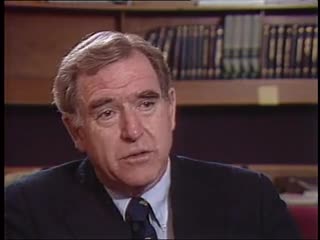
Interview with Dr. Arnold Relman, editor of New England Journal of Medicine, on reform of health care system. Patients in hospital corridor. X-rays, sphygmomanometer (blood pressure gauge).
Collection:
Ten O'Clock News
Date Created:
07/17/1990

Description:
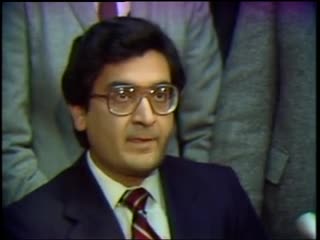
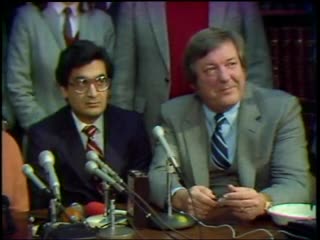
MIT microbiologist Dr. David Baltimore speaks to Executives Club of Greater Boston Chamber of Commerce at Copley Plaza Hotel about recombinant DNA research. Genetic engineering, biotechnology.
Collection:
Ten O'Clock News
Date Created:
11/18/1983

Description:
Upon return from Iraq, where he surveyed and documented war devastation, Dr. Jonathan Fine of Physicians for Human Rights describes dire need for food, medicine, water, electricity. Injured children.
Collection:
Ten O'Clock News
Date Created:
04/19/1991

Description:
Carmen Fields interviews Dr. Kenneth Clark (psychologist). Fields reports that Clark and his Mamie Phipps Clark (psychologist) performed studies using dolls to gauge ego and self-esteem in young African American children. Fields notes that the Clarks' research influenced the Supreme Court's 1953 landmark decision on school desegregation. Clark talks about his research, saying that African American children rejected the brown dolls because they had internalized society's negative stereotypes of African Americans. Clark discusses the use of the study by NAACP lawyers in the 1953 school desegregation case. Clark talks about the importance of school desegregation and the need for white and African American children to grow up with self-respect and respect for others. He says that children must be taught to act humanely toward others. Fields' report includes footage from the 1959 film Imitation of Life and footage from Eyes on the Prize. Fields' report also includes footage of school desegregation in South Boston and shots of dolls. Sound cuts out at the very end of the video.
1:00:10: Visual: Shot of a display of dolls and toys. Carmen Fields reports that Dr. Kenneth Clark (psychologist) and the late Mamie Phipps Clark (psychologist) used dolls in a 1939 psychological experiment; that the Clarks used dolls to gauge ego and self esteem in young African American children. Fields notes that the results of the experiments shocked the nation. V: Shots of Kenneth Clark being interviewed by Fields. Shots of a white doll; of an African American doll. Footage of Clark talking about how African American children internalize society's negative stereotypes of African Americans. Clark says that two out of three African American children rejected the brown dolls. Footage from the 1959 film, Imitation of Life. Footage of Clark saying that the children were forced to identify with the brown dolls they had rejected. Fields reports that the Supreme Court's 1953 decision on school desegregation was influenced by the Clarks' research. V: Shot of the exterior of the Supreme Court Building in Washington D.C. Footage of Clark saying that NAACP lawyers were interested in the study; that NAACP found parallels between the results of the study and the effects of segregated schools on African American chiildren. Fields reports that school desegregation has been accomplished in both southern and northern cities. V: Black and white footage from Eyes On the Prize. Shots of an African American girl being accompanied into a school; of the National Guard running in formation; of African American students entering a school; of an African American female student in a classroom; of an African American man walking with two white men. Shots of school buses pulling up to the front of South Boston High School in 1974; of South Boston residents jeering at the buses. Shots of police officers lined up on a streeet outside of a Charlestown Housing Project. Fields notes that Clark blames low self-esteem for many of today's educational problems including high drop-out rates and violence. V: Footage of Clark being interviewed by Fields. Clark says that society's problems cannot be solved by laws and court cases; that churches have not influenced people to act more humanely toward others. Clark says that children must be educated to act in a humane manner. Fields asks Clark how he responds to people who believe that desegregation did not work. Clark says that desegregation has never really been tried; that schools are still organized along racial lines. Clark says that schools are not set up to teach children to respect others. Fields asks if the doll study is still relevant today. Clark says that both white African American children need help in developing positive self-images in today's society. Shots of students in an integrated classroom; of white students in the classroom. Footage of Clark saying that racism is indicative of a lack of self-respect. Clark says that dolls can be used to communicate a sense of humanity and decency. Shots of white and African American dolls. Footage of Clark saying that some African American children in his doll study had good role models; that those children did not reject the brown dolls. Clark says that children can be taught to respect themselves and others.
1:00:10: Visual: Shot of a display of dolls and toys. Carmen Fields reports that Dr. Kenneth Clark (psychologist) and the late Mamie Phipps Clark (psychologist) used dolls in a 1939 psychological experiment; that the Clarks used dolls to gauge ego and self esteem in young African American children. Fields notes that the results of the experiments shocked the nation. V: Shots of Kenneth Clark being interviewed by Fields. Shots of a white doll; of an African American doll. Footage of Clark talking about how African American children internalize society's negative stereotypes of African Americans. Clark says that two out of three African American children rejected the brown dolls. Footage from the 1959 film, Imitation of Life. Footage of Clark saying that the children were forced to identify with the brown dolls they had rejected. Fields reports that the Supreme Court's 1953 decision on school desegregation was influenced by the Clarks' research. V: Shot of the exterior of the Supreme Court Building in Washington D.C. Footage of Clark saying that NAACP lawyers were interested in the study; that NAACP found parallels between the results of the study and the effects of segregated schools on African American chiildren. Fields reports that school desegregation has been accomplished in both southern and northern cities. V: Black and white footage from Eyes On the Prize. Shots of an African American girl being accompanied into a school; of the National Guard running in formation; of African American students entering a school; of an African American female student in a classroom; of an African American man walking with two white men. Shots of school buses pulling up to the front of South Boston High School in 1974; of South Boston residents jeering at the buses. Shots of police officers lined up on a streeet outside of a Charlestown Housing Project. Fields notes that Clark blames low self-esteem for many of today's educational problems including high drop-out rates and violence. V: Footage of Clark being interviewed by Fields. Clark says that society's problems cannot be solved by laws and court cases; that churches have not influenced people to act more humanely toward others. Clark says that children must be educated to act in a humane manner. Fields asks Clark how he responds to people who believe that desegregation did not work. Clark says that desegregation has never really been tried; that schools are still organized along racial lines. Clark says that schools are not set up to teach children to respect others. Fields asks if the doll study is still relevant today. Clark says that both white African American children need help in developing positive self-images in today's society. Shots of students in an integrated classroom; of white students in the classroom. Footage of Clark saying that racism is indicative of a lack of self-respect. Clark says that dolls can be used to communicate a sense of humanity and decency. Shots of white and African American dolls. Footage of Clark saying that some African American children in his doll study had good role models; that those children did not reject the brown dolls. Clark says that children can be taught to respect themselves and others.
Collection:
Ten O'Clock News
Date Created:
10/18/1988

Description:
Dr. Margot O'Toole defends her exposure of fraudulent data in published research of Nobel winners. Photos of David Baltimore, Tereza Imanishi-Kari. Whitehead Institute at MIT.
Collection:
Ten O'Clock News
Date Created:
03/27/1991
Description:
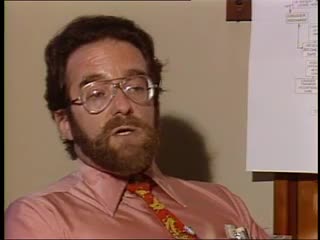
Dr. Thomas Gutheil, Massachusetts Mental Health Association.
Collection:
Ten O'Clock News
Date Created:
04/02/1982

Description:
Dr. Walter Drew of Institute for Self Active Education promotes use of industrial surplus for elementary students to create fanciful objects. Children glue and decorate plastic and foam parts.
Collection:
Ten O'Clock News
Date Created:
05/21/1991


