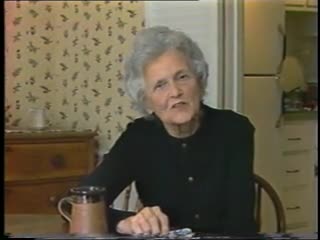
Description: Yuppie volunteers donate their services to hospitals and reading for the blind.
Collection: Ten O'Clock News
Date Created: 12/23/1988
Description: “Yuppies” dining, drinking, shopping at Copley Place.
Collection: Ten O'Clock News
Date Created: 03/30/1984
Description: BOSTON PHILHARMONIC ORCHESTRA REHEARSAL AT SYMPHONY HALL, BENJAMIN ZANDER CONDUCTOR, MUSICIANS, INSTRUMENTS
Collection: Ten O'Clock News
Date Created: 10/05/1983
Description: ILLARIO ZANNINO SENTENCED TO PRISON FOR GAMBLING+LOANSHARKING
Collection: Ten O'Clock News
Date Created: 03/12/1987
Description: BOSTON ZONING COMMISSION MEETING. WILLIAM MCNEILL (WHITE ADMINISTRATION FELON) PRESENT
Collection: Ten O'Clock News
Date Created: 12/12/1983
Description: Benjamin Zander conducts the Youth Chamber Orchestra in Mahler.
Collection: Ten O'Clock News
Date Created: 04/12/1984
Description: Dr. Mark Goldstein explains the educational and recreational benefits of zoos in face of funding cut. People strolling at Franklin Park Zoo. Chameleon, gorilla, exotic birds, long-horned striped antelope.
Collection: Ten O'Clock News
Date Created: 10/01/1990
Description: Bureaucratic mess surrounding and delaying renovation of Franklin Park Zoo. Zebra, monkeys.
Collection: Ten O'Clock News
Date Created: 07/07/1983
Description: Tug Yourgrau interviews Zwelakhe Sisulu (South African journalist) about reactions in the South African townships to the play Woza Albert. Sisulu discusses censorship and the facilities in the townships where the play has been staged. Yourgrau and Sisulu talk about why the South African government has failed to ban Woza Albert; they talk about the government's attitude toward Bishop Desmond Tutu (South African anti-apartheid leader). Yourgrau and Sisulu discuss the effect of the Soweto uprising on black political consciousness in South Africa and the related politicization of black theater in South Africa. Yourgrau and Sisulu analyze the relationship of black theater to political rallies in South Africa and to black political culture. Sisulu talks about the multi-lingual, multi-ethnic nature of black South African society. Sisulu discusses the banning of theater groups or theatrical works by the South African government. Sisulu says that black theater portrays the situation in South Africa more accurately than the US media.
0:00:59: Visual: Tug Yourgrau interviews Zwelakhe Sisulu (South African journalist). The two are sitting among shelves of books. Yourgrau asks about the reaction to Woza Albert in the South African townships. Sisulu says that the play has had a good run in the townships; that the actors have enjoyed a good rapport with the audiences in the townships; that the audience becomes part of the play when it is run in the townships. Yourgrau asks where plays are staged in the townships. Sisulu says that the play is run in community halls or church halls in the townships; that there are no theaters in the townships. Sisulu notes that the play must have the approval of the township superintendent in order to be staged in the community hall. Sisulu says that the facilities in the township are inadequate. Sisulu says that the township supervisors are appointees of the South African government; that they are members of the white ruling party. Yourgrau notes that Woza Albert has never been banned. Sisulu notes that Woza Albert has never been staged in a community hall; that community halls were burnt down in 1976. Sisulu says that Woza Albert was staged in church halls or independently owned halls in the black community. Sisulu says that community halls were rebuilt as administrative offices for the government. Yourgrau asks if the government has shown tolerance by not banning the play. Sisulu says that the black community is beginning to exhibit some power in South Africa; that the black community is more militant. Sisulu notes that the government is aware that a ban of the play could provoke a crisis. Yourgrau asks about the government's attitude toward Bishop Desmond Tutu (South African anti-apartheid leader). Sisulu says that the government would like to jail Tutu; that the government cannot act against Tutu because of his standing in the international community. Sisulu says that the government cannot ban Woza Albert because of its international reputation. 1:05:22: V: Yourgrau asks again about the reaction to Woza Albert in the black townships. Sisulu talks about the good rapport between the actors and the audience in the townships. Sisulu says that the audience is seeing their own lives played out on stage. Yourgrau asks about the effect of the Soweto uprising on black consciousness in South Africa. Sisulu asks Yourgrau to define "black consciousness." Yourgrau asks about black political consciousness. Sisulu says that South African blacks began to assert their power in 1976. Sisulu talks about the origins of protest theater and protest poetry in 1969. Sisulu says that contemporary black theater in South African focuses on social issues and apartheid; that earlier black theater focused on entertaining people. Sisulu says that 1976 brought changes in black political consciousness and in black theater. Yourgrau asks how black theater has changed. Sisulu talks about the change in black theater since 1976. Sisulu says that theater has turned away from singing and dancing; that one-man and two-man plays are common since 1976. Sisulu says that contemporary black theater in South Africa is concerned with creating a dialogue about apartheid and South African society. 1:09:59: V: Yourgrau asks if black theater is present at political rallies in South Africa. Sisulu says that a typical political rally in Soweto includes speeches, poetry, and theater. Sisulu notes that speeches are often in English; that the plays are performed in native languages; that theater is used to get the message across to all people. Sisulu says that theater has become a part of black political culture. Yourgrau asks about the multiple languages used in Woza Albert. Sisulu says that black South African culture is multi-lingual. Sisulu says that black South Africans are not divided by language or ethnicity; that residents of Soweto can communicate in several different languages. Yourgrau asks if theater groups have been banned in South Africa. Sisulu says that a theater group was banned along with other organizations in October of 1977. Sisulu says that the government would ban a particular script instead of all works by a particular playwright. Sisulu adds that township managers would refuse to give permission for some plays to be staged. Yourgrau asks if the recent strike by black workers in the Transvaal area is an isolated event. Sisulu says that the US media does not present an accurate depiction of events in South Africa; that the US media portrays the situation in terms of riots and disturbances. Sisulu says that there is a "low-scale civil war" in South Africa. Sisulu says that South African black theater accurately reflects the situation.
Collection: Ten O'Clock News
Date Created: 11/08/1984
Description: Christopher Lydon reports that the Nieman Foundation has awarded Zwelakhe Sisulu (South African journalist) the Louis Lyons Award. Sisulu has been jailed by the South African government and has not been charged with a crime. Michael Pride (Concord Monitor of Concord, NH) and Al Max (Chairman, Lyons Committee) at a press conference. Pride talks about Sisulu's courage. Max says that Sisulu is the third South African journalist to win the award. Lydon notes that Zwelakhe Sisulu is the son of Walter Sisulu (founder of the African National Congress), who has been jailed since 1964 and is featured prominently in a new documentary film about the life of Nelson Mandela. Lydon's report includes photos of Zwelakhe Sisulu and footage from the HBO film Mandela. Fernando Lima (Mozambique News Agency) speaks about Zwelakhe Sisulu.
1:00:03: Visual: Footage of Mike Pride (Concord Monitor of Concord, NH) at a press conference. Pride talks about Zwelakhe Sisulu's great courage in the face of adversity. Shots of photos of Sisulu. Christopher Lydon reports that Sisulu's father was the founder of the African National Congress (ANC); that Walter Sisulu and Zwelakhe Sisulu are both in jail in South Africa. V: Footage from the Home Box Office (HBO) film Mandela. Lydon reports that Walter Sisulu is a major figure in the HBO film about the life of Nelson Mandela (ANC leader). Lydon notes that Mandela has been jailed since 1962; that Walter Sisulu has been jailed since 1964; that Oliver Tambo (ANC leader) has been exiled from South Africa. Shot of a black and white photo of Zwelakhe Sisulu. Lydon reports that Zwelakhe Sisulu has been jailed; that Zwelakhe Sisulu has not been charged with any crime. Lydon notes that Zwelakhe Sisulu will be honored by the Neiman Foundation. V: Footage of Al Max (Chairman, Lyons Committee) at a press conference. Max says that Sisulu is the third South African to have won the award. Max says that he hopes that Sisulu will be the last South African to win the award while in in prison. Footage of Fernando Lima (Mozambique News Agency). Lima speaks for Zwelakhe Sisulu, saying that apartheid is the cause of the trouble and disturbances in South Africa.
Collection: Ten O'Clock News
Date Created: 09/18/1987