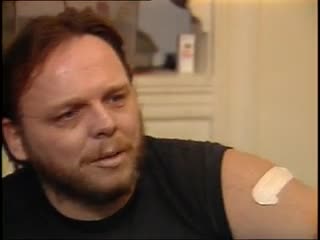
Description: Environmentalists go to Brockton Superior Court to get injunction against insecticide because of lack of impact statement. Judge issues restraining order. Planes spraying malathion.
Collection: Ten O'Clock News
Date Created: 08/27/1990
Description: Organic farmer in Kingston frets over malathion spraying. In State House hearing, David Mulligan explains decision to use the insecticide. Roadside blueberry stand.Boys pick berries.Kingston town hall.
Collection: Ten O'Clock News
Date Created: 08/22/1990
Description: Malden couple struggles to keep up with housing costs but faces eviction because they are unable to meet rent increase. They cannot get public assistance because waiting list is so long.
Collection: Ten O'Clock News
Date Created: 12/06/1988
Description: Joe Malone + William Galvin tell their aspirations for treasurer + qualms about each other. Malone family's vacant Waltham lot(site of fire). Candidates campaigning,debating. Malone intros transition team.
Collection: Ten O'Clock News
Date Created: 11/02/1990
Description: Treasurer Joe Malone recommends House Ways and Means committee cut millions of dollars in state health insurance, Medicaid, and public assistance, to address 'structural deficit' and salvage credit rating.
Collection: Ten O'Clock News
Date Created: 04/18/1991
Description: Marcus Jones reports that Mamie Till-Mobley (civil rights activist) received a lifetime activism award from a Massachusetts senior citizen action group. Jones reports that Till-Mobley's son, Emmett, was brutally murdered in Mississippi in 1955. Jones notes that Till-Mobley's determination to bring the murderers to justice has been an inspiration to other African Americans. Jones notes that the Eyes On The Prize series has brought attention to Till-Mobley's role in the civil rights movement. Jones' report includes footage from Eyes on the Prize. Jones reports that James Farmer (civil rights activist) also received an award from the organization. Jones' report features footage of Farmer and Till-Mobley at a press conference after the awards ceremony. Jones interviews Till-Mobley, who discusses her role in the civil rights movement. Jones notes that Till-Mobley has organized the Emmett Till players, who travel with Mobley to spread the message of the civil rights movement. Jones' report includes footage of performances at the awards ceremony by Ericka Elcy and Patrice Richardson of the Emmett Till Players.
1:00:05: Visual: Footage of Mamie Till-Mobley talking about the civil rights movement. Till-Mobley says that she wanted the world to see the horrible events taking place in the US. Marcus Jones reports that the brutal murder of Emmet Louis Till startled the nation in 1955; that Emmet Louis Till was from Chicago; that Emmet Louis Till was visiting relatives in Mississippi in 1955. Jones reports that Emmet Louis Till said "Bye, baby" to a white woman when exiting a grocery store; that Emmet Louis Till's body was found in the Tallahatchie River a few days later. V: Footage from Eyes On The Prize of Emmet Louis Till's funeral. Shots of a black and white photo of Emmet Louis Till; of Bryant's grocery store in Mississippi; of a river. Footage from Eyes on the Prize of Mamie Till-Mobley at a press conference. Shots of whites seated in an audience. Jones reports that Till-Mobley's determination to bring her son's murderers to justice was an inspiration to other African Americans. V: Black and white footage from Eyes On The Prize of Rosa Parks (civil rights activist); of Martin Luther King Jr. (civil rights leader); of a city bus in Montgomery, Alabama; of white people seated at the front of a bus. Footage of Mamie Till-Mobley and James Farmer (civil rights activist) at a press conference in Boston in June of 1988. Till talks about her quest for justice in 1955. Shots of reporters at the press conference. Till-Mobley and Farmer embrace. Jones reports that Till-Mobley and Farmer received lifetime activism awards from a Massachusetts senior citizen action group. V: Shots of members of the action group seated in a room. Footage of Alfred Saunders (member of the senior citizen action group) greeting Till-Mobley. Footage of Saunders saying that Till-Mobley's commitment to justice inspired the civil rights movement. Footage of Ericka Elcy (member, Emma Till Players) performing in front of the members of the senior citizen group. Elcy says that people must be committed to their goals and life's work. Jones reports that Till-Mobley has organized a group in Chicago called the Emma Till Players; that the young people in the Emma Till Players travel with Till-Mobley to spread the message of the civil rights movement. V: Footage of Patrice Richardson (member, Emma Till Players) performing. Richardson reciting a speech by Martin Luther King, Jr. Shots of Till, Farmer and the audience applauding for Richardson. Footage of Till-Mobley talking about how her role in the civil rights movement may have gotten lost in history. Till-Mobley says that her role in the movement stems from an "ugly" incident; that no one wants to remember "ugly" incidents. Footage from Eyes On The Prize of Till-Mobley in 1955. Till-Mobley says that she hopes that her son's death will mean something to other oppressed people. Shots of Till-Mobley at her son's funeral. Jones reports that the Eyes On The Prize series has shed light on Till-Mobley's role in the civil rights movement. V: Footage of Till-Mobley being interviewed by Jones. Till-Mobley says that she is interested in seeing a renewal of activism; that kids today need to be directed toward positive ways of living; that drugs and gangs are a problem for youth today.
Collection: Ten O'Clock News
Date Created: 06/24/1988
Description: Norfolk prisoners put on Man of LaMancha. Actor Richard Kiley advises.
Collection: Ten O'Clock News
Date Created: 12/11/1986
Description: Marcus Jones reports that supporters of the proposed city of Mandela, Massachusetts, are raising the issue again. Voters rejected the 1986 proposal to incorporate the Greater Roxbury neighborhood into a new city. Supporters of the proposal have put together a video to educate voters about the benefits of forming a new city, by Maverick Video. Andrew Jones (Greater Roxbury Incorporation Project) is shown in the video. Interview with Curtis Davis (Greater Roxbury Incorporation Project) about the video and about the Mandela proposal. The referendum question on Mandela will be on the ballot again this year. Review of the boundaries of the proposed city and the specifics of the proposal. Marcus Jones notes that the 1986 referendum question received national media attention. Marcus Jones' report includes footage of Davis, Andrew Jones and other Mandela supporters at a press conference in 1986 and footage from an episode of the Phil Donahue Show in 1986 with community leaders Mel King (community activist), Andrew Jones, Charles Stith (Union United Methodist Church), and Bruce Bolling (Boston City Council). Marcus Jones reports that the referendum question has not received as much media coverage this year. He adds that Mandela supporters may try again in the future if the referendum question is defeated again this year. Jones' report includes footage from Say Brother of Andrew Jones talking about Mandela and footage of Bruce Bolling at a press conference. This edition of the Ten O'Clock News also included the following item:Members of Boston's African American community voice their support for Bush
1:00:15: Visual: Footage from Say Brother of Andrew Jones (co-founder, Greater Roxbury Incorporation Project) in June of 1987. Jones says that he is not sure that the people do not want Mandela. Marcus Jones reports that voters in the predominantly African American neighborhoods of Boston overwhelmingly rejected the referendum quesion on the incorporation of Mandela in 1986. V: Shots of African American residents crossing under the elevated train tracks on Washington Street in Roxbury; of a map of the boundaries of the proposed city of Mandela. Marcus Jones reports that many believed the issue to be dead. V: Footage of Bruce Bolling (President, Boston City Council) addressing an audience in November of 1986. Bolling says that the issue of incorporation has been put aside "for once and for all." Marcus Jones reports that proponents of Mandela have raised the issue again; that Mandela proponents have put together a videotape to educate voters about the virtues of forming a new city. V: Footage from Maverick Video of the pro-Mandela videotape. The videotape shows Andrew Jones talking about building a new city hall for the city of Mandela. Footage of Curtis Davis (co-founder, Greater Roxbury Incorporation Project) being interviewed by Marcus Jones. Davis says that many people have liked the videotape. Davis says that the videotape is biased in favor of the proposal; that the videotape does not try to fool the voters. Marcus Jones reports that Davis and Andrew Jones were responsible for putting the Mandela referendum question on the ballot in 1986; that the referendum question will be on the ballot again this year. V: Footage of Davis, Andrew Jones, and other Mandela supporters at a press conference in front of the state house in October of 1986. Footage of Davis being interviewed by Marcus Jones. Davis says that the city of Mandela would be predominantly African American; that the residents of the Greater Roxbury neighborhoods have common concerns. Davis says that those issues are best addressed by a local neighborhood government. Marcus Jones reports that Roxbury, Mattapan and parts of Dorchester, Jamaica Plain, the South End, and the Fenway would form the proposed city. Marcus Jones reports that the referendum question gained national attention in 1986. V: Footage from the Phil Donahue Show on Mandela on October 30, 1986. An African American male audience member says that he supports Mandela. African American community leaders Andrew Jones, Mel King (community activist), Bolling, and Reverend Charles Stith (Union United Methodist Church) are guests on the show. Stith says that the incorporation of Mandela would signal a retreat from the progress made by the civil rights movement. Marcus Jones reports that the Mandela question has not received as much media attention this year; that the proponents of Mandela are presenting their case in a calmer atmosphere. V: Footage from the pro-Mandela videotape. The videotape shows Andrew Jones talking to a group of African American women outside of a housing project building. Marcus Jones reports that Mandela supporters are campaigning for the passage of the referendum question; that the supporters may try again in the future if the referendum question is defeated this year. V: Footage of Davis saying that a narrow defeat will inspire supporters to work harder for passage of the referendum. Footage from the pro-Mandela videotape.
Collection: Ten O'Clock News
Date Created: 10/27/1988
Description: David Boeri reports that the referendum question on the creation of Mandela, Massachusetts, was soundly defeated in the 1986 elections. Supporters of incorporation of a new city from the Greater Roxbury neighborhood are raising the issue again. Community leaders gathered at a press conference in support of the issue. Those present included Andrew Jones (Greater Roxbury Incorporation Project), Chuck Turner (teacher), and Byron Rushing (State Representative). Jones and Rushing speak out in favor of Mandela. They criticize the city of Boston for not dealing effectively with problems in the Roxbury neighborhood. Boeri reports that the Roxbury neighborhood is suffering from an epidemic of violence and drug-related crime. He notes that Mandela supporters believe that crime could be fought more effectively if Roxbury were an independent city. Interviews with Mandela supporters Sadiki Kambon and Donald Madrey talking about the problems in the neighborhood. City Councilor Bruce Bolling talks about street violence. Footage of William Celester (Deputy Superintendent, Boston Police Department) and Ray Flynn at a press conference.
1:00:09: Visual: Footage of Andrew Jones (Greater Roxbury Incorporation Project) at a press conference. Supporters stand behind him. Jones says that the time has come to "free Mandela, Massachusetts." Shot of Mandela supporters with Jones including Chuck Turner (teacher). David Boeri reports that the referendum question on Mandela, Massachusetts was overwhelmingly rejected by voters in the 1986 elections. Boeri notes that Mandela supporters are raising the question again. V: Footage of Byron Rushing (State Representative) at the press conference. Rushing asks if it is better to be a poor neighborhood in a rich city, or a poor city in a rich state. Boeri reports that little has changed in Boston's African American neighborhoods since 1986; that Mandela supporters can exploit the fact that little has changed in their favor. Boeri notes that Roxbury may be worse off than it was in 1986. V: Shot of white police officers at a crime scene. Roxbury residents stand behind police cordons. A pool of blood appears on the street. Footage of Sadiki Kambon (Mandela initiative supporter) saying that Roxbury continues to suffer from high unemployment, poor housing, an increase in the infant mortality rate, and a high drop-out rate from schools. Shot of two white police officers patrolling a residential street in Roxbury. Boeri reports that drug-related crime and violence have created a crisis in the community. V: Shot of a Boston Herald newspaper article featuring a photo of Darlene Tiffany Moore (Roxbury resident and shooting victim). Footage of Bruce Bolling (Boston City Council) speaking to the press on August 22, 1988. Bolling says that there is open warfare going on in the district. Footage of Donald Madrey (Roxbury resident and Mandela initiative supporter) saying that Roxbury residents are living in fear from crime. Madrey says that it seems like all of the drugs in the state of Massachusetts are being dropped in Roxbury. Shot of African American residents crossing Washington street underneath elevated train tracks in Roxbury. Boeri reports that supporters of the Mandela initiative say that crime could be fought more effectively if Roxbury were an independent city. V: Shot of a group of African American men outsde of Joe's sub shop on Washington Street in Roxbury. Footage of Jones at the press conference saying that an independent city has its own police force which can set its own priorities. Jones says that the Boston Police Department is corrupt; that an independent police department could establish a better relationship with the community. Footage of Rushing saying that officers of the Mandela Police Department would live in the city; that the police officers would be living on the streets where crime takes place. Boeri notes that Boston city officials have declared war on drugs and crime in Roxbury. V: Shot of William Celester (Deputy Superintendent, Boston Police Department) speaking at a press conference. Ray Flynn (Mayor of Boston) stands at his side. Shot of two white police officers stopping an African American man in order to search him. Footage of Rushing at the press conference. Rushing says that the city has not responded to questions about why they have not applied for federal funds for anti-drug campaigns in the city.
Collection: Ten O'Clock News
Date Created: 08/24/1988
Description: Meg Vaillancourt reports on black South African leader Nelson Mandela's visit to Madison Park High School. Vaillancourt reports that a large crowd waited in the hot gymnasium for Mandela to arrive. She adds that Madison Park High School was one of many stops on Mandela's itinerary during his visit to Boston. Vaillancourt's report includes footage of the crowd in the gymnasium and footage of a musical group performing traditional African music. Vaillancourt reports that the crowd erupted in ecstatic cheers when Mandela arrived. Vaillancourt's report also includes footage of Mandela's arrival at the high school. Members of the crowd are on their feet as they cheer. Mandela talks about the importance of education to today's youth. Vaillancourt reports that Mandela also spoke of the struggle against apartheid and the importance of sanctions. Vaillancourt notes that many people in the crowd consider Mandela to be a hero. Vaillancourt's report includes shots of Mandela with Winnie Mandela (wife of Nelson Mandela) and his entourage on stage at the high school.
1:00:01: Visual: Footage of a crowd filling the bleachers of a gymnasium at Madison Park High School on June 23, 1990. The crowd claps and applauds. Shots of crowd members on the bleachers. Meg Vaillancourt reports that many Roxbury residents waited at Madison Park High School for an opportunity to see Nelson Mandela (black South African leader). Vaillancourt notes that Mandela is a hero to many people of color; that the Roxbury community used the Mandela visit as an opportunity to showcase its strenghts. V: Footage of Roxbury community members performing for the audience. A musical group in African dress plays on African instruments. African-American girls perform a dance in front of the audience. A man plays a rhythm on a drum strung around his neck. Vaillancourt reports that Mandela's plane arrived late at Logan Airport; that a luncheon at the John F. Kennedy Library ran long. Vaillancourt reports that every stop on Mandela's itinerary ran long; that a faithful crowd at Madison Park High School waited while chanting his name. V: Shots of the crowd standing on the bleachers. The crowd sings, claps and chants. Many crowd members hold up signs welcoming Mandela. Vaillancourt reports that the gymnasium was sweltering; that the crowd stayed to wait for Mandela. Vaillancourt notes that the crowd erupted in cheers when Mandela arrived. V: Shots of members of the crowd; of people fanning themselves. Footage of Mandela approaching the stage as the crowd cheers. Mandela and Winnie Mandela (wife of Nelson Mandela) wave at the crowd. Mandela raises his clenched fist. Mandela is accompanied by an entourage including Charles Yancey (Boston City Council). Vaillancourt reports that the crowd's ovation for Mandela lasted five minutes. V: Shots of the crowd on its feet. The crowd cheers for Mandela. Vaillancourt reports that Mandela spoke of the struggle against apartheid and the importance of sanctions. V: Footage of Mandela addressing the crowd. Mandela says that he and others are concerned by the high drop-out rate among schoolchildren in Boston. Mandela says that the youth of today are the leaders of tomorrow. Shots of the crowd. Vaillancourt reports that Mandela emphasized education. Vaillancourt notes that the drop-out rate in Boston Public Schools is nearly 40%. V: Footage of Mandela addressing the crowd. Mandela says that many students leave school because of poverty and frustration. Mandela urges students to stay in school. Shots of the crowd. Many members of the crowd fan themselves. Vaillancourt reports that Mandela spoke briefly; that Mandela's visit to Madison Park High School was the high point of Mandela's visit for many Roxbury residents. V: Footage of Mandela addressing the crowd. Mandela tells the crowd that he loves them. The crowd cheers. Mandela greets community leaders who are on stage with him, including Shirley Owens Hicks (State Representative), Bruce Bolling (Boston City Council) and Byron Rushing (State Representative). Themba Vilakazi (South African exile) and Louis Elisa (NAACP) are on stage with Mandela.
Collection: Ten O'Clock News
Date Created: 06/25/1990