Description:
Richard Boddie is seeking the Libertarian nomination for the 1992 presidential election. Interview with Boddie about the Libertarian Party and his position on the issues. He says that there is no difference between the Democratic and Republican Parties. He talks about the need for government to remove itself from the private lives and economic lives of the citizenry. Boddie calls for reform of the criminal justice system. He says that he will work to empower all people. He accuses other African American politicians of trying to redistribute wealth. Boddie says that the only legitimate function of government is to protect citizens from violations of their rights. Fields notes that the Libertarian nomination is also being sought by Andre Marrou, accompanied by a shot of a photograph of him. Sounds cuts out at the very end of the story. This edition of the Ten O'Clock News also included the following items: Charles McKenney interviewed by Marcus Jones and African American officials in white suburbs
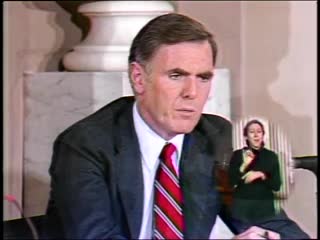
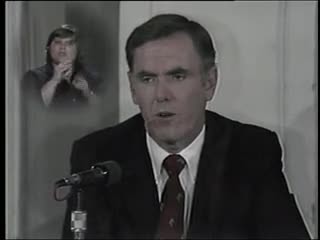
1:00:04: Visual: Footage of Richard Boddie (Libertarian candidate for US President) being interviewed. Boddie says that people who have no values have no regard for human life. Boddie says that the criminal justice system does not force people to take responsibility for their actions. Boddie says that the criminal justice system lets people avoid responsibility for their actions by placing blame on society. Boddie says that government must not outlaw guns in order to fight crime; that the people must get government out of their lives. Carmen Fields reports that Boddie is fifty-two years old; that Boddie is the son of a minister from Rochester, NY. Fields reports that Boddie does not believe that gun control is the answer to urban crime; that Boddie is seeking the Libertarian nomination for president. Fields notes that the Libertarian Party does not support government involvement in the lives of citizens. V: Footage of Boddie being interviewed by Fields. Boddie says that the government needs to remove itself from the private lives and economic lives of its citizens. Boddie says that the nation would become more productive and competitive with less government; that there would be more opportunities for all with less government. Boddie says that the government protects the class structure. Boddie says that the government is the "elitist power-monger." Boddie says that the government does not follow through on its promises. Fields reports that Boddie has tried bipartisanship; that he was a Democrat for ten years. Fields reports that Boddie was an activist law student at Syracuse University; that Boddie became a Republican shortly after graduating from law school. V: Footage of Boddie being interviewed by Fields. Boddie says that he wanted to build his law practice; that he became a Republican. Boddie says that he spent ten years as a Democrat and ten years as a Republican; that there is no difference between the two parties. Fields reports that Boddie was a "political agnostic" until he discovered the Libertarian Party in 1983. V: Footage of Boddie being interviewed by Fields. Boddie says that the Libertarian Party found him. Fields reports that Boddie has been considering entering politics since the early 1980s; that Boddie promises to be a different kind of African American politician if he wins the Libertarian nomination. Fields notes that the nomination is also being sought by Andre Marrou (Libertarian candidate for US President). V: Shot of a black and white photo of Marrou. Footage of Boddie being interviewed by Fields. Boddie mentions some African American politicians including Jesse Jackson and Douglas Wilder. Boddie says that most African American politicians want to redistribute wealth. Boddie says that he wants people to empower themselves. Boddie says that the role of government should be reduced to defending the rights of citizens when those rights are violated. Boddie says that this is the only legitimate function of government.
1:00:04: Visual: Footage of Richard Boddie (Libertarian candidate for US President) being interviewed. Boddie says that people who have no values have no regard for human life. Boddie says that the criminal justice system does not force people to take responsibility for their actions. Boddie says that the criminal justice system lets people avoid responsibility for their actions by placing blame on society. Boddie says that government must not outlaw guns in order to fight crime; that the people must get government out of their lives. Carmen Fields reports that Boddie is fifty-two years old; that Boddie is the son of a minister from Rochester, NY. Fields reports that Boddie does not believe that gun control is the answer to urban crime; that Boddie is seeking the Libertarian nomination for president. Fields notes that the Libertarian Party does not support government involvement in the lives of citizens. V: Footage of Boddie being interviewed by Fields. Boddie says that the government needs to remove itself from the private lives and economic lives of its citizens. Boddie says that the nation would become more productive and competitive with less government; that there would be more opportunities for all with less government. Boddie says that the government protects the class structure. Boddie says that the government is the "elitist power-monger." Boddie says that the government does not follow through on its promises. Fields reports that Boddie has tried bipartisanship; that he was a Democrat for ten years. Fields reports that Boddie was an activist law student at Syracuse University; that Boddie became a Republican shortly after graduating from law school. V: Footage of Boddie being interviewed by Fields. Boddie says that he wanted to build his law practice; that he became a Republican. Boddie says that he spent ten years as a Democrat and ten years as a Republican; that there is no difference between the two parties. Fields reports that Boddie was a "political agnostic" until he discovered the Libertarian Party in 1983. V: Footage of Boddie being interviewed by Fields. Boddie says that the Libertarian Party found him. Fields reports that Boddie has been considering entering politics since the early 1980s; that Boddie promises to be a different kind of African American politician if he wins the Libertarian nomination. Fields notes that the nomination is also being sought by Andre Marrou (Libertarian candidate for US President). V: Shot of a black and white photo of Marrou. Footage of Boddie being interviewed by Fields. Boddie mentions some African American politicians including Jesse Jackson and Douglas Wilder. Boddie says that most African American politicians want to redistribute wealth. Boddie says that he wants people to empower themselves. Boddie says that the role of government should be reduced to defending the rights of citizens when those rights are violated. Boddie says that this is the only legitimate function of government.
Collection:
Ten O'Clock News
Date Created:
04/22/1991