Description:
This tape is a compilation of news stories from the 1988 presidential campaign. Paul Brountas (Michael Dukakis campaign chairman), Susan Estrich (Dukakis campaign manager), and John Sasso (former Dukakis campaign manager) speak at a press conference on September 2, 1988. Brountas and Estrich welcome Sasso back to the Dukakis campaign. Sasso apologizes for the events leading up to his resignation the previous year. Sasso is happy to rejoin the campaign. Sasso answers questions from the media. Jesse Jackson (African American political leader) addresses the NAACP Convention in July of 1988. He talks about his campaign for the presidency. Jackson talks about his disadvantaged background. He says that he is running for the presidency so that future African Americans can run for the presidency. William Bulger is the emcee at his annual St. Patrick's Day Breakfast in 1988. Bulger and Robert Crane (State Treasurer) perform duets of Irish songs and parodies of Irish songs. Bulger exchanges witticisms and barbs with politicians at the breakfast including John Kerry (State Senator), Edward Kennedy (State Senator) and Michael Dukakis (Democratic candidate for Governor of Massachusetts). Jesse Jackson addresses an audience about the increase in poverty among African Americans under the administration of Ronald Reagan (US President). Jesse Jackson addresses an audience at Sanders Theater at Harvard University. Jackson talks about the civil rights movement. Thomas "Tip" O'Neill (former Speaker of the US House of Representatives) comes out of retirement to endorse Michael Dukakis for the presidency at a press conference outside of the Massachusetts State House. O'Neill defends liberals against Republican attacks. George Bush (Republican candidate for US president) and John Sununu (Governor of New Hampshire) speak at a press conference. Bush talks about the differences between him and Dukakis. Bush says that his views on the issues are more compatible with those of blue-collar Americans. Sununu answers questions from the media. Sununu criticizes Dukakis' performance as Governor of Massachusetts. Christy George interviews Alicia Munnell (economist). Munnell discusses Social Security, Medicare and the federal budget. Arlen Specter (US Senator) speaks at a press conference in front of the Massachusetts State House. Specter condemns Dukakis's furlough program in Massachusetts and his record on crime prevention. John Kerry (US Senator) is present. A reporter interviews a police official about crime prevention programs in Massachusetts. A reporter interviews Francis Bellotti (former Massachusetts Attorney General) and Ron Kaufman (coordinator for the Bush campaign) about crime in Massachusetts and the presidential campaign
1:00:05: Visual: Footage of a press conference at the Lafayette Hotel on September 2, 1988. Shots of members of an audience on their feet as they applaud. Paul Brountas (Dukakis campaign chairman), Susan Estrich (Dukakis campaign manager) and John Sasso (former Dukakis campaign manager) approach the podium. Brountas announces that Sasso has rejoined the presidential campaign of Michael Dukakis (governor of Massachusetts) as vice-chairman; that he and Estrich will continue in their positions. The audience applauds. Brountas reports that the campaign staff will report to Estrich; that he, Estrich, and Sasso will report to Dukakis. Brountas says that Sasso will bring strength, wisdom, and political insight to the campaign. Brountas says that Sasso will serve as an advisor to Dukakis; that Sasso will take on tough assignments and special projects. Brountas says that Sasso is a friend to Dukakis and the campaign staff. Brountas says that Sasso is a man of integrity and substance. Brountas says that the presidential campaign is entering its final phase; that the Dukakis campaign will reach out to the most talented members of the Democratic Party in the run up to the election. Brountas says that Sasso's return marks the beginning of this outreach process. The crowd applauds. Brountas says that Dukakis's success has energized the Democratic Party; that the Dukakis campaign has raised the hopes of Americans who have been excluded during the presidency of Ronald Reagan (US President). Brountas invites Estrich to speak. The crowd applauds. Estrich says that she and the campaign staff are happy to welcome Sasso back to the campaign; that she is happy to be working with Sasso during the final stretch of the campaign. Estrich says "welcome home" to Sasso. The crowd applauds. Sasso shakes Estrich's hand and kisses her cheek. Sasso shakes Brountas's hand. Sasso says that he is delighted to return to the Dukakis campaign; that he is committed to Dukakis. Sasso says that Dukakis will make an excellent president; that he has the strength and other qualities necessary to be president. The crowd applauds. Sasso says that he made an error in judgement last September. Sasso apologizes for hurting Joseph Biden (US Senator) and his family. Sasso says that Biden is a man of strong character; that Biden had attributed his quotations to Neil Kinnock (British Labour leader) on other occasions; that Biden never meant to mislead the American people. Sasso thanks Dukakis for his friendship. Sasso thanks Jack Connors (Hill Holliday Connors Cosmopulos Inc) for allowing him to take a leave of absence to rejoin the campaign. Sasso takes questions from reporters. Sasso says that Dukakis talked to him about rejoining the campaign earlier in the week. A reporter asks if the campaign of George Bush (Republican nominee for US president) has been able to put the Dukakis campaign on the defensive. Sasso says no. Estrich talks about other people who have been hired onto the Dukakis campaign at all levels in the past few weeks. Sasso says that he will adhere to the high standards set by Dukakis. Sasso says that there are contrasts and issues which must be highlighted for the voters as they make their choices. Sasso says that he will not shy away from pointing out those issues. The audience applauds. Sasso says that the Dukakis campaign has been reaching out to others since the beginning; that the campaign has reached out to Jesse Jackson (African American political leader) and to independent voters. Sasso says that the campaign is inclusive. A reporter asks Sasso about Lee Atwater (Bush campaign manager). Sasso says that he has no idea about what Atwater has planned. Sasso says that presidential campaigns are never easy; that Dukakis has met every challenge so far. Sasso thanks the reporters. The audience applauds.
1:13:00: V: Footage of Jesse Jackson addressing the NAACP Convention in July of 1988. Jackson talks about the need for a new direction for the nation. Jackson says that he plans to run for the presidency. Jackson says that he has been told not to run for the presidency because he cannot win. Jackson says that he has fought against the odds for his whole life. Jackson says that he is an "odds-breaker and a dream-maker;" that he will not turn back. The audience applauds. The crowd begins to chant, "Jesse." Jackson says that he is running because he wants to make his grandmother happy once more before she dies. Jackson says that he will run for the presidency so that future African Americans can run for the presidency. Jackson says that he wants every child in the US to believe that he or she can become president. Jackson says that he understands hard times and broken families. Jackson says, "if I can, you can." Jackson says that he understands all of the sociologists categories, including subclass, subculture, underclass, ethnic minority, and deprived. Jackson says that he was born to a teenage mother who was born to a teenage mother. Jackson says that he was delivered by a midwife into a three-room house. Jackson says that his house did not have an indoor bathroom; that his house was cold. Jackson says that his mother did not prepare a turkey dinner for the family on Thanksgiving Day; that his mother was preparing another family's turkey on Thanksgiving Day; that his family ate the leftovers from another family's dinner. Jones says that his mother worked hard to clothe him nicely for school; that his schoolteachers made less money than white teachers; that he still learned to read and write. The audience applauds. Jackson tells the audience not to surrender or to turn back. Jackson says that the struggle will not be easy; that he has faith. Jackson says that he will not turn back or surrender. Jackson says that he may not be elected as the Democratic nominee; that he knows he is qualified to be the Democratic nominee. The audience members rise to their feet and applaud. Jackson embraces NAACP leaders as he turns away from the podium.
1:20:17: V: Footage from Barry Cunningham's report on Jackson's speech to the NAACP Convention.
1:20:44: V: Footage from Cablevision of William Bulger's annual St. Patrick's Day Breakfast in 1988. Michael Connolly (Massachusetts Secretary of State) calls out a light-hearted remark at the breakfast. William Bulger (President of the Massachusetts State Senate) stands at a podium with a hand-held microphone. An Irish band is arranged behind him. Bulger makes a few jokes in front of the audience. Bulger makes a joke at the expense of Thomas McGee (former Speaker of the Massachusetts House of Representative). McGee is seated near the stage. Shot of James Kelly (Boston City Council) laughing in the audience. Shots of the audience members, seated at long tables. Bulger makes references to Michael Dukakis (Governor of Massachusetts), Evelyn Murphy (Lieutenant Governor of Massachusetts), Joseph Feeney (Chief Justice, Boston Municipal Court). Bulger notes that Newman Flanagan (District Attorney) is present. Shot of Flanagan. Bulger and Robert Crane (Massachusetts State Treasurer) sing a duet of Irish songs. Shots of audience members seated at the breakfast. Bulger continues to make jokes for the audience. Shot of Joe Moakley (US Congressman) seated at the breakfast. Bulger welcomes Moakley and asks if Dukakis and Kitty Dukakis (wife of Michael Dukakis) have arrived. Bulger introduces co-host Michael Flaherty (State Representative). Bulger roasts John Kerry (US Senator) who is seated next to McGee at the breakfast. Shot of Kerry. Bulger asks Kerry why Edward Kennedy (US Senator) never comes to the breakfast. Bulger jokes about the Boston Herald newspaper, which has been taken over by Rupert Murdoch (Australian media magnate). Bulger jokes about Kerry's wealth. Bulger jokes about US foreign policy in Nicaragua. Bulger jokes about Joseph Kennedy (US Congressman). Bulger jokes about running for the US Senate. Shots of the audience. Edward Kennedy arrives and approaches the podium. Kennedy presents Bulger with a bag of trash. Bulger tells Kennedy to bring the trash to Hyannisport. Dukakis approaches the podium and embraces Bulger as he is speaking. Bulger welcomes Dukakis. Dukakis sits down next to the podium. Bulger jokes about Dukakis's campaign strategy and his lack of charisma. Bulger jokes about Dukakis's Greek background. Bulger jokes about Dukakis's newfound national prominence. Bulger predicts that Dukakis will win the Democratic nomination. Bulger compliments Dukakis on his integrity and competence. Dukakis takes the microphone. Dukakis says that he will bring Bulger with him to the Democratic Convention in Atlanta so that Bulger can help him make back-room deals. Bulger makes a joke at the expense of Raymond Shamie (Chairman, Massachusetts Republican Party). Crane takes the microphone to sing a song about Bulger to the tune of an Irish song. The audience claps for Crane.
1:40:37: V: Footage from WBZ-TV of Jesse Jackson (African-American political leader) addressing an audience. Jackson says that one-third of African Americans are living in poverty after eight years of the Reagan administration. Shots of the audience. Jackson urges the audience to vote against George Bush (Republican nominee for US president). The audience applauds. Shot of an young African American man speaking to a reporter.
1:41:32: V:Footage of Jackson addressing an audience at Sanders Theater at Harvard University. The audience members stand on their feet as they applaud one of Jackson's remarks. Jackson talks about the civil rights movement.
1:41:55: V: Footage of Tip O'Neill (former Speaker of the US House of Representatives) arriving at a press conference outside of the Massachusetts State House. O'Neill greets other Dukakis supporters, including John Nucci (Boston School Committee). Kevin Fitzgerald (State Representative) says that much has been said about Boston, Brookline, Cambridge and the whole state of Massachusetts during the presidential campaign. Fitzgerald says that some have taken offense to those comments. Fitzgerald introduces O'Neill. Fitzgerald says that O'Neill will address some of the issues in the campaign. O'Neill thanks the audience. O'Neill says that he misses press conferences and public service. O'Neill says that he has been staying out of the public eye since his illness; that he speaks to Michael Dukakis (Democratic nominee for US president) about once a week. Dukakis says that Massachusetts is the only one of the fifty states that can compete with Berlin, Germany, Hong Kong, Japan, Korea or Singapore. Shots of the media and audience members. Many audiences hold Dukakis campaign signs. O'Neill says that Dukakis is the best candidate for the presidency. O'Neill accuses George Bush of forgetting his roots. O'Neill says that Bush was once a moderate Republican; that Bush has now-joined the ultra-conservatives. Shot of a Dukakis campaign sign. O'Neill says that Bush has lost sight of his eastern Republican support since he became vice president. O'Neill says that Dukakis is an innovator; that Dukakis is the best candidate for president. O'Neill invites questions from the media. The audience members applaud. A reporter comments that the Republicans have painted Dukakis as a "liberal." O'Neill says that there are few liberals left; that he was a liberal. O'Neill says that liberals developed "middle America." O'Neill says that sixty-five percent of Americans were impoverished when he started out in public life.
1:46:35: V: George Bush (Republican nominee for US President) speaks at a press conference. Bush says that he needs to get his message across to voters; that he needs to highlight the differences between him and Michael Dukakis (Democratic nominee for US President). Bush says that his views on gun control and other issues are more in line with "blue-collar America." Shots of the media at the press conference. Bush says that he must make it clear that his administration will keep the economic recovery going. Bush says that he will focus on "neighborhood values" and the role of the federal government in Americans. Bush thanks the media. He leaves the podium, accompanied by Barbara Bush (wife of George Bush). John Sununu (Governor of New Hampshire) approaches the podium. A reporter asks Sununu if he has a personal vendetta against Dukakis because of a disagreement over the Seabrook nuclear plant. Sununu says that he would like to correct some misperceptions about Dukakis. Sununu says that Massachusetts ranks fifth or sixth among the six New England states in terms of manufacturing jobs and jobs associated with trade. Sununu says that he is completely objective about the Dukakis campaign; that he has nothing personal against Dukakis. A reporter asks Sununu about Dukakis's objections to Bush's proposed budget. Sununu says that Dukakis is avoiding a discussion of the issues. Sununu encourages the media to focus on the debate instead of ancillary events surrounding the debate. Sununu says that Dukakis's employment record has been misrepresented. The audience includes David Locke (State Senator).
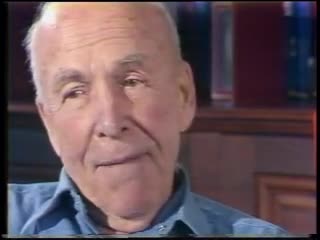
1:50:56: V: Christy George sets up an interview with Alicia Munnell (economist). Munnell tells George not to ask her a certain question about the economy. George asks Munnell about possible cuts to entitlement programs like Social Security. Munnell says that every government expenditure must be examined; that there is no reason not to look at Social Security. Munnell says that Social Security accounts for 22% of government outlays; that Social Security and Medicare account for almost 30% of government outlays. Munnell says that one must examine whether Social Security is contributing to the deficit problem. Munnell says that Social Security has been bringing in more money than it has been paying out for five years.
1:53:22: V: Arlen Specter (US Senator) speaks at a press conference in front of the Massachusetts State House. Specter says that he is at the conference on behalf of George Bush (Republican nominee for US president). Specter says that Bush wants him to compare the Bush position on crime control to that of Michael Dukakis (Democratic nominee for US president). Specter says that he will comment on Dukakis's controversial furlough program. Specter says that he has studied the furlough program. Specter reviews his record on crime and prison reform. Specter says that he advocates furlough programs if they are properly directed. Shot of the exterior of the Massachusetts State House. Shots of the press conference. Specter continues to talk about furlough programs. Shot of John Kerry (US Senator) at the press conference. Jim Braude (Tax Equity Alliance for Massachusetts) and Robert Rufo (Suffolk County Sheriff) are also in the crowd. Shot of Francis X. Bellotti (former Massachusetts Attorney General) and William Delahunt (Norfolk County District Attorney) at the press conference. Specter says that Dukakis's furlough program allows furlough releases for "career criminals" and those who were sentenced to life without parole. Specter takes questions from the media. Specter says that he invited Kerry and James Shannon (Massachusetts Attorney General). Specter invites Kerry to the microphone. Kerry says that he will talk about the meaning of the press conference. A reporter asks a police official about the press conference. The reporter asks the police official if Dukakis is "soft on crime." The police official says that the state of Massachusetts has not been "soft on crime"; that the state of Massachusetts has one of the lowest crime rates in the nation. The police official says that Dukakis deserves some credit for the low crime rate in Massachusetts. The police official says that law enforcement has been working together with elected officials to reduce crime. The reporter asks what Dukakis has done to help law enforcement. The police official says that Dukakis meets once a month with the Anti-Crime Council; that the Anti-Crime Council discusses issues and brings the law enforcement community together. The reporter asks if the police official is annoyed at Bush's rhetoric about crime in Massachusetts. The police official says that he came to listen to Specter today. Footage of Kerry speaking to an older white man after the press conference. Shot of Bellotti speaking to Ron Kaufman (coordinator for the George Bush electoral campaign). Footage of Bellotti being interviewed. A reporter asks if Dukakis's furlough program is flawed. Bellotti says that Dukakis tried to tighten up the state's original furlough program. Bellotti says that the media is focusing on furlough programs and the death penalty. Bellotti says that the crime rate in Massachusetts is below the national average; that it is easy to find fault with furlough programs. The reporter asks Bellotti if Bush is doing Dukakis a disservice by sending people out to talk about Dukakis's record on crime. Bellotti says that Bush's campaign rhetoric about Dukakis's record on crime is not true. Bellotti says that Dukakis has pushed all of the law enforcement units working together. Bellotti says that Bush's campaign rhetoric is politics as usual. Shot of Specter getting into his car in front of the Massachusetts State House. Footage of Kaufman being interviewed. Kaufman says that Specter has a lot of experience with criminal justice; that it is important for Specter to speak out on the issue. The reporter asks why Bush is having Specter and John Sununu (Governor of New Hampshire) travel the country to talk about Dukakis's record on certain issues. Kaufman says that this is an effective strategy; that there were twelve media cameras at Specter's press conference today. Kaufman says that Dukakis sent out a contingent of defenders.
Date Created:
1988