Description: 1) In State of the City address at JP High Mayor Ray Flynn laments struggling economic health of Boston even as state is booming. 2) Interview with Samuel Tyler of Boston Municipal Research Bureau on city's tenuous finances. 3) Gov. Michael Dukakis signs bill to hasten conversion of abandoned buildings to affordable housing. 4) Reps. William Robinson and David Cohen debate rules reform on late night legislative sessions; Reps. Gregory Sullivan, Lawrence Alexander, Andrew Natsios; Robinson on speaker's platform with George Keverian. 5) Brief on aggressive tactics of anti- abortion protesters, reporting that Joseph Stanton of Citizens for Life denies escalating attacks on clinics, calling protesters “sidewalk counselors.” 6) Interview with Roger Fisher on Geneva arms limitations talks. 7) Felicia Lamport verse on arms talks. Anchors Lydon and Vaillancourt.
Collection: Ten O'Clock News
Date Created: 01/07/1985
Description: Hope Kelly reports that the Tent City Housing Complex in the South End will soon open. She notes that the housing complex is named for the protests that began on the site twenty years before. Kelly reviews the history of the Tent City site. Kelly's report includes photos of the protests at the Tent City site in the 1960s. Kelly interviews Betty Meredith (Executive Director, Tent City Corporation) and Michael Kane (Chairman, Tent City Corporation) outside of the housing complex. Kane and Meredith talk about the struggle by South End residents to get the housing complex built. Kane says that affordable housing was not a priority in this part of the city until now. Kelly interviews Mel King (community activist) about the Tent City site. Kelly reports that Copley Place was developed while the Tent City site was ignored. Kelly's report includes a time-lapse arrangement of shots documenting the construction of Copley Place. Kelly reports that 75% of the units in the housing complex are low- and moderate-income units. Kelly interviews Sophie Iglesias (Marketing Director) and Florcie Versailles (Tent City resident) about the housing complex..,
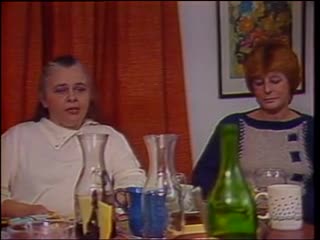
1:00:19: Visual: Shots from the window of a building on Copley Place. Shots of the high-rise buildings near Copley Place; of the South End. Hope Kelly reports on the long-standing controversy surrounding the Tent City site in the South End. V: Footage of Betty Meredith (Executive Director, Tent City Corporation) sitting outside of the Tent City Housing Development. Meredith says that she knew that South End residents would have to fight to get the housing development built. Shot of a man approaching the entrance to the Tent City Development with balloons in his hand. Shots of the exterior of the Tent City Housing Complex. Kelly reports that the Tent City Housing Complex will open tomorrow; that the housing complex is named for the protests that began on the site twenty years ago. Kelly reports that the city of Boston sold a parcel of land in the South End to William Fitzgerald (former Fire Commissioner of the City of Boston) in the 1960s; that Fitzgerald tore down the buildings on the land to make a parking lot. Kelly reports that the buildings on the land had been the homes and residences of many African American South End residents. Kelly notes that the Boston Redevelopment Authority (BRA) had promised to replace the buildings in 1965; that South End residents began to protest on the site in 1968 because nothing had been built. V: Shots of South End residents protesting on the Tent City site; of a protest sign on the Tent City site reading, "People, not cars. This is a place where homes should be." Shots of graffiti on a building reading, "BRA, go away." Shots of police officers on the Tent City site; of tents erected to house the protesters; of Mel King (community activist) being arrested by police on the Tent City site. Footage of Mel King in the South End. King says that the protesters did not believe that the city should allow people to be displaced in order to build parking lots. Kelly reports that Meredith was one of the original Tent City protesters; that Michael Kane (Chairman, Tent City Corporation) joined the protest in the 1970s because nothing had been built. V: Footage of Kelly interviewing Meredith and Kane outside of the development. Footage of Kane saying that the protesters had to block the city from building market-rate housing and a 1400-car parking garage on the site. Kelly reports that the city developed the Copley Place area while ignoring the Tent City site. V: Shot of the Tent City site in the early 1980s. A time-lapse arrangement of shots shows the construction of buildings on Copley Place. Footage of Meredith saying that the protesters had to wait a long time for the development to be built because they did not have the money to develop the land themselves. Footage of Kane saying that affordable housing was not a priority in this part of the city during the 1970s. Kelly reports that Kane and Meredith give Ray Flynn (Mayor of Boston) credit for the development of the Tent City site. V: Shots of the exterior of the Tent City Housing Complex. Kelly reports that there are 369 units in the Tent City development; that 75% of the units are low- and moderate-income units; that 25% of the units are market rate. V: Footage of Sophie Iglesias (Marketing Director) standing in an apartment in the Tent City Housing Complex. Iglesias says that this one-bedroom apartment has a market rate of $1,000 per month. Shots of the exterior of the housing complex. Kelly reports that low- and moderate-income renters will pay one-third of their income; that some renters will pay as little as $200 per month. V: Footage of Iglesias saying that people are not fully aware of the great need for affordable housing in the city of Boston. Footage of Meredith saying that over 6,000 people applied for the low- and moderate-income units. Kelly reports that priority is given to former South End residents who have been displaced. V: Footage of Kelly interviewing Florcie Versailles (Tent City resident). Versailles says that she would not be able to afford to live in Tent City without help from the government. Shot of Versailles in the lobby of the housing developement. Versailles pushes a child in a stroller. Footage of Meredith saying that the housing development took a long time to build; that the development will be a nice place for people to live.
Collection: Ten O'Clock News
Date Created: 04/29/1988
Description: Low-income residents line up to become potential South End homeowners in Tent City project. Photographs from the 1968 tent city protest. Interviews with applicants and Tent City administrations on affordable housing.
Collection: Ten O'Clock News
Date Created: 08/13/1987
Description: Several takes of reporter standup. History of the struggle to develop low income housing on the South End site where the Tent City Corporation is fighting to build. South End environs. Sign for a community garden. Construction workers and equipment starting work at Tent City construction site. Equal Housing Opportunity bulletin. South End apartment buildings. Residents in front of apartments and on balconies. Coffin with "Broke BRA Promises" written on it. Interview with Tent City Corporation representative on their efforts.
Collection: Ten O'Clock News
Date Created: 09/22/1981
Description: BRA will require of developers concessions to public benefits: contributions to affordable housing, inclusion of day care facilities in new construction. Stephen Coyle. Chinatown, Lafayette Place.
Collection: Ten O'Clock News
Date Created: 12/08/1988
Description: Four stories from 1983. 1) Urban development in Boston is an issue in the mayoral race. Helicopter aerial of skyline from harbor. Tilt up Prudential and Hancock towers. Pan of Copley Place. Anthony Tappe of Boston Society of Architects comments on deterioration of Victorian Boston because of the scale of new development, making for a less desirable and livable city. Controversy over Mayor Kevin White's intense involvement in urban planning process is discussed by mayoral candidates at a BSA forum on the future of city planning. David Finnegan, Dennis Kearney, Lawrence DiCara, Robert Kiley, Ray Flynn, Mel King. Robert Ryan, BRA director. Marriott Long Wharf Hotel. 2) The dichotomy between preserving rent control/affordable housing and encouraging free market business development through condo conversions in Boston. Struggle of 87-year-old Hester Hurlbutt of 250 Commonwealth Avenue to stay in her apartment. Mel King comments on housing displacement. Ray Flynn favors ban on evictions. David Finnegan disagrees, worried about economic climate. Scenes of Back Bay, Copley Place, Boston Public Library. Sign for luxury condominium for sale. Mayoral candidates Dennis Kearney and Lawrence DiCara campaigning. 3) Latino voters will have an impact on Boston's mayoral race. Alex Rodriguez, Jorge Hernandez, Yohel Camayd-Freixas endorse Mel King. Jose Masso, Gov. Dukakis' Hispanic liaison, says Latinos will split ideologically according to their respective nationalities. 4) Joseph Nelson and Mabel "Matty" Matheson talk about the tradition of the Fenway Victory Gardens. Other plot tenders revel in the therapeutic value and beauty of gardening. Views of flower beds and vegetables.
Collection: Ten O'Clock News
Date Created: 1983
Description: WESTON - HOUSING, TOWN CENTER & COMMON
Collection: Ten O'Clock News
Date Created: 10/24/1985
Description: Boston waterfront environs. Lewis Wharf sign. Pilot House. Pleasure boats docked at pier. Interview with Bruce Taymore who lives on a houseboat.
Collection: Ten O'Clock News
Date Created: 01/14/1980
Description: South Boston High School headmaster Jerome Wynegar interviewed on end of federal receivership of his school. Calmly says he seldom encounters overt hostility. He expects no substantial change in programs and attitudes now that jurisdictional control has reverted to the city. Exteriors of South Boston Highs School, and shots of Wynegar outside the school. Several takes of the reporter standup. A very bitter and angry Robert Lunnin, member of the South Boston Marshals and the South Boston Information Center, interrupts reporter standup. Lunnin says Wynegar lies, exaggerates attendance; that resistance to forced busing comes from both students and parents; that desegregation will never work “especially with the housing situation” (referring to effort to integrate blacks into public housing). He vehemently pronounces “forced busing.”
Collection: Ten O'Clock News
Date Created: 08/30/1978
Description: Examination of the shortage of affordable housing locally.
Collection: Ten O'Clock News
Date Created: 02/27/1985