Description:
Steve Pearlstein (journalist) speaks at a Town Meeting on Race and Class at the John F. Kennedy Library. The meeting is held in honor of the release of J. Anthony Lukas' novel, Common Ground. The novel is about the busing crisis in Boston. Pearlstein sums up the issues discusses at the forum. Dr. Laval Wilson (Superintendent, Boston Public Schools) addresses the audience. Wilson says that issues of race and class can be mediated through the public schools. He adds that public education is a means of upward mobility for poor students. Wilson says that the city of Boston must commit itself to providing quality education in the schools. He says that parents, institutions of higher education, the business community, and social agencies need to join him in the effort to improve the Boston Public Schools. John Cullinane (Chairman, John F. Kennedy Library Foundation) gives closing remarks and ends the meeting. Panelists at the meeting include Jack Beatty (Senior Editor, Atlantic Monthly), Thomas Brown (Professor, University of Massachusetts), Marie Clarke (parent and member of the Home and School Association), Moe Gillen (Charlestown community activist), Father Michael Groden (Archdiocese of Boston), Robert Kiley (former Deputy Mayor of Boston), Theodore Landsmark (attorney), Sandra Lynch (former general counsel to the State Department of Education), Kim Marshall (Director of Curriuculum, Boston Public Schools), Reverend Charles Stith (Union United Methodist Church) and Thomas Winship (former editor, Boston Globe). Tape 8 of 8
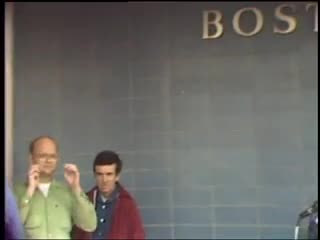
1:00:03: Visual: Steve Pearlstein (journalist) addresses a Town Meeting on Race and Class at the John F. Kennedy Library. The town meeting is held in honor of the release of the book, Common Ground by J. Anthony Lukas (author). Pearlstein speaks from a podium. Panelists are assembled at tables on either side of the podium. Panelists include Jack Beatty (Senior Editor, The Atlantic Monthly), Thomas Brown (Professor, University of Massachusetts), Marie Clarke (parent and member of the Home and School Association), Moe Gillen (Charlestown community activist), Father Michael Groden (Archdiocese of Boston), Robert Kiley (former Deputy Mayor of Boston), Theodore Landsmark (attorney), Sandra Lynch (former general counsel to the State Department of Education), Kim Marshall (Director of Curriuculum, Boston Public Schools), Reverend Charles Stith (Union United Methodist Church), and Thomas Winship (former Editor, The Boston Globe). Pearlstein says that he is honored to be at the gathering with an audience of great intelligence and experience. Pearlstein sums up the issues discussed at the gathering. Pearlstein says that class issues were not given consideration during the busing crisis; that Arthur Garrity (federal judge) made the city of Boston face up to race issues; that many suffered during the busing crisis. Pearlstein refers to audience comments about dialogue between the opposing sides and the role of Kevin White (former Mayor of Boston). Pearlstein refers to Lynch's presentation. Pearlstein notes that Lynch's role as an attorney in the case was to deny that the Commonwealth of Massachusetts had any responsibility in the city of Boston's segregated school. Pearlstein notes that the Twymon children are very well behaved. Visual: Shots of the Twymon family in the audience. Pearlstein refers to comments by Joan Diver (member of the Diver family portrayed in Common Ground) and Elvira Pixie Palladino (member of the Boston School Committee). Pearlstein notes that the gathering disagreed on the role of Arthur Garrity (federal judge) and on changes in the city's racial climate. Pearlstein refers to comments by Gerard Doherty (Charlestown resident) and Lukas. Shots of Lukas; of the audience. Pearlstein talks about the viability of a metropolitan busing solution. Pearlstein says that suburbanites do not seem concerned about the state of Boston's schools. The audience applauds. Shots of the podium and the panelists from the back of the room.
1:06:42: V: Martin Nolan (The Boston Globe) introduces Dr. Laval Wilson (Superintendent, Boston Public Schools). Wilson approaches the podium. Wilson says that he is pleased to be in Boston. Wilson reads a quote from Isaiah. Wilson says that the past must inform the future; that Boston residents must accept their differences and move forward. Wilson says that he would like to work with diverse groups from the community to benefit Boston's schoolchildren. Wilson quotes Jack Beatty, who writes about class and race issues in his review of Common Ground. Wilson says that class and race issues can be mediated through the public schools; that quality education can provide upward mobility for poor youngsters. Wilson says that the city's public policy must reflect its commitment to quality education for schoolchildren. Wilson says that he wants to focus the city's attention on education. Wilson says that society must take responsibility for its schools and for the education of its children. Wilson notes that students are graduating from US high schools with poor literacy skills. Wilson quotes from the study, "A Nation at Risk," which reports on the state of education in the US. The report warns of "a rising tide of mediocrity" in US schools. Wilson says that society must demand quality education for the students; that the students are the future leaders of the society. Wilson compares hiring practices by the Boston business community to a "donut." Wilson says that corporations hire workers from the communities outside of Boston, instead of from within the city. Wilson says that he wants to improve the education in Boston Public Schools; that parents, institutions of higher education, the business community, and social agencies need to join in that effort. Wilson says that the school system must help students to learn. Wilson asks for the cooperation of the audience in this effort. The audience applauds.
1:17:26: V: Shots of audience members including Eric Van Loon (attorney for the plaintiffs, Morgan v. Hennigan) and Jim Conway (Charlestown resident). Nolan addresses the audience. He thanks the John F. Kennedy Library and introduces John Cullinane (Chairman, John F. Kennedy Library Foundation). Shots of the panelists. Cullinane thanks Mark Roosevelt (Executive Director, John F. Kennedy Library) for organizing the evening's events. Cullinane compliments Lukas on his book. Cullinane says that he is the son of poor Irish immigrants; that all parents want their children to succeed in life. Cullinane talks about how education is the first priority for many parents. Cullinane says that he wishes the book had talked more about each parent's commitment to education above all else. Shots of Lukas; of the audience. Cullinane talks about how race and class are issues all over the world. Cullinane thanks the audience and invites them for cocktails and refreshments afterwards. The audience applauds. Audience members rise and prepare to exit the auditorium.
Date Created:
09/28/1985