Description: David Boeri reports that E.W. Jackson is the manager of WLVG radio station in Cambridge and the pastor of the New Corner Baptist Church in Roxbury. Jackson addressed a community meeting in South Boston last night about the city's public housing desegregation plan. He attacked atheism, school busing, and seat belt laws in his speech, and called the city's housing desegregation plan a form of "social engineering." Interview with Jackson in the studios of WLVG. He discusses public housing integration and says that "freedom of choice" is more important than integrated developments. Boeri reports that Boston City Councilors James Kelly and Dapper O'Neil are leading the fight against the desegregation plan, but that interest in the issue is waning among South Boston residents. Interview with Neil Sullivan, policy advisor to mayor Ray Flynn, who helped develop the housing desegregation plan. Sullivan says that elements of choice have been preserved in the city's new public housing policy.
1:00:13: Visual: Shots of a light outside of the studio door at WLVG radio station; of a record by Amy Grant spinning on a turntable inside of the studio. Music plays on the soundtrack. David Boeri reports that E.W. Jackson is the manager of WLVG, a gospel radio station in Cambridge. V: Shots of Jackson in the offices of WLVG. Shots of a record spinning on a turntable; of the WLVG logo on a piece of paper. Audio of Jackson talking to a disc jockey about the playlist. Shot of Jackson in the studio. Boeri reports that Jackson is also the pastor of the New Corner Baptist Church in Roxbury; that Jackson visited a community meeting in South Boston last night; that 350 white residents attended the meeting. V: Shot of Jackson addressing a community meeting in South Boston on July 12, 1988. Members of the audience stand to applaud for him. Footage of Jackson ad dressing the meeting. Jackson says that South Boston residents have been "dumped on" by city leaders. Footage of Jackson sitting behind a desk, being interviewed by Boeri. Jackson chuckles when Boeri asks him if he had ever imagined bringing an audience of South Boston residents to their feet. Shots of Jackson addressing the community meeting. Boeri reports that Jackson attacked atheism, school busing, and seat belt laws in his speech at the meeting in South Boston. Boeri says that Jackson called the city's plan to desegregate public housing is an example of "social engineering." V: Shots of audience members at the community meeting. Footage of Jackson addressing the meeting. Jackson says that he can understand why the people of South Boston do not want bureaucrats telling them how to live their lives. The audience applauds. Boeri reports that James Kelly (Boston City Council) and Dapper O'Neil (Boston City Council) are leading the fight against the city's desegregation plan for public housing; that interest in the struggle may be waning among South Boston residents. V: Shot of Jackson addressing the meeting. O'Neil sits beside the podium. Kelly is visible behind Jackson. Shot of empty seats at the back of the room. Footage of Boeri asking Jackson if he thinks he might have been "used" by Kelly and O'Neil. Jackson quotes the Bible as saying that it is good to be used for a good cause. Footage of Neil Sullivan (Policy Advisor to Mayor Ray Flynn) being interviewed by Boeri. Sullivan says that the attending the community meeting is a good way to get on television. Boeri reports that Sullivan says that Jackson has confused the issues. V: Footage of Jackson saying that tenants must be able to choose where they want to live; that freedom of choice is more important than integrated developments. Footage of Sullivan saying that the city's plan tries to preserve elements of choice in the new housing plan. Footage of Jackson saying that affordable and adequate housing is needed in every neighborhood. Footage of Sullivan saying that the city of Boston is working harder than any other major city on the issue of affordable housing. Footage of Jackson leaving the stage at the community meeting. Jackson shakes hands with several attendees of the meeting. Boeri reports that Jackson may have forged a new alliance with South Boston residents.
Collection: Ten O'Clock News
Date Created: 07/13/1988
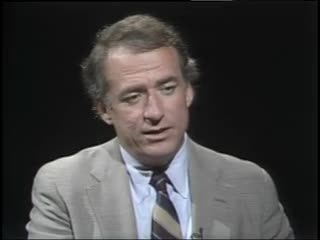
Description: Interview with Robert Kiley as Boston mayoral candidate. Formerly deputy mayor, MBTA manager, CIA bureaucrat. Makes fighting racism a priority.
Collection: Ten O'Clock News
Date Created: 09/16/1983
Description: Robert Spillane (Superintendent, Boston Public Schools) speaks to an audience in the chambers of the Boston School Committee. He is introduced by Jean Sullivan McKeigue (President, Boston School Committee), who notes that the School Committee will vote on March 5 about whether to keep Spillane in the post of Superintendent. Spillane addresses the issues of school desegregation and school violence. Spillane says past students in Boston Public Schools had been denied a good education due to segregated schools and cynicism among educators. Spillane talks about the continued involvement of Arthur Garrity (federal judge) in the supervision of the Boston Public Schools. Spillane says that the Boston School Department must begin to take responsibility for school desegregation. Spillane reminds the audience that racial discrimination will not be tolerated in the Boston Public School system; that the climate in the schools must be improved. Spillane stresses the importance of faculty integration. Spillane talks about school discipline and the fair implementation of the disciplinary code. Spillane says that a monitoring process will assure that minority students are no longer singled out for disciplinary action. Spillane promises to establish a task force to investigate school violence. Spillane says that school desegregation will have been a failure if quality education cannot be assured. Spillane also talks about additional programs for students, teacher training, teacher evaluation and community involvement in the schools. John O'Bryant (Boston School Committee) is interviewed by the media after the speech. O'Bryant says that Spillane has addressed school desegregation in a courageous manner; that he will vote for Spillane on March 5.
1:00:04: Press and members of the community are gathered in the Boston School Committee chambers. Jean Sullivan McKeigue (President, Boston School Committee) enters the room and announces that the vote on the office of school superintendent will take place on March 5. McKeigue introduces Robert Spillane (Superintendent, Boston Public Schools). Spillane enters the room and sits down. Spillane thanks McKeigue. He acknowledges the fact that the School Committee will be voting on whether to continue his superintendency. Spillane addresses the need for community involvement in Boston schools. Spillane says that he started as superintendent seven months ago; that he was aware of the social, fiscal and educational problems faced by Boston schools; that he has tried to provide constructive leadership. Spillane says that the schools are working with reduced resources; that he is trying to address the educational and social needs of nearly 60,000 students. Spillane refers to school desegregation across the nation. He says that Boston public school students had been denied a good education due to segregated schools and a cynicism among educators. Spillane says that he would like to address two problems today: school desegregation and school violence. Spillane talks about Judge Arthur Garrity's efforts to produce agreement among the parties in the Boston school desegregation case (Morgan v. Hennigan). He says that these agreements aim to secure the advances made by eight years of school desegregation; that these agreements would form the basis of a final set of court orders; that Garrity would cease to supervise the schools after these consent decrees were put in place. Spillane says that the consent decrees provide an opportunity to assess the progress made in school desegregation. Spillane reviews the state of the Boston Public School System before desegregation. Spillane says that he would like to eliminate racial inequality while improving educational quality. Spillane says that he would like to institute a long-range plan for the schools; that the plan would be presented to Garrity through the consent decree process. Spillane says that Boston schools must take responsibility for school desegregation; that equal educational opportunities must exist for all students; that the staff must be integrated as well as the students. Spillane says that the schools require strong leadership, a clear curriculum, conscientious teaching and a safe school climate. Spillane says that students must be prepared for higher education or the job market; that schools must work with parents to improve education. Spillane says that racial discrimination cannot be tolerated in and out of school; that he will not tolerate those who say that some children cannot learn. Spillane says that teachers must work hard to educate all children. Spillane says that he supports the integration of school faculty; that school staff must represent a cross-section of American society; that minority staff have been denied access to jobs in the past. Spillane says that African Americans and other minorities will be represented in key positions in the school administration. 1:10:44: Spillane says that youth violence is a problem in Boston's schools and neighborhoods. Spillane says that order must be kept in the schools; that alternative programs must be provided for all students in need of them. Spillane says that violence can stem from a lack of success in school; that school staff must help students to learn and achieve as best they can. Spillane says that fair and equitable disciplinary action must be assured; that minority students may have been singled out for disciplinary action in the past. Spillane says that he will set up a process to monitor disciplinary action and insure fair implementation of the disciplinary code. Spillane says that he will establish a task force to investigate school violence; that the task force can make recommendations on how to counter school violence. Spillane notes that students who are not taught to read and write are victims of another kind of violence; that some students are not encouraged to learn; that all students must be prepared to function as active and contributing members of society. Spillane says that desegregation will be rendered ineffective if quality education is not assured; that urban schools can make a difference in the lives of their students. Visual: Shot of a young African American boy who is fidgeting in the back of the room. Spillane says that teacher training is important. V: Jump cut in videotape. Spillane talks about alternative programs for students with special needs. V: Jump cut in videotape. Shots of audience from Spillane's perspective. Spillane says that a fair process of teacher evaluation will be implemented; that assistance and training must be given to teachers; that superior performance should be recognized and inferior performance should be addressed. V: Shot from the back of the room of Spillane addressing the audience. Spillane talks about the need for high academic standards. V: Jump cut in videotape. Spillane says that he will continue to work with the business community on employment and training programs for students. V: Jump cut in videotape. Spillane talks about the need for good vocational education programs. V: Jump cut in videotape. Spillane addresses the need for strong bilingual education programs. Spillane says that the programs must be assessed to assure that they are meeting the needs of the students. V: Jump cut in videotape. Spillane says that education must be a priority in the city; that civic leaders, parents and school administrators must work together to improve the schools; that all groups concerned about the schools must be listened to. V: Jump cut in videotape. The audience claps for Spillane. V: Jump cut in videotape. John O'Bryant (Boston School Committee) is interviewed by the media. He says that he is impressed with Spillane's growth since his stormy meeting with the school committee on February 8; that he will vote for Spillane. O'Bryant says that Spillane addressed school desegregation in a courageous manner; that very few high-profile officials talk about the beneficial effects of school desegregation in Boston; that few people give Garrity credit for instituting desegregation in Boston schools. O'Bryant says that he is optimistic about Spillane's ability to do the job. The media continues to question O'Bryant.
Collection: Ten O'Clock News
Date Created: 03/02/1982
Description: Hope Kelly reports on charges of racism against the Boston Irish Rowing Club. Larry Otway, President of St. Brendan's Rowing Club of New York said that he was discouraged from bringing African American rowers to compete against the Boston Irish Rowing Club in South Boston. Otway later rescinded his accusations. Mayor Ray Flynn holds a press conference to cite progress in fighting racism across the city. Flynn, William Geary, the Commissioner of the Metropolitan District Commission, City Councilor Bruce Bolling, John Joyce, the President of Boston Irish Rowing Club, and Otway speak at the press conference. Joyce denies any discriminatory practices on the part of the Boston Irish Rowing Club. Andrew Jones and Curtis David of the Greater Roxbury Incorporation Project hold a rival press conference in front of the L Street Bath House in South Boston, spekaing out against racism Jerry Cullitary (South Boston resident) defends South Boston against charges of racism. Interview with Susan Moir, a South Boston resident, about racism in South Boston. People rowing in curraghs on Pleasure Bay.
1:00:00: Visual: Footage of Andrew Jones (Greater Roxbury Incorporation Project) and Curtis Davis (Greater Roxbury Incorporation Project) at a press conference in front of the L Street Bathhouse in South Boston. Jones reads a prepared statement. The statement reads that Ray Flynn (Mayor of Boston) should not invite New York residents to Boston; that African Americans from New York and Boston are not welcome in Flynn's neighborhood. Footage of Flynn at a press conference. Flynn says that acts of discrimination in the city will not be tolerated. Shots of Davis and Jones at their press conference; of Bruce Bolling (Boston City Council) speaking at Flynn's press conference. Footage of Jones saying that African Americans were stoned when they tried to visit Carson Beach in 1974. Footage of William Geary (Commissioner, Metropolitan District Commission) at Flynn's press conference. Geary says that Carson Beach is open to all citizens. Shots of Flynn speaking at his press conference. White and African American city officials stand behind him. Hope Kelly says that Flynn's press conference included a full array of testimony about the city's progress in fighting racism; that it is rare for African American community leaders to hold press conferences in South Boston. V: Shot of the press conference in front of the L Street Bathhouse. The sign over the entrance to the bathhouse reads, "James Michael Curley Recreation Center." A crowd of white residents and media stand in front of the entrance. Shot of a white man standing at the entrance of the bathhouse. Footage of Jones saying that Flynn is doing nothing to combat racism in his own neighborhood. Footage of Flynn saying that a number of minority youngsters have participated in events in South Boston. Footage of John Joyce (President, Boston Irish Rowing Club) saying that the rowing club does not discriminate; that their activities are open to all. Kelly reports that Joyce directs a group of rowers who row on Pleasure Bay in curraghs; that curraghs are boats which are native to Ireland. Kelly notes that the club competes against other curragh clubs; that the club will host a New York curragh club on Sunday. V: Shot of Joyce in a curragh; of rowers in curraghs on Pleasure Bay; of white male members of the club on shore; of a white male getting into a boat with two other white rowers. Shots of curragh races. Kelly reports that Larry Otway (President, St. Brendan Rowing Club of New York) filed a complaint against the Boston club; that the Otway contends that Joyce told the New York club not to come to Boston with African American rowers. V: Shot of Joyce at Flynn's press conference. Kelly notes that Joyce apologized; that Otway has now exonerated Joyce. V: Footage of Otway at Flynn's press conference. Otway says that Joyce is not a racist; that Joyce has always welcomed all of the members of the New York Club; that Joyce has been mistakenly targeted as a racist. Kelly reports that some people agree that the rowing club has been unfairly targeted as racist. Footage of Jerry Cullitary (L Street bather) saying that the residents of South Boston are hard-working, working-class people; that racism is more of a problem in the white suburbs than it is in South Boston. Kelly reports that South Boston has become synonymous with racism. V: Shot of a front page headline in the Boston Herald. The headline reads, "Southie rowing club beached by racial uproar." Footage of a white man addressing Jones and Davis at the press conference at the bathhouse. The man says that "good news in South Boston is no news; that bad news is big news." Davis says that he has not heard anyone utter a racial slur at the press conference. The man says that he would like Davis and Boyce to talk about "good news" in South Boston. Kelly says that the press conferences pointed up the stereotypes which still exist on both sides of the race issue in Boston; that the "sunny side-up" tone of Flynn's press conference only reinforced skepticism about the issue. V: Shot of Flynn leaving his press conference. Hope Kelly stands in the room where Flynn's press conference was held. Kelly said that she wanted to ask Flynn if Carson Beach was presently open to everyone; that Flynn did not answer the question. V: Footage of Susan Moir (white South Boston resident) in South Boston. Moir says that her son is white; that he gets insulted at Carson Beach because he has dark skin. Moir adds that she has brought African American children to the beach with her; that the children have been hassled by white beachgoers. Moyer says that non-white people cannot use the beach.
Collection: Ten O'Clock News
Date Created: 05/22/1987
Description: Footage of the exterior of Roxbury High School on Greenville Street and footage of students in an English class at Roxbury High School. Pam Bullard interviews Roxbury High School students Domingo Rivera, Ramon Alicea, Crystal Roach, Mark Benjamin, and Chiman Lee about their experiences at Roxbury High School. The students talk about academic programs at the school, their college plans, the atmosphere at the school, and extracurricular activities and sports programs at the school. All of the students speak highly of Charles Ray (Headmaster, Roxbury High School). Footage of Ray greeting students in the hall as they change classes.
1:00:07: Visual: Shots of the exterior of Roxbury High School on Greenville Street. Shots of the plaster statues at the entrance of the school. One of the statues has a cigarette stuck in its mouth. A male student enters the school. Shots of the houses on Greenville Street. 1:02:24: V: African American and white students sit in a classroom at Roxbury High School. A white female teacher talks to them about a book. She asks one of the students to read a paragraph. An African American male student reads from the book. The teacher asks the students questions about the passsage from the book. Shots of the students in the classroom. The students look at their books. The teacher and the students continue to discuss the book. Shots of the students seated at their desks. 1:06:50: V: Pam Bullard interviews a group of Roxbury High School students in a classroom. The students tell Bullard their names: Domingo Rivera, Ramon Alicea, Crystal Roach and Mark Benjamin. Bullard asks the students questions about Roxbury High School. Roach says that she is an the college program and has an internship at State Street Bank. Roach talks about her internship at the bank. Roach says that she would like to go to college and hopes for a scholarship. Alicea says that he is in the college program and is involved in the Upward Bound Program. Alicea talks about the Upward Bound Program; he says that the Upward Bound Program is helping him prepare his college applications. Alicea says that he plays for the football team. Rivera says that he is also in the college program and is involved in the Upward Bound Program. Rivera says that he has taken an English class through the Upward Bound Program. Rivera says that he does not know where he wants to go to college. Benjamin says that he is also in the college program. He says that he wants to major in sciences when he goes to college. Bullard asks Benjamin if he likes the school. Benjamin says that he likes the school. He adds that the majority of the students get along well at the school. 1:11:41: V: Bullard interviews Chiman Lee (Roxbury High School student); Lee has joined the group in the classroom. Lee says that he has recently moved to Boston and has been at Roxbury High School for six months. Lee says that he likes the teachers and students at the school. Lee adds that he is enrolled in the bilingual program. Bullard asks Roach what she likes about the school. Roach says that the teachers are helpful; that everyone gets along well. Roach says that she attended Charlestown High School for one week; that she transferred to Roxbury High School because she did not like Charlestown High School. Roach says that she likes Charles Ray (Headmaster, Roxbury High School) and the teachers at Roxbury High School. Roach says that Ray is helpful and friendly. Benjamin agrees that Ray is concerned about the students at the school. Benjamin talks about how much he likes going to school at Roxbury High School. He adds that the teachers are eager to help the students with their problems. Bullard asks about extracurricular activities at the school. Roach talks about the sports program and the annual Fall Festival at the school. Benjamin says that the sports teams would be better if all of the students participated. He talks about the football and basketball teams. Benjamin says that basketball is the most popular sport. Bullard asks Rivera about the baseball team. Rivera says that the baseball field is not very close to the school. He adds that it is inconvenient for some students to get to the field after school. Alicea says that the football team will be good this year. Bullard closes the interview. 1:17:38: V: The WGBH camera crew films Charles Ray as he greets students in the hallway of Roxbury High School. Ray greets most of the students by name. Some of the students wave and strike poses for the camera. Many students pass Ray in the hallway as they change classrooms. Some students stop to retrieve books from lockers in the hallway. Ray speaks to a teacher about the bilingual program at the school. Ray jokes with the students and urges them to go to their classrooms.
Collection: Ten O'Clock News
Date Created: 09/13/1978
Description: Racially integrated, open classrooms at the Joseph Lee School in Dorchester. The teachers are primarily white. The classes are racially integrated; the majority of students are African American. Pam Bullard interviews Frances Kelley (Principal, Joseph Lee School) about school attendance, the faculty and the atmosphere at the school. Kelley is optimistic about the coming year. Bullard interviews two Roxbury High School students about their experiences at the school. Both are enthusiastic about the school, report little racial tension among students, and comment on how helpful headmaster Charles Ray is to the students.
0:59:58: Visual: Racially integrated classes enter the Joseph Lee School in Dorchester. The doors close. A few latecomers knock on the door to be let in. 1:02:01: V: Frances Kelley (Principal, Joseph Lee School) talks to a teacher about attendance. A white teacher helps students in an open classroom. The class is integrated, although a majority of the students are African American. The teacher helps the students learn how to print their names. The students color in pictures on their worksheets. Shot of a white student and an African American student sitting together at a table. 1:08:19: V: Shot of open classrooms at Lee School. Several classes are conducted at once. A teacher tells her students to stand up behind their chairs. The students stand and push their chairs in. Another white teacher teaches her class to read the names of colors. The class is racially integrated. 1:12:20: V: Pam Bullard sets up an interview with Frances Kelley (Principal, Joseph Lee School) in the open classrooms. Kelley admits that a certain percentage of students have not returned to the Lee School this year; that her staff will begin contacting their parents. Kelley says that parents are supportive of the programs at the Lee School; that some are upset because bus routes were consolidated this year; that there is some confusion over bus stops. Bullard comments that the Lee School lost some faculty this year. Kelley says that her faculty likes the school; that some are worried about losing their jobs due to the shrinking student population. Kelley says that morale tends to be low in June; that morale is higher in September when teachers return to school. Kelley says that the faculty at the Lee School is young, enthusiastic, and innovative; that the children like the school and its programs. 1:15:28: V: Bullard sets up an interview with a non-white female student (Betty) and a white male student (Paul) about their experiences at Roxbury High School. Both students opted to return to Roxbury High School after attending the previous year. Betty says that she likes the school because it is close to where she lives and it has good programs; that there are no problems. Paul says that he returned to Roxbury High School to play football; that he gets along well with the teachers and had no problems during the previous year; that he does not mind taking a bus to school. Betty says that there is no tension among the students at the school. Paul agrees that there are no racial problems. Betty says that it is a small school; that the teachers will give individual attention to the students. Paul says that everyone at the school seems to get along; that the teachers are willing to help the students with problems they might have; that Charles Ray (Headmaster, Roxbury High School) is a good principal. Bullard talks to the students informally while the crew takes cutaway shots. Betty says that she likes the programs at the high school; that there is a new chemistry lab; that students have access to photography equipment. Paul says that he moved to Boston from California last year; that people had told him not to attend Roxbury High School; that he liked the school after visiting it for the first time. Bullard comments that Roxbury High School does not deserve its bad reputation.
Collection: Ten O'Clock News
Date Created: 09/09/1976
Description: Marcus Jones reports that artist Robert Guillemin, also known as "Sidewalk Sam," is working with elementary-school students to create a mural to celebrate Boston's ethnic diversity. The mural will be two stories tall, made up of 30,000 personal drawings by children and student, and it will hang in the Grand Concourse of South Station. Guillemin talks to students about the mural and works with them in the classroom. Students sit together as they work on drawings for the mural. Jones interviews a fourth grade student from Hurley School, who talks about her drawing for the mural. Mayor Ray Flynn has endorsed the mural project, and he visits the classroom and talks to individual students about their drawings. Interview with Flynn, who says that the mural promotes peace and unity in the city. Jones reports that volunteers at Roxbury Community College are putting the mural together, and it will be unveiled to the public tomorrow. Following the edited story is additional b-roll footage of Guillemin and students working on the mural and footage of volunteers at Roxbury Community College putting together the mural.
Collection: Ten O'Clock News
Date Created: 05/14/1990
Description: Meg Vaillancourt reports that Democratic gubernatorial candidate John Silber held a press conference on a Roxbury street today, trying to explain his comments during the previous evening's gubernatorial debate, in which he referred to the residents of Roxbury, Dorchester, and Mattapan as "a group of drug addicts." Silber apologizes for hurting anyone's feelings. A group of African American community leaders stand behind him. Vaillancourt notes that Silber blamed the media for not attending his speech on crime control on the steps of the Massachusetts State House. Vaillancourt reports that the press conference changed tone when Silber got into a hostile argument with Roxbury resident Priscilla Flint Russell. Interviews with Roxbury residents about John Silber. City Councilor Bruce Bolling, State Rep. Gloria Fox, and other Roxbury community leaders held a press conference today at which they condemned Silber for his comments. Following the edited story is additional footage of the Roxbury community leader press conference. Segments of Bruce Bolling's statement. Additional footage of John Silber's press conference. Segments for City Councilor Charles Yanceys' statement at the Roxbury community leader press conference. This edition of the Ten O'Clock News also included the following item: Marcus Jones reports on negative media coverage of the Roxbury community
1:00:05: Visual: Footage of John Silber (Democratic candidate for governor of Massachusetts) speaking at a press conference on the corner of Humboldt Avenue and Homestead Street in Roxbury. Bill Owens (State Senator) and other African American community leaders stand behind Silber. Silber says that there are upstanding, responsible citizens who fear for their lives in the Roxbury community. Silber says that he did not indict them in recent comments. Meg Vaillancourt reports that Silber held a press conference on a Roxbury street today. V: Shots of the press conference. Silber is surrounded by members of the media. A camera crew stands on top of a van to film Silber. Vaillancourt reports that Silber tried to explain his comments during a debate on the previous evening. Vaillancourt notes that a reporter at the debate asked Silber why he has not held any campaign events in the Roxbury, Dorchester, or Mattapan areas of Boston, which is also known as Area B. V: Footage from a gubernatorial campaign debate on September 11, 1990. Silber says that it is useless to give a speech about crime control to "a group of drug addicts." Silber says that it is better for him to give a speech on the steps of the Massachusetts State House. Vaillancourt reports that Silber tried to clarify his remarks today. V: Footage of Silber at the Roxbury press conference. Silber says that he regrets the confusion; that he did not mean to hurt anyone's feelings. Vaillancourt notes that Silber's comments were not all apologetic. V: Shot of a member of a TV news crew at the press conference. Footage of Silber at the Roxbury press conference. Silber tells a reporter that he was not making an apology to the community. Vaillancourt reports that Silber held his press conference in the area where Darlene Tiffany Moore (Roxbury resident and murder victim) was killed two years ago. V: Shot of a 1988 Boston Herald newspaper article featuring a photo of Moore. Vaillancourt reports that Silber chose the spot for the press conference in order to remind people of his crime control proposals. Vaillancourt notes that Silber also tried to blame the media. V: Footage of Silber at the press conference. Silber says that this is not the place for a speech about law and order. Silber says that he will make the speech at this press conference. Silber says that he recently gave a speech on crime control on the steps of the State House; that no one attended. Vaillancourt reports that there are six days left before the gubernatorial primary election. Vaillancourt notes that Silber received a lot of media attention today. V: Shots of members of the media standing on top of a van at the press conference; of reporters surrounding Silber at the press conference. Vaillancourt reports that the press conference changed its tone when a Roxbury resident told Silber that he needs to acknowledge drugs as an equal opportunity problem. V: Footage of Silber and the media at the press conference. Priscilla Flint Russell (Roxbury resident) addresses Silber. She asks him how the drugs and guns are getting into Roxbury. Russell says that Roxbury teenagers are not bringing in the drugs and guns. Silber says that the high-level drug dealers must be prosecuted by the federal courts. Russell asks who will be prosecuted. Silber tells Russell to ask Francis Bellotti (Democratic candidate for governor of Massachusetts). Russell says that she wants an answer from Silber. Silber says that he is not a prosecuting attorney. Russell stands and yells at Silber. Russell points out that Silber is the one who came to the neighborhood to talk about drugs; that she is not a drug addict. Silber turns away from the microphone, saying that he has no time for "fanaticism." Russell tells Silber to get out of the neighborhood. Vaillancourt reports that neighborhood residents talked about Silber's comments after the press conference. V: Footage of a female neighborhood resident saying that Silber showed his ignorance by speaking of her community in that way. Footage of an African American man saying that he got out of the neighborhood and went to college. The man says that he is not offended by Silber's statements. Footage of an African American woman saying that Silber's comments were taken out of context; that people are afraid to walk the streets. Vaillancourt reports that Roxbury community leaders held a press conference today; that they refused to speak Silber's name. V: Shot of Bruce Bolling (Boston City Council) speaking at the press conference. Footage of Gloria Fox (State Representative) speaking at the press conference. Fox says that Silber is a "wicked racist individual" who deserves no name. Fox says that Silber perpetuates the racist atmosphere which prevailed during the Carol Stuart murder case. Don Muhammad (Roxbury community leader) is among the leaders at the press conference. Vaillancourt stands on a street in Roxbury. Vaillancourt reports that Silber took a lot of heat from the Roxbury community today. Vaillancourt notes that the Roxbury community has not received much attention from Bellotti or from the Republican gubernatorial candidates. Vaillancourt reports that the Roxbury community felt snubbed by the 1988 presidential campaign of Michael Dukakis (governor of Massachusetts) because the campaign made no major stops in Roxbury. V: Footage of an African American man saying that politicians need to be more visible in Roxbury when there is no election going on. Footage of another African American man saying that he expects little from the next governor of Massachusetts; that the present governor has done little for the Roxbury community. Shot of two white police officers carefully watching an African American boy as he walks down the street.
Collection: Ten O'Clock News
Date Created: 09/12/1990
Description: South Boston High. Walking shot down corridor and dark stairs. In library, a group of black and white students discuss their experience in school since desegregation started four years ago. They attest to better educational programs and improved racial harmony now. “No fights.” They think police presence in the early years worsened tension.
Collection: Ten O'Clock News
Date Created: 06/08/1978
Description: Empty classroom at South Boston High School. Mr. Healey's science class, mostly black students, sparsely attended. Geology principles written on blackboard and other science posters on classroom walls. Boy writes in spiral notebook. Students in the hallway. Boys in mechanical shop class. Black and white boys play basketball in gym. Black teacher works with black student on vocabulary lesson. Students do class work at desks.
Collection: Ten O'Clock News
Date Created: 06/08/1978