Description:
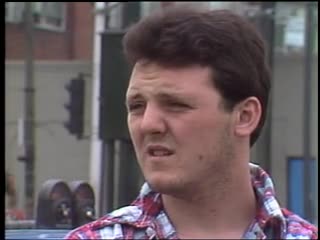
Marcus Jones reports that a group of African American teenagers have created an anti-violence tele-play called "A Second Chance," which will air on the Boston Neighborhood Network. Jones notes that the teenagers spent the summer rehearsing, writing and recording the video, with encouragement from counselors from the Dorchester Counseling Center. Jones reports that the 30-minute video takes a stand against drugs and violence. Jones' report includes footage from an interview with Maxine Rawlins (Dorchester Counseling Center). Rawlins says that parents, teachers, and peer counselors can use the video in discussions about violence. Jones' report also includes interviews with teenagers involved in making the video. The teenagers talk about the video and their efforts to turn others away from violence. Jones notes that the lives of many of these teenagers have been touched by violence. Jones' report includes footage from the video, footage of a teenager performing a rap song, and footage from the funeral of teenager Kingsley Allen who was killed at Boston High School.
1:00:21: Visual: Footage from the Boston Neighborhood Network of a video made by African American teenagers from the Dorchester Counseling Center. The video is called A Second Chance. Marcus Jones reports that a group of African American teenagers have created a tele-play called A Second Chance. Jones notes that the teenagers are trying to send a message to other teenagers about stopping violence. V: Footage of Tanachee Babbitt (student) being interviewed. Babbitt says that kids need to stop killing other kids. Babbitt says that the violence needs to stop or there will be no one left. Footage of a group of African American teenagers being interviewed. One teenage boy says that anyone can have a second chance. A teenage girl says that people should not waste those second chances. Shots of the teenagers. Jones reports that the teenagers were encouraged by counselors at the Dorchester Counseling Center; that the teenagers spent the summer writing, rehearsing, and recording the video. Jones notes that the video was recorded at the Roxbury studio of the Boston Neighborhood Network. V: Footage of one of the teenagers performing a rap song. Jones reports that the video will premiere on the Boston Neighborhood Network tomorrow; that the video speaks is 30 minutes long; that it speaks out against drugs and violence. Jones reports that the cast members do not think that the video alone will stem the violence in their community. V: Footage of Babbitt sitting at a table with two teenage boys. Babbitt says that it is easy to send a message while making people laugh at the same time. Footage of Maxine Rawlins (Dorchester Counseling Center) being interviewed. Rawlins says that the video will not make people suddenly turn away from drugs and violence. Rawlins says that she hopes that the video will make people think twice before engaging in these activities. Footage of a teenage boy sitting with Babbitt at a table. The boy says half-seriously that he and the others can make a difference. Babbitt laughs. Shot of Jones. Jones reports that each of these teenagers has been touched by violence; that each has experienced the death of a friend or family member. Jones reports that the father of one of the boys was killed in a street robbery; that a funeral was held yesterday for Kingsley Allen (Babbitt's brother). V: Shots of one of the teenage boys; of the funeral service for Allen. Jones reports that Allen was stabbed to death by another teenager at Boston High School. V: Footage of Babbitt being interviewed. Babbitt says that her brother was "a bad boy." Babbitt says that she talked to her brother about the video project; that her brother had talked to her about trying to end his violent lifestyle. Babbitt says that her brother was killed two days after speaking to her. Footage of Rawlins saying that she would like to make a guide to go along with the video; that parents, teachers and peer counselors can use the video in discussions about violence. Footage from the video, A Second Chance.
1:00:21: Visual: Footage from the Boston Neighborhood Network of a video made by African American teenagers from the Dorchester Counseling Center. The video is called A Second Chance. Marcus Jones reports that a group of African American teenagers have created a tele-play called A Second Chance. Jones notes that the teenagers are trying to send a message to other teenagers about stopping violence. V: Footage of Tanachee Babbitt (student) being interviewed. Babbitt says that kids need to stop killing other kids. Babbitt says that the violence needs to stop or there will be no one left. Footage of a group of African American teenagers being interviewed. One teenage boy says that anyone can have a second chance. A teenage girl says that people should not waste those second chances. Shots of the teenagers. Jones reports that the teenagers were encouraged by counselors at the Dorchester Counseling Center; that the teenagers spent the summer writing, rehearsing, and recording the video. Jones notes that the video was recorded at the Roxbury studio of the Boston Neighborhood Network. V: Footage of one of the teenagers performing a rap song. Jones reports that the video will premiere on the Boston Neighborhood Network tomorrow; that the video speaks is 30 minutes long; that it speaks out against drugs and violence. Jones reports that the cast members do not think that the video alone will stem the violence in their community. V: Footage of Babbitt sitting at a table with two teenage boys. Babbitt says that it is easy to send a message while making people laugh at the same time. Footage of Maxine Rawlins (Dorchester Counseling Center) being interviewed. Rawlins says that the video will not make people suddenly turn away from drugs and violence. Rawlins says that she hopes that the video will make people think twice before engaging in these activities. Footage of a teenage boy sitting with Babbitt at a table. The boy says half-seriously that he and the others can make a difference. Babbitt laughs. Shot of Jones. Jones reports that each of these teenagers has been touched by violence; that each has experienced the death of a friend or family member. Jones reports that the father of one of the boys was killed in a street robbery; that a funeral was held yesterday for Kingsley Allen (Babbitt's brother). V: Shots of one of the teenage boys; of the funeral service for Allen. Jones reports that Allen was stabbed to death by another teenager at Boston High School. V: Footage of Babbitt being interviewed. Babbitt says that her brother was "a bad boy." Babbitt says that she talked to her brother about the video project; that her brother had talked to her about trying to end his violent lifestyle. Babbitt says that her brother was killed two days after speaking to her. Footage of Rawlins saying that she would like to make a guide to go along with the video; that parents, teachers and peer counselors can use the video in discussions about violence. Footage from the video, A Second Chance.
Collection:
Ten O'Clock News
Date Created:
12/18/1990