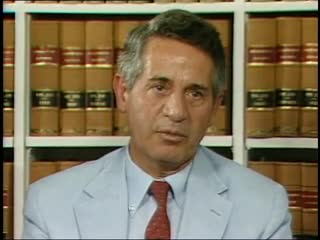
Description: Meg Vaillancourt reports that Jesse Jackson has challenged Michael Dukakis to come out with a budget for his proposed domestic programs, during a campaign debate. Dukakis has refused to release a budget so far. Interview with Issues Dirextor for the Dukakis campaign, Christopher Edley, who says that Dukakis is an experienced chief executive and that he does not need to release a budget during a presidential campaign. Vaillancourt reviews Dukakis's proposals on day care, affordable housing, and drugs. She notes that he has not talked about a budget for these proposals. Interview with community activist and Jackson supporter Mel King, who also supports Jackson in his demand for Dukakis's budget. Dukakis has talked about funding for his education proposals and for his "Rebuild America" proposal. Vaillancourt reviews Dukakis' budget priorities and notes that he would fund increases in domestic funding through cuts in the defense budget. Vaillancourt reviews the events of Dukakis's first term as Governor of Massachusetts. She notes that a massive state debt forced Dukakis to raise taxes and cut spending.
1:00:02: Visual: Footage of Jesse Jackson (Democratic US Presidential candidate) and Michael Dukakis (Democratic US Presidential candidate) at Steel Valley Debate in Pennsylvania. Jackson says that "Reaganomics" must be reversed. The audience applauds. Meg Vaillancourt reports that Jackson has challenged Dukakis to come up with a budget detailing which domestic programs need support and how Dukakis would pay for them. Vaillancourt notes that Dukakis has stuck to his own script; that he has refused to enter into a budget battle with Jackson. V: Footage of Dukakis at the debate. Dukakis says that partnerships between Washington DC, management, and labor need to be built. Vaillancourt reports that public-private partnerships are the key to Dukakis's domestic programs. V: On-screen visuals and text detail Dukakis's positions on day care, affordable housing, and drugs. Vaillancourt reports that Dukakis has called for "'a national partnership to create affordable day care for all'"; that Dukakis's position paper carries no price tag for his day care program. Vaillancourt reports that Dukakis supports a reallocation of money to build more affordable housing; that Dukakis's position paper carries no price tag for the affordable housing program. Vaillancourt reports that Dukakis would fight drugs by restoring funds to the Coast Guard and to other enforcement measures; that Dukakis's position paper carries no price tag for his anti-drug program. V: Shot of Jackson at the campaign debate. Footage of Christopher Edley (Issues Director for the Dukakis campaign) being interviewed by Vaillancourt. Edley says that Dukakis is an experienced chief executive; that Dukakis has put together ten balanced budgets in his tenure as Governor of Massachusetts. Edley says that an electoral campaign is not the time to put together a budget. Footage of Mel King (Jackson supporter) saying that the voters need to know about Dukakis's priorities; that voters need to know where Dukakis will find the money to implement his programs. Vaillancourt notes that Dukakis has talked about the budgets for two of his programs. V: Shots of Dukakis and Jackson at the campaign debate. On-screen text and visuals detail Dukakis's positions on job creation and education. Vaillancourt reports that Dukakis's "'Rebuild America'" program would "invest $500 million from federal government to regional development." Vaillancourt reports that Dukakis supports increasing the education budget by $250 million in his first year. Vaillancourt reports that Jackson would raise taxes on corporations and the wealthy to pay for his domestic programs; that Dukakis would like to generate additional money by cracking down on tax cheats and by making the government more efficient. V: Shots of Dukakis and Jackson at the campaign debate. On-screen text and visuals detail Dukakis's budget priorities. Vaillancourt reports that Dukakis will "finance all new domestic spending through cuts in Star Wars." V: Shot of King being interviewed by Vaillancourt. Footage of Dukakis speaking at a press conference in 1974. Vaillancourt reports that Dukakis promised no new taxes in his first campaign for governor of Massachusetts in 1974; that the massive state debt forced him to raise taxes and to cut spending. V: Footage of King being interviewed by Vaillancourt. King says that Dukakis has not learned the lesson of 1974; that Dukakis has not honored his commitments to meet the needs of people on welfare. King says that voters need to know where the money will come from for his programs. Vaillancourt notes that Dukakis probably does not want to quote specifics in order to avoid becoming the captive of special interest groups. V: Shot of Dukakis at the campaign debate. Footage from C-Span of Walter Mondale (1984 Democratic US Presidential candidate). Vaillancourt reports that Dukakis has avoided giving Jackson specifics outside of the areas of job creation and welfare reform; that Dukakis has left himself room to maneuver in the general election.
Collection: Ten O'Clock News
Date Created: 04/25/1988
Description: Footage of the Bunker Hill Monument against a blue sky. Children play on the surrounding grass slope. Pans to adjacent columned building with US and Massachusetts State flags. Footage of the USS Constitution ("Old Ironsides") in Charlestown Navy Yard. “Welcome aboard” sign; masts without sails; shipmates with striped shirts. Early US flag with 15 stars hangs from bowsprit. Visitors ascend gangplank. National Park Service booth with attendant. Boston Naval Shipyard plaque. Aft view of ship.
Collection: Ten O'Clock News
Date Created: 05/02/1976
Description: Meg Vaillancourt reports on discriminatory practices by the Boston Housing Authority (BHA). African American families are passed over on the waiting list for apartments in South Boston housing projects. The Department of Housing and Urban Development (HUD) has ordered the BHA to stop this policy. Interview with Doris Bunte, director of the BHA. Bunte says that the BHA is not intentionally engaged in discrimination. Bunte adds that she concentrated on maintenance and repair of units when she took office and has now turned her attention to the fair housing issue. Bunte notes that she is concerned about the safety of non-white families in South Boston housing projects. Vaillancourt reviews previous efforts to desegregate public housing projects in Charlestown. She notes that the BHA must change its policy despite public resistance in South Boston.
1:00:11: Visual: Footage of Doris Bunte (Boston Housing Authority) in her office. Bunte says that separate facilities are unequal facilities. Meg Vaillancourt reports that the Boston Housing Authority (BHA) has practiced discrimination against African American families; that white families are given preference over African American families for apartments in South Boston. V: Shot of a white woman and white children outside of a housing project building in South Boston; of a white woman speaking to a reporter from a window of a project apartment in South Boston. Footage of Bunte being interviewed by Vaillancourt. Bunte says that a conscious decision was made "at some point" not to send minority families to projects in South Boston. Vaillancourt asks why Bunte did not change the BHA policy. Bunte says that the BHA is moving slowly to change the policy; that the safety of non-white families in South Boston is a concern. Bunte says that the BHA has been involved in outreach and meetings to move the policy along. Vaillancourt reports that the same argument was used by Bunte's predecessors at the BHA; that white families still have more housing options than African American families in South Boston. V: Shots of a housing project; of white residents sitting outside of a housing project in South Boston; of parochial school students walking toward a housing project; of a white boy scrambling under a fence near a housing project. Vaillancourt reports that some white families in South Boston are living in apartments which are too large for their family size; that African American families in other parts of the city are living in apartments which are too small; that the BHA did not offer available apartments in white housing developments to African American families. V: Shots of an African American girl standing outside of a housing project building; of African American children playing outside of a housing project. Vaillancourt reports that the Department of Housing and Urban Development (HUD) has called the BHA policy discriminatory; that the BHA must change its policy. V: Footage of Bunte saying that the BHA does not plan to discriminate against anyone; that the BHA will not steer anyone to a particular project. Vaillancourt reports that HUD has ordered the BHA to stop discriminating against non-white families; that the BHA has not been asked to integrate its housing projects. V: Shots of a white woman and children outside of a housing project building; of a young white boy running around outside of a housing project; of a group of African American schoolchildren walking on a sidewalk. Vaillancourt reports that HUD has ordered the BHA to offer available apartments in South Boston to African American families. V: Footage of a white female resident of a South Boston project. The woman saying that public housing projects decline when African American families move in. Footage of a white female project resident saying that gang fights will erupt if African American families move into the South Boston projects. Shot of a white woman walking in the snow with two white children in Charlestown. Shots of a public housing project in Charlestown. Vaillancourt reports that African American families were integrated into an all-white public housing project in Charlestown; that Harry Spence (former BHA director) organized the integration of the Charlestown projects. Vaillancourt notes that Spence carefully selected the families to move into the Charlestown projects; that the families did not include teenage boys who were likely to become involved in turf wars with other residents. V: Shots of Spence talking to a reporter; of racially diverse residents outside of a project in Charlestown. Shot of a white woman and child looking out of a window of a project apartment. Vaillancourt reports that HUD will not allow the kind of selection engaged in by Spence. V: Footage of Bunte saying that it is discriminatory to pass over families with teenagers when filling apartment in white housing projects. Vaillancourt notes that Bunte has not moved any African American families into public housing projects in South Boston. V: Footage of Bunte saying that she concentrated on making repairs to vacant units when she took over the BHA; that families are now living in units which were vacant. Bunte says that she also concentrated on maintenance; that only 20% of units were in compliance with the sanitary code in 1984. Bunte adds that 88% of units are now in compliance. Bunte says that the BHA did not turn its attention to the fair housing issue until 1986. Bunte says that the BHA should have considered integrating South Boston before Charlestown. Shots of vacant apartments strewn with trash; of a broken door in the hallway of a public housing apartment building; of the exterior of a public housing project building; of the snowy grounds surrounding a public housing project. Vaillancourt reports that Spence had planned to integrate the public housing projects in Charlestown, and then to move on to the rest of the city. Vaillancourt notes that Bunte did not follow up on Spence's plan until 1986; that the federal government found a pattern of discrimination before the BHA could remedy its policies. V: Shot of Spence; of a white project resident climbing over a pile of snow outside of a public housing project building; of African American men standing outside of a public housing project building; of children playing in the snow outside of a public housing project building. Vaillancourt notes that the BHA must change its policy in the face of public resistance in South Boston. V: Footage of Bunte saying that fair housing is an important issue; that the BHA will implement a fair policy for all residents.
Collection: Ten O'Clock News
Date Created: 01/15/1988
Description: George Bush and Robert Dole speeches before New Hampshire primaries. Bush explains the importance of foreign affairs and the validity of keeping your word of honor as a nation. He emphasizes fundamentals and his optimism for the United States.
Collection: Ten O'Clock News
Date Created: 02/18/1980
Description: Suffolk County District Attorney Garrett Byrne gives press conference to ask Chief Justice Robert Bonin to remove himself from child sexual abuse case because of involvement in fundraising for defendant.
Collection: Ten O'Clock News
Date Created: 04/06/1978
Description: Christopher Lydon interviews in-studio guests Howie Carr (columnist, The Boston Herald) and Byron Rushing (State Representative) about the murder of Carol Stuart in Mission Hill. Carr talks about criticism received by the Boston Herald for running a brutal photograph of the murder. Rushing and Carr talk about how to solve the problem of violence on the streets. Rushing accuses city officials of making policy "based on frustration." He adds that the government must focus on the root of the problem. Rushing and Carr talk about class and race issues surrounding media response to the murder. Rushing says that education and community development will help to stop violence on the streets.
Collection: Ten O'Clock News
Date Created: 10/25/1989
Description: B-roll footage of Charles Street Jail building models from various angles; footage of snow outside and jail building; Suffolk County Jail exterior and sign shots from various angles. CHARLES STREET JAIL, SUFFOLK COUNTY SHERIFF DENNIS KEARNEY, JUDGE W. ARTHUR GARRITY PRESS CONFERENCE, INTERIOR, EXTERIORS, BARBED WIRE, TRUCKS
Collection: Ten O'Clock News
Date Created: 10/08/1982
Description: Background of CIA recruitment protest trial with Amy Carter and Abbie Hoffman. Footage of protest from year earlier. Court scenes. Interviews with Leonard Weinglass, Abbie Hoffman, Daniel Ellsberg, and Ralph Mcgehee. B-roll follows of interiors of court house, Weinglass talking to Amy Carter, and Amy and Abbie talking.
Collection: Ten O'Clock News
Date Created: 04/07/1987
Description: Third day of jury selection for CIA recruitment protest trial of Amy Carter, Abbie Hoffman, and others. David Boeri comments on the media's intense focus on Amy Carter. Court scenes. After the court lets out without having selected a jury, Abbie Hoffman talks to the press about the importance of this trial in revealing the true nature of the Central Intelligence Agency. He also comments that despite his age, he's remaining active in the causes he believes in.
Collection: Ten O'Clock News
Date Created: 04/08/1987
Description: Students and camera men walk together. Attorney Leonard Weinglass in court argues in defense of students who protested CIA recruitment at University of Massachusetts, Amherst, due to CIA involvement in Central America. Activist Abbie Hoffman nervously reads from a notebook in defense of the students. Prosecutor Diane Fernault argues that the case is about trespassing, not protest. Footage of jury acquitting students; Amy Carter of charges. Brief individual interviews after trial with Hoffman, Fernault and student. Hoffman says, "good luck, Celtics. They'll need it." Reporter David Boeri appears on screen to sign off among crowd of students.
Collection: Ten O'Clock News
Date Created: 04/15/1987