Description: Day in the life of Boston Housing Court, Judge Paul Garrity presiding. Actual disputes between tenants and landlords, contractors, code inspectors. Explanation of legal terminology in each case.
Collection: Ten O'Clock News
Date Created: 06/06/1973
Description: Boston mayoral debate from the 1975 campaign. 1975 mayoral campaign debate in WGBH studio, moderated by Pam Bullard, Ed Baumeister, and Gary Griffith, between Mayor Kevin White, Robert Gibbons, Senator Joseph Timilty, and Norman Oliver. Main topic is busing for school integration. Timilty believes that busing is a waste of resources; Gibbons believes that busing was forced by government and should be stopped. Discussion of budget: White is attacked for his handling of state funds. Timilty claims Boston is on verge of bankruptcy. White claims that he has tried to take politics out of City Hall. There is much bickering between Baumeister and Gibbons. Oliver says that Boston Police Department is not operating in the interest of the black community in the city. Timilty gives closing address, talks about type of city citizens want. Oliver closing address: vows to stand up against racism. Gibbons closing address: create neighborhoods for productive working class. White closing address: proud of his record in eight years as mayor. Talks about trying to balance the city fiscally. Ed Baumeister signs off.
Collection: Evening Compass, The
Date Created: 09/02/1975
Description: Evening Compass special. Press conference at Boston City Hall during the second week of Phase I desegregation of Boston schools. Frank Tivnan (Director of Communications for Mayor Kevin White) introduces the speakers at the press conference. John Coakley (Boston School Department) gives school attendance figures and analyzes trends in attendance. Robert Kiley (Deputy Mayor, City of Boston) reports that sixteen people were arrested in South Boston and Roslindale today. Kiley voices his concern about the number of young people involved in violent incidents. Joseph Jordan (Superintendent, Boston School Department) and Charles Barry (Deputy Superintendent, Boston Police Department) report that a bus was stoned while passing the Old Colony Housing Project in South Boston. Jordan and Barry report that 200 people were gathered outside of the housing project in the afternoon. Jordan is optimistic that the tension in South Boston will abate. The officials take questions from reporters about school attendance, police tactics in South Boston and the safety of bus routes.
3:02:56: Visual: Ed Baumeister reports live from Boston City Hall, at a briefing by Mayor Kevin White's office and the Boston School Department, after a day of violence and arrests stemming from court-ordered busing in Boston. Reporters include Walt Sanders and John Henning. 3:03:25: V: Frank Tivnan (Director of Communications for Mayor Kevin White) thanks the media for the opportunity to keep the public informed, then outlines the agenda and introduces the speakers: John Coakley (Boston School Department); Robert Kiley (Deputy Mayor, City of Boston); Joseph Jordan (Superintendent, Boston Police Department); Charles Barry (Deputy Superintendent, Boston Police Department). 3:04:24: V: Coakley reports that 54,000 students (67.4% of projected enrollment) attended classes in grades 1 - 12. Shots of reporters looking at handout sheets and taking notes. Coakley notes that attendance decreased in South Boston High School, Roxbury High School, Gavin and McCormack middle schools and South Boston elementary schools but increased at other schools. Coakley gives further analysis of attendance numbers and notes some logistical issues to be resolved in the schools. 3:06:51: V: Kiley gives an overview of the day's events: 16 arrests in South Boston and Roslindale, and 2 injuries requiring hospital treatment. Shots of reporters taking notes. Kiley notes an upswing in calls from parents reporting bruises and minor injuries to their children in the schools. He says that the city is working hard to control and deter incidents of violence and is concerned at the number of young adolescents (aged 12-13) involved in violent incidents. 3:09:45: V: Superintendent Jordan reports on arrests in South Boston; he notes a slight reduction in tension among citizens. He voices the police commitment to the safety of students, calls the violence "deplorable" and is optimistic that the situation will abate. 3:12:00: V: Deputy Superintendent Barry reports that one student was injured by a projectile thrown at a bus in an incident in front of the Old Colony Project in South Boston; that the fine weather attracted many people to the streets, including 200 people outside of the project. Shots of reporters in audience. Jordan takes the microphone and reports that 2 youths were arrested in Roslindale. 3:13:56: V: The panelists take question from reporters. Kiley responds to questions about a possible NAACP motion for US Marshals to come to Boston. Barry responds to questions about the presence of police or US Marshals on buses. Coakley responds to questions about the accuracy of the school attendance figures. Kiley and Tivnan respond to questions about a communication lag between the site of the incidents in South Boston and the communications center at City Hall. Jordan responds to questions about the reaction of South Boston residents to a police rule banning assembly of large groups of people; about the incident outside the Old Colony Project; about security along bus routes; about new police tactics in the coming weeks; about maintaining personnel on the streets and the possibility of changing the bus routes. 3:22:35: V: The panelists take more questions from reporters. Coakley responds to questions about changes in school enrollment percentages from the day before. Kiley responds to questions about whether African American students are really safe in South Boston; about communication between the city government and community leaders in the Old Colony Project; about whether authorities learned about the incident at the Old Colony Project from MDC police. Barry responds to questions about a possible increased police presence at the Old Colony Project. Jordan responds to questions about whether the increased police presence in South Boston will keep South Boston parents from sending their children to school. Coakley responds to questions about the accuracy of attendance figures at South Boston High School; about whether it is possible to educate students in the environment at South Boston High School. 3:31:30: V: Tivnan closes by asking, "any other questions, gentlemen?" Reporters rise to leave. Kiley comments to Tivnan that there is a woman in the audience. Recording ends.
Collection: Evening Compass, The
Date Created: 09/13/1974
Description: Press conference at Boston Schools Information Center to sum up week one of Phase II desegregation of Boston schools. Ed Baumeister introduces the Boston School Report with a summary of the day's events. Ron Brinn (Information Coordinator, Mayor's Office) introduces the participants. Peter Meade (Mayor's Office) comments on a successful opening of schools. Marion Fahey (Superintendent, Boston Public Schools) gives a report on school suspensions and comments that the atmosphere in the schools is good. William Reid (Headmaster, South Boston High School) comments on the opening week at South Boston High School. Pat Brady (Detective, Boston Police Department) reads a police report detailing arrests and injuries. Brady reports that there were no major incidents today and that extra police will continue to be deployed. Dr. Louis Perullo (Boston School Department) analyzes school attendance statistics. Perullo compares attendance statistics from the 1975-76 school year to attendance statistics from the 1974-1975 school year. Reporters ask Reid about an altercation at South Boston High School and the effect of community demonstrations on the atmosphere in the schools. Reid says that outside disturbances have a negative effect on the atmosphere inside the schools. Fahey says that she has no control over demonstrations outside of the school. Fahey reports on increased attendance at the city's magnet schools. Reporters ask Fahey and Perullo about school attendance and the possibility of a non-white majority in the Boston school population. Fahey says that she is not yet ready to predict a non-white majority. Robert Murphy (Civil Rights Division, US Justice Department) reports on the activity of federal marshals in Boston and the ongoing federal investigations into violations of the federal court order. Ann Foley (administrative assistant to Fahey) announces a change in operating hours for the Boston Schools Information Center. This tape has audible time code on track 2 and visible time code burned in at the top of the picture.
17:00:00: Visual: Opening credits read Boston School Report. Press conference at Boston Schools Information Center sums up events during week one of Phase II desegregation of Boston schools. Ed Baumeister gives a summary of the day's events: school attendance dropped to 68.4% from 69.1% on the previous day; six African American students were sent home after a scuffle with white students at South Boston High School; no suspensions at South Boston High School; three peaceful protest marches were held. Reporters at the press conference include Baumeister and Walt Sanders. 17:00:51: V: Ron Brinn (Information Coordinator, Mayor's Office) opens the press conference, reminding all that it is day five of Phase II desegregation of Boston schools. He introduces the panel: Marion Fahey (Superintendent, Boston Public Schools), William Reid (Headmaster, South Boston High School), Ann Foley (administrative assistant to Fahey), Robert Murphy (Civil Rights Division, US Justice Department), Peter Meade (Mayor's Office). 17:01:52: V: Meade says that the school personnel deserve a lot of credit for their efforts; that students and parents deserve credit for behaving responsibly during the first week of Phase II desegregation. Meade says that the opening of schools was a success; that many doubted it would go as well as it did; that the city's problems are not over. 17:03:08: V: Fahey says that she is pleased with the progress made in the schools; that she would like to thank the staff of the school system; that ten African American males, 16 white males, five African American females and three white females were suspended over the past week. She introduces Dr. Louis Perullo (Boston School Department), who analyzes attendance statistics for the school system. She says that there were no arrests in the schools all week; that the atmosphere in the schools is good. 17:05:13: V: Brinn introduces Reid. Reid says that he prefers not to compare Phase I desegregation to Phase II; that they are more prepared this year; that he would like to see higher attendance figures; that the past week at South Boston High School was adequate. 17:06:38: V: Brinn stalls as he waits for Pat Brady (Detective, Boston Police Department). Brady reads a statement from Robert DiGrazia (Police Commissioner, City of Boston). The statement reads that there were no major incidents today; that no students were injured in incidents related to school desegregation during the week; that the peaceful opening of schools was due to increased police presence and effective leadership by community leaders; that 112 arrests were made during the week; that 16 police officers were injured; that DiGrazia is pleased with the events of the past week; that extra police will continue to be deployed. 17:09:00: V: Perullo talks about statistics he has compiled. He compares attendance statistics from a Thursday and Friday during the first week of Phase I busing with statistics from a Thursday and Friday during the first week of Phase II. Attendance was down significantly on Friday at all levels during Phase I. Attendance was down slightly on Friday at the high schools and middle schools during Phase II; the elementary schools experienced a slight increase. Perullo says that school attendance usually drops on Fridays. Perullo introduces a table with total attendance by area and level of schooling. He finds that attendance did not change significantly from yesterday to today in any of the areas except high schools; that attendance at Jamaica Plain High School decreased 5.5%; that attendance at Hyde Park High School decreased 6.9%; that attendance at Dorchester High School decreased 5.0%; that attendance at South Boston High School and East Boston High School decreased 4.4% and 5.3% respectively; that attendance at the magnet high schools declined only slightly; that elementary schools in Roslindale saw an increase in attendance of 3.5%. Perullo says that high school attendance increased from 60.3% on Monday to 68% on Thursday; that high school attendance today was down 2.6% from Thursday; that middle schools increased from 60% on Monday to 70.3% on Wednesday; that middle school attendance was down ).7% from Wednesday; that elementary school attendance increased from 58.1% on Monday to 69.8% today. Perullo says that white attendance increased from 56.9% on Monday to 64% on Wednesday; that white attendance was down 1.8% from Wednesday; that African American attendance increased from 62.5% to a high of 75% on Thursday; that today's African American attendance was down 0.6%; that the attendance of other minorities increased from 55% on Monday to 75.9% on Friday. 17:14:52: V: Brinn invites questions from the media. Reporter asks Perullo if he can verify that white students comprise 46% of the school system while African Americans and other minorities comprise 54%. Perullo says he has not yet analyzed those numbers and cannot verify the statistic. Baumeister asks Fahey if she has investigated claims by Frank Power (Headmaster, Charlestown High School), that the projected enrollment numbers are high. Fahey says that she has no answer. Reid says that it is normal to plan for the attendance of every student who might attend, even those whose attendance is doubtful; that students drop out or move away over the summer; that it is difficult to compare actual enrollment to projected enrollment during the first week of school; that actual enrollment is usually less than projected enrollment. 17:17:41: V: A reporter asks Reid about the atmosphere at South Boston High School, as compared to the previous year. Reid says that he does not remember the climate last year; that he has had a good first week of school; that the students were restless today due to a prayer march and rumors of a walkout. A reporter asks Reid about a disturbance resulting in a request for state troopers at South Boston High School today. Reid says that he works closely with Major Gilligan (Massachusetts State Police Department); that Gilligan places troopers where he thinks they will be effective; that decisions concerning the number of troopers are made by him, Gilligan, and the officer in charge of the building; that an altercation at South Boston High School began with an African American student who said he was punched; that three African American students were brought to the office to file reports; that another altercation involving one of these three students occurred after lunch; that he is investigating the situation. 17:20:39: V: A reporter asks Reid if he finds prayer marches and demonstrations outside of the building disruptive. Reid says that any actions taken by the outside community create tension in the school. A reporter reminds Fahey that she had told him that demonstrations outside Charlestown High School had no negative effects on the African American students inside the building. Fahey says that she does not dispute Reid's analysis of the atmosphere in his school; that normal school activity is taking place despite marches in South Boston, Charlestown and Hyde Park; that it is not up to her to restrict parade permits for these marches. A reporter says that Headmaster Power had complained that the number of non-school personnel present at Charlestown High School made it difficult to operate the school. Reid says that he shares Power's concern; that the court order allows 12 community persons to be in the school; that two persons are sufficient to monitor activity and report on the atmosphere. 17:22:54: V: A reporter asks Fahey for observations on the performance of the magnet schools so far. Fahey says that attendance has increased at the magnet schools; that programs in conjunction with area universities will be implemented; that programs are currently under review include a program between English High School and University of Massachusetts as well as an open education program involving the Martin Luther King School and Antioch University. Baumeister asks Murphy if any charges have been filed in cases involving Molotov cocktails. Murphy says that no charges have been filed; that charges may be filed at the end of next week. Baumeister reminds Murphy that the local US attorney has already filed civil charges in one case. Murphy says his office is working together with the local US attorney. Baumeister asks if federal marshals have made any arrests on their own in the past week. Murphy says that they have made no arrests. Baumeister asks if they have been instructed to use restraint. Murphy says that they have been instructed to be professional. 17:24:38: V: A reporter asks Meade if he can share any Police Department intelligence. Meade replies that he does not attend the police intelligence briefings and if he did, he would not share the information. A reporter asks Meade if the mayor will continue to request that two battalions of the National Guard be on call for the city at the expense of $37,000 per day. Meade responds that the decision will be made jointly by the mayor and the governor; that the expense had not been discussed; that a reduction of troops in the public safety plan must be submitted to the court. A reporter asks Fahey if she knows the racial breakdown of the kindergarten population. Fahey says that the school department is making efforts to gather that data. A reporter asks Fahey about the possibility of white students becoming the minority in Boston schools. Fahey says that she is not yet ready to predict a non-white majority; that the school system is engaged in a recruitment program for students of all races; that white attendance has gone up in Roslindale elementary schools; that recruitment is going on in West Roxbury, Jamaica Plain and Brighton; that it is too soon to make predictions. 17:29:26: V: A reporter comments on the fact that white students are staying away from schools in African American communities. Fahey says that this is true; that white parents may be keeping children out until they are sure the schools are safe; that the safety of the schools has been demonstrated over the past week. A reporter asks Fahey how long she thinks parents will wait before sending their children. Fahey says that the decision is up to individual parents. Baumeister asks if Fahey has seen results from the campaign to attract students back to the schools. Fahey says she has not had feedback from teachers; that over the past week teachers have been calling the parents of absentee students; that over the next two weeks teachers will write letters to the parents; that teachers will make personal visits to parents if they get no response from the letters or phone calls. A reporter comments that many classes will be racially imbalanced if white students do not return to schools in the next few weeks. Fahey says that she will refer the matter to the court. A reporter asks if it will be easier for parents to transfer students to a new school if classes are deemed to be racially imbalanced. Fahey reviews the transfer procedure and says that a transfer might be accepted if it does not upset the racial balance in either school. 17:35:01: V: Brinn invites other questions. Brady says that two arrests have been reported since his last report. An African American juvenile male was arrested at the Barton Rogers School for disorderly conduct and an African American juvenile female was arrested for assault and battery with a dangerous weapon relating to an incident on September 9th at the temporary Madison Park High School. Brady confirms 112 arrests for the week. Reporter asks if the Tactical Patrol Force (TPF) will be pulled out of South Boston. Brady responds that the TPF is stationed where it is needed. 17:36:46: V: Brinn invites Murphy to make a statement about the past week's events. Murphy says that he is happy that the federal marshals have made no arrests; that few arrests indicate that the situation is not so bad; that the marshals will continue to be stationed at the schools; that his office is investigating a dozen cases; that he does not expect a dozen indictments; that he is working on these cases with the state district attorney's office, the US attorney's office, the FBI, and the Bureau of Tobacco and Firearms. 17:38:28: V: Foley announces a change in operating hours for the Boston Schools Information Center. Foley says that the phone lines will be open until 5:30pm; that the center has received very few calls during the evenings. Fahey thanks the media and mentions that she will no longer attend press conferences on a regular basis; that she will be working hard to improve programs in the schools; that Boston is dealing with the same problems that many urban schools are facing. Fahey excuses herself. Brinn thanks the participants and the media, then closes the press conference. Baumeister gives a summary of the press conference.
Collection: Evening Compass, The
Date Created: 09/12/1975
Description: Press conference at the Boston Schools Information Center on day two of Phase II desegregation of Boston schools. Footage is silent until 00:01:37. Robert DiGrazia (Police Commissioner, City of Boston) takes questions about the arrests of 74 members of the Committee Against Racism, and how the police and judiciary process mass arrests in South Boston. DiGrazia also answers questions about police restraint and police response to violence in the streets. Ed Baumeister (WGBH reporter) notes that there are many arrests for minor infractions and few arrests for major incidents. Greg Pilkington (WGBH reporter) questions the police policy of restraint. DiGrazia says that there is a difference between low visibility and restraint; that police are making arrests. J. Stanley Pottinger (Assistant US Attorney General) discusses the presence of federal marshals in Boston and the ongoing federal investigations into violations of the federal court order. Pottinger says that antibusing activity at night can be considered a violation of the court order. DiGrazia says that police are making great efforts to crack down on violence and vandalism during the evening hours. Peter Meade (Mayor's Office) reports on public safety teams in Charlestown. Marion Fahey (Superintendent, Boston Public Schools) reports on school attendance and atmosphere. She gives information on registration for students without school assignments. Reporters ask Pottinger questions about the federal investigations of antibusing activity. Reporters ask Fahey questions about school attendance and low attendance among white students. Fahey says that attendance will improve as parents and students realize that the schools are running smoothly. This tape has visible time code burned in at the bottom of the screen.
0:01:27: Visual: Press conference at the Boston Schools Information Center. Panelists assemble at a table with microphones. Reporters include Ed Baumeister (WGBH), John Henning, Greg Pilkington (WGBH), and Walt Sanders. Ron Brinn (Information Coordinator for Mayor Kevin White) begins to speak. Audio cuts in and out. 0:03:04: V: A reporter asks about the arrests of 74 members of the Committee Against Racism in South Boston, and a related confrontation with a hostile crowd at the South Boston courthouse. Robert DiGrazia (Police Commissioner, City of Boston) says he has spoken to the parties involved and that the problems at the South Boston courthouse were due to a lack of communication; that Chief Justice Flaschner will work with police and local courts to expedite the booking of arrestees; that he had previously met with Flaschner and others to discuss the expeditious booking of mass arrests; that there was confusion in South Boston on the day in question. A reporter asks if there was a firm agreement with all involved in the meeting to hold court in a venue other than the courthouse if necessary. DiGrazia says there was discussion and plans to implement action if necessary. 0:06:34: V: Baumeister points out that many arrests are made for minor infractions and few arrests are made for more serious acts of violence. DiGrazia responds that there have been quite a few arrests for acts of violence; that members of the Committee Against Racism needed to be moved in order to avoid a major confrontation along a bus route; that the police are trying to neutralize a dangerous situation; that police are showing great restraint. Pilkington points out that restraint by police was not effective during the previous year. DiGrazia interrupts him by saying that there is a difference between low visibility and restraint; that police are actively making arrests this year, but are showing restraint. Reporter asks if there is discussion of calling in the National Guard to aid police at night. DiGrazia says that police are working long hours but performing well; that there are no plans at present to call in the National Guard. 0:09:38: V: A reporter asks about the possibility of federal charges being brought against some arrestees. J. Stanley Pottinger (Assistant U.S. Attorney General) responds that charges are being investigated; that federal and state charges may be lodged; that he is personally involved with five investigations. A reporter asks how federal marshals can aid police in the evening if their mandate is to enforce the federal court order. Pottinger says that certain actions outside of school hours could be handled by the federal marshals as violations of the federal court order; that federal marshals are there to assist police; that federal marshals are working long hours. Pottinger confirms that the Justice Department is investigating an incident at the JFK Home and a Molotov cocktail incident; that they are investigating reports of direct intimidation of individuals trying to comply with the court order; that they are investigating some arrests for the assault of police officers. 0:12:38: V: Pilkington asks if the violence committed by youth gangs in Charlestown constitutes a violation of federal law. Pottinger says that the violence may be a violation, especially if the violence involves an assault on a police officer or a fire official. Reporter asks what will be done about nighttime violence and vandalism. DiGrazia says that he will increase police numbers in Charlestown and South Boston; that police will be assisted by federal marshals; that federal marshals will investigate assaults on police officers. A reporter asks Peter Meade (Mayor's Office) to clarify a statement indicating that he has complaints against the media. Meade says that it was a humorous statement directed at a reporter whom he knows well; that he would like to clarify a his answer to a question from yesterday about police presence in Charlestown. 0:15:31: V: A reporter asks Meade what public safety teams are doing to prevent violence and vandalism in Charlestown. Meade says that several people are on the streets trying to calm the situation; that Roberta Delaney (Manager, Charlestown Little City Hall) will hold a meeting that afternoon with a public safety team; that antibusing leaders in Charlestown have made it clear that they do not support violence. A reporter asks DiGrazia to compare today's violence in Charlestown to that of the previous day. DiGrazia says that police did a good job in defusing a difficult situation today. A reporter asks if federal marshals will be on duty for the evening. Pottinger says that the federal marshals will not be on patrol; that they will be available upon request from police. 0:18:09: V: Brinn introduces Marion Fahey (Superintendent, Boston Public Schools). Fahey thanks the public safety officials. Fahey says that attendance is up for both African Americans and whites; that there has been one suspension and no arrests; that the climate in the schools is good; that extracurricular activities are proceeding. Commissioner DiGrazia excuses himself and leaves. A reporter asks Fahey about low white attendance in West Roxbury. Fahey responds that they are watching the situation and will contact students who are absent. Reporter comments that attendance in elementary schools is primarily African American. Fahey says that some white parents may be waiting to assess the climate at the schools before sending their children; that she is confident that white attendance will go up. 0:21:37: V: A reporter asks Pottinger if there are some individuals under investigation who have not been arrested. Pottinger says yes, but that he will not give details. A reporter asks Fahey about students who have not yet been assigned to school. Fahey gives information on two sites where student registration will be held on the following day. Fahey asks the media to disseminate the information. Fahey says that 800 students were processed in last week's preregistration; that 400 students were processed today; that she has no way of knowing how many students still need school assignments. Fahey tells a reporter that she has no information on the suspension of an African American male student today. A reporter asks Fahey about plans to assess student achievement in the desegregated schools. Fahey says that she is working with consultants on assessing math and reading; that attendance is another indication of school performance. 0:25:21: V: Brinn interrupts to clarify Pottinger's title as he prepares to make a statement. Pottinger explains that he will be absent for a few days for personal reasons; that Robert Murphy (Civil Rights Division, US Justice Department) will be in charge in his absence. Brinn checks with Meade to see if he has a statement, then invites more questions. A reporter asks Pottinger for more detail on investigations of people who have not been arrested. Pottinger says that the investigations are centered on intimidations and threats to those trying to comply with the court order; that the FBI is investigating allegations; that it is possible to move quickly toward indictment if the evidence is sufficient; that he cannot predict when or if an indictment will occur. A reporter asks Pottinger about the five investigations he is involved with personally, and whether they concern people who have not been arrested. Pottinger says that he is familiar with five investigations concerning threats and intimidation as well as arrests made by the state; that there may be other investigations; that there are sitting grand juries available to hear these cases; that he does not think it will be necessary to empanel a grand jury. 0:28:49: V: A reporter asks Fahey where the 25,000 absentee students are. Fahey responds that she does not know. A reporter asks for a summary of the attendance figures. Robert Donahue (Boston School Department) says that the attendance has increased; that some parents have kept children out of school; that attendance will increase as it becomes clear to parents that schools are functioning normally. Fahey gives a rundown of attendance figures for the first and second days of school: that attendance was 60.3% and 64.1% at the high schools; that attendance was 60.1% and 65.8% at the middle schools; that attendance was 58.1% and 64.9% at the elementary schools. 0:30:44: V: Brinn thanks the panelists and closes the press conference. Baumeister gives a summary of the conference. Reporters mill around the room.
Collection: Evening Compass, The
Date Created: 09/09/1975
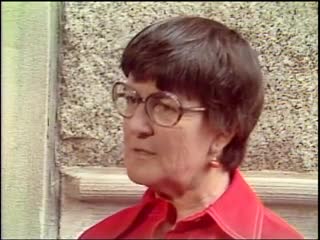
Description: Interview with Wellesley College economist Carolyn Shaw Bell on her support for Jimmy Carter as presidential candidate.
Collection: Ten O'Clock News
Date Created: 05/12/1976
Description: Evening Compass late edition newscast covering day 3 of Phase II desegregation in Boston Schools. Ed Baumeister summarizes events and report on school attendance figures. Pam Bullard reports that attendance figures show white students to be in the minority: Peter Meade (Mayor's Office) comments on racial makeup of the school system; Cardinal Medeiros (Archdiocese of Boston) comments on influx of Boston students to parochial schools to avoid busing. School officials comment on the opening of schools: Charles Leftwich (Associate Superintendent of Schools) reports a missing bus and problems with buses arriving late; Robert Donahue (Boston School Department) reports on registration for unassigned students; Frances Condon (Boston School Department) reports on kindergarten registration. Bullard interviews Thayer Fremont-Smith (Lawyer, Boston Home and School Association) about the court action to overturn forced busing. Fremont-Smith says that the court-ordered busing plan is too broad and will result in racially imbalanced schools as a result of declining white enrollment. Edwin Diamond (media critic) analyzes Boston Globe coverage of busing crisis with guests Mike McNamee (MIT student) and Robert Healy (Executive Editor, Boston Globe). Healy says that a local newspaper has to deal with the crisis differently than a national newspaper.
Collection: Evening Compass, The
Date Created: 09/10/1975
Description: Day 3, year 2 of desegregation. Reporters on set give accounts of day's events in school system. Ed Baumeister opens with press conference in which Metropolitan Distric Commission Police (MDC) Superintendent Lawrence Carpenter and mayoral spokesperson Peter Meade comment on student safety and “minority white” school system. Clip of Robert Donahue of School Department on student suspensions. Reporter Pam Bullard presents statistical figures for racial makeup of schools. Clip of Cardinal Medeiros on white influx to parochial schools. WGBH reporters discuss political significance of majority African American schools. At police command center, officers monitor communications to spot trouble and coordinate efforts of State, MDC, and Boston police forces: George Landry of Boston Police Department comments on the professional rivalry between groups. Reporter Gary Griffith reports on South Boston residents who are less vocal in protest than in year 1. Stills of bandaged Michael Coakley, allegedly beaten by the Tactical Patrol Force (TPF). Claims against brutality of TPF. Reporter Paul deGive discusses Charlestown residents' resentment of media and threatened retaliation against media presence. Stills of peaceful Charlestown marchers filling street. Gloria Conway, editor of Charlestown Patriot comments on the peaceful demonstration. Pam Bullard reports on location about Joseph Lee elementary school in Dorchester (first busing site) exterior and open classrooms. Lee School Principal Frances Kelley talks about school's program. Children line up to board bus; wave goodbye from inside bus as it pulls away.
2:12:09: Ed Baumeister introduces the show. Opening credits. Baumeister gives summary of the day's events: no arrests related to the schools; an orderly demonstration in Charlestown. Visual: Footage of the day's press conference by city officials. Baumeister asks if there are plans to reduce police presence. Lawrence Carpenter (MDC Police Superintendent) replies that he does not know; Peter Meade (Mayor's Office) doubts that there will be a reduction. Baumeister notes the absence of top officials from daily press conference; that present attendance levels in Boston schools indicate that white students are in the minority. V: Footage of Robert Donahue (Boston School Department) reporting on discipline in the schools. Donahue gives information on new student registration for the following day. Baumeister reports that attendance was 52,109 (68,4%). 2:16:01: Pam Bullard reports on the percentages of white and minority children in Boston schools. Bullard reports that under the court-ordered desegregation plan, 60 of 162 Boston schools are projected to be predominantly African American; that 46 of 115 elementary schools are projected to be predominantly African American; that current attendance levels put 61 of 115 elementary schools predominantly African American. Bullard reports that school officials fear that white children will become a minority in Boston schools. V: Footage of Meade talking about desegregation leading to a white minority in other urban school systems. Meade says that one could project a non-white majority in the future based on elementary school enrollments; that racial imbalance in Boston schools is unfortunate. Bullard reports that elementary enrollment is down 18% from previous year; that 73 whites of 306 have attended the Lee School so far; that 85 of 145 whites have attended the Morris School so far; that 86 of 136 whites have attended the Ripley School so far; that 75 of 148 whites have attended the Kilmer School so far. Bullard reports that many white parents enrolled children in private schools to avoid eventual busing; that Catholic schools are serving as a haven for anti-busers despite a pledge to the contrary by Humberto Cardinal Medeiros (Archdiocese of Boston). V: Footage of Medeiros saying that he would examine enrollment numbers at Catholic schools before determining any punishment for those who enrolled to avoid busing. Bullard reports that school officials are uncertain if white students will return. 2:21:49: Baumeister asks Bullard about the significance of a majority non-white school system. Bullard replies that a majority non-white school system may not receive sufficient funds from a white city government; that the city risks losing its white population. Baumeister reports on a rivalry among state, MDC and Boston police forces during the 1974 school year. 2:22:33: Donovan Moore reports on coordination among state, MDC and Boston police forces. Moore reports that school desegregation requires 100 federal marshals, 250 MDC police officers, 350 state troopers and 1,000 Boston police officers. V: Footage of officers sitting in front of radios at communications center in Boston Police Headquarters. George Landry (Boston Police Department) explains how the communications center operates. Officers are shown looking at a map of the city and working the radios. Moore reports that the center can communicate instantly with officers on the streets. Moore lists the different police forces. V: Shots of an MDC officer on horseback; of state police in front of South Boston High School; of Boston police officers walking on the street. Footage of Landry admitting to a spirit of competiveness among the police forces. Landry denies any hostility. 2:25:49: Gary Griffith reports that South Boston remains a stronghold of the anti-busing movement; that South Boston has been relatively quiet since the opening of school three days ago. V: Shots of photographs of Nancy Yotts (South Boston Information Center); of students in front of a high school; of African American students boarding buses. Griffith reports that the SBIC has accused the police department's Tactical Patrol Force (TPF) of police brutality; that the SBIC has produced witnesses including Michael Coakley, who says he was beaten by police. Griffith reports that the SBIC has demanded the withdrawal of the TPF from South Boston; that Warren Zanaboni (South Boston Marshals) says he tries to get South Boston youth off the streets at night. V: Shots of photographs of an SBIC poster in a store window; of Michael Coakley, with bandaged head and arm in a sling. Shot of a photograph of Zanaboni. Griffith reports on small skirmishes between police and South Boston youth during the previous three nights; that the MDC police and the police in South Boston have a good working relationship with the South Boston Marshals; that the TPF does not have a good relationship with the marshals; that four arrests were made by the TPF the previous evening; that South Boston residents say the trouble would subside if the TPF withdrew. 2:28:55: Paul deGive reports that relations between between Charlestown residents, the police and the news media show slight improvement; that rumors circulated in the morning that residents would target the media; that the media tried not to antagonize the residents during the mother's march. V: Shots of photographs of mother's march in Charlestown; of prayer meeting at the St. Francis de Sales church; of camerapeople covering the march; of peaceful street scenes in Charlestown; of police patrolling streets. DeGive reports that the police did not crowd the marchers; that Superintendent Joseph Jordan (Boston Police Department) was calmly watching events develop; that police were quietly patrolling the streets. V: Footage of Gloria Conway (Editor, Charlestown Patriot) interviewed by deGive. Conway says that the police were wise to allow a peaceful demonstration because it allowed residents to vent their frustrations; that the police presence today seemed less aggressive and threatening; that many officers were covering their regular beats. DeGive reports that Conway, Dennis Kearney (State Representative) and community leaders requested that the TPF not be deployed in Charlestown. [ V: Shot of a photograph of Kearney in street. DeGive reports that Mon O'Shea (Associate Dean, Bunker Hill Community College) accused the TPF of creating a military-like atmosphere; that community leaders agree that some police presence is needed; that Kearney is seeking a way to keep Charlestown youth in check. 2:34:16: Baumeister adds that the atmosphere was calm and attendance was low at Charlestown High School. Bullard reports from the Joseph Lee School in Dorchester. Bullard notes that the Boston School Committee's decision to ignore the racial imbalance at the Lee School's opening provoked the lawsuit leading to court-ordered desegregation in Boston; that four years later, the Lee School is still racially imbalanced. V: Shots of photographs of the Lee School; of groups African American kids outside of Franklin Field Housing Project; of school classrooms. Bullard notes that the Lee School is located in an inner city neighborhood; that white students from West Roxbury were to be bused into the Lee School; that 73 whites out of 306 have attended the Lee School so far; that the school is an excellent but underutilized facility. V: Footage of Bullard interviewing Frances Kelley (Principal, Joseph Lee School). Kelley talks about enrichment programs at the Lee School. She says that the school opened with no problems; that white parents may be staying away due to safety concerns; that in the past, parents have been very satisfied with the Lee School. Footage of children exiting school and boarding buses. Bullard notes that children assigned to the Lee this year will stay for subsequent grades; that desegregation has failed so far at the Lee. V: Footage of African American children outside of Lee School; of white children leaving the school on a bus. 2:40:07: Baumeister talks about the evening's late newscast and closes show. Credits roll.
Collection: Evening Compass, The
Date Created: 09/10/1975
Description: Ed Baumeister hosts an Evening Compass broadcast. Louis Lyons reports on national and international general news of the day. The rest of the broadcast is focused on school desegregation. Judy Stoia and Greg Pilkington report on the violence at South Boston High School the day before. These reports include stills and footage of protests, Louise Day Hicks with bullhorn next to William Bulger, South Boston angry crowds, helmeted police, cruisers and motorcycles, buses, exterior of South Boston High, African American students responding. Peggy Murrell reports on the reaction of the African American community to the South Boston violence, with quotes from Thomas Atkins and Mel King. Pam Bullard reports on the changes in the public opinion on desegregation since the start of school in September. Judy Stoia reports on the effect of the violence on other schools in Boston, specifically Hyde Park High School, including white students walking out. Pam Bullard reports on the legal ramifications of the violence at South Boston High School, including a hearing where black parents will request specific limitations in South Boston from Judge Arthur Garrity and the Boston School Committee's opinions on the second phase plan for desegregation. This report includes an interview with John Coakley (Boston School Dept.). Ed Baumeister reports on the silence of both Mayor Kevin White and Governor Frank Sargent on the South Boston violence. This report include footage of a September 12, 1974 address by Kevin White on violence related to school desegregation.
0:24:31: Ed Baumeister introduces the newscast. Opening credits roll. 0:25:27: Louis Lyons reads the headlines. Lyons reports that Nelson Rockefeller's appointment to the vice-presidency was approved by the House Judiciary Committee by a vote of 26 - 12; that he should be elected by the full House of Representatives next Thursday; that 9 Democrats on the Committee joined all 17 Republicans voting for Rockefeller; that the Committee had investigated Rockefeller's gifts to members of the Senate Committee and had heard a wide range of criticism of Rockefeller. Lyons reports that both houses of Congress overwhelmingly approved money to create jobs for the unemployed. Lyons reports that President Gerald Ford has indicated his support of a tax cut to stimulate auto sales; that there would be no increase in gasoline taxes. Lyons reports that the rate of inflation rose 1.5% last month; that the rate of inflation seems to be leveling off after a rise of 3% during the previous month. Lyons reports that the House Rules Committee voted to approve a bill to regulate strip mining; that the House Rules Committee did not approve bills for a tax cut and an end to the oil depletion allowance; that liberals and representatives from the oil states voted to kill the bills. Lyons reports on speculation that William Saxby (Attorney General) will be appointed Ambassador to India; that Edward Levy (President, University of Chicago) will be appointed as the new attorney general. Lyons comments that Levy is an expert in the area of anti-trust law; that Saxby is an expert at "putting his foot in his mouth." Lyons reports that Great Britain had a record trade deficit of 1.25 billion last month, partly due to oil prices; that the pound dropped to a new low. Lyons comments that Great Britain's currency is suffering as a result of Saudi Arabia's decision "not to accept any more Stilton for oil." Lyons reports that Henry Kissinger warned western leaders that their economic system will be faced with disaster unless a remedy can be found for the "double crisis of inflation and recession." Lyons reports that Ford will meet with Valery Giscard d'Estaing (President of France) this weekend; that the French are skeptical about Kissinger's strategy to cope with oil prices. Lyons reports that students continue to fight government troops in Rangoon, Burma; that the Ne Win government has imposed martial law. Lyons reports that Jimmy Carter (Governor, State of Georgia) announced his candidacy for president; that Carter promises to end secrecy in government and the "cozy relations" between government officials and industry. 0:28:30: Baumeister reports that yesterday's violence at South Boston High School will have long-range repercussions on the court-ordered desegregation of Boston schools; that the Boston School Committee has five days left to file a long-range desegregation plan in court. Baumeister introduces a report on the violence by Judy Stoia. 0:29:05: Stoia reports that tension in South Boston High School had been building during the past week; that there was a fight in the machine shop on Monday; that there was a scuffle in the girls' restroom on Tuesday; that there were fights in the cafeteria and the library on Wednesday; that school aides warned of serious trouble between white and African American students. Stoia reports that a white student was stabbed at school yesterday; that an African American student has been charged with assault with a dangerous weapon. Stoia reports that white students left the school after the stabbing; that several hundred people had gathered in front of the high school by noon; that residents of Charlestown and East Boston also joined the crowd in front of the school. Stoia reports that the there were many anti-busing mothers and children among the crowd. Visual: Shots of photographs of a white female student standing among a crowd of white students; of large crowds assembled in front of South Boston High School; of helmeted police officers standing among the crowd. Shots of photographs of middle-aged women among the crowd. Stoia reports that 1500 people had gathered in front of the school by 1:00 pm; that the crowd was waiting for the arrival of school buses to pick up the African American students; that many in the crowd were intent on attacking the buses. Stoia reports that Louise Day Hicks (Boston City Council) tried to calm the crowd. V: Shots of photographs of huge crowds assembled on G Street, in front of the school; of helmeted police officers keeping the crowd at bay. Shots of a photograph of Hicks in the crowd. Footage of Hicks assuring the crowd that the assault will be investigated. William Bulger (State Senator) stands beside Hicks. Hicks pleads with the crowd to let the African American students return home safely. The crowd boos at Hicks. Stoia reports that the crowd was hostile to police; that police units from the Tactical Patrol Force (TPF), the MDC Police Department and the Massachusetts State Police Department were outnumbered by the crowd; that the crowd threw bricks and bottles at police. Stoia reports that the crowd angrily stoned school buses headed toward the school. V: Shots of photographs of the huge crowd; of a TPF unit; of an MDC police officer on a motorcycle; of mounted police on the street. Shots of photographs of a police car with a broken window; of arrests being made. Shots of photographs of the crowd; of stoned school buses. Stoia reports that the buses were decoys and that African American students had escaped through a side door and were bused to safety. V: Shots of photographs of a side entrance at South Boston High School. 0:32:25: Greg Pilkington reports on the atmosphere at the Bayside Mall, where buses arrived with the African American students who had been trapped in South Boston High School. Pilkington reports that students and parents were frightened and angry. V: Footage of buses and police officers in the mall parking lot. Angry groups of African American students speak directly to the camera about their experiences in South Boston. One student comments on the angry and violent parents in the South Boston crowd. An angry African American woman says that white children go to school peacefully at the McCormack School in her neighborhood, but that African American students cannot go to school safely in South Boston. She says that Kevin White (Mayor, City of Boston) is not doing his job. A man shouts into a bullhorn that there is no school on Thursday or Friday. Pilkington reports that the anger of the African American community seems to be directed at the city, the police, and the Boston School Committee for not controlling the situation in South Boston. 0:34:13: Peggy Murrell reports on the reaction of Thomas Atkins (President, NAACP) and Mel King (State Representative) to the violence at South Boston High School. She says that both leaders are determined to continue with school desegregation; that both are concerned for the safety of African American students in the schools. She quotes Atkins as saying that schools should be shut down and students should be reassigned if the safety of African American students cannot be guaranteed; that Atkins will make this request to the court if necessary. Murrell reports that King agrees with Atkins about shutting down the schools if safety cannot be assured; that King says African American students will continue to attend school despite the violence. V: Shots of photographs of Atkins and King. Murrell quotes King's condemnation of the violence at South Boston High School. Murrell reports that Atkins charged the South Boston Home and School Association with holding a racist rally inside the high school and with encouraging a school boycott by white students. Murrell says that Virginia Sheehy (South Boston Home and School Association) denies the charges. Murrell reports that Sheehy says that white students should be able to hold meetings in school just like student-run African American societies do. State Senator William Owens (Chairman of the Emergency Committee Against Racism in Education) agrees that schools should be shut down if a peaceful solution cannot be found, and says that a march against racism planned for Saturday will proceed. 0:38:11: Baumeister introduces Pam Bullard's report, which reviews school desegregation in South Boston since the opening of school. Bullard reports that many expected the worst on opening day at South Boston High School; that national and foreign press were covering the arrival of African American students to desegregate the school. Bullard reports that a large crowd gathered to protest school desegregation; that the crowd yelled racial epithets at the students entering the school; that the police were tolerant of the crowd; that the crowd quieted down after school began. V: Footage from September 12, 1974, of a school bus in front of South Boston High School. African American students exit the buses and enter the front doors of South Boston High School. Protesters are gathered in front of the school. Police officers are stationed along the street and in front of the crowd of protestors. Another school bus pulls up. Crowds of white residents jeer at the busloads of African American students. Bullard reports that many in South Boston could not believe that desegregation was happening at their high school; that violence erupted on the afternoon of the first day of school, when busloads of African American students were stoned by South Boston residents. Bullard reports that the situation appeared to grow calmer as the school year progressed; that police motorcycles escorted school buses to and from school; that police officers were stationed inside and outside of schools. Bullard reports that violence erupted again yesterday; that the crowd gathered outside of South Boston High School showed great levels of anger, frustration, and hatred; that almost everyone in the crowd shouted ugly racial slurs. V: Shots of photographs of a white crowd gathered on G Street, outside of South Boston High School. Shots of photographs of middle-aged women and young people among the crowd. Bullard reports that young people in the crowd openly insulted African American police officers; that members of the crowd shouted obscenities at the press and grabbed their cameras; that members of the crowd spit at police officers and jumped on top of police cars; that the crowd cheered each time a bottle or brick was thrown at the police. V: Shots of photographs of a damaged Boston Police cruiser; of two police officers stationed in the street; of helmeted police officers making an arrest; of an older woman among the crowd. Bullard notes that the crowd included men and older residents of South Boston; that earlier demonstrations had been primarily South Boston mothers and students. Bullard notes that the crowd was bent on revenge for the stabbing of a white student; that they probably would have done great harm to the African American students if they could have. 0:41:00: Baumeister introduces Stoia's report on the atmosphere at schools around the city after the incident at South Boston High School. Stoia reports that police and the media were present at Hyde Park High School this morning; that some had anticipated problems at Hyde Park High School after the violent incident at South Boston High School on the previous day; that Hyde Park High School had experienced some walkouts and racial incidents over the past few months. V: Shots of photographs of police officers stationed at the entrance of Hyde Park High School; of police officers stationed on the streets around the school. Stoia reports that the Tactical Patrol Force (TPF) was present at the school in case of an incident. Stoia reports that African American students arrived on buses and entered the school with no problems; that white students arrived peacefully. V: Shots of photographs of African American students exiting buses and entering the schoolyard; of white students outside of the school. Stoia reports that about 100 white students staged a walkout after their first period class; that 400 white students stayed in class. Stoia reports that there were a few fights between students and police and some arrests; that the walkout was inspired by the previous day's events in South Boston; that the atmosphere at Hyde Park did not seem as tense as in South Boston. Stoia reports that a few African American students walk to school in Hyde Park; that it would be impossible for an African American student to walk to school in South Boston. V: Shots of photographs of a small crowd of people gathered on the steps of the school; of a large crowd of white students gathered outside of the school; of police moving students away from the school building; of students walking away from the school. Shots of photographs of white students outside of the school; of African American students walking into the school. Stoia reports that some white students are angry about the stabbing at South Boston High School; that other students participated in the walkout because they wanted a day off from school. Stoia adds that no racial slurs were exchanged between African American and white students in the schoolyard of Hyde Park High School; that there were no racist buttons or posters in sight. Stoia says that she spoke to some anti-busing mothers in Hyde Park who were appalled at the violence in South Boston. Stoia reports that the violence in South Boston did have some effect on Boston schools; that attendance was down 7% in Boston schools today; that there were small walkouts by white students at four Boston high schools; that the white students who stayed in school outnumbered those who walked out in all four schools. Stoia reports that another incident in South Boston could escalate racial tension at other schools; that a lessening of tension in South Boston could result in higher attendance rates at other schools. 0:44:02: Bullard reports on a special hearing before Arthur Garrity (federal judge) planned for the next day. Bullard notes that the African American plaintiffs in the desegregation case (Morgan v. Hennigan) have called the hearing to demand the following: the presence of state police and the national guard in South Boston; a ban on parents in schools; a ban on gatherings of more than five people in South Boston; a ban on the use of all racial epithets. Bullard reports that Eric Van Loon (attorney for the plaintiffs) says that South Boston will not escape desegregation. Bullard notes that the Boston School Committee is under court order to file a second phase desegregation plan on the following Monday; that the new plan will desegregate schools city-wide and will allow parents to choose between flexible and traditional educational programs. V: Footage of John Coakley (Boston School Department) talking about the differences between the traditional and flexible program choices under the new plan. Coakley says that the new plan allows parents to choose programs, but not specific schools. Bullard reports that the Boston School Committee has repeatedly refused to endorse any form of desegregation; that the committee risks being held in contempt of court if they do not approve a plan to submit to the court. Bullard reports on speculation that William Leary (Superintendent, Boston Public Schools) will submit the plan without the approval of the School Committee, to avoid being held in contempt of court. 0:49:06: Baumeister comments on the silence of both Kevin White (Mayor, City of Boston) and Frank Sargent (Governor, State of Massachusetts) regarding the previous day's violence in South Boston. Baumeister notes that White spoke out publicly against the stoning of school buses in South Boston on the first day of school. V: Footage of White on September 12, 1974, condemning violence and promising that it would not be tolerated. Baumeister notes that as the level of violence goes up, the visibility of top officials goes down. Credits roll.
Collection: Evening Compass, The
Date Created: 12/12/1974
Description: Evening Compass late edition newscast on the second day of school during Phase II desegregation of Boston Schools. Ed Baumeister and Paul deGive introduce the show and give attendance statistics. Introduction includes footage of Marion Fahey (Superintendent, Boston Public Schools) giving an upbeat statement on the opening of schools. Greg Pilkington reports on African American students who are bused into Charlestown. Pilkington's report includes interviews with Caroline Bell (local resident), Harietta Moore (local resident), Robert Kelley (student), Galina Davis(student), Georgia Carter (local resident), John Filadoro (bus driver) and Leona Pleas (bus monitor). Pilkington notes that the bus rides from the South End to Charlestown have been uneventful so far. Pilkington reports on a group of Roxbury parents who are urging other African American parents to send their children to Charlestown High School. Richard Gittens (transitional aid, Charlestown High School) reports that there are no problems at Charlestown High School. Pilkington interviews Nathaniel Jones (general counsel, NAACP) about school desegregation issues and busing in Boston. Jones says that segregated schools are harmful to both white students and African American students. Judy Stoia interviews Renee Burke (student, Hyde Park High School) and Donald McCarthy (student, Hyde Park High School) on their participation in a leadership program to lessen racial tension at Hyde Park High School. Stoia interviews Judy Rattash (First National Bank of Boston), Suzanne Kelly (Stonehill College) and Gail O'Reilly (teacher, Hyde Park High School) about Hyde Park High School programs in conjuction with Stonehill College and the First National Bank of Boston. Rattash, O'Reilly and Kelly talk about the programs available to Hyde Park High School students. DeGive reports that the Massachusetts Supreme Court failed to lift an injuction blocking the City of Boston from paying legal fees for the Boston Home and School Association's appeals of court-ordered busing. DeGive notes that the Home and School Association will seek private funding to continue the fight against the court order. Pam Bullard interviews John Coakley about magnet schools and the opening of schools across the city. Coakley says that public-safety issues are being handled better this year than last year. This tape has audible time code on track 2 and visible time code in the upper right corner.
23:00:02: Ed Baumeister introduces a special Evening Compass broadcast featuring information on the school situation. Baumeister reports that the city is calm; that federal marshals are ready to act if there are any signs of a disturbance. Opening credits roll. Paul deGive reports that school attendance was 64.9%. Baumeister reports that there is still confusion over school assignments for some students. [ V: Footage of Marion Fahey (Superintendent, Boston Public Schools) saying that the general climate of the schools is "excellent"; that there have been no arrests in the schools. Baumeister reports that there were 14 arrests in Boston today; that 94 have been arrested since the opening of school; that 9 police officers have been injured. 23:02:25: Greg Pilkington reports on African American students assigned to Charlestown High School. V: Footage of African American students boarding buses at corner of Lenox and Tremont Streets, near the Cathedral Housing Project in the South End; of African American students riding buses. Pilkington reports that Charlestown has been the center of resistance to Phase II busing; that many African American students assigned to Charlestown schools did not attend the opening day of school for fear of violence; that there was no violence in the schools or along the bus routes on opening day. V: Footage of Pilkington interviewing parents at the bus stop. Caroline Bell (local resident) says that her two sons were assigned to the Holden School in Charlestown; that her sons were apprehensive about going to school in Charlestown; that they were pleased with the school when they returned home after the first day. Harietta Moore (local resident) says that four of her children were assigned to schools in Charlestown; that they did not attend the opening day of school; that they will attend school today because the schools in Charlestown appear to be peaceful. Robert Kelley (student) says that a crowd threw rocks at his bus as he was leaving school in Charlestown; that the climate inside the school was fine. Galina Davis (student) says that a crowd outside of her school in Charlestown was insulting the African American students. Footage of buses lined up to pick up students at a bus stop. Pilkington says that the busing of students from the South End to Charlestown was uneventful yesterday; that the absence of a bus monitor caused some confusion. V: Footage of Georgia Carter (local resident) saying that parents were concerned about their children riding buses without bus monitors. John Filadoro (bus driver) says that a bus monitor would have calmed the fears of the kids on the bus; that the police did a good job of breaking up crowds and easing tension on the streets; that he thinks his bus might have a bus monitor today. Leona Pleas (bus monitor) says that she came out today because she heard that bus monitors were needed; that she has a child assigned to school in Charlestown; that white parents should send their kids to school because a child's education is more important than politics; that more African American students are on the bus today to go to Charlestown. 23:06:45: Pilkington reports that 85 African American students attended Charlestown High School today; that the attendance figure for African American students at the high school is 38%; that a group of parents in Roxbury is urging African American parents to send their children to school in Charlestown. Pilkington interviews Richard Gittens (bus monitor and transitional aide, Charlestown High School) in the studio. Gittens says that the climate is good at Charlestown High School; that the principal at Charlestown High School is doing a good job; that there have been no problems between white and African American students; that the school situation is normal, despite the violence on the streets in Charlestown. Gittens says that he is among a group of parents urging others to send their children to school in Charlestown; that they hope for 100% attendance among African American students by Friday. Gittens says that African American parents and students are pleased with the middle school in Charlestown; that African American parents and students have found that there is a difference between schools in Charlestown and schools in African American neighborhoods. Gittens says white and African American parents need to send their kids to school, no matter how they feel about busing. Gittens says that the violence on the streets in Charlestown has not affected the educational climate in the high school. Gittens leaves the set. 23:11:14: Pilkington interviews Nathaniel Jones (general counsel, NAACP) in the studio about desegregation issues and the court case which brought desegregation to Boston (Morgan v. Hennigan). Jones says that the resolve of the government to enforce the court order has resulted in a peaceful opening of schools in Boston. Jones says that the plaintiffs in the lawsuit brought the case to court because the Constitutional rights of their children were being violated; that the court's decision in Morgan v. Hennigan is in line with the Supreme Court's landmark decision in Brown v. Board of Education; that it is unconstitutional for a school board to make policy which results in a segregated school system. Jones says that segregation is harmful to both white children and African American children; that segregated schools are inherently unequal; that Judge Garrity's ruling eliminates segregation and tries to remedy the harm caused by segregation to white and African American children in Boston. Jones says that popular opinion about busing is irrelevant; that the Constitutional rights of the minority must be protected; that busing does not compromise a child's education; that busing has been used in the past to enforce segregation; that 3% of children in the US are bused for the purposes of desegregation. Jones says that he can understand why African Americans might have reservations about busing; that in the past, the burden of busing fell on the African American community; that the court order calls for students of both races to be bused in Boston; that the rights of African American students must be protected. 23:17:40: Baumeister reports that attendance at Hyde Park High School was 70% today; that African American attendance was 65%; that white attendance was 74%; that the school has opened peacefully this year. Baumeister reports that the pairing of Hyde Park High School with Stonehill College and the First National Bank of Boston led to the creation of Student Leadership Teams to deal with racial tension. 23:18:33: Judy Stoia interviews Renee Burke (student, Hyde Park High School), Donald McCarthy (student, Hyde Park High School) in the studio. Burke and McCarthy are members of the Hyde Park Biracial Leadership Team. Burke says that the training she received as a member of the team helped her; that the training brought the team closer together. McCarthy says that the training took place at Stonehill College; that members of the group have learned to trust one another. Burke says that members of the team are working as student aides in the school. McCarthy says that the team can set a good example for the other students; that the 52 members of the team can show that African American and white students can get along. Burke says that there has been a lessening of tension in the school; that team members can help to mediate problems among students. McCarthy says that there is much less tension this year than last year. Burke says that she hopes that the example of the biracial team will encourage more interaction between African American and white students. McCarthy says that interaction between the two groups will happen gradually; that there are probably a few resentments carried over from the previous year. 23:22:55: Stoia interviews Judy Rattash (First National Bank of Boston), Suzanne Kelly (Stonehill College) and Gail O'Reilly (teacher, Hyde Park High School) in the studio. Rattash says that the First National Bank will continue some of its pilot programs from the previous year at Hyde Park High School; that the bank developed a successful computer course taught at their facility in Columbia Park during the previous year; that the bank is developing a program called World of Work, in which students learn interview and resume techniques. Rattash says that students get hands-on experience with computers in the computer course. Kelly says that Stonehill College would like to expand the leadership program at Hyde Park High School; that they would like to get more students involved in one-day leadership workshops at the college. Kelly says that she is presently writing proposals to get funding for programs through the state legislature; that some programs may begin before the funds become available at the end of September. Kelly says that there are plans for academic enrichment programs, an ethnic studies program, an ethnic crafts course, and a radio production; that the programs take place at Stonehill College and at Hyde Park High School. O'Reilly says that she likes the programs available through Stonehill College and the First National Bank; that the bank's reading tutorial program will continue this year; that both the bank and the college will participate in the school newspaper. Rattash says that other outside organizations are interested in the schools; that the Greater Boston Real Estate Board may try to work with teachers to develop a curriculum for students at Hyde Park High School; that the bank will encourage the Junior Achievement program at Hyde Park High School. Burke says that students will be especially interested in the newspaper program. 23:29:57: Paul deGive reports that Massachusetts Superior Court Justice Francis Quirico has refused to lift an injuction blocking the city of Boston from paying legal fees for the Boston Home and School Association; that the city of Boston had paid over $50,000 until African American parents brought the city to court. DeGive reports that the Boston Home and School Association will seek private funds in order to continue to fight the court order; that the Home and School Association is slated to argue the desegregation plan in front of the First Circuit Court of Appeals next week. 23:30:56: Baumeister reports that John Coakley was praised for his performance last year as Boston's chief school desegregation planner; that he was appointed head of the city-wide magnet schools by William Leary (former Superintendent of Schools); that he was not reappointed to that post by the new superintendent Marion Fahey. Baumeister reports that Judge Garrity has requested that Coakley stay in the post until the end of September. 23:31:09: Pam Bullard interviews John Coakley in the studio. Bullard asks why there are more problems with transportation and student assignments this year. Coakley says that the school department had more time to implement the Phase I plan after it was handed down from the court; that the Phase II plan was more complex, and the schools had less time to implement it. Coakley says that organizing bus transit is very complex; that the school department did the best it could in the time allowed. Bullard reports that elementary school attendance city-wide was 70%; that elementary school attendance in Dorchester was 74%; that elementary school attendance in East Boston was 76%; that attendance in elementary-level magnet schools was 80%. Coakley says that parents choose magnet schools; that the magnet schools are well established and carry over a sizable population from year to year. Bullard asks Coakley if the magnet schools can continue to pull in students and reverse the trend of declining enrollments. Coakley says that the Boston area provides great resources to the magnet schools; that universities, hospitals, and other institutions are participating in magnet school programs. Bullard reports that attendance at high schools is down 7% from last year; that attendance at middle schools is up 11% from last year; that attendance at elementary schools is down 18% from last year. Coakley says that many elementary schools were unaffected by Phase I desegregation; that elementary schools are losing students because more schools are affected by Phase II desegregation this year. Coakley says that he thinks some elementary school students may have left public schools for reasons other than desegregation. Bullard asks Coakley to compare the opening of schools this year to the opening of schools last year. Coakley says that he is more optimistic about the schools this year; that public safety issues are being handled more effectively this year; that many residents, parents, and students do not wish to see a repeat of last year's violence; that many are trying to recover their pride in the city, which may have been lost last year. Coakley says that Phase II desegregation did try to incorporate educational improvements with desegregation; that the magnet schools are an example of this; that the involvement of universities and other institutions in the schools can provide some momentum for a more dynamic school system. 23:40:25: Bumeister reports on Evening Compass broadcasts for the following day. DeGive reminds viewers that Edwin Diamond (media critic) will analyze media coverage of busing on the tomorrow's late edition of Evening Compass. DeGive closes the show. Credits roll.
Collection: Evening Compass, The
Date Created: 09/09/1975