Description:
Interview with Andrew Young, Mayor of Atlanta at the Parker House. Young talks about his efforts to facilitate international trade between Atlanta businesses and third-world nations. He says that urban mayors can help local businesses by leading trade delegations and encouraging local businesses to get involved in emerging markets. Young criticizes the federal government's reliance on the military in conducting foreign policy. He says that the US must act with intelligence and rely on diplomacy to solve world problems. He talks about US involvement in Vietnam, Lebanon, and El Salvador. Young and Christy George discuss African Americans in politics. Young does not believe that a candidate should not represent one single constituency. Young says that more African Americans need to be elected as senators, mayors and governors before an African American is elected as president. George reasks questions for cutaways. Young attends a cocktail party at the Parker House. Other guests include Bruce Bolling, Boston City Councilor, and Hubie Jones, Dean of the School of Social Work at Boston University.
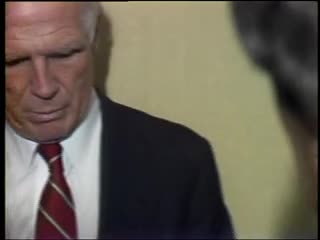
1:00:04: Visual: Andrew Young (Mayor of Atlanta) is interviewed by Christy George in the Parker House. George asks about urban mayors taking on international roles. George notes that Mel King (candidate for mayor of Boston) is interested in Young's work in Atlanta with third-world nations; that Kevin White (Mayor of Boston) calls Boston a "world-class city." Young says that most governments help businesses; that the federal government has done little to help businesses. Young says that mayors can help local businesses. Young talks about leading trade delegations of Atlanta businessmen to other parts of the world. Young says that businessmen can gain access to government officials through the mayor. Young says that he took businesspeople, educators and a YMCA soccer team on a trip to Jamaica and Trinidad. Young says that the businesspeople did $150 million of business during a one-week trade mission. Young says that business people were allowed to see the decision-makers in foreign governments. Young says that white mayors can do the same thing. Young says that the mayors of Seattle and Indianapolis have done the same thing. Young says that there are large concentrations of Dutch and Japanese businesses in Georgia; that he is trying to build on that. George notes that African-American mayors are now dealing with third-world countries. Young says that the emerging markets are in the third world. Young says that he will visit Nigeria next week. Young says that Nigeria is buying products from Atlanta; that Nigeria is developing at a rapid rate. Young notes that Japanese and German businesses have been doing business with the third world for a long time. Young says that US businesses never needed to do business abroad until 1975. George notes that Young had been talking about doing business with the third world when he worked for Jimmy Carter (former US President). George remarks that the Democratic Party has not advocated more trade with the third world. Young says that Ronald Reagan (US President) sees everything in terms of an East-West conflict. Young says that the US needs to look beyond the East-West conflict. Young talks about US involvement in Egypt and Panama in the 1970s. Young says that diplomatic treaties can undercut communist influence. Young says that military solutions seem popular, easy and "macho." Young says that military solutions have seldom succeeded for the US or for the Soviet Union. 1:05:15: V: George asks what the Democratic Party should be doing to prepare for the 1984 elections. Young says that the Democratic Party must approach world problems with "reason and sanity." Young talks about how the US was drawn into the Vietnam War. Young says that US ships are present off the coasts of Central America and Lebanon; that the US could easily become trapped in a military situation in one of these regions. Young says that there is no military solution in Lebanon; that the US has no business there. Young says that there is no military solution in El Salvador. Young says that the US needs to show its strength through intelligence; that the US should not show its strength through destructiveness. Young says that the Democratic Party must offer clear a alternative to Reagan. Young says that the US is living on the brink of war; that this policy is insane. George asks how the Democratic Party should deal with political unrest and revolutions in the third world. Young says that the US needs to understand the impulses behind revolutions in third world country. Young says that Harry Truman (former US President) probably did not know that Ho Chi Min (former Vietnamese leader) worked as a chef at the Parker House while he was a student in Boston. Young talks about the influence of American ideas of freedom on Ho Chi Min in the 1940s. Young says that third world leaders should not be discounted as Marxists. Jump cut in videotape. George asks if African Americans need an African American candidate for president in 1984 in order to gain political influence. Young says that he disagrees; that politicians should not represent only one segment of the population. Young says that the present Democratic candidates have strong records on civil rights and minority issues. Young says that African Americans need to be involved in the campaign of a winning candidate. Young says that candidates never live up to promises made at the convention. George asks if it is time for an African American presidential candidate. Young says that there need to be more African American mayors, governors and senators before there is an African American president. George closes the interview. 1:09:57: V: The crew takes cutaway shots of George. 1:14:40: V: Footage of a cocktail reception at the Parker House. Attendees eat, drink, and socialize. Attendees include Hubie Jones (Dean of the School of Social Work, Boston University), Bruce Bolling (Boston City Council), Carol Bolling (wife of Bruce Bolling), Young, and others. Shot of Young socializing.
1:00:04: Visual: Andrew Young (Mayor of Atlanta) is interviewed by Christy George in the Parker House. George asks about urban mayors taking on international roles. George notes that Mel King (candidate for mayor of Boston) is interested in Young's work in Atlanta with third-world nations; that Kevin White (Mayor of Boston) calls Boston a "world-class city." Young says that most governments help businesses; that the federal government has done little to help businesses. Young says that mayors can help local businesses. Young talks about leading trade delegations of Atlanta businessmen to other parts of the world. Young says that businessmen can gain access to government officials through the mayor. Young says that he took businesspeople, educators and a YMCA soccer team on a trip to Jamaica and Trinidad. Young says that the businesspeople did $150 million of business during a one-week trade mission. Young says that business people were allowed to see the decision-makers in foreign governments. Young says that white mayors can do the same thing. Young says that the mayors of Seattle and Indianapolis have done the same thing. Young says that there are large concentrations of Dutch and Japanese businesses in Georgia; that he is trying to build on that. George notes that African-American mayors are now dealing with third-world countries. Young says that the emerging markets are in the third world. Young says that he will visit Nigeria next week. Young says that Nigeria is buying products from Atlanta; that Nigeria is developing at a rapid rate. Young notes that Japanese and German businesses have been doing business with the third world for a long time. Young says that US businesses never needed to do business abroad until 1975. George notes that Young had been talking about doing business with the third world when he worked for Jimmy Carter (former US President). George remarks that the Democratic Party has not advocated more trade with the third world. Young says that Ronald Reagan (US President) sees everything in terms of an East-West conflict. Young says that the US needs to look beyond the East-West conflict. Young talks about US involvement in Egypt and Panama in the 1970s. Young says that diplomatic treaties can undercut communist influence. Young says that military solutions seem popular, easy and "macho." Young says that military solutions have seldom succeeded for the US or for the Soviet Union. 1:05:15: V: George asks what the Democratic Party should be doing to prepare for the 1984 elections. Young says that the Democratic Party must approach world problems with "reason and sanity." Young talks about how the US was drawn into the Vietnam War. Young says that US ships are present off the coasts of Central America and Lebanon; that the US could easily become trapped in a military situation in one of these regions. Young says that there is no military solution in Lebanon; that the US has no business there. Young says that there is no military solution in El Salvador. Young says that the US needs to show its strength through intelligence; that the US should not show its strength through destructiveness. Young says that the Democratic Party must offer clear a alternative to Reagan. Young says that the US is living on the brink of war; that this policy is insane. George asks how the Democratic Party should deal with political unrest and revolutions in the third world. Young says that the US needs to understand the impulses behind revolutions in third world country. Young says that Harry Truman (former US President) probably did not know that Ho Chi Min (former Vietnamese leader) worked as a chef at the Parker House while he was a student in Boston. Young talks about the influence of American ideas of freedom on Ho Chi Min in the 1940s. Young says that third world leaders should not be discounted as Marxists. Jump cut in videotape. George asks if African Americans need an African American candidate for president in 1984 in order to gain political influence. Young says that he disagrees; that politicians should not represent only one segment of the population. Young says that the present Democratic candidates have strong records on civil rights and minority issues. Young says that African Americans need to be involved in the campaign of a winning candidate. Young says that candidates never live up to promises made at the convention. George asks if it is time for an African American presidential candidate. Young says that there need to be more African American mayors, governors and senators before there is an African American president. George closes the interview. 1:09:57: V: The crew takes cutaway shots of George. 1:14:40: V: Footage of a cocktail reception at the Parker House. Attendees eat, drink, and socialize. Attendees include Hubie Jones (Dean of the School of Social Work, Boston University), Bruce Bolling (Boston City Council), Carol Bolling (wife of Bruce Bolling), Young, and others. Shot of Young socializing.
Collection:
Ten O'Clock News
Date Created:
09/22/1983