Description: MAID & ROOM SERVICE WAITERS AT COPLEY PLAZA HOTEL
Collection: Ten O'Clock News
Date Created: 11/18/1982
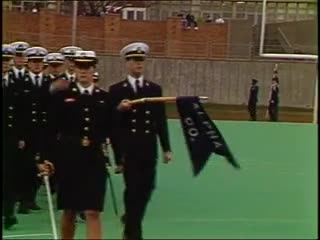
Description: Gay MIT student Robert Bettiker is discharged from ROTC and billed for scholarship. ROTC students put on uniformed drill on BU field. MIT main building. Students walk on campus, lounge on green. ROTC cadets march in parade dress.
Collection: Ten O'Clock News
Date Created: 04/27/1990
Description: BOSTON CITY COUNCIL MEETING ABOUT 2000 COMMONWEALTH AVENUE DEVELOPMENT OF JEROME RAPPAPORT
Collection: Ten O'Clock News
Date Created: 01/28/1985
Description: The film Common Ground is based on a book about the history of school desegregation in Boston. Christy George reports that a group of people who were involved in school desegregation in Boston watched the film together last night. Afterwards, they hold a discussion of the film. Former Mayor Kevin White says that the film provoked strong reactions in everyone. City Councilor James Kelly and Former School Committee Member Elvira "Pixie" Palladino speak out against busing. George Walker, a member of the Twymon family portrayed in Common Ground, speaks out against "closed communities." Jim Conway, a Charlestown resident, says that the film promotes a negative image of Charlestown. Lisa McGoff, a member of the McGoff family portrayed in Common Ground, and Cassandra Twymon, a member of the Twymon family portrayed in Common Ground, also speak at the meeting. McGoff says that the film concentrates on the negative events of the busing crisis. Twymon says that the film gives an accurate portrayal of her experiences as an African American student in a white school. George's report includes footage from the film. This edition of the Ten O'Clock News also included the following item: Jan von Mehren talks to students about school desegregation and race relations
1:00:03: Visual: Footage from the opening credits of the film, Common Ground from CBS/WHDH and Lorimar. Audio of Kevin White (former Mayor of Boston) saying that the film represents a piece of history; that no one should regret looking at piece of history. Christy George reports that the film, Common Ground, looks at the history of court-ordered school desegregation in Boston. George notes that a group of people who were involved in school desegregation in Boston watched the film together last night. V: Footage of White saying that everyone felt strong emotions after watching the film. V: Footage from the film, Common Ground. V: Footage of James Kelly (Boston City Council) addressing the gathering at the screening on March 19, 1990. Kelly says that there was something sacred about Boston's neighborhoods. Kelly says that busing for school desegregation "was not worth it." Footage of Cassandra Twymon (from the Twymon family portrayed in Common Ground) addressing the gathering at the screening. Twymon says that she is sorry that some people are "embarrassed" about what they did to Boston's schoolchildren. V: Footage from the film Common Ground. V: Footage of Elvira "Pixie" Palladino (former Boston School Committee member) addressing the gathering at the screening. Palladino says that forced busing always has been wrong and always will be wrong. Footage of George Walker (member of the Twymon family portrayed in Common Ground) addressing the gathering at the screening. Walker says that people need to realize that "closed communities" do not work. Walker addresses Palladino by name. V: Footage from the film Common Ground. V: Footage of Jim Conway (Charlestown resident) addressing the gathering at the screening. Conway says that men did not walk around Charlestown with open cans of beer while the mothers were demonstrating against busing. Conway says that the producers' image of Charlestown is not accurate; that the nation will see that image in the film. Footage of Lisa McGoff (member of the McGoff family portrayed in Common Ground) addressing the gathering at the screening. McGoff says that she did not attend any anti-busing meetings in barrooms; that the meetings did happen. McGoff says that bad things did go on in Charlestown. V: Footage from the film, Common Ground. George reports that Common Ground is a risky series for network television to air; that CBS is devoting four hours of prime time to the series. George reports that the movie is based on a book that tells the story of Boston's busing crisis through the experiences of three families. George reports that the book focuses on the experiences of Rachel Twymon, a widow who believed in the importance of education for her children. George reports that the book also focuses on the experiences of Alice McGoff, who believed in the importance of neighborhood communities. V: Footage from the film, Common Ground. George reports that the book also focuses on the adolescent experiences of Cassandra Twymon and Lisa McGoff. V: Footage of McGoff addressing the gathering at the screening. McGoff says that she and Twymon were kids who were trying to understand the situation as it happened. McGoff says that the film only shows the negative events during the busing crisis. McGoff says that the students were "guinea pigs"; that the success or failure of school desegregation has little to do with them. V: Footage from the film, Common Ground. V: Footage of Twymon addressing the gathering at the screening. Twymon says that people acted like the African American students were going to take over the school. Twymon says that she only wanted "to do her time" in school and return home. Twymon says that she did not want to deal with the added stress put on her by the busing crisis. Twymon says that she is glad the movie will air; that the movie gives an accurate portrayal of her experience. V: Footage from the film, Common Ground. George reports that the movie ends on a note of hope; that the argument at the screening continued after the film ended. V: Footage of Palladino addressing the gathering at the screening. Palladino says that now is not the time for this film. Footage of Walker saying that minorities are always told that the present is not the right time. Walker asks when the right time will come. Footage from the film, Common Ground.
Collection: Ten O'Clock News
Date Created: 03/20/1990
Description: Christy George reports that shifts in the state's population have forced the Massachusetts House of Representatives to draw up a redistricting plan for the state's legislative districts. State Rep. Jim Brett has been charged with drafting a redistricting plan. Interview with Brett on his plan. Boston and Cambridge will each lose one seat while the South Shore and Cape Cod will each gain a seat. George notes that the Republican Party and minorities are protective of their legislative districts and that both groups seem to be happy with the plan. Interviews with State Rep. Peter Forman and Byron Rushing. Brett and Peter Vellucci will lose their districts and be forced to run against other incumbent legislators. Interviews with State Rep. Vellucci and Paul White. The legislature has voted in favor of the plan. Speaker of the House George Keverian presides over the proceedings in the House chambers.
1:00:00: Visual: Footage of Jim Brett (Massachusetts House of Representatives) and another lawmaker discussing the Massachusetts House of Representatives' redistricting plan for the state of Massachusetts. Brett and the other lawmaker look at a map of the districts. Shots of Brett and the other lawmaker walking into Brett's office; of Brett sitting down behind his desk. Christy George reports that Brett is the architect of the House redistricting plan; that the job of redistricting is difficult; that Brett's colleagues are eager to have input on the borders of their districts. George reports that Brett appears to have done an excellent job in drafting the redistricting plan. V: Footage of Brett and the other lawmaker looking at the map in Brett's office. Brett gives the map to the other lawmaker, saying that he is tired of looking at the map. The other lawmaker exits Brett's office. George notes that Brett has done a heroic job in performing a thankless task. V: Footage of Brett saying that he was told that the redistricting job was a "losing proposition." Brett says that he thinks that he has managed to please all of the people involved. George reports that Brett's task was to keep all 160 state representatives secure in their districts while making shifts in almost all legislative districts. George notes that a shift in the state's population forced the redistricting of the state. [Shot of Brett explaining the redistricting proposal. Brett stands in front of a map of the districts. George notes that the most recent state census shows that Massachusetts' cities have shrank while suburbs have grown. V: Shot of the districts near Boston shown on Brett's map. George notes that Boston and Cambridge are each losing a seat in the legislature; that two new legislative seats will be created on the South Shore and Cape Cod. V: Shots of Brett pointing to the map; of the audience members. Footage of Brett joking that he might need a security fence around his house after the redistricting plan is filed. Shots of audience members listening to Brett. George reports that minority voters and Republican voters want to protect their districts; that the redistricting may allow Republicans to win one of the new seats on the South Shore. V: Footage of Peter Forman (State Representative from Plymouth) saying that he is very happy with the plan because there are two new districts in suburban areas. Footage of Byron Rushing (State Representative) saying that Brett asks representatives in neighboring districts to come to him with group proposals for redistricting; that Brett's efforts to take those proposals into account have led to acceptance of the plan. Shot of Brett entering the House Chambers with another lawmaker. George reports that it is difficult to combine districts; that the act of combining districts pits two incumbent lawmakers against one another. V: Shot from above of Harvard Square in Cambridge. George notes that the shrinking population in Cambridge forced the combinations of three districts into two districts. George reports that Peter Vellucci (State Representative from Cambridge) voted for the redistricting plan; that Vellucci will lose his Cambridge district and be forced to run in Somerville. V: Footage of Vellucci saying that he does not believe that the plan was drawn up according to the wishes of Charles Flaherty (Majority Leader, Massachusetts House of Representatives). Vellucci says that Flaherty and Saundra Graham (State Representative) have always had districts in Cambridge. George notes that Brett's own district in Dorchester was combined with the district of Paul White (State Representative); that White is expected to run for Senate next year. V: Shots of a residential street in Dorchester. Footage of White saying that Brett will have a long political career ahead of him; that Dorchester voters will have a chance to vote for him and Brett in the future. Shot of an electronic board indicating the results of the vote in the House Chambers; of George Keverian (Speaker of the House) presiding proceedings in the House Chambers. George stands outside of the House Chambers. George reports that the vote was 151 to 1 in favor of the proposal. George notes that Keverian picked Brett to draw up the redistricting plan; that Keverian himself was in charge of a previous redistricting plan years ago.
Collection: Ten O'Clock News
Date Created: 07/13/1987
Description: Christy George reports on the final redistricting plan for legislative districts of the Massachusetts House of Representatives. State Rep. James Brett drew up an original plan that was challenged by the Massachusetts Republican Party and by the Black Political Task Force. Both groups are fighting for more representation in the legislature. Interviews with State Rep. Byron Rushing and Lloyd King of the Black Political Task Force. Rushing claims a victory for the Black Political Task Force. George discusses whether the new redistricting plan will result in a greater number of Republican and African American representatives. George reports that the Republican Party is worried that Republican challengers will not have enough time to plot campaigns in new districts. Interview with State House Minority Leader Stephen Pierce. Interview with Rep. Brett, who talks about the redistricting plan. Footage from House chambers, including Brett explaining the new plan to his colleagues and Speaker of the House George Keverian, who addresses the House and says, "The law is an ass."
1:00:21: Visual: Shots of traffic on a city street; of scuba divers on a beach. Christy George reports that the population of Boston has been shrinking; that the suburbs south of the city have an increasing population. George reports that James Brett (State Representative) was in charge of a redistricting plan for the Massachusetts House of Representatives; that Dorchester lost a representative while Cape Cod gained one. V: Shots of Brett standing in front of a map detailing the new districts; of a street in Dorchester; of Carver Square in Carver, MA; of a ship passing through the Cape Cod Canal. George reports that Brett's redistricting plan won 159 of 160 votes in the House of Representatives; that all of the African American and Republican representatives voted for the plan. V: Shot of a roll call board of the members of the Massachusetts House of Representatives. Shot of Brett entering the chambers of the Massachusetts House of Representatives. George reports that the Republican State Committee and the Black Political Task Force each wanted more seats for their constituents. George notes that both groups had called Brett's original plan unconstitutional because the districts were of uneven size. George adds that Brett's new plan passed easily. V: Shot of African American teenagers standing at the entrance to a building. Shot of Brett in his office, rolling up a map of the new districts. Footage of Byron Rushing (State Representative) saying that the Black Political Task Force scored a major victory; that race should be factored into redistricting plans. George reports from the Massachusetts State House. George speculates as to whether the redistricting plan will result in a greater number of African American and Republican representatives. V: Footage of George Keverian (Speaker of the Massachusetts House of Representatives) saying that the redistricting process is political. Shot of Brett and another lawmaker examining the maps of the new districts. George reports that the original plan protected incumbents and gave Republicans a good chance at winning two new seats. George reports that the new plan still allows Republicans a good chance in those two districts. George notes that the Republican Party is worried that Republican challengers will not have enough time to plot campaigns in the new districts. V: Shot of representatives at the entrance to the House Chambers. Footage of Steven Pierce (Minority Leader, Massachusetts House of Representatives) saying that the redistricting process is working to the advantage of incumbents; that Republican challengers are at a disadvantage. Footage of Lloyd King (Black Political Task Force) saying that he would have liked to have seen the creation of two additional districts for people of color; that he is happy that the redistricting has created one district for people of color. George reports that the redistricting plan divides some communities. George reports that Brett says that the new plan leaves some communities underrepresented. V: Footage of Brett saying that the court did not take into account the number of communities in the state. Brett says that the court ruled that the districts must be equal, according to the number of inhabitants in the state. Footage of Keverian in the House Chambers. Keverian says that "the law is an ass." George reports that the redistricting plan had been tying up legislation in the House; that the House is likely to vote on the transportation bond issue next.
Collection: Ten O'Clock News
Date Created: 03/31/1988
Description: Byron Rushing (State Representative) addresses a rent control demonstration outside Boston City Hall. He encourages tenants to fight for their rights, urges voters not to support anti-rent control candidates, and advocates a citywide referendum on the issue. Pat Burns (Catholic Connection) speaks about Sojourner House, a shelter for homeless families and the Catholic Connection's support for rent. Boston City Councilors Ray Flynn, Michael McCormack, Christopher Iannella and Maura Hennigan confer in the chambers of the Boston City Council. Boston City Councilors Frederick Langone, Albert "Dapper" O'Neil, Terence McDermott, Bruce Bolling , and Joseph Tierney are also present. The gallery of the chambers is filled with observers, many wearing pro-rent control buttons. Ianella calls the meeting to order and the clerk reads appropriation orders and requests submitted by Kevin White (Mayor, City of Boston) for the approval of the council. The council discusses and votes on orders from the mayor concerning the Public Works Department and the Public Facilities Commission. The clerk reads a request from the mayor concerning the financing of a bond for the Winthrop Printing Company. The Council conducts business on the chamber floor with Langone discussing a proposed law concerning the cleanliness of dumpsters in the city and about building affordable housing instead of high-priced condominiums. Sounds cuts out near the end and then comes back in.
1:00:04: Visual: Byron Rushing (State Representative) speaks into a microphone. He says that working class and poor people need to fight for their rights as tenants. The crowd claps. Rushing says that voters must vote against politicians who do not support rent control; that rent control must be brought to the ballot as a citywide referendum. The crowd claps. Shots of the crowd outside of City Hall. A white woman addresses the crowd, saying that it is not a good idea to classify tenants as elderly, disabled or low-income; that those classes of tenants will have difficulty finding apartments. Shots of two older men in the crowd. One of them is wearing a button which reads, "Rent Control: Continue and Strengthen it. Ban condominium conversion evictions." Shot of the button. Pat Burns (Catholic Connection) addresses the crowd. Burns talks about Sojourner House, which is a shelter for homeless families. Burns says that the Catholic Connection supports rent control in order to stop the increasing number of homeless families. Shot of a man holding a rent control sign reading, "No rent control plus no condo ban equals no housing." Shots of the crowd listening to Burns. Several crowd members are holding pro-rent control signs. 1:02:23: V: The white woman addresses the crowd as they move into the City Hall building. Shots of the crowd as they enter City Hall. One woman holds up a sign reading, "Landlords get the money. Tenants get the shaft." 1:03:33: V: Boston City Councilors Ray Flynn, Michael McCormack, Christopher Ianella and Maura Hennigan confer in the chambers of the Boston City Council. Frederick Langone (Boston City Council) confers with a woman on the floor of the chambers. Langone sits down in his chair, with his cigar in his mouth. The gallery of the chambers is filled with observers. Many observers wear pro-rent control buttons. Albert "Dapper" O'Neil (Boston City Council) joins the group of councilors. 1:05:51: V: Hennigan sits in her chair on the floor of the chambers. She flips through some papers on the table in front of her. Flynn sits down in his seat. Langone lights his cigar. Terence McDermott (Boston City Council) is sitting in his seat on the floor of the chamber. Albert "Dapper" O'Neil (Boston City Council) sits in his seat. The clerk calls the roll of city council members. Ianella brings the meeting to order. 1:08:28: V: The clerk reads appropriation orders and requests submitted by Kevin White (Mayor, City of Boston) for the approval of the council. The council discusses and votes on orders from the mayor concerning the Public Works Department and the Public Facilities Commission. Shots of McDermott; of McCormack; of Langone; of audience members in the Council gallery. The clerk calls the council roll for a vote on the order concerning the Public Facilities Commission. Shot of Bruce Bolling (Boston City Council). The clerk reads a request from the mayor concerning the financing of a bond for the Winthrop Printing Company. 1:12:03: V: Shots of audience members in the gallery; long shot of the floor of the Council Chamber from the gallery. Audio is muffled. Langone discusses a proposed law concerning the cleanliness of dumpsters in the city. More shots of audience members. 1:15:45: V: Councilors conduct business on the floor of the Chamber. Langone talks about housing. Shots of Christy George (WGBH reporter); of Bolling, Flynn and Hennigan; of Bolling; of Flynn; of Joseph Tierney (Boston City Council). The Council continues to conduct business. Langone talks about building affordable housing instead of high-priced condominiums.
Collection: Ten O'Clock News
Date Created: 12/15/1982
Description: House delays debate on taxes because leaders must revise proposal to improve chance of passage. McGee, Keverian,Brett,Pierce,Galvin,Hynes,Havern. Shouts f/ floor of "Mr. Speaker." Dukakis attests to confusion.
Collection: Ten O'Clock News
Date Created: 11/30/1989
Description: Residential property assessments have increased in Boston neighborhoods through revaluation. Real estate agent Margaret MacMillan. Assessing commissioner William Coughlin. Examples of houses that gained value through successive sale prices.
Collection: Ten O'Clock News
Date Created: 03/27/1985
Description: NH RESIDENTS THANK MICHAEL DUKAKIS FOR STALLING SEABROOK at demonstration in Boston. Paul McEachern, anti Seabrook Democratic candidate for NH governor.
Collection: Ten O'Clock News
Date Created: 07/16/1986