Description:
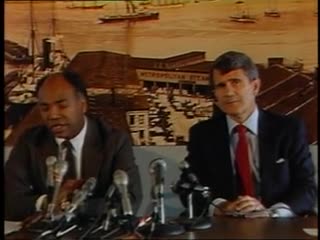
Hope Kelly reports that Reverend Graylan Hagler of the Church of the United Community has announced his candidacy for mayor of Boston. He says that it is time for a change in the city of Boston. His supporters cheer. Kelly reviews Hagler's credentials and career. She notes that Hagler has a confrontational style and is experienced in the art of political theater. Kelly reviews Hagler's recent political activities. Kelly's report includes footage of Hagler addressing striking hotel and restaurant workers in November of 1988 and footage of Hagler with unemployed construction workers at a press conference at a Roxbury construction site in December of 1990. Kelly's report also includes footage of Hagler denouncing racism on the part of city officials at a press conference in the wake of the Carol Stuart murder case. Kelly's report includes footage from an interview with Hagler in March of 1991. He says that he is seeking justice and equity in the city.
1:00:11: Visual: Footage of the Reverend Graylan Ellis-Hagler (Church of the United Community) announcing his candidacy for mayor of Boston. Ellis-Hagler says that it is time for change. The audience applauds. Shots of Ellis-Hagler supporters cheering. Hope Kelly reports that Ellis-Hagler's announcement was a rousing reminder that many residents of the city are ready for a change. V: Footage of Ellis-Hagler speaking to supporters. Ellis-Hagler says, "no more business as usual" and "no more disrespect." Kelly reports that Ellis-Hagler is a minister; that Ellis-Hagler was born in Baltimore and graduated from Oberlin College. Kelly reports that Ellis-Hagler listed many reasons why Ray Flynn (Mayor of Boston) should not be re-elected. V: Shots of Ellis-Hagler as he addresses the crowd. Shots of the audience. Footage of Ellis-Hagler addressing supporters. Ellis-Hagler says that streets in some neighborhoods have more trash-filled lots than houses. Ellis-Hagler says that the city is ready for a change. The audience applauds. Kelly reports that Ellis-Hagler says that his constituents are the ones who live on streets with vacant lots. Kelly reports that Ellis-Hagler believes that the city needs to hire more of its own residents instead of bringing in workers from outside. V: Footage of Ellis-Hagler addressing supporters. Ellis-Hagler says that many workers in the city come from towns outside of the city. Ellis-Hagler says that the city is ready for change. The audience applauds. Shot of Chuck Turner (teacher) holding up Ellis-Hagler's arm as he sits down after his speech. Kelly reports that Ellis-Hagler is experienced in the art of political theater; that Ellis-Hagler does not give in or give up quickly. V: Footage of Ellis-Hagler speaking to striking hotel and restaurant workers in November of 1988. Ellis-Hagler embraces Domenic Bozzotto (union leader). Footage of Ellis-Hagler at a press conference at a construction site in Dudley Square in December of 1990. Unemployed African-American construction workers stand behind him. Ellis-Hagler says that the workers will not "go away with crumbs." Shots of the construction site. Kelly reports that Ellis-Hagler was arrested twice last winter at the construction site of a new Post Office facility in Dudley Square. Kelly reports that Ellis-Hagler was supporting the cause of unemployed construction workers in his community. V: Footage of Ellis-Hagler being interviewed on March 13, 1991. Ellis-Hagler says that people must buck the system in order to stand up for their dignity and rights. Footage of Ellis-Hagler at a press conference about the Carol Stuart murder case in January of 1990. Ellis-Hagler compares the actions of city officials and the media to the actions of the Ku Klux Klan. Ellis-Hagler says that the African American and Latino communities have been "raped" by the police and the media. Shot of an audience member at the press conference holding a sign reading, "What do Boston and South Africa have in common? Stopping and detaining men because of the color of their skin." Kelly reports that Ellis-Hagler excoriated the police, the media, and the mayor after the murder of Carol Stuart (Reading resident). Kelly notes that Ellis-Hagler's style is confrontational. V: Footage of Ellis-Hagler being interviewed on March 13, 1991. Ellis-Hagler says that he has a desire to seek justice and equity in the city. Ellis-Hagler says that he wants the voices of all of the people to be heard. Kelly stands outside of a church. Kelly reports that Flynn' s campaign is following the actions of Ellis-Hagler; that Ellis-Hagler is short on money, but long on mission. V: Footage of Ellis-Hagler addressing his supporters. Ellis-Hagler says that he and his supporters will win. The audience applauds. Ellis-Hagler steps back from the microphone and greets Elizabeth Ellis-Hagler (wife of Graylan Ellis-Hagler). Another man speaks into the microphone.
1:00:11: Visual: Footage of the Reverend Graylan Ellis-Hagler (Church of the United Community) announcing his candidacy for mayor of Boston. Ellis-Hagler says that it is time for change. The audience applauds. Shots of Ellis-Hagler supporters cheering. Hope Kelly reports that Ellis-Hagler's announcement was a rousing reminder that many residents of the city are ready for a change. V: Footage of Ellis-Hagler speaking to supporters. Ellis-Hagler says, "no more business as usual" and "no more disrespect." Kelly reports that Ellis-Hagler is a minister; that Ellis-Hagler was born in Baltimore and graduated from Oberlin College. Kelly reports that Ellis-Hagler listed many reasons why Ray Flynn (Mayor of Boston) should not be re-elected. V: Shots of Ellis-Hagler as he addresses the crowd. Shots of the audience. Footage of Ellis-Hagler addressing supporters. Ellis-Hagler says that streets in some neighborhoods have more trash-filled lots than houses. Ellis-Hagler says that the city is ready for a change. The audience applauds. Kelly reports that Ellis-Hagler says that his constituents are the ones who live on streets with vacant lots. Kelly reports that Ellis-Hagler believes that the city needs to hire more of its own residents instead of bringing in workers from outside. V: Footage of Ellis-Hagler addressing supporters. Ellis-Hagler says that many workers in the city come from towns outside of the city. Ellis-Hagler says that the city is ready for change. The audience applauds. Shot of Chuck Turner (teacher) holding up Ellis-Hagler's arm as he sits down after his speech. Kelly reports that Ellis-Hagler is experienced in the art of political theater; that Ellis-Hagler does not give in or give up quickly. V: Footage of Ellis-Hagler speaking to striking hotel and restaurant workers in November of 1988. Ellis-Hagler embraces Domenic Bozzotto (union leader). Footage of Ellis-Hagler at a press conference at a construction site in Dudley Square in December of 1990. Unemployed African-American construction workers stand behind him. Ellis-Hagler says that the workers will not "go away with crumbs." Shots of the construction site. Kelly reports that Ellis-Hagler was arrested twice last winter at the construction site of a new Post Office facility in Dudley Square. Kelly reports that Ellis-Hagler was supporting the cause of unemployed construction workers in his community. V: Footage of Ellis-Hagler being interviewed on March 13, 1991. Ellis-Hagler says that people must buck the system in order to stand up for their dignity and rights. Footage of Ellis-Hagler at a press conference about the Carol Stuart murder case in January of 1990. Ellis-Hagler compares the actions of city officials and the media to the actions of the Ku Klux Klan. Ellis-Hagler says that the African American and Latino communities have been "raped" by the police and the media. Shot of an audience member at the press conference holding a sign reading, "What do Boston and South Africa have in common? Stopping and detaining men because of the color of their skin." Kelly reports that Ellis-Hagler excoriated the police, the media, and the mayor after the murder of Carol Stuart (Reading resident). Kelly notes that Ellis-Hagler's style is confrontational. V: Footage of Ellis-Hagler being interviewed on March 13, 1991. Ellis-Hagler says that he has a desire to seek justice and equity in the city. Ellis-Hagler says that he wants the voices of all of the people to be heard. Kelly stands outside of a church. Kelly reports that Flynn' s campaign is following the actions of Ellis-Hagler; that Ellis-Hagler is short on money, but long on mission. V: Footage of Ellis-Hagler addressing his supporters. Ellis-Hagler says that he and his supporters will win. The audience applauds. Ellis-Hagler steps back from the microphone and greets Elizabeth Ellis-Hagler (wife of Graylan Ellis-Hagler). Another man speaks into the microphone.
Collection:
Ten O'Clock News
Date Created:
05/01/1991