Description:
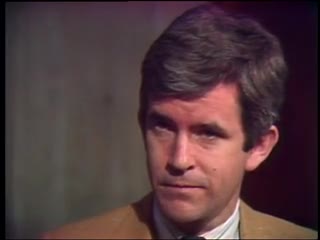
Compilation of Christopher Lydon stories. Christopher Lydon interviews Bill Lee (pitcher, Montreal Expos) at Fenway Park. Lee discusses the possibility of a baseball strike. Lee talks about unions and his feelings about baseball. Lee says that he is no longer "addicted" to baseball. Three essays by Robert J. Lurtsema about the coming of summer, the coming of fall and barnacles. Lydon reports on the upcoming preliminary elections for the Boston City Council. Lydon analyzes voting patterns in various districts and the political networks of some candidates. Lydon notes that there has been little voter interest in the campaign. The report includes interviews with and profiles of candidates Maureen Craven Slade, Craig Lankhorst, and Stephen Michaels. Lydon reports from the Boston Celtics' practice court in Brookline. Lydon interviews Ernie DiGregorio (basketball player) and Nate "Tiny" Archibald for the report. Lydon's second report on the upcoming preliminary elections for Boston City Council includes footage from interviews with several candidates including Maura Hennigan, James Kelly, David Scondras, Charles Yancey, Ed McNamara, and Michael McCormack. The candidates talk about voter anger and apathy, the city's fiscal crisis, the need for better city services and the policies of Kevin White (Mayor of Boston). Lydon interviews Donald Woods (South African journalist) about South Africa. Woods criticizes the US veto of the United Nations condemnation of the South African invasion of Angola. Woods says that the white minority in South Africa must negotiate with the black majority in order to avoid a civil war. Woods compares the political situations in South Africa to that of Northern Ireland.
1:00:04: Christopher Lydon interviews Bill Lee (pitcher, Montreal Expos) at Fenway Park. Lee says that he is happy to come back to Fenway Park to play a game. V: Shots of Montreal Expos practicing at Fenway Park. Lee says that he is disappointed to see changes at Fenway Park. He criticizes the disappearance of the bleacher seats, the installation of plastic seats and the increase in advertising at the park. Lydon asks Lee about the baseball strike. Lee says that the players had to strike to maintain the status quo; that unions in the US are being pushed out of existance by a "conservative" government; that he fears the advent of an Orwellian future in this country. Lee says that the issue of uncompensated free agency was not important to him; that he does not believe in free agency. Lee talks about the concept of free agency. He says that the baseball system is destined to fail because it is based on a "false foundation." Lee digresses, talking about the fact that Fenway Park is built on a landfill. Lee says that he is no longer "addicted" to baseball; that he does not need to play at the professional level; that he is playing professional baseball because his "old lady" wants him to. Lee says that the season has been exciting so far. He digresses again, talking about raising fish on an Indian reservation in Bellingham. Lee says that the US needs to give land back to Native Americans. Lydon and Lee shake hands as the interview ends.
1:04:27: Robert J. Lurtsema's essay on beach plums and the coming of summer. Segment is accompanied by shots of beach plums; of trees; of a deserted dirt road lined with bushes and trees.
1:06:59: Robert J. Lurtsema's essay on the coming of fall and the need to adapt a slower tempo as the year draws to a close. Segment is accompanied by shots of trees and the landscape in a small park.
1:09:51: Robert J. Lurtsema's essay on barnacles, which cover the rocks along the coast. Segment is accompanied by shots of barnacles-covered rocks along the ocean shore; of a marsh at sunset.
1:13:02: Christopher Lydon stands outside of Boston City Hall. Lydon reports that the preliminary elections for City Council seats are ignored by voters in non-mayoral election years; that six out of seven residents did not vote in the preliminary City Council elections four years ago. Lydon reports that City Council candidates represent areas of the city with a politically active electorate. V: Shot of a map of Boston. South Boston, Dorchester, and West Roxbury are highlighted in red. Lydon reports that some sections of South Boston, Dorchester, and West Roxbury had voter turnouts as high as 30% four years ago. V: Shot of the same map of Boston. Areas around South Boston, Dorchester, Hyde Park, and West Roxbury are highlighted in yellow. Lydon reports that neighborhoods with high percentages of white families and homeowners have higher voter turnouts; that these voters have often supported candidates like Louise Day Hicks (former Boston City Councilwoman) and Joseph Timilty (former mayoral candidate). Lydon reports that East Boston, the Back Bay, Allston/Brighton, the South End, Mattapan, and Roxbury usually have low voter turnouts. Lydon reports that City Councillors Rosemarie Sansone, John Sears, and Lawrence DiCara will not seek reelection this year; that the three councillors are popular with younger, progressive voters. Lydon reports that the young, progressive voters tend to live along the waterfront and in the West End, Chinatown, Beacon Hill and the Back Bay. V: Shots of DiCara, Sansone and Sears. Shot of the highlighted map of Boston with the waterfront, the West End, Chinatown, Beacon Hill, and a few other neighborhoods highlighted in green. Lydon says that progressive voters like a polished candidate. Lydon reports that there has been little interest in the campaign; that there have been few advertisements and little media attention. Lydon says that a good political organization is crucial to the candidates. V: Shots of candidates meeting with voters. Lydon says that "house party politics" is at the heart of the campaign; that Kevin White (mayor, City of Boston) has the best organized political network in the city; that his support will help the "Kevin seven" candidates. Lydon reports that police officers have a network which may help Ed McNamara (City Council candidate); that fire fighters may organize to help Joe Maher (City Council candidate). Lydon says that roots in a politically active neighborhood, a good political network, a polished image, and a recognized name are all assets in the race for a City Council seat. V: Shot of signs for City Council candidates Brian Hickey, Frederick Langone, and Ray Flynn. Lydon reports that Maureen Craven Slade (candidate, Boston City Council) was not endorsed by The Boston Globe or by White; that she has a very well-connected family. Lydon reports that Craven Slade uses her maiden name. Lydon reviews the political careers of her father, mother, brother and cousin. Lydon notes that her mother was a legendary City Councilwoman in the 1960s. V: Footage of Lydon interviewing Craven Slade. Craven Slade says that she has 60 first cousins in her political organization. Footage of Craven Slade saying that many voters remember her mother; that many of her mother's former supporters have formed a political network promoting her candidacy. Lydon reports that Craig Lankhorst (candidate, Boston City Council) is a progressive candidate who has been endorsed by the Boston Globe; that his support is strong in "non-voting" neighborhoods. V: Footage of Lankhorst saying that he is campaigning city-wide; that he has connections in Brighton and in African American neighborhoods. Lankhorst says that he is also concentrating on Ward 16 and West Roxbury; that he needs all of his supporters in the "non-voting" neighborhoods to get out to the polls. Lydon reports that Stephen Michaels (candidate, Boston City Council) has roots in West Roxbury, a polished image and support from White. V: Footage of Lydon interviewing Michaels. Michaels says that he was a community activist in West Roxbury; that he has family and friends in Dorchester and South Boston; that he has an endorsement in the Beacon Hill District. Michaels says that it is impossible to campaign city-wide in the primary. Lydon reports that Michaels's surname has been shortened from a longer Polish name; that the Polish clubs all know about his Polish background.
1:20:41: Lydon reports on Press Day at the Boston Celtics' practice court in Brookline. V: Shots of Celtics' players shooting baskets while the press stands around the court; of Robert Parish (player, Boston Celtics). Footage of Ernie DiGregorio (basketball player) talking to Lydon about Channel 2. Shot of Larry Bird (player, Boston Celtics) talking to a reporter. Lydon reports that DiGregorio was a star at Providence College; that DiGregorio is trying out for a spot on the Celtics' team. V: Footage of DiGregorio saying that he will make the team if he is good enough; that he feels no pressure. Footage of Nate "Tiny" Archibald (player, Boston Celtics) saying that DiGregorio will have to learn how to run the plays out on the court. Lydon reports that DiGregorio will have to compete with Archibald for playing time. Lydon jokes about being taller than Archibald. He humorously speculates about his potential for a career in basketball.
1:22:28: Lydon reports that eighteen candidates are running for nine seats on the Boston City Council; that the candidates have been campaigning across the city. V: Shots of Raymond Flynn (candidate, Boston City Council) walking to church with his family; of Lydon interviewing Maura Hennigan (candidate, Boston City Council) in front of the Park Plaza Hotel; of a campaign sign for Charles Yancey; of Lydon interviewing James Kelly (candidate, Boston City Council) in South Boston. Lydon says that the candidates have reported apathy and anger among the voters. V: Footage of Craig Lankhorst (Boston City Council candidate) saying that city residents who have been affected by cuts in the city budget and city services are upset; that residents who have been unaffected by cuts seem to be cynical and apathetic. Footage of Hennigan saying that voters talk about wanting change, but vote for the same candidates over and over. Footage of Kelly saying that voters feel like the City Council has no influence; that Kevin White (Mayor, City of Boston) holds all of the power. Footage of David Scondras (Boston City Council candidate) saying that voters are frustrated; that they do not understand where the city's money is going. Lydon says that the City Council elections have been overshadowed by controversy between the White and the state over the Tregor Bill. V: Footage of Charles Yancey (Boston City Council candidate) with campaign signs; of a Boston Fire Department station. Lydon says that City Council candidates have ignored the mayor's warning of a money crisis; that the candidates are campaigning for better services to city residents. V: Footage of Scondras saying that the city has not collected $60 million in back taxes; that the Tregor Bill exists to pay off a few wealthy interests who can be put off; that the city has not been managed efficiently. Scondras says that emergency money marked for city services must be used for those services. Footage of Kelly saying that White has a history of hiding the true financial figures; that he is not sure if there is a fiscal crisis. Footage of Hennigan saying that the voters have confused the Tregor Bill and Proposition 2 1/2; that the city is facing a fiscal crisis. Footage of Yancey saying that the city is facing a budget crunch due to Proposition 2 1/2; that some of the cuts in services were not necessary; that there is excess spending elsewhere in the administration. Lydon reports that Ed McNamara (candidate, Boston City Council) is a former FBI employee and former police commissioner. V: Footage of McNamara campaigning outside of a Roche Brothers' supermarket. He says that the city is faced by a cash shortage; that the city is not faced with a fiscal crisis. Lydon reports that none of the six incumbent City Councillors support White; that City Council resistance to White's policies will continue no matter who is elected. V: Shots of City Council members in the City Council chambers. Footage of McNamara saying that the voters' mandate is "anti-administration." Footage of Hennigan saying that voters want police officers and fire fighters back on the street; that voters want the City Council to make Proposition 2 1/2 work; that voters want the council to stand up to the mayor on issues instead of politics. Footage of Michael McCormack (candidate, Boston City Council) saying that voters want city services restored; that voters want the council to control the mayor's spending. Footage of Kelly saying that voters want the City Council to work with the mayor when he is right and oppose the mayor when he is wrong. Kelly notes that the mayor is rarely right.
1:27:25: Christopher Lydon interviews Donald Woods (South African anti-apartheid activist). Woods talks about the US veto of the United Nations condemnation the South African invasion of Angola. Woods says that the US veto encourages the white minority to believe that the US condones their actions; that the US veto allows the Soviet Union to pose as a friend of the black South Africans. Woods says that it is possible to avoid a civil war in South Africa only if western governments put pressure on the white minority. Woods says that the white minority must negotiate with black South Africans to allow the drafting of a democratic constitution. Lydon asks Woods about parallels between South Africa and Northern Ireland. Woods says that Northern Ireland and South Africa are similar in the tactics used by the minority to control the majority. Woods says that there will be no peace in Ireland until the British pull out of the country. Lydon comments that the minority in both countries are well armed and resistant to pressure. Woods says that there are "myths" surrounding the minorities in both countries; that Ian Paisley (leader of the Democratic Unionist Party of Ireland) may be full of "hot air;" that the Protestants in Northern Ireland must realize that they are Irish and must learn to live in Ireland; that South African whites must realize that they live on a black continent.
Date Created:
11/01/1981