Description:
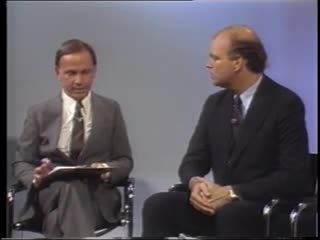
Judy Stoia interviews James Kelly (South Boston Information Center) about resistance to busing and his decision not to attend the Procession Against Violence. Kelly says that he has appealed to African American parents to put pressure on the NAACP to stop busing. Kelly says that many African American parents agree that "forced busing is the problem." Following interview is silent footage of helicopter and security detail among rooftops of City Hall Plaza. A WGBH camera crew overlooks City Hall Plaza and records the Procession Against Violence. Thomas O'Neill, Jr. (Lieutenant Governor of Massachusetts), Kitty Dukakis, Michael Dukakis (Governor of Massachusetts), Kathryn White, Kevin White (Mayor, City of Boston), Charles Barry (State Secretary of Public Safety), Dr. Charles Glenn (Massachusetts State Department of Education), Ann Landers (advice columnist), Joseph Kennedy, Edward Kennedy (US Senator), and Edward Brooke (US Senator) are among those at the front of the procession. Footage includes overhead shots of the crowd and audio of hecklers jeering at White and Kennedy. Reverend Robert Golledge and John Colburn address the crowd. Tape 1 of 3.
1:00:15: Visual: Judy Stoia sets up an interview with James Kelly (South Boston Information Center) near City Hall Plaza. Stoia asks Kelly about a message he delivered to African American parents. Kelly says that he urged African American parents to use their influence with the NAACP to stop forced busing; that both white and African Americans know that "forced busing is the problem"; that African American parents have encouraged the South Boston Information Center to continue the fight against busing. Kelly says that he made the plea to African American parents in order to help restore sanity to the city. Kelly says that he will not participate in today's Procession Against Violence because it will do nothing to remedy forced busing; that the mayor, state officials and "the liberals" need to take a stand against forced busing. Stoia probes Kelly's motives in boycotting the march. Kelly says that his statement to African American parents will be more effective than a march around the city by "the liberal establishment." Kelly says that white parents want a good education for their children in neighborhood schools; that the "liberal establishment" and the media need to realize that "good education for all kids" is more important than "quality integrated education." Kelly says that he hopes white parents and African American parents can work together to solve some of the problems in the city. Stoia thanks Kelly. The crew takes some cutaway shots of Stoia asking questions. 1:05:09: V: A small crowd begins to gather for the procession against violence at City Hall Plaza. A few people look down on the plaza from rooftops. Helicopters circle above City Hall Plaza. A crowd mills about on the plaza. A small crowd is gathered around some seating. A marching band plays. 1:07:44: V: Groups of people walk toward City Hall Plaza. Police officers are visible. One officer directs traffic. The music of a marching band is audible, then it stops. Marchers begin to fill the street, moving toward the plaza. Four men in uniform lead the march, carrying an American flag and a Massachusetts state flag. A crowd of people stream into the plaza. A woman yells, "Kevin, stop forced busing." A man yells, "Hey, you hypocrite." Thomas O'Neill (Lieutenant Governor of Massachusetts), Michael Dukakis (Governor of Massachusetts), Kitty Dukakis, Kathryn White, Kevin White (Mayor, City of Boston), Charles Barry (State Secretary of Public Safety), Dr. Charles Glenn (Massachusetts State Department of Education) and Ann Landers (advice columnist) are among those visible at the front of the marchers. Some of the crowd jeers. A man yells, "Kennedy, you faker." The officials at the front of the march greet Elma Lewis and others informally as they proceed to the front of the plaza. A woman yells, "Stop forced busing. A large crowd continues to stream into the plaza. Shots of the assembled crowd. The WGBH crew tries to locate and identify public figures. A helicopter circles overhead. 1:15:25: V: A marching band begins to play. The stream of marchers continues into the plaza. Shots of assembled crowd. A woman yells, "Stop forced busing. A voice is heard addressing the crowd, calling for "a peaceful community in Boston." Shot of the crowd. O'Neill, Joseph Kennedy, Edward Kennedy (US Senator) and Edward Brooke (US Senator) are visible. Audio is difficult to hear. Reverend Robert Golledge (Vicar, Old North Church) addresses the crowd from the podium. Golledge introduces the band from the St. William's School in Dorchester. Assembled in front of the podium, the band strikes up the national anthem. Shots of the media photographing the event; of the crowd filling the plaza; of officials at the front of the crowd. John Colburn (Episcopal Archdiocese) leads the crowd in prayer.
1:00:15: Visual: Judy Stoia sets up an interview with James Kelly (South Boston Information Center) near City Hall Plaza. Stoia asks Kelly about a message he delivered to African American parents. Kelly says that he urged African American parents to use their influence with the NAACP to stop forced busing; that both white and African Americans know that "forced busing is the problem"; that African American parents have encouraged the South Boston Information Center to continue the fight against busing. Kelly says that he made the plea to African American parents in order to help restore sanity to the city. Kelly says that he will not participate in today's Procession Against Violence because it will do nothing to remedy forced busing; that the mayor, state officials and "the liberals" need to take a stand against forced busing. Stoia probes Kelly's motives in boycotting the march. Kelly says that his statement to African American parents will be more effective than a march around the city by "the liberal establishment." Kelly says that white parents want a good education for their children in neighborhood schools; that the "liberal establishment" and the media need to realize that "good education for all kids" is more important than "quality integrated education." Kelly says that he hopes white parents and African American parents can work together to solve some of the problems in the city. Stoia thanks Kelly. The crew takes some cutaway shots of Stoia asking questions. 1:05:09: V: A small crowd begins to gather for the procession against violence at City Hall Plaza. A few people look down on the plaza from rooftops. Helicopters circle above City Hall Plaza. A crowd mills about on the plaza. A small crowd is gathered around some seating. A marching band plays. 1:07:44: V: Groups of people walk toward City Hall Plaza. Police officers are visible. One officer directs traffic. The music of a marching band is audible, then it stops. Marchers begin to fill the street, moving toward the plaza. Four men in uniform lead the march, carrying an American flag and a Massachusetts state flag. A crowd of people stream into the plaza. A woman yells, "Kevin, stop forced busing." A man yells, "Hey, you hypocrite." Thomas O'Neill (Lieutenant Governor of Massachusetts), Michael Dukakis (Governor of Massachusetts), Kitty Dukakis, Kathryn White, Kevin White (Mayor, City of Boston), Charles Barry (State Secretary of Public Safety), Dr. Charles Glenn (Massachusetts State Department of Education) and Ann Landers (advice columnist) are among those visible at the front of the marchers. Some of the crowd jeers. A man yells, "Kennedy, you faker." The officials at the front of the march greet Elma Lewis and others informally as they proceed to the front of the plaza. A woman yells, "Stop forced busing. A large crowd continues to stream into the plaza. Shots of the assembled crowd. The WGBH crew tries to locate and identify public figures. A helicopter circles overhead. 1:15:25: V: A marching band begins to play. The stream of marchers continues into the plaza. Shots of assembled crowd. A woman yells, "Stop forced busing. A voice is heard addressing the crowd, calling for "a peaceful community in Boston." Shot of the crowd. O'Neill, Joseph Kennedy, Edward Kennedy (US Senator) and Edward Brooke (US Senator) are visible. Audio is difficult to hear. Reverend Robert Golledge (Vicar, Old North Church) addresses the crowd from the podium. Golledge introduces the band from the St. William's School in Dorchester. Assembled in front of the podium, the band strikes up the national anthem. Shots of the media photographing the event; of the crowd filling the plaza; of officials at the front of the crowd. John Colburn (Episcopal Archdiocese) leads the crowd in prayer.
Collection:
Ten O'Clock News
Date Created:
04/23/1976