Description: Dapper O'Neil visits Mapplethorpe exhibit at the Institute of Contemporary Art, to judge for himself if photos are obscene. David Ross, the museum director, greets him. Dapper takes notes on the pictures, is disgusted, threatens city council action. Interview with Dappy and an argument between Ross and Dapper over whether the city council has authority to censor ICA exhibit, since ICA is owned by BRA. B-roll follows of exteriors of ICA, police and crowds waiting for entrance, opening of the exhibit, chanting, free speech protest outside museum.
Collection: Ten O'Clock News
Date Created: 08/01/1990
Description: Interview with Albert "Dapper" O'Neil during his run for Suffolk County sheriff. He accuses his oppenent of corruption and complains that no Boston newspapers will report the negative allegations he has made against his opponent. He discusses his plan to make the sheriff's department more visible and says "I'm a law and order man." He discusses his plan for the Charles St. Jail. He defends the office of the sheriff in the face of claims that the state should take over its responsibilities. He accuses the current sheriff of patronage and speaks against it in his campaign. He expresses his conservatism against the liberalism of the current sheriff., which includes his position against furloughs and halfway houses. He explains how he got the nickname "Dapper." He explains why he thinks former mayor and governor James Curley is the greatest man that ever lived. Video dropout in the middle of the video.
Collection: Ten O'Clock News
Date Created: 09/07/1978
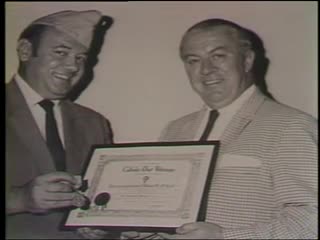
Description: Photos of Albert Dapper O'Neil.
Collection: Ten O'Clock News
Date Created: 09/07/1978
Description: Phoenix reporter says Darryl Whiting wants to be boss of Boston gangs, and that his Dorchester recreation club is a center for drug dealing. Whiting denies it.
Collection: Ten O'Clock News
Date Created: 05/16/1990
Description: Darryl Whiting, who runs Dorchester social club, video and sneaker store, barber shop, and other businesses in New York, is suspected of involvement in drug and gang activity. He denies allegations.
Collection: Ten O'Clock News
Date Created: 05/25/1990
Description: Interview with Data General president Edson de Castro on New Hampshire workforce as high quality. Women assemblers put together tiny components of printed circuit boards. reel 3 of 4.
Collection: Ten O'Clock News
Date Created: 11/09/1977
Description: Women assemblers solder components on printed circuit boards at Data General. Sign at entrance to plant. reel 4 of 4.
Collection: Ten O'Clock News
Date Created: 11/09/1977
Description: Soviet Armenian pianist David Azarian performs in Cambridge with his jazz trio.
Collection: Ten O'Clock News
Date Created: 11/10/1989
Description: John Hashimoto reports on a visit to Boston by David Duke (Louisiana State Representative and former Ku Klux Klansman). Hashimoto notes that protesters turned out for Duke's speech at the Old South Meeting House. Hashimoto's report includes footage of protesters in front of the Old South Meeting House and footage of Duke's speech inside, which protesters try to drown out with chanting. Duke struggles to make himself heard above the jeers of protesters in the Meeting House. A scuffle breaks out between a protester and a Duke supporter. Hashimoto reports that Duke is trying to trying to overcome his past as a Ku Klux Klan leader, but that his white rights agenda was not well received during his visit to Boston. Hashimoto interviews Duke. Duke says that he has overcome his past and that he is not longer a "hater." Hashimoto reports that Duke answered questions from callers on a radio talk show while in Boston. Hashimoto's report includes footage of Duke speaking to callers in a radio studio. Duke defends himself against charges of racism. This edition of the Ten O'Clock News also included the following items: Avi Nelson and Dianne Wilkerson talk about quotas and civil rights and Carmen Fields reports on the history and present activities of the Ku Klux Klan
1:00:04: Visual: Footage of protesters outside of the Old South Meeting House in Boston. The protesters march in a circle, carrying signs. A protest leader shouts into a bullhorn, "Hitler-lovers you can't hide. Shots of protesters; of a man carrying a sign reading, "David Duke: Klan in a suit." John Hashimoto reports that David Duke (Louisiana state representative) spoke at the Old South Meeting House tonight. V: Shot of Duke sitting inside the Old South Meeting House. Audio of the audience booing and whistling at Duke. Hashimoto reports that there was tight security in the Meeting House; that tension erupted from the moment he appeared. V: Shots of audience members yelling and clapping their hands. Hashimoto reports that some audience members were trying create so much noise that Duke could not speak. V: Shot of Duke sitting in the Meeting House; of audience members on their feet making noise. Footage of Duke speaking from a podium. Duke says that freedom of speech exists for all points of view. Duke says that there are many historical examples of people who have stood up for an idea, only to find out that the idea was wrong. Hashimoto reports that Duke visited Boston in his own bus in 1974; that Duke was a Ku Klux Klan member in 1974; that Duke tried to stir up trouble in South Boston during the busing crisis. V: Shots of Duke speaking from the podium; of the audience. Audio of the audience yelling. Hashimoto reports that Duke is now a state representative from Louisiana; that he is a former candidate for the US Senate. Hashimoto reports that Duke is running for governor of Louisiana; that some recognize him as a powerful political force. V: Footage of Duke being interviewed by Hashimoto. Hashimoto asks Duke if people see him as a "hater." Duke says that some people think of him as a "hater." Duke says that he is sorry if some people feel that way. Duke says that he does not hate anyone; that he want the country to work for everybody. Duke says that the country's liberal social policies have not worked. Footage of Duke speaking from the podium at the Old South Meeting House. Audio of audience members making noise. Duke condemns the nation's welfare program. Hashimoto reports that Duke repeatedly refers to the underclass. Hashimoto reports that Duke believes that the underclass is a burden to society. Hashimoto says that Duke is haunted by his past and by his present rhetoric. V: Footage of Duke being interviewed by Hashimoto. Duke says that he has felt hatred in the past; that he regrets that hatred. Duke says that he has evolved and grown. Duke says that he is a Christian; that he has been "made new" by Christ. Hashimoto reports that Duke took calls on a WHDH radio show with Ted O'Brien (radio personality); that Duke was not rattled by callers. V: Footage of Duke in a radio studio. Duke speaks into a broadcaster's microphone. Duke says that affirmative action is discrimination against white people; that affirmative action is wrong. Duke says that discrimination against African Americans is also wrong. Duke says that voters have a right to question his past. Duke says that his past should not be the only issue. Duke says that Edward Kennedy (US Senator) overcame Chappaquiddick; that Duke should be able to overcome his past. Duke says that the first child born in New Orleans this year was the eighth illegitimate child of a local woman. Duke says that there are differences between the various chapters of the Ku Klux Klan; that none of the members of his chapter were ever accused of harming a minority. Shot of O'Brien in the studio. Footage of Duke being interviewed by Hashimoto. Duke says that he never hated all African Americans and Jews; that he felt hatred toward those who committed robbery and rape in the South. Hashimoto asks if those criminals were African American or Jewish. Duke says no. Hashimoto reports that a Duke supporter clashed with protesters during Duke's speech at the Old South Meeting House; that Duke's speech was a sideshow. V: Shots of police and media in the balcony of the Old South Meeting House. Police are breaking up a fight. The crowd mills around. Hashimoto stands in the Old South Meeting House. The audience boos and whistles at Duke. Duke is visible at the podium. Hashimoto reports that Duke's white rights agenda was not well received publicly in Boston.
Collection: Ten O'Clock News
Date Created: 03/28/1991
Description: Interview with David Finnegan as Boston mayoral candidate. His study of philosophy shapes his politics and view of government.
Collection: Ten O'Clock News
Date Created: 09/12/1983