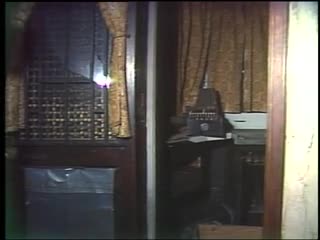
Description: PUVA Treatment at Mass General Hospital, drugs, ultraviolet light. .
Collection: Ten O'Clock News
Description: Palestinian activists march in front of Israeli consulate in Boston to protest murder committed by deranged Israeli in occupied territories.
Collection: Ten O'Clock News
Date Created: 05/21/1990
Description: Interview with Palestinian who believes US reaction to Iraqi invasion of Kuwait is inconsistent w/ support of Israelis in West Bank. In quest for a homeland, he embraces Saddam Hussein's pan-Arabism.
Collection: Ten O'Clock News
Date Created: 08/16/1990
Description: Judy Stoia interviews Elvira "Pixie" Palladino about her reaction to the Supreme Court's refusal to hear arguments against court-ordered busing in Boston. She is angry about the decision and calls the members of the court a "pack of flaming liberals." Palladino urges the anti-busing movement to continue their protest through legitimate means, like demonstrations and picketing, without resorting to violence. Palladino says that the anti-busing movement will pressure elected officials to redress the grievances of the anti-busing movement. Palladino notes that she is more concerned with a politician's stance on busing than with his or her political party; that she would switch to the Republican Party if the party came out against busing. Palladino says that she is opposed to all forms of busing, including a metropolitian busing plan. Palladino accuses the courts of dictating to parents how they should raise their children; she says that forced busing in Boston represents "reverse discrimination."
0:34:47: Visual: Elvira "Pixie" Palladino is interviewed as she sits behind a table. She says that she is disappointed in the Supreme Court's refusal to hear arguments against court-ordered busing in Boston; that the Supreme Court is a "pack of flaming liberals" and "out of touch with reality"; that she would expect to hear about this kind of "judicial oppression" in the USSR, Cuba or China; that the "shocking" decision will result in increased "white flight" from Boston schools; that the Supreme Court is more interested in redressing the grievances of criminals than law-abiding citizens. Pam Bullard asks Palladino if this is the end of anti-busing action in the courts. Palladino says that they are waiting for an appeal to be heard on the receivership of South Boston High School; that she hopes the court will void the receivership of South Boston High School. Palladino says that the Supreme Court decision will probably result in further resistance to busing; that the anti-busing movement needs to unite in demonstrating against busing through whatever means are left open to them; that the anti-busing movement must concentrate on furthering anti-busing legislation and on electing officials who take an anti-busing position. 0:38:49: V: Bullard asks Palladino about being elected to public office through an anti-busing campaign. Palladino says that government is no longer "of, for and by" the people; that government is now "to" the people; that citizens must be vigilant in protecting their rights; that citizens must elect officials who represent their position on the issues. Bullard asks what recourse anti-busers have if the courts can strike down anti-busing legislation. Palladino says a grass-roots movement could unite the people and put pressure on elected officials. Bullard asks Palladino about the court case concerning Wilmington, Delaware (Evans v. Buchanan), in which suburbs could be forced to integrate their schools. Palladino says that she is opposed to metropolitanization; that she is opposed to forced busing in any form; that forced busing is a failed social experiment. Bullard quotes Palladino as saying that she would not be surprised if anti-busers reacted to the decision in a disruptive manner. Palladino says that she is opposed to violence in any form; that she has received sympathetic calls from anti-busers in Akron, Ohio and Tulsa, Oklahoma; that she is interested in organizing a "constructive" anti-busing reaction. Palladino says again that she would not be surprised if anti-busers react negatively to the decision; that anti-busers may be called on to act as "patriots" to save democracy; that she would like anti-busers to demonstrate their feelings through all legitimate means available. Palladino says that she has never committed an act of violence in her life; that the people of South Boston and Charlestown have been pushed to their limit; that no relief is in sight for the people. 0:43:51: V: Bullard asks Palladino if she feels conflicted as a public official, who must ask her constituents to obey a law she believes is wrong. Palladino says that she is not asking her constituents to do anything illegal; that demonstrating through legitimate means is a legal right; that anti-busers must demonstrate legally, work to further legislation and vote their consciences at the ballot box; that some parents have kept their children out of school for two years; that she fears for the safety of her own children. Palladino says that the government is denying people the basic right to raise their children as they see fit; that the Supreme Court should not dictate where parents send their children to school; that the situation in Boston is a blatant case of "reverse discrimination". Bullard asks Palladino if the anti-busing movement will lobby Tip O'Neill to their cause. Reporter notes that O'Neill will be the new Speaker of the US House of Representatives. Palladino says that O'Neill has not been receptive to the anti-busing movement in the past; that pressure will be brought to bear upon him to represent the anti-busing majority in Boston. Palladino says that voters are crucial to the careers of politicians. Bullard asks Palladino about her voting preferences. Palladino says that she has always voted for the Democratic party; that she would switch to the Republican party if they were to come out against forced busing; that a candidate's position on busing is more important than his or her party affiliation. Palladino says that she is committed to demonstrating against busing through legal means; that she would urge the anti-busing movement to demonstrate non-violently.
Collection: Ten O'Clock News
Date Created: 06/14/1976
Description: Interview with peace activist Pam Solo, MacArthur Award recipient. She will use the '"genius grant" to further her work with Institute for Peace and International Security.
Collection: Ten O'Clock News
Date Created: 07/18/1989
Description: Marcus Jones reports on the public's interest in the Pamela Smart trial. Includes interviews with "groupies" that wait overnight for public seating inside the courtroom, or to watch the trial on television in an adjoining room. The trial is being broadcast live throughout New Hampshire (shots of residents watching in bars, nursing homes, etc.) and has gained national media attention. Reporter Bill Spencer says that the live courtroom coverage will help people understand the legal system and make them more willing to serve as jurors, but Marcus Jones wonders whether the "circus atmosphere" surrounding the trial is about "justice, or just entertainment." B-roll follows edited story, including courthouse exterior, metal detector, waiting for a place in courtroom, Court Room One signs, bags being searched before entry, people entering courtroom directly, Pamela Smart entering courtroom, onlookers watching on television in overflow room, shots of Smart testimony on television.
Collection: Ten O'Clock News
Date Created: 03/18/1991
Description: Rudolph Pierce, Mickey Roache and others hold forum with students at Humphrey Center on "stop and search" tactics by Boston police. Rebecca Rollins reports that Boston lawyers and police officials participated in a forum with students at Madison Park High School. Rollins notes that the topic of the forum was gang activity and the Boston Police Department's stop-and-search procedures. Rollins notes that students and community members have complained about unreasonable stop-and-search procedures by police offiicers. Rollins' report includes footage from the forum. Panelists include Rudolph Pierce (Boston Bar Association), Joan Stanley (Colette Manoil Law Offices) and Francis "Mickey" Roache (Police Commissioner, City of Boston). Pierce says that police have the right to stop a person if there is reasonable suspicion of guilt. Dennis Jean (senior, Madison Park High School) talks about his experiences with police officers who have stopped him. Candido Brown (junior, Madison Park High School) asks why police should be able to search him if he is innocent. Roache tells students that the police department is obliged to protect the rights of citizens. Rollins reports that the forum will help to improve communication between youth and police. Rollins' report includes footage of police officers arresting an African American man. This tape includes additional footage of the forum at Madison Park High School.
1:00:10: Visual: Footage of Rudolph Pierce (Boston Bar Association) speaking at a Madison Park High School. Pierce talks about gang members in Boston. Footage of Joan Stanley (Colette Manoil Law Offices) speaking at the press conference. Stanley says that neighborhood residents are fed up with the activities of some gang members. Rebecca Rollins reports that Boston lawyers and police officials talked about gang activity with students at Madison Park High School. Rollins notes that the lawyers and police officials read fictional scenarios about confrontations between gangs and police. Rollins reports that lawyers and police officials met with students to discuss their differences over the Boston Police Department's stop-and search procedures. V: Shots of the students in the audience at Madison Park High School; of an African American female student addressing the panel of lawyers and police officials. Shot of Francis "Mickey" Roache (Police Commissioner, City of Boston) addressing the students. Footage of a white police officer arresting an African American man. The police officer puts handcuffs on the man, who stands next to a red sports car. Footage of Pierce addressing the students. Pierce says that a police officer has the right to stop and frisk someone if they have reasonable suspicions about the person. Pierce says that the "reasonable suspicion" must be based on facts. Footage of Dennis Jean (senior, Madison Park High School) saying that he and his friends would be stopped and searched almost every day by police. Pierce says that police officers once forced him to drop his pants in public. Pierce says that police officers force people to remove their sneakers; that his friends have had their money stolen by police officers. Pierce says that police officers harass people when they stop to search them. Footage of Roache addressing the students. Roache says that the police often want to act on information that they receive. Roache says that police officers are obliged to protect the rights of citizens. Shots of students in the audience; of the lawyers and police officials at the front of the room. Rollins reports that Roache told students that he investigates every complaint about the improper treatment of citizens at the hands of police officers. Rollins notes that students and police officials cannot agree on what constitutes "improper treatment." V: Shot of two white police officers searching a young African American male on the street. Shot of the lawyers and police officials on the panel at Madison Park High School. Footage of Candido Brown (junior, Madison Park High School) addressing the panel. Brown asks the panel why police officers should be allowed to bother him when he is not doing anything. The students applaud. Shot of a white official addressing the students. Rollins reports that the forum may not resolve the stop-and-search controversy; that the forum will improve communication between youth and police. V: Shots of students at the forum. Footage of Jean saying that the police should be investigating "gang territory." Jean says that police know where the gangs are and what the gangs wear. Jean says that he is not wearing any gang insignia.
Collection: Ten O'Clock News
Date Created: 05/08/1990
Description: Historic documents & archival papers restored at New England paper conservation center. Signature of Abraham Lincoln on Emancipation Proclamation. Old, handwritten census listings.
Collection: Ten O'Clock News
Date Created: 12/12/1986
Description: Inside abandoned Paramount Theater. Deteriorated details of dark interior: seats, gilded and carved decoration, refreshment sign, ticket booth, staircase, peeling ceiling, old telephone on wall, 3D glasses on floor, brocade curtains, art deco motifs.
Collection: Ten O'Clock News
Date Created: 04/04/1978
Description: Meg Vaillancourt reports that the city of Boston is experimenting with a parcel-to-parcel linkage program to promote development in both the downtown area and in the outlying neighborhoods of the city. A new development project has linked a development in Chinatown to the development of Parcel 18 near the Ruggles MBTA station in Roxbury; the developers had to agree to develop both parcels of land. Vaillancourt reviews the details of the proposed development in each neighborhood. Interview with Stephen Coyle of the Boston Redevelopment Authority about the linkage project. Coyle says that the city is linking desirable downtown sites to sites in other neighborhoods in an attempt to bring jobs and services to the neighborhoods. Mayor Ray Flynn, Governor Michael Dukakis, and City Councilor Bruce Bolling at a press conference in Roxbury talk about the benefits of the linkage project. The Columbia Plaza Associates are a group of minority developers who will most likely develop the sites in Chinatown and Roxbury. Vaillancourt reviews the city's criteria for the development project. The project may bring more jobs and better housing to the Roxbury neighborhood. Following the edited story is b-roll of the area near the Ruggles MBTA station. This edition of the Ten O'Clock News also included the following item: Jesse Jackson campaigns for president in New Hampshire
1:00:06: Visual: Footage of Stephen Coyle (Boston Redevelopment Authority) saying that public land is being used to create "community equity." Shots of a street in Chinatown.<br /><br />Meg Vaillancourt reports that a new development project will affect two communities; that a parking garage and another lot on Essex Street will be developed into office space, retail space, a hotel, and moderate-income housing. Vaillancourt adds that land near the Ruggles MBTA station in Roxbury will be developed into a commercial center with two office buildings, a cultural center, and mixed-income housing for over 150 families. <br /><br />: V: Shots of a parking garage in Chinatown; of the area near the Ruggles Street MBTA station in Roxbury.<br /><br />Vaillancourt notes that developers who wanted the land in Chinatown had to agree to develop the land in Roxbury. <br /><br />: V: Shot of shoppers on a street in Chinatown; of African American commuters entering the Ruggles MBTA station. Shot of a sign reading, "Parcel-to-parcel linkage program project #1. Kingston-Bedford/Parcel 18."<br /><br />Vaillancourt reports that the parcel-to-parcel linkage program is the first program of its kind in the nation. <br /><br />V: Footage of Coyle saying that the downtown sites are desirable to developers; that the city is linking downtown sites with sites in other neighborhoods; that the city would like to bring the service economy into other neighborhoods. Coyle says that Roxbury can benefit from a service economy, especially with the new MBTA orange line trains. Footage of Ray Flynn (Mayor of Boston) addressing a crowd seated outside of the Ruggles MBTA station. Flynn talks about the necessity of good jobs, affordable housing, and neighborhood revitalization. The crowd applauds. The crowd is mostly African American. Shots of an older African American woman in the crowd.<br /><br />Vaillancourt reports that the $400 million project will provide benefits to both communities; that the projects will create more than 2,000 jobs in construction; that the projects will provide more than 8,000 permanent jobs when complete. <br /><br />V: Shots of construction workers working on building sites. Footage of Michael Dukakis (Governor of Massachusetts) saying that these projects will prove to students that there are opportunities for them if they stay in school to be trained. Shot of the audience members. Footage of Bruce Bolling (President, Boston City Council) says that the projects are about the "economic mainstreaming" of those who had been factored out of the process. Shots of an African American woman and her child in the audience; of an African American man at the podium.<br /><br />Vaillancourt reports that Roxbury and Chinatown residents met with the Columbia Plaza Associates; that Columbia Plaza Associates are the minority developers of the projects. Vaillancourt notes that the Columbia group must satisfy five criteria before being officially designated as the developer of the projects. Vaillancourt reports that the group must expand minority and community participation in the project beyond 30%; that the group must develop a plan with clear community benefits; that the plan must get maximum benefit from the $6.6 million in linkage funds; that the project plans must be sensitive in scale and design; that the group must find private investors who promote community ownership and who will insure the projects. <br /><br />V: Shot of the Boston skyline from area near the Ruggles MBTA station. Text on screen lists the city's criteria for development. Footage of Coyle being interviewed by Vaillancourt. Coyle says that the plan requires that the land be put to use for the community. Shot of an African American woman holding her child.<br /><br />Vaillancourt stands in front of the Ruggles MBTA station. Vaillancourt reports that Roxbury community activists blocked a 1970 plan to extend an interstate highway; that the plan would have destroyed several area neighborhoods; that the activists argued for more jobs, more housing and better transportation. Vaillancourt notes that the project looks like it will fulfill the wishes of those community activists.:
Collection: Ten O'Clock News
Date Created: 10/12/1987