Description:
Marcus Jones reports on efforts to provide positive male role models for young African American boys through the Paul Robeson Institute for Positive Self-Development. Third and fourth grade boys attend the Institute every Saturday, and 25 men from diverse backgrounds assist the boys in developing their understanding of math, science and history. Interviews with Pamela Brodie and Delores Wilson, who are both teachers at the Holland Community School. Both teachers praise the program. Brodie talks about the need for positive male role models. Interview with Keith Motley, a member of the Paul Robeson Institute, about the program. Motley says that programs like this one can help to end the violence on the streets. Interviews with two African American boys who attend the Institute. Following the edited story is additional footage of Brodie and her students in class at the Holland School.
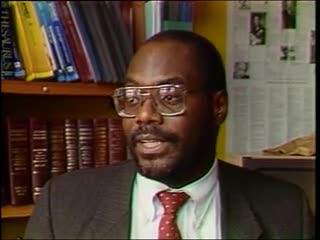
1:00:14: Visual: Footage of students in a classroom at the Holland Community School in Dorchester. Shot of students are getting out their textbooks. The students are seated at their desks. Pamela Brodie (teacher, Holland Community School) stands at the front of the room. Shot of students raising their hands to be called on. Most of the students are non-white. Marcus Jones reports that the majority of students in public elementary schools in Boston are non-white. Jones reports that most of the teachers are female. Jones notes that male authority figures are limited; that African American male authority figures are virtually absent. V: Footage of Brodie being interviewed. Brodie says that most school systems have a lot of female teachers. Brodie says that it is important to have positive male role models for students; that some students do not have a male role model at home. Brodie says that schools need more male role models. Jones reports that elementary school students are in their formative years. Jones reports that a group called Concerned Black Men of Massachusetts visit the Holland School to help students make the right choices. V: Shots of students eating lunch at their desks. Shots of an African American boys walking around the classroom. Footage of Keith Motley (Paul Robeson Institute) being interviewed. Motley says that the group wants to fight against violence; that education is necessary to end violence. Footage from the Paul Robeson Institute. An African American man addresses a group of African American boys. The man speaks from a podium, while the boys sit in seats. The man encourages the boys to be the best people they can be. The man says that the future depends on them. Jones reports that the organized effort to provide positive role models is called The Paul Robeson Institute for Positive Self-Development. Jones reports that African American boys from the third and fourth grades in the Holland and Fifield Schools are involved in the program; that the boys visit the African American Institute at Northeastern University on Saturdays. Jones reports that 25 men from diverse backgrounds assist the boys in developing their understanding of math, science, and history. Jones says that the Institute focuses on African American history. V: Shot of an African American man speaking to a group of African American boys in a classroom. The boys are seated at desks. Shot of a sign for the African American Institute on the exterior of a building. Shot of an African American man standing at the front of a classroom. African American boys are seated at desks. A second African American man leans on a chalkboard as the other man teaches. Shot of a group of African American boys in orange T-shirts standing in a circle. The boys hold hands. An African American man stands in the center of the circle. African American men stand in a circle surrounding the boys. Footage of an African American boy being interviewed by Jones. Jones asks if the teachers at the institute are teaching him to be proud of himself. The boy says yes. Footage of another African American boy being interviewed by Jones. The boy says that the program has taught him that he can do something else besides sell drugs on the street. Shots of Brodie standing in her classroom; of an African American boy flipping through a textbook. Jones reports that the Robeson Institute has been operating for a year; that the Robeson Institute has earned praise from parents and teachers. V: Footage of Delores Wilson (teacher, Holland Community School) being interviewed. Wilson talks about one of her students who has behavior problems. Wilson says that the student's behavior has improved since attending the Robeson Institute. Wilson says that the student now helps other kids. Footage of Motley being interviewed. Motley says that programs like the Robeson Institute should be promoted and encouraged; that men and women should get involved. Shot of the African American boys at the Institute standing in a circle while holding hands. African American men form a circle around the boys. An African American man stands in the center.
1:00:14: Visual: Footage of students in a classroom at the Holland Community School in Dorchester. Shot of students are getting out their textbooks. The students are seated at their desks. Pamela Brodie (teacher, Holland Community School) stands at the front of the room. Shot of students raising their hands to be called on. Most of the students are non-white. Marcus Jones reports that the majority of students in public elementary schools in Boston are non-white. Jones reports that most of the teachers are female. Jones notes that male authority figures are limited; that African American male authority figures are virtually absent. V: Footage of Brodie being interviewed. Brodie says that most school systems have a lot of female teachers. Brodie says that it is important to have positive male role models for students; that some students do not have a male role model at home. Brodie says that schools need more male role models. Jones reports that elementary school students are in their formative years. Jones reports that a group called Concerned Black Men of Massachusetts visit the Holland School to help students make the right choices. V: Shots of students eating lunch at their desks. Shots of an African American boys walking around the classroom. Footage of Keith Motley (Paul Robeson Institute) being interviewed. Motley says that the group wants to fight against violence; that education is necessary to end violence. Footage from the Paul Robeson Institute. An African American man addresses a group of African American boys. The man speaks from a podium, while the boys sit in seats. The man encourages the boys to be the best people they can be. The man says that the future depends on them. Jones reports that the organized effort to provide positive role models is called The Paul Robeson Institute for Positive Self-Development. Jones reports that African American boys from the third and fourth grades in the Holland and Fifield Schools are involved in the program; that the boys visit the African American Institute at Northeastern University on Saturdays. Jones reports that 25 men from diverse backgrounds assist the boys in developing their understanding of math, science, and history. Jones says that the Institute focuses on African American history. V: Shot of an African American man speaking to a group of African American boys in a classroom. The boys are seated at desks. Shot of a sign for the African American Institute on the exterior of a building. Shot of an African American man standing at the front of a classroom. African American boys are seated at desks. A second African American man leans on a chalkboard as the other man teaches. Shot of a group of African American boys in orange T-shirts standing in a circle. The boys hold hands. An African American man stands in the center of the circle. African American men stand in a circle surrounding the boys. Footage of an African American boy being interviewed by Jones. Jones asks if the teachers at the institute are teaching him to be proud of himself. The boy says yes. Footage of another African American boy being interviewed by Jones. The boy says that the program has taught him that he can do something else besides sell drugs on the street. Shots of Brodie standing in her classroom; of an African American boy flipping through a textbook. Jones reports that the Robeson Institute has been operating for a year; that the Robeson Institute has earned praise from parents and teachers. V: Footage of Delores Wilson (teacher, Holland Community School) being interviewed. Wilson talks about one of her students who has behavior problems. Wilson says that the student's behavior has improved since attending the Robeson Institute. Wilson says that the student now helps other kids. Footage of Motley being interviewed. Motley says that programs like the Robeson Institute should be promoted and encouraged; that men and women should get involved. Shot of the African American boys at the Institute standing in a circle while holding hands. African American men form a circle around the boys. An African American man stands in the center.
Collection:
Ten O'Clock News
Date Created:
12/13/1990