Description:
Carmen Fields reports on the history and present activities of the Ku Klux Klan. Fields notes that recent statistics show an increase in hate crimes. She adds that membership in the Ku Klux Klan has increased. Fields' report includes footage from Eyes on the Prize of an interview with Reverend Fred Shuttlesworth, footage of Ku Klux Klan ceremonies and graphic shots of lynching victims. Fields talks about murders and lynchings by the Klan. She reports that the Ku Klux Klan turned out in large numbers to stop a march honoring Martin Luther King, Jr. in Forsythe County, Georgia. Fields notes that Louisiana State Rep. David Duke is a former Ku Klux Klan member, who has founded a new white advocacy group. Fields' report is accompanied by footage of Duke in the studios of WHDH radio and by footage from A Walk Through the Twentieth Century with Bill Moyers. Fields' report includes footage of Sterling Brown reading a poem about a lynching. This edition of the Ten O'Clock News also included the following items: Controversy surrounds David Duke's visit to Boston and Avi Nelson and Dianne Wilkerson talk about quotas and civil rights
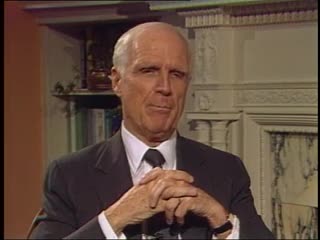
1:00:07: Visual: Footage of Ku Klux Klan members at a ceremony. The members wear white robes and hoods. The members walk in a circle and carry torches. The members light a cross on fire and begin to cheer. Carmen Fields reports that the Ku Klux Klan brought David Duke (Louisiana State Representative) into prominence. Fields reports that the Ku Klux Klan began in the 1860s after Abraham Lincoln (former US president) freed the slaves. Fields notes that Klan members hated Jews, Catholics, and especially African Americans. V: Footage from Eyes on the Prize of the Reverend Fred Shuttlesworth being interviewed. Shuttlesworth says that no one knows how many African Americans have been killed because of their race in our society. Footage of Klan members standing in a circle around a burning cross. Fields reports that the Klan murdered African Americans; that the Klan has distorted the symbol of the Christian cross by associating it with violence and terror. V: Shot of a burning cross toppling over. Audio of Klan members cheering. Footage from A Walk Through the Twentieth Century with Bill Moyers. A woman is interviewed. The woman says that she would watch the newspaper to find out who had been lynched the night before and where the lynching took place. Fields reports that nearly 300 people were murdered by the Klan in the 1920s; that the murders continued through the 1960s. Fields reports that the NAACP began calling for anti-lynching legislation in the 1940s; that no congress ever passed a law. V: Shots of a black and white photograph of a group of men watching a body burn; of a charred body hanging from a tree; of white men surrounding the body of an African American man hanging from a tree. Shots of a black and white photograph of the bodies of two African American men hanging from trees; of a the body of a handcuffed African American man hanging from a tree. Fields reports that the Ku Klux Klan seemed to die out in the 1960s and 1970s; that the Ku Klux Klan turned out in large numbers to stop a march honoring Martin Luther King Jr. (civil rights leader) in Forsythe County, Georgia. Fields reports that statistics show an increase in hate crimes; that membership in the Ku Klux Klan has increased. V: Shot of hooded and robed Klan members at a cross-burning ceremony. White people in civilian clothes stand behind them. Shots of cars parked on a street in a rural area. Shot of two African American protesters in front of a group of protesters in Forsythe County, Georgia. Shots of Klan members at a cross-burning ceremony; of a wizard of the Klan at a cross-burning ceremony. Footage of David Duke speaking into a broadcaster's microphone in the studios of WHDH radio. Duke says that Americans are not shallow; that they are wise. Fields reports that Duke is a former grand wizard of the Ku Klux Klan; that Duke has founded a new white advocacy group. Fields reports that Duke has not been able to explain away his connection to the Ku Klux Klan. V: Shot of Duke at WHDH. Shot of Sterling Brown (poet). Shots of Klan members at a cross-burning ceremony. Fields notes that Brown's best friend was lynched by the Klan. V: Footage from A Walk Through the Twentieth Century with Bill Moyers. Brown reads a poem about the lynching of his friend.
Date Created:
03/28/1991