Description: Parents of children murdered in Boston announce formation of State Victims Services Fund to help other families of violent crime victims.
Collection: Ten O'Clock News
Date Created: 03/26/1990
Description: After canoe trip, Shakur Ali brings gang members to City Hall plaza to pledge a truce in street fighting. Ted Landsmark says Boston has made an effort to end violence, but Ali criticizes Ray Flynn.
Collection: Ten O'Clock News
Date Created: 05/29/1991
Description: Ted Landsmark, coordinator of Boston Safe Neighborhoods Plan, talks about prevalence of guns among teens and calls for national gun control legislation. Confiscated weapons on table.
Collection: Ten O'Clock News
Date Created: 12/20/1990
Description: Haitian victims of brutality arrive in Boston for medical treatment and hope to garner US attention to the military dictatorship.
Collection: Ten O'Clock News
Date Created: 03/07/1990
Description: Hope Kelly reports on the incidence of hate crimes in Boston. Kelly explains that hate crimes are defined as incidents of racial violence; she cites statistics that illustrate how hate crimes have affected various racial and ethnic groups. Kelly's report includes footage of Jack McDevitt (Center for Applied Research, Northeastern University) giving a seminar on hate crimes in Boston. The small audience includes uniformed police officers. McDevitt says that most hate crimes are not initially categorized as such by police officers. McDevitt talks about the seriousness of hate crimes. He notes that all racial and ethnic groups are affected. Kelly's report includes shots of Boston residents on the streets and shots from a moving car of downtown Boston in the evening.
1:00:13: Visual: Shots from a moving car of downtown Boston at night. Hope Kelly reports that hate crimes are defined as incidents of racial violence; that Boston has had 452 hate crimes over the past four years. Kelly notes that hate crimes are rarely recognized for what they are. V: Footage of Jack McDevitt (Center for Applied Research, Northeastern University) addressing a small audience. McDevitt says that his research looks at how Boston's 452 hate crimes were initially categorized by the responding officer. McDevitt says that 19 of the 452 incidents were initially categorized as racially motivated. Shots of the audience listening to McDevitt. Shots of police officers in uniform as they listen to McDevitt. Kelly reports that one of the goals of the study is to teach police officers and citizens to recognize these crimes for what they are. V: Footage of McDevitt saying that Boston's hate crimes were more serious than statistics show them to be. Kelly reports that half of Boston's 452 hate crimes involved assaults; that thirty percent of the assaults were serious enough to require hospitalization. Kelly reports that national statistics show only 7% of assaults as serious enough to require hospitalization. V: Shots from a moving car of residents on the streets of Boston at night. Audio of McDevitt saying that many of Boston's hate crimes involve multiple offenders attacking a single victim. Shots of Washington Street in Roxbury during the day. Elevated train tracks are visible. Shots of African American men gathered outside of Joe's sub shop on Washington Street. Kelly reports that McDevitt found turf issues to be the motivation of many hate crimes in Boston. V: Footage of McDevitt saying that members of every racial and ethnic group were victims of hate crimes. Kelly reports that the study found that Africans Americans and whites were equally apt to be victims of hate crimes; that the perpetrators were usually of another race than their victim. V: Shots of residents walking on the streets of Boston in the daylight. On-screen text and visuals detail hate crime statistics. Kelly reports that 118 African Americans were victims of hate crimes; that 92% of those victims were attacked by whites. Kelly reports that 111 whites were victims of hate crimes; that 78% of those victims were attacked by African Americans. Kelly reports that whites and African Americans accounted for 2/3 of all victims. Kelly reports that 6% of victims were Latino; that the rest of the victims were Asian. Kelly notes that Vietnamese residents were victimized at a rate far out of proportion to their population. V: Shot of a white business man walking and an African American business man walking in the financial district. Shots of Latino residents walking on a street; of two Asian men conversing on a sidewalk. Kelly reports that the perpetrators were unknown in 25% of Boston's hate crimes. V: Shots of a police car traveling slowly through a parking lot. On-screen text and visuals detail statistics about perpetrators of hate crimes. Kelly reports that 63% of known offenders are white; that 33 % of known offenders are African American; that 4% of known offenders are Latino and Asian. Kelly notes that victims are often reluctant to report hate crimes. V: Shots of McDevitt talking about his study; of police officers and officials in the audience, including Francis "Mickey" Roache (Commissioner, Boston Police Department). Shot from a car of a street in downtown Boston.
Collection: Ten O'Clock News
Date Created: 03/27/1989
Description: Family and friends attend funeral for Kingsley Allen, 16 year old student stabbed in Boston High School.
Collection: Ten O'Clock News
Date Created: 12/17/1990
Description: Theodore Landsmark (attorney) speaks to the media at a press conference. His face is in bandages. Landsmark gives an account of the attack he sustained on City Hall Plaza, perpetrated by white teenagers attending an anti-busing rally. He commends the actions of Clarence Jones (Deputy Mayor, City of Boston), who came to his aid after the attack. Landsmark talks about the media's coverage of his attack. Landsmark says that he will seek full prosecution of his attackers, and adds that he will bring suit against members of the Boston School Committee and the Boston City Council. He condemns white city leaders who "incite and encourage" racist violence. Landsmark calls for an end to racism and race discrimination in the city. He accuses the white power structure of ignoring the problems of minority citizens.
1:00:04: Visual: A group of African American men greet each other at the entrance of the room where Theodore Landsmark (attorney) will hold a press conference. Landsmark enters the room. His nose and face are bandaged with white tape. An African American woman hands him a note as he enters. Landsmark sits down behind a table with microphones. An African American man sits beside him. A group of African American men and women, and a few white people, stand behind him as he speaks. Reporters sit at the other side of the table and stand around the room. The reporters take notes as Landsmark speaks. 1:02:00: V: Landsmark notes that there has been conflict among the media over coverage of the press conference; that he wants both union and non-union members of the media to cover the press conference; that the media needs to work out the union issues outside of the press conference. Landsmark greets the media and reads a statement. He says that the press conference will be brief because he needs to get some rest; that he lost a lot of blood in the attack. Landsmark says that he is concerned that the publicity generated by the attack may distort some of the crucial issues which need to be discussed. Landsmark runs through the sequence of events on the day of the attack. Landsmark says that he was on his way to an affirmative action committee meeting with the Boston Redevelopment Authority; that he was beaten and kicked by a crowd of young people coming from an anti-busing rally at City Hall. Landsmark refutes rumors that Clarence Jones (Deputy Mayor, City of Boston) had been with him and ran away from the scene. Landsmark says that he regrets the circulation of the false reports regarding Jones; that Jones was the only person who left City Hall to aid him after the attack. Landsmark says that he will seek full prosecution of the youth involved in the attack; that he will take action in civil and criminal court against members of the Boston City Council and the Boston School Committee; that he would like to see an end to the use of City Hall as "a sanctuary for racism and a resource center for those who would incite and encourage racist violence." Landsmark says that some city officials perpetuate discrimination against people of color in Boston on a daily basis. Landsmark expresses gratitude to members of the African American and white communities for the many acts of kindness and courage shown to him after the attack. Landsmark adds that meaningful gestures by the white community before the attack could have prevented the violence. Landsmark says that he is grateful for the support of the Black Caucus, the Board of Directors of the Contractors Association of Boston, and the Massachusetts Black Lawyers Association. Landsmark thanks the newspaper and TV cameramen for capturing the attack on film. He says that he wishes that somebody had come to his aid, but is grateful for the record of the attack provided by the journalists. Landsmark says that without the photos, the attack would have been recorded "as just another scuffle on the street." Landsmark says that racism is to blame for the attack; that racism in the city of Boston has been fueled by selfish politicians; that politicians continue to ignore the social and economic problems of the city. Landsmark says that he will work to solve these problems in the African American community; that solving these problems will benefit all citizens. Landsmark says that the attack lays bare the problems of the city; that the problems go beyond issues of safety in the street or busing. Landsmark notes that the attack has been called "an isolated incident" by J. Stanley Pottinger (Assistant US Attorney General). Landsmark says that he does not agree; that people of color must be allowed to participate on an equal basis in all areas and levels of business and city government. Landsmark says that the issue of racism must not be subordinated; that the white power structure is indifferent to people of color in the city; that businesses and government must work together to improve the economic situation of people of color in Boston. 1:15:29: V: Reporters ask Landsmark questions after his statement. A reporter asks him to specify city officials against whom he will bring suit. Landsmark says that he will not name the officials because he does not want to jeopardize any of the lawsuits. A reporter asks him if he will bring suit against Louise Day Hicks (Boston City Council). Landsmark says that he will not comment except that his attackers were violating truancy laws; that his attackers were marching on City Hall Plaza without a parade permit. Landsmark notes that Hicks invited the protestors into her office to escape from the cold; that police officers were on duty near City Hall Plaza, but did not arrive on the scene until after the attack. Landsmark says that he cannot comment on how the police department should have deployed its personnel to control the unlicensed protest on City Hall Plaza by the students. A reporter asks Landsmark if he agrees with the Black Caucus' decision to call for the resignation of Kevin White (Mayor, City of Boston). Landsmark says that the Black Caucus is looking for better leadership from White on issues of affirmative action, busing, and unemployment. Landsmark says that he has received calls from around the country; that many are appalled by the incident on City Hall Plaza; that the city can take action to prevent more violent incidents.
Collection: Ten O'Clock News
Date Created: 04/07/1976
Description: Meg Vaillancourt talks to Nthabiseng Mabuza, who was exiled from South Africa, about the upcoming visit by Nelson Mandela to Boston. Mabuza will sing a welcome for Mandela when he visits Madison Park High School tomorrow. She practices her welcome song. Interview with Mabuza, who was only twelve years old when she was paralyzed from injuries sustained during an attack on her home by South African security forces. Interview with her month Anna Mabuza and Jane Schaller from the New England Medical Center, Floating Hospital. The Fund for a Free South Africa has helped Mabuza and her family settle in Boston. Nthabiseng Mabuza also talks about the inhumane policies and practices of the South African government. She says that she is not bitter about what happened to her. Mabuza talks about the importance of achieving democracy in South Africa.
1:00:06: Visual: Footage of Nthabiseng Mabuza (South African exile in the US) singing a song about South Africa. Meg Vaillancourt reports that Mabuza was born in South Africa; that her father was a member of the African National Congress (ANC). V: Footage of Mabuza being interviewed by Vaillancourt. Mabuza talks about being shot by South African Security Forces when they raided her home. Vaillancourt reports that Mabuza was twelve years old when South African Security Forces raided her home; that her aunt was killed in the raid; that an uncle was wounded; that her mother barely escaped. V: Shot of a color photo of Mabuza as a young girl. Footage of Anna Mabuza (mother of Nthabiseng Mabuza) being interviewed by Vaillancourt. Anna Mabuza says that Nthabiseng Mabuza is lucky to be alive. Footage of Dr. Jane Schaller (New England Medical Center, Floating Hospital) describing Nthabiseng Mabuza's injuries. Schaller says that Nthabiseng Mabuza was shot in the abdomen and in the back. Schaller says that Mabuza is paralyzed from the chest down. Shot of Nthabiseng Mabuza maneuvering herself into her wheelchair. Vaillancourt reports that the Fund for a Free South Africa (charity) has helped Nthabiseng Mabuza come to Boston; that Nthabiseng Mabuza is receiving free medical care at the Floating Hospital. Vaillancourt reports that Nthabiseng Mabuza is teaching local students about life under apartheid. V: Footage of Nthabiseng Mabuza being interviewed by Vaillancourt. Nthabiseng Mabuza talks about the cruel treatment of an eight-year old boy at the hands of the South African government. Nthabiseng Mabuza says that children and adults are imprisoned and killed by the South African government. Footage from January of 1990 of Nthabiseng Mabuza working with her physical therapist. Vaillancourt reports that Nthabiseng Mabuza has physical therapy twice a week; that doctors are doing what they can for her. Vaillancourt reports that Nthabiseng Mabuza keeps her spirits up; that she has responded to her trials with courage and dignity. V: Footage of Nthabiseng Mabuza in a wheelchair. She wheels herself through the house and into a room. Audio of "I'm Forever Your Girl" by Paula Abdul plays in the background. Shot of Nthabiseng Mabuza in her bedroom. Footage of Nthabiseng Mabuza being interviewed by Vaillancourt. Vaillancourt asks Nthabiseng Mabuza if she is bitter. Nthabiseng Mabuza says that she gets angry sometimes; that she is not bitter. Nthabiseng Mabuza says that South African citizens must work toward achieving a democratic society. Vaillancourt reports that Nthabiseng Mabuza will meet Nelson Mandela (ANC leader) tomorrow; that Nthabiseng Mabuza will talk to Madison Park High School students about the struggle against apartheid; that Nthabiseng Mabuza will sing a welcome for Mandela. V: Shot of Nthabiseng Mabuza on her bed. She takes off her shoes and begins to study a notebook. Audio of Nthabiseng Mabuza singing a song. Audio of Nthabiseng Mabuza saying that she was not yet born when Mandela went to prison; that today's youth will be tomorrow's leaders. Footage of Nthabiseng Mabuza singing her welcome for Mandela.
Collection: Ten O'Clock News
Date Created: 06/22/1990
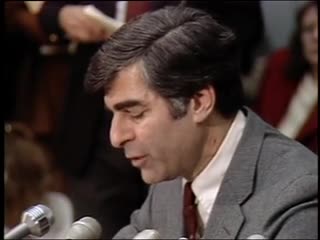
Description: MICHAEL DUKAKIS IN PC AT STATE HOUSE ON PRESUMPTIVE SENTENCING FOR VIOLENT CRIMES
Collection: Ten O'Clock News
Date Created: 10/30/1984
Description: Press conference addressing Racial Violence in public housing in Boston, Harry Spence, Melbourne firebombing. .
Collection: Ten O'Clock News
Date Created: 08/14/1982