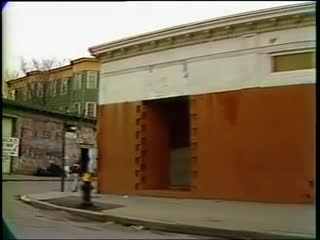
Description: Reporter David Boeri walks with Sam Cook, age 24, retired auto thief and part seller. Cook explains his specialties being Chevrolet Camaro IROC-Z, Pontiac Firebird Trans Am, Chevrolet Monte Carlo Super Sport, and customized vans. MDC officer Robert Springer and State Trooper Richard Connolly of Governor's Auto Theft Strike force comment on Cook's theft and similar theft in other cities. 50,000 cars were stolen in Boston in 1987: most in the country. Cook explains that auto thieves look for parts of cars rather than reselling whole cars. Cook now works for City of Boston as a parking enforcement officer.
Collection: Ten O'Clock News
Date Created: 02/09/1988
Description: Callie Crossley reports on the documentary film Street Cop, set in Roxbury. Interview with Roxbury community activists Georgette Watson and Ben Haith about the documentary's portrayal of crime and drug traffic in the community. Watson complains about the negative images of Roxbury in the media and about the negative attitude of many police officers toward African Americans. Crossley's report includes footage from Street Cop and footage of Crossley, Watson, and Haith walking in Dudley Square. Interview with Larry Brown of the Boston Minority Police Association, who says that the documentary gave a realistic and effective portrayal of law enforcement. This edition of the Ten O'Clock News also included the following item: David Boeri reports that William Celester has been accused of sexual assault by a female employee of the Police Department
1:00:00: Visual: Footage from Street Cop, a documentary film produced for Frontline. The footage shows a police plainclothes police officer entering a family's apartment. Women and children in the apartment are screaming and crying. Callie Crossley reports that Street Cop is a gritty documentary set in Roxbury; that the documentary profiles police officers from Area B headquarters in Roxbury; that the documentary examines crime and drug traffic. Crossley reports that some Roxbury activists say that the film shows the disrepectful attitude of the police toward citizens in the community. V: Footage of Crossley interviewing Georgette Watson (Roxbury community activist) and Ben Haith (Roxbury community activist). Watson says that police show less respect and restraint in Roxbury than they do in other communities. Watson wonders if the police are helping the community or destroying it. Crossley reports that Watson and Haith are concerned about the portrayal the Roxbury community in the documentary. V: Footage from Street Cop of a police officer breaking down an apartment door with a sledgehammer. Footage of Watson saying that drug problems exist all over the city, not just in Roxbury. Footage of Haith saying that the documentary showed the police attacking the neighborhood as if they were engaged in warfare. Footage from Street Cop of police officers searching for drugs in an apartment. Footage of Crossley, Watson, and Haith walking across the street in Dudley Square in Roxbury. Watson says that there are massive drug deals taking place across from the police station; that police are more concerned with forcefully entering homes to search for nickel bags of marijuana. Footage from Street Cop. Stanley Philbin (Boston Police Department) drives by a depressed housing project in Roxbury, saying that if he were young, black and living in that housing project, he would probably sell drugs; that "being black is no bargain." Crossley reports that Roxbury activists say that comments by police officers in the documentary reflect racist attitudes. V: Footage from Street Cop of a white police officer grabbing an African American girl as he tries to chase some African American kids away from a residential home. Footage of Watson saying that Roxbury needs police officers who understand the community; that police officers from South Boston do not understand the culture of African Americans. Watson says that Roxbury needs police officers who do not have a negative attitude toward African Americans. Footage of Larry Brown (Boston Minority Police Association) saying that the documentary was realistic and effective portrayal of law enforcement. Footage from Street Cop of a police officer reaching down the shirt of an old woman to pull out drugs. Footage of Brown saying that drugs and guns are a huge problem in communities; that police officers need to protect themselves from violence. Footage from Street Cop of police officers making an arrest. Footage of Brown saying that the community needs to support the police officers in the fight against the drug problem; that tough tactics are necessary to eradicate the drug problem. Footage from Street Cop of a uniformed African American police officer in a cruiser.
Collection: Ten O'Clock News
Date Created: 03/31/1987
Description: Marcus Jones reports on the Ninth Annual Black-Jewish Seder held in Roxbury. Jones reports that the audience at the Seder honored civil rights workers Andrew Goodman, James Chaney, and Michael Schwerner. Jones notes that the three civil rights workers were murdered in Mississippi during the civil rights movement. Jones notes that family members were present at the Seder to talk about the men on the twenty-fifth anniversary of the murders. Jones' report includes footage from the Seder supper. Charles Stith (Union United Methodist Church) talks about the sacrifices made by the three men. Family members Ben Chaney, Carolyn Goodman and Cassie Schwerner talk about the three men. Ben Chaney announces a freedom ride from Mississippi to New York planned for the summer. Chaney, Carolyn Goodman and Cassie Schwerner talk about the need to continue the struggle for civil rights. Jones reviews the events leading up to the murder of the three men. Jones' report also features clips from Eyes on the Prize and Mississippi Burning. This edition of the Ten O'Clock News also included the following item: Christy George reports that the Boston School Committee held an executive session to make a decision on the renewal of the contract of Laval Wilson (Superintendent, Boston Public Schools)
1:00:17: Visual: Footage from a trailer for the 1988 film, Mississippi Burning. Shots of official FBI posters with head shots of three missing men. Marcus Jones reports that the film Mississippi Burning is based on the murders of civil rights workers Andrew Goodman, James Chaney, and Michael Schwerner in Mississippi during the civil rights movement. V: Shot of a newspaper article with a headline reading, "Three men reported missing in Mississippi rights campaign." Jones reports that African Americans and Jews gathered in Roxbury last night to honor the three men and their family members. V: Shot of a flyer for the Ninth Annual Black-Jewish Seder. Footage of Charles Stith (Union United Methodist Church) speaking at the Ninth Annual Black-Jewish Seder. Stith talks about the sacrifice made by Goodman, Chaney, and Schwerner. Shots of audience members, including Leonard Zakim (Director, Anti-Defamation League of B'Nai B'rith) Jones reports that the twenty-fifth anniversary of the murders will be marked in June. Jones notes that relatives of Chaney, Goodman, and Schwerner are traveling across the country to enlist people in a major demonstration planned for the summer. V: Shots of black and white photos of the three men which are displayed at the Seder gathering. Footage of Ben Chaney (brother of James Chaney) saying that racism and anti-semitism are not a regional problem. Chaney says that a group of demonstrators will depart from Mississippi on June 21; that the demonstrators will travel to New York. Chaney says that the demonstrators want to send a message about the national importance of civil rights. The audience stands to applaud Ben Chaney. Jones reports that Ben Chaney was eleven years old in 1964; that Ben Chaney began to work with James Chaney and Michael Schwerner to register African Americans in Mississippi to vote in 1964. V: Shots of black and white photos of James Chaney and Michael Schwermer. Black and white footage of a white man approaching the home of an African American man; of a body being put onto a stretcher. Footage of Ben Chaney saying that he used to attend demonstrations with James Chaney and Schwermer; that Chaney and Schwermer would bail him out of jail when he got arrested. Ben Chaney says that he did not believe that any of the demonstrators would die as a result of their actions until his brother was found dead. Footage from Eyes on the Prize of the Chaney family at the burial of James Chaney. Black and white footage of Mr. and Mrs. Goodman (parents of Andrew Goodman) speaking to the media in 1964. Mr. Goodman says that he is proud of his son's commitment and the commitment of Chaney and Schwarmer. Shots of an audience listening to Goodman. Jones reports that the anniversary of the murders brings back disturbing memories for Dr. Carolyn Goodman (mother of Andrew Goodman). V: Footage of Goodman at the Seder gathering. Goodman says that there are civil rights issues which still need to be addressed. Footage of Goodman being interviewed by Jones. Goodman says that the families of the victims wish to perpetuate the work performed by the three men. Goodman says that young people need to be made aware of the events of the civil rights era. Footage of Cassie Schwermer (niece of Michael Schwermer) at the Seder gathering. Schwermer says that the murders of the three men were meant to discourage northern volunteers from participating in the Mississippi Freedom Summer. Jones reports that Cassie Schwermer never knew her uncle; that she has come to understand his beliefs. Jones reports that Cassie Schwermer is a social activist. V: Shot of a black and white photo of Michael Schwerner. Shot of a newspaper article with a headline reading, "Three in rights drive reported missing." Footage of Schwermer being interviewed by Jones. Schwermer says that she would like to see a renewed commitment to activism by young people today. Black and white footage of Fannie Chaney (mother of James Chaney) speaking in 1964. Fannie Chaney says that the three men died to help African Americans achieve equal rights. Footage of the Chaney family at the funeral of James Chaney. Footage of Carolyn Goodman saying that the work of civil rights activists is never finished. Goodman says that there will always be threats to our freedoms. Black and white shot from 1964 of James Chaney's coffin.
Collection: Ten O'Clock News
Date Created: 04/11/1989
Description: Meg Vaillancourt reports on issues of race in the presidential campaign. While the African American community has traditionally voted Democratic, Michael Dukakis is not receiving unanimous support from the African American community. Younger African Americans seem open to voting Republican. At a meeting of the Black Republican Leadership Council, Reverend Earl Jackson criticizes the Dukakis campaign and Ed Reed speaks out in favor of George Bush. Interviews with African American voters about which candidate they support. Many of the interviewees support Bush. Vaillancourt reports that some African American voters support Bush because they want to support the eventual winner. She notes that some African American voters are disillusioned with Dukakis for not choosing Jesse Jackson as his running mate. The African American community is still a Democratic stronghold, but that Dukakis may be alienating some African American voters in his effort to appeal to more conservative Democratic voters. Interview with Janice Thurmond of the Dukakis campaign about the campaign and his appeal to African American voters. Vaillancourt's report is accompanied by footage of Dukakis and Jackson at the 1988 Democratic National Convention. This edition of the Ten O'Clock News also included the following item: Curtis Davis of the Greater Roxbury Incorporation Project (GRIP)
1:00:22: Visual: Footage from CBS of Lloyd Bentsen (Democratic US vice-presidential candidate) being interviewed on October 26, 1988. Bentsen says that there are elements of racism in the campaign. Meg Vaillancourt reports that race has become an issue in the presidential election; that Democrats claim that Republican campaign advertisements are racist. Vaillancourt notes that Republican accuse Democrats of racially divisive tactics. V: Footage of the Reverend Earl Jackson (Black Republican Council) addressing a meeting of the Black Republican Leadership Council in Roxbury. Shots of the audience. Jackson accuses Michael Dukakis (Democratic US presidential candidate) of hypocrisy. Jackson remarks that Dukakis has kept his distance from the African American community during the campaign; that Dukakis is now accusing George Bush of racism (Republican US presidential candidate). Shots of an African American neighborhood; of African American female shopper. Vaillancourt reports that the African American community has traditionally voted Democratic; that younger African Americans have doubts about Dukakis. V: Footage of an African American female saying that she will vote Republican this year because Dukakis is not a good candidate for president. Footage of another African American female saying that she would vote for Bush because he seems like an honest man. Footage from CNN of Dukakis, Kitty Dukakis (wife of Dukakis), Jesse Jackson (African American political leader), and Jaqueline Jackson (wife of Jackson) with other Democratic Party leaders at the 1988 Democratic National Convention; of delegates at the convention. Vaillancourt reports that Dukakis is not running as strongly with African American voters as previous Democratic candidates. Vaillancourt reports that a poll has found younger African American voters to be more open to Republican overtures. V: Shots of the meeting of the Black Republican Leadership Council; of the attendees. Footage of Ed Reed (Black Republican Council) saying that Bush will make an effort to increase minority participation if elected. Vaillancourt reports that some African Americans are supporting Bush because they want to support the winner. V: Shots of African Americans residents on the streets of Roxbury. Footage of an African American man saying that Dukakis doesn't have what it takes to win. Vaillancourt reports that African American voters may not be convinced by the Republican Party's position on economic issues. V: Footage of an African American woman saying that she will vote for Dukakis because she is a poor, African American woman. Shots of a voter registration table in Dorchester. African American workers register African American residents to vote. Vaillancourt notes that many African American voters seem angry at Dukakis. V: Footage of an African American male saying that he is angry at Dukakis for not choosing Jackson as his vice-president. Footage of an elderly African American woman saying that she remembers when the candidates were nice to poor people. Footage from CNN of Michael Dukakis, Kitty Dukakis, and Euterpe Dukakis (mother of Michael Dukakis) at the Democratic Convention. Vaillancourt reports that Dukakis may be alienating traditional Democratic voters by trying to appeal to a wider spectrum of voters. Vaillancourt notes that the African American community is still a Democratic stronghold. V: Shots of African American residents on the streets of Roxbury. Footage of Janice Thurmond (Dukakis campaign) being interviewed by Vaillancourt. Thurmond says that young African Americans take civil rights for granted. Thurmond says that Dukakis represents justice and a sense of fair play.
Collection: Ten O'Clock News
Date Created: 10/27/1988
Description: Massachusetts Fair Share register African American voters to vote in Roxbury. Christy George interviews a female community worker who discusses Mass Fair Share's voter registration drive, its lawsuit against the Boston Election Department and the importance of voter education in the African American community. The woman says that some city officials do not want to disrupt current voting patterns by registering new voters; that the Boston Election Department started to cooperate only after the lawsuit was filed. She adds that the recent voter registration drives have been successful.
0:59:57: V: An African American man and an African American woman sit behind a table on a sidewalk in front of the Charles Drew Neighborhood Health Center in Roxbury. Handmade signs for voter registration are posted behind the table. The signs read, "Voter registration here today" and "Save your health center. Register and vote." An African American woman stands in front of the table. A young African American man in a blue shirt sits beside the woman at the table. He watches her fill out forms. More young African Americans stand in front of the table. The male community worker fills out a form for another young African American male. He asks the young man questions as he fills out the form. The young man signs the form. Shot of the community worker's hand as he fills out the form. 1:03:29: V: The two community workers sit behind the table. The young man in the blue shirt stands in front of the table. The young man hands his license to the male community worker, who is filling out a form. The young man signs the form and walks away. Three more young African American males stand in line in front of the table. Close up shot of one of the African American males. The male community worker fills out forms for one of the young men. The young man gives his license to the community worker. Shots of the female community worker; of the book and papers she is studying. 1:10:19: V: A middle-aged African American woman stands at the voter registration table. An African American man registers to vote with the male community worker. The young woman in the red skirt passes by the people gathered at the bus stop. She speaks to two men standing on the sidewalk. She turns and walks back to the voter registration table. The young woman in the red skirt directs someone to the voter registration table. A middle-aged African American woman registers to vote at the table. Shot of the exterior of the Charles Drew Building. The young woman in the red skirt speaks to two young African American men on the sidewalk. 1:13:17: V: An African American woman exits an MBTA bus. The young woman in the red skirt directs her to the voter registration table. They young woman continues to approach people on the street and direct them to the table. 1:14:44: V: Christy George interviews the female community worker. The worker says that Mass Fair Share filed a lawsuit concerning voting discrepancies in the primary elections of September,1982. The worker says that the Boston Election Department was not cooperative last year; that the department failed to provide reliable registrars and sites for Mass Fair Share voting registration drives. The worker says that Mass Fair Share fought to set up voting registration tables at MBTA stations. George notes that voting registration tables need to be set up in a "site of principal activity." The worker says that the Boston Election Department determines which sites can be used; that the department has not made it clear which sites are allowed. The worker says that parks are now allowed as voter registration sites; that the Boston Election Department had previously allowed mills, schools, factories; that churches and welfare offices are recent additions to the list. The worker says that the Boston Election Department began to cooperate after Mass Fair Share filed a lawsuit. George notes that Mass Fair Share has organized voter registration drives all week long. The worker says that the turnout has been excellent at the drives; that the Boston Election Department had predicted a low turnout; that Mass Fair Share is trying to create a momentum around voter registration. George asks the worker if the City of Boston was trying to make voter registration difficult. The worker says that the city can predict which areas vote and how they will vote; that the city does not want to disrupt current voter patterns by registering new voters. The worker says that Mass Fair Share wants to educate people on the importance of voting and on the issues; that the organization is not supporting individual candidates. George asks if voter registration is a civil rights issue. The worker says that voter turnout in the African American community was below the city average; that Mass Fair Share would like to encourage voting in the African American community; that voter registration is more of a problem than voter turnout. The worker says that voter education is important in the African American community; that citizens need to know that voting is a basic right; that citizens need to understand why voting is important. The crew takes cutaway shots of George and the worker.
Collection: Ten O'Clock News
Date Created: 04/28/1983
Description: Carmen Fields interviews Frank Hector (World War II veteran) and Ralph Cooper (Vietnam veteran) about their experiences in the military. Hector talks about the accomplishments of African American soldiers and war veterans. Hector says that the military is a good experience for young African Americans. Cooper talks about the disproportionate numbers of African American soldiers in the front lines and the lack of services for veterans of color. Hector and Cooper talk about their opinions of Colin Powell (Head, US Joint Chiefs of Staff). Field's report is accompanied by footage of Powell and soldiers during the Persian Gulf War. Fields reports that many African Americans join the military to escape the high unemployment rate in the African American community. Field's report is accompanied by footage of Reverend Michael Haynes leading a church service at Roxbury's Twelfth Baptist Church. Relatives of soldiers in the Persian Gulf War stand in front of the altar to pray for the soldiers. Fields interviews Haynes. Haynes says that African American soldiers must be granted equal rights and privileges when they return home from the war. Fields' report is accompanied by footage from interviews with people on the street about African American soldiers in the Persian Gulf War.
Collection: Ten O'Clock News
Date Created: 01/21/1991
Description: Ride along Blue Hill Avenue. Decrepit, boarded up and abandoned storefronts. Many defunct businesses. Vacant lot. Zion Apostolic and Immanuel Pentecostal Churches. Warren Street intersection. Bridge Free Medical Van. Houses on Supple Road. Prince Hall Masonic Lodge. Sign for the Mayor's Office of Housing. Street sweeping vehicle. Mayor Kevin White walks with Julian Bond through neighborhood with press entourage. White answers questions about his candidacy and housing policy decisions as mayor especially involving the Boston Housing Authority, and says urban revitalization will come to reality within 3-5 years but need more federal $$. White and Bond meet local business owners and community members.
Collection: Ten O'Clock News
Date Created: 06/20/1979
Description: Environs of Blue Hill Avenue and Morton Street in Roxbury. Drive by decrepit boarded up storefronts and abandoned lots. Graffiti and trash abound. Sign "Mayors [sic] Office Public Service of Franklin Field Little City Hall."
Collection: Ten O'Clock News
Description: ROXBURY vs Boston Redevelopment Authority. STEPHEN COYLE, EXECUTIVE DIRECTOR. VACANT LOTS.
Collection: Ten O'Clock News
Date Created: 06/11/1986
Description: Press conference at City Hall on day 3 of Phase I desegregation of Boston Schools. Frank Tivnan (Director of Communications for Mayor Kevin White) commends the performance of the police department and reports no serious injuries to residents or schoolchildren. John Coakley (Boston School Department) gives school attendance figures. Coakley reports that the atmosphere in the schools is reasonably calm. Joseph Jordan (Superintendent, Boston Police Department) reports on a liquor ban imposed in South Boston. Jordan notes that police made 20 arrests today. Leroy Chase (Deputy Superintendent, Boston Police Department) reports that Freedom House is helping to patrol streets in Roxbury/North Dorchester. Kevin White (Mayor, city of Boston) talks about antibusing sentiment in South Boston; answers questions about efforts by South Boston neighborhood leaders to calm the tension in the neighborhood; about the possible underworld and criminal background of some agitators in South Boston; about the school boycott by South Boston residents. William Leary (Superintendent, Boston School Department) and Robert Kiley (Deputy Mayor, City of Boston) are also present at the press conference. Anne O'Brien (Principal, John P. Holland School) gives a positive report on the opening of the Holland School.
0:03:46: Visual: Opening title reads Compass Special: Boston School Report. Paul deGive reports on the day's events from press conference at Boston City Hall: a ban on a protest march by South Boston residents; 20 arrests. Frank Tivnan (Director of Communications for Mayor Kevin White) thanks the media for the opportunity to report the day's events to the public. Tivnan reports no serious injuries to Boston residents or to children on school buses. Tivnan commends the police department for managing crowds in South Boston. Tivnan reports an increase in school attendance. 0:06:33: V: John Coakley (Boston School Department) reports that 57,000 students (69%) were in attendance: 66% at the high school level, 68% at the middle school level and 73% at the elementary school level. V: Video changes from color to black and white. Coakley notes a marked increase in attendance from the previous Friday. He adds that attendance is still very low in South Boston. Coakley reports a reasonably calm atmosphere at schools; that the superintendent visited schools in Hyde Park and Roslindale; that some scheduling difficulties remain to be worked out at the secondary school level (English High School, Roslindale High School, Jamaica Plain High School); that Robert Peterkin (Headmaster, English High School) is optimistic about the situation at his school. 0:12:31: V: Tivnan introduces Joseph Jordan (Superintendent, Boston Police Department). Jordan reports that crowds in South Boston gathered sporadically throughout the day and were broken up by police; that 20 arrests were made; that the ban on liquor during the day will continue; that the police will continue to deploy a maximum number of officers in South Boston. 0:14:30: V: Tivnan introduces Leroy Chase (Deputy Superintendent, Boston Police Department). Chase reports that Freedom House and members of the community are helping police monitor the streets of Roxbury and North Dorchester. 0:15:27: V: Kevin White (Mayor, City of Boston) joins the panel. He commends the performance of the police department, school officials, and Robert Kiley (Deputy Mayor, City of Boston). White talks about his goals of getting children back in school and withdrawing police from South Boston. He says he is prepared to increase police presence if necessary, but hopes to see a continued decrease in violence. 0:17:49: V: Tivnan invites reporters to ask questions. White answers questions about the afternoon's hearings in Judge Garrity's courtroom; about a possible decrease in the police presence in South Boston. V: Color video returns. White responds that police presence will decrease when the city can guarantee the safety of students. He again commends the performance of the police. Reporter asks the mayor how groups of people in South Boston managed to assemble if police were present in the neighborhood. White comments that children and young people were out on the streets despite a commitment by antibusing parents to keep children at home. 0:20:39: V: A reporter asks Mayor White if the city is getting cooperation from some moderates in South Boston. White responds that the moderate leaders must assert themselves over the groups causing disruption. A reporter asks Mayor White what it will take to end the white boycott of schools. White responds that it will take some time until emotions are cooled down. A reporter asks Mayor White when truancy laws will be enforced. White responds that the decision will be made by the School Department. A reporter asks Mayor White if Senator William Bulger, Councilor Louise Day Hicks, and other South Boston leaders will exert a calming influence on the neighborhood. White says that he has met with them and they are eager to resolve the situation. 0:25:41: V: A reporter asks Mayor White if he asked South Boston leaders to join him in an appeal to the people of South Boston. White says no. DeGive asks White how long the city can sustain the police presence in South Boston, and where the money comes from to pay overtime. Reporters ask White how bad the situation in South Boston will be allowed to get before outside help is sought; if he can confirm reports that agitators in South Boston are connected to the underworld. A reporter asks if a group of agitators in South Boston has been infiltrated by police. White says that all agitators are dealt with in the same manner. Jordan adds that the police will gather intelligence on anyone involved in the unrest. A reporter asks Jordan if he will identify any particular group associated with the unrest. Jordan confirms that police have identified agitators who have been involved in past criminal activity in South Boston. 0:29:31: V: A reporter asks Mayor White about comments by South Boston leaders which could be seen as supportive to the white boycott. White says he cannot control the opinions and comments of other leaders. He mentions that white students have been going to B.C. High School and other schools located in difficult neighborhoods for many years. Superintendent William Leary (Boston School Department) mentions Boston Technical High School in Roxbury. A reporter asks White about whether he will admit to isolating some groups in South Boston and failing to seek their input. White denies this charge. A reporter asks White if the liquor ban in South Boston will be enforced for the next day. White says that the decision is made by the police department. 0:32:53: V: A reporter asks Leary if he has information on increased discipline problems in the schools. Leary replies that he has visited several schools across the city and that the number of problems is no greater than normal. A reporter asks Jordan for a breakdown of arrests. White excuses himself and leaves the room. Jordan reads a list of arrest locations and charges. Tivnan asks Deputy Mayor Kiley if he has anything to add. Kiley says no. A reporter asks Tivnan how the city will pay for police overtime. Tivnan says that it will come from Police Department budget. A reporter asks Tivnan about the reaction of liquor store owners to the liquor ban. Tivnan responds that most stores complied with the ban. 0:36:52: V: A reporter asks Jordan if the liquor ban is effective. Jordan says yes. Leary breaks in to introduce Anne O'Brien (Principal, John P. Holland School). O'Brien reports a successful school opening; that teachers are prepared; that progress is good. Tivnan closes the press conference. Panelists and reporters rise and exit.
Collection: Evening Compass, The
Date Created: 09/16/1974