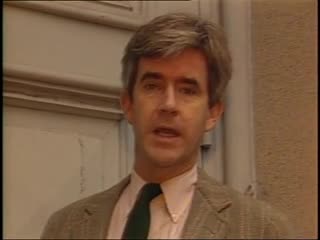
Description: Gay bars in South End. South End environs. Exteriors of 520 Tremont. Henry Vara, nightclub operator, will be fifty percent owner of jazz room Lulu White's if the licensing board approves. Interview with spokesman for gay community on concerns about the Vara Brother's reputation for exploiting the neighborhoods, and the types of gay bars they would prefer. He encourages community involvement with neighborhood associations to ensure safe spaces for gay people. They shoot cutaways. Exteriors of South End residences. Exteriors of Lulu White's. Interview with White's owner, Mario Carnavale, who explains that they are having to close Lulu's because jazz isn't supported by the Boston community. He defends himself and Lulu's co-owner Dennis Palmisciano, against the controversy people are trying to make of their selling the club.
Collection: Ten O'Clock News
Date Created: 09/02/1981
Description: High, wide, long shots of Boston environs from observation deck of Hancock Tower. Nearly aerial views of South End, Charles River, Boston Harbor, State House, and orange line T moving along elevated tracks.
Collection: Ten O'Clock News
Date Created: 09/10/1976
Description: Exterior of Holy Cross Cathedral in the South End. Various views, gothic windows. Bare trees, orange line elevated train passes.
Collection: Ten O'Clock News
Date Created: 02/22/1984
Description: Interior of Holy Cross Cathedral. Crucifix, stained glass and rose windows, relics, gothic architectural details, vaulted ceiling.
Collection: Ten O'Clock News
Date Created: 02/21/1984
Description: Homeless seize abandoned building in South End for shelter.
Collection: Ten O'Clock News
Date Created: 11/25/1986
Description: SOUTH ENDERS OPPOSE CONSTRUCTION OF 'TREE OF LIFE' SHELTER FOR HOMELESS WOMEN. PINE STREET INN AND ROSIE'S PLACE EXTERIORS.
Collection: Ten O'Clock News
Date Created: 10/02/1986
Description: Elderly people eating at South End Settlement House in a cafeteria-style hot lunch program. Interview with two men about why they appreciate the social support services and why elderly people suffer hunger.
Collection: Ten O'Clock News
Date Created: 08/30/1978
Description: SOUTH END UPROAR OVER SURREPTITIOUS RENOVATION OF IMMACULATE CONCEPTION CHURCH BY JESUITS. E.G.G. HOOK ORGAN
Collection: Ten O'Clock News
Date Created: 10/09/1986
Description: First seven minutes are shots of photographs of community activist Mel King throughout his life. Then Christopher Lydon interviews his wife Joyce King in the kitchen of their home. Joyce says that Mel's parents taught him the importance of sharing with others, and adds that he was very proud of his father, who was active in a union. Joyce talks about Mel's generosity. Lydon asks about the West Indian background of Mel's family, and about his formative years. She says that Mel's family was proud of their West Indian heritage and discusses his experiences while attending college in South Carolina. Joyce says that he learned about racism and oppression while living in South Carolina.
1:00:02: Visual: Shots of black and white photographs of Mel King throughout his life; of Mel King's high school yearbook photograph. 1:06:55: V: Christopher Lydon interviews Joyce King (wife of Mel King) in the kitchen of her home. Lydon asks Joyce King about Mel King's family. Joyce King says that Mel King's family always shared what they had with others; that Mel King's mother was able to make do with the few resources she had. Joyce King says that Mel King's father was active in a union; that Mel King is very proud of his father. Joyce King tells a story about the generosity of Mel King's father. Joyce King says that Mel King has an "open door policy"; that Mel King is not protective of his privacy. Joyce King says that Mel King often brings people to their home. Joyce King says that Mel King often gives clothing or money to those in need; that he does it in a quiet manner. 1:15:06: V: Lydon asks about the West Indian culture of Mel King's family. Joyce King says that Mel King's family is proud of their heritage; that his parents grew up in Barbados; that the family has strong connections to their heritage. Lydon asks about Mel King's formative years. Joyce King says that Mel King's membership in the Church of All Nations was important in his younger years; that Mel King attended a church-sponsored school in South Carolina; that the public school system discouraged African Americans from attending university. Joyce King says that Mel King learned a lot about race and oppression when he was at college in South Carolina; that Mel King traveled through the South as a member of the sports teams at his college. Joyce King says that Mel King returned from South Carolina with ideas about race and the fight against oppression.
Collection: Ten O'Clock News
Date Created: 11/06/1983
Description: Campaigners hold Mel King for Mayor signs in English, Chinese, and Spanish, and sell t-shirts and caps outside Concord Baptist Church in South End. King gets out of limousine with Jesse Jackson. Inside they shake hands and raise linked arms before Rainbow Coalition press conference. King introduces Jackson as “country preacher.” Jackson recounts 20 years of progress in America toward freedom and equality. He commends King for his efforts to leverage power of black people, and endorses him for mayor of Boston. King presents Jackson with a copy of King's book, Chain of Change. Jackson takes questions about the role of minorities in the Democratic Party and his potential campaign for the 1984 Democratic presidential nomination. reel 1 of 2.
1:00:04: Visual: Campaign workers for Mel King (candidate for Mayor of Boston), many of them white, hold campaign signs and sell T-shirts and buttons outside of the Concord Baptist Church in the South End. A campaign worker models his own King T-shirt, which has a campaign slogan in English, Spanish and Chinese. He helps customers find sizes among the multicolored shirts, which are displayed on a table. An Asian woman arrives with a King campaign sign in Chinese. Shot of Mel King baseball caps displayed along a fence. More campaign workers arrive with signs. Shot of the church, with campaign workers standing on the sidewalk and in the street. A truck mounted with two speakers drives along the street. The driver speaks into a microphone, alerting passersby to the arrival of Jesse Jackson (African American political leader). 1:04:11: V: A limousine pulls up outside of the church. King and Jackson exit the limousine and stand in the street. The crowd applauds and cheers, "We want Mel." 1:05:04: V: Jackson and King stand before the media in a room set up for a press conference. They shake hands and raise linked arms. King and Jackson sit down at a table at the front of the room. King gets up and stands at a podium. He welcomes the audience and introduces Jesse Jackson. King commends Jackson's struggle for equality on behalf of minorities and the disenfranchised. King refers to Jackson as a "country preacher." 1:08:10: V: Jackson stands at the podium. He talks about the civil rights movement and the struggle for equal access for all minorities. Jackson says that no one must be denied access or participation because of their race, sex, or religion. Jackson talks about the need for equal protection under the law. Jackson says that voting irregularities must be eliminated; that the Voting Rights Act must be enforced. Jackson says that King has a good combination of experience, integrity, and intelligence; that Massachusetts is ready for a change. Jackson congratulates King on the organization of a Rainbow Coalition in Massachusetts. King presents Jackson with a copy of his book, Chain of Change. Jacson and King and King's supporters raise linked arms while the crowd cheers. 1:14:09: V: Shot of an African American man in the audience. Jackson and King take questions from the audience. An audience member asks Jackson about the possibility of his running for president as an independent candidate, or of his supporting an independent candidate. Jackson says that it is too soon to answer the audience members questions; that the Democratic Party reflects its membership. Jackson says that there must be reciprocal voting within the Democratic Party; that white voters must vote for minority candidates if minority candidates vote for white candidates; that there must be integrated slates of candidates. Jackson says that voting irregularities can be used to keep people from the polls; that voting irregularities must be eliminated. Jackson says that he has two objectives: to achieve parity and to fight Reagan. Jackson adds that a King victory in Boston accomplishes both of his objectives. The audience applauds. Another audience member asks Jackson if he will run for president. Jackson says that he is considering a campaign for the Democratic Party nomination. An audience member asks Jackson about Boston's reputation as a racist city. Jackson says that the United States is "schizophrenic" on the question of race. Jackson reviews some high and low moments concerning race and the African American community in Boston. Jackson says that King's candidacy is a "high moment." An audience member asks a question about voter turnout.
Collection: Ten O'Clock News
Date Created: 10/06/1983