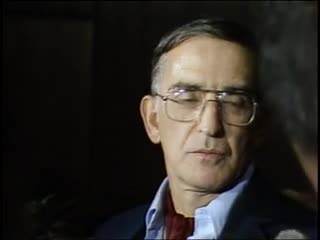
Description: INSPECTIONAL SERVICES PC AT CITY HALL, RAY FLYNN IN ATTENDANCE
Collection: Ten O'Clock News
Date Created: 08/21/1985
Description: Interview with Paul Folkins, Paul Rogers from Inspectional Services. Building with crack. Out in field. EXTERIORS OF MASS GENERAL HOSPITAL
Collection: Ten O'Clock News
Date Created: 08/19/1985
Description: HIGH % OF BOSTON'S WORKING POOR LACK HEALTH INSURANCE. RAY FLYNN.
Collection: Ten O'Clock News
Date Created: 06/30/1987
Description: B+W archival visuals: BOSTON IRISH, HONEY Fitzgerald, CARDINAL O'CONNELL. SAILBOATS ON CHARLES RIVER.
Collection: Ten O'Clock News
Date Created: 10/07/1982
Description: Ray Flynn explains he opted not to implement sprinkler ordinance for Boston rooming houses in favor of providing more units of affordable housing. Exterior+interior of rooming houses+code violations.
Collection: Ten O'Clock News
Date Created: 08/11/1989
Description: First immigrants granted amnesty in Boston under new immigration law. Luis Tiant, INS liaison. Charles Cobb.
Collection: Ten O'Clock News
Date Created: 08/26/1987
Description: Bulger and Flynn correspond coolly on incinerator site. Citizens advisory committee on solid waste disposal arrive at no consensus either.
Collection: Ten O'Clock News
Date Created: 08/11/1987
Description: Boston taxi fares will increase. Cab driver explains why this is necessary. Medallions.
Collection: Ten O'Clock News
Date Created: 07/28/1989
Description: Report on an alarming increase in the infant mortality rate in Boston. Review of the statistics noting that the infant mortality rate among African Americans is 2.5 times the infant mortality rate among whites and that the increase was most pronounced in the Roxbury neighborhood. Interview with Dr. Bailus Walker, the Commissioner of Public Health, who says that the increase in the infant mortality rate is the result of a cutback in social programs from 1982 to 1984. Mayor Ray Flynn talks about the effects of cutbacks in social programs. The state has put $15 million toward reducing the infant mortality rate. Marian Wright Edelman, the Director of the Children's Defense Fund, speaks at a press conference, saying that the US has one of the highest infant mortality rates of any industrialized nation. The video cuts to black for 45 seconds during this story, from 00:01:34 to 00:02:15, presumably for graphics that weren't added to this copy. Following the edited story is additional b-roll footage of health care workers, parents and children at the Codman Square Health Center.
1:00:05: Visual: Footage of a doctor examining a non-white baby with a stethoscope. Hope Kelly reports that the infant mortality rate in Massachusetts is nine out of 1,000 infants; that 22 of every 1,000 African American babies die; that the infant mortality rate for African Americans is 2.5 times higher than the infant mortality rate for whites. V: Footage of three young African American children playing outside of a housing project. Kelly reports that the infant mortality rate is 15 out of 1,000 for babies born in Boston; that the mortality rate for non-white babies born in Boston is 23 out of 1,000. V: Shots of a white child standing near a park bench; of a doctor examining a pregnant African American woman. Kelly reports that infant mortality rates have increased from previous years. V: Shots of an African American infant girl being undressed before a medical examination. Kelly reports that the state-wide infant mortality rate was 8.9 deaths per 1,000 babies in 1984. V: Video cuts out. Black screen is visible. Kelly reports that that the state-wide infant mortality rate was 9.1 per 1,000 babies in 1985. Kelly notes that the African American infant mortality rate was 17 per 1,000 babies in 1984; that the African American mortality rate was 22.1 per 1,000 babies in 1985. Kelly adds that the increase was drastic in the city of Boston. Kelly notes that the African American infant mortality rate in Boston was 11.7 per 1,000 babies in 1984; that the African American infant mortality rate in Boston was 15.4 per 1,000 babies in 1985. Kelly notes that the increase in the infant mortality rate was pronounced in the Roxbury area; that the infant mortality rate in Roxbury rose from 16.5 per 1,000 in 1984 to 23.4 per 1,000 in 1985. Kelly adds that the infant mortality rate in North Dorchester doubled from 1984 to 1985. V: Video cuts back in. Footage of Dr. Bailus Walker (Commissioner of Public Health) saying that he is concerned but not surprised about the rise in the infant mortality rate. Walker says that the infant mortality rate is the result of cutbacks made in social programs from 1982 to 1984. Kelly says that Walker and Ray Flynn (Mayor of Boston) blame cutbacks by the federal government. V: Footage of Flynn saying that the rise in the infant mortality rate is attributable to dramatic cutbacks in nutrition programs, housing programs, and other social programs. Kelly says that the state put $15 million dollars toward an effort to reverse the increase in the infant mortality rate in 1985. V: Shots of the State House. Footage of Walker saying that it is too soon to see the results of the effort; that the data for 1986-1988 will show the results of the state effort. Shots of a Boston Globe front page article. The headline reads, "Hub infant deaths up 32%. Kelly says that Boston is home to some of the nation's most advanced medical centers. V: Shots of Boston City Hall; of signs for Boston Hospitals, including the New England Medical Center Hospital and Children's Hospital. Kelly reports that the Boston's Mission Hill neighborhood is very close to the Harvard Medical Complex and other hospitals. V: Shots of a child riding a go-cart outside of a housing project in Mission Hill; of a woman standing at the window of her aparment, holding an infant. Shots of African American children playing outside of the housing project. Kelly reports that the infant mortality rate in Mission Hill is 50 deaths per 1,000 births; that the infant mortality rate in Mission Hill is as high as the infant mortality rate in many third-world countries. Kelly reports that there are high infant mortality rates among African American communities across the nation. V: Footage of Marian Wright Edelman (Director, Children's Defense Fund) at a press conference. Wright Edelman says that an African American infant born in Washington D.C. is more likely to die than in infant born in Trinidad and Tobago; that the US and one other nation have the highest infant mortality rates among twenty industrialized nations surveyed. Footage of Walker saying that he will be concerned if this trend continues for three or more years; that a one-year "snapshot" does not yet indicate a trend.
Collection: Ten O'Clock News
Date Created: 02/09/1987
Description: Hope Kelly reports on an increase in the infant mortality rate since last year. Kelly reviews statistics on the infant mortality rate in Massachusetts and in Boston. There is a wide discrepancy between the infant mortality rates in the white and African American communities. Two out of three infant deaths in Boston are African American infants. Interview with Commissioner and Deputy Commissioner of Public Health, David Mulligan and Howard Spivak about the rising infant mortality rate. The state of Massachusetts has implemented prenatal care programs for all pregnant women. Interview with Commissioner of Boston Health and Hospitals, Judith Kurland, about the prenatal care programs. Kurland says that the programs do not reach the women who are most in need of them. Kurland says that an increase in poverty has resulted in an increase of the infant mortality rates. Kelly reviews statistics concerning teenage pregnancy in the state, noting that teenage pregnancy is becoming increasingly common. Kelly's report is accompanied by footage of infants in a hospital nursery and footage of a doctor examining a baby.
1:00:01: Visual: Shots of an infant in a neo-natal intensive care unit; of an infant in an incubator being wheeled through the corridors of a hospital. Hope Kelly reports that infant mortality refers to any infant who dies within the first year of life; that the infant mortality rate among the minority population in Massachusetts is high. Kelly reports that the infant mortality rate for white babies is 7.1 per 1,000 births; that the infant mortality rate for African American babies is 17.2 per 1,000 births. Kelly notes that the infant mortality rate for white babies in Boston is 8.1 per 1,000 births; that the infant mortality rate for African American babies in Boston is 24.4 per 1,000 births. Kelly reports that the infant mortality rate has increased since last year. V: On-screen text and visuals detail the statistics of the infant mortality rate in Massachusetts. Footage of David Mulligan (Commissioner of Public Health) saying that there the infant mortality rate signals a wide discrepancy between the white community and the African American community. Kelly reports that two out of every three infant deaths in Boston are African American infants; that African Americans make up less than one-quarter of the city's population. V: Footage of Howard Spivak (Deputy Commissioner of Public Health) saying that infant mortality rates are high across the nation; that Massachusetts has one of the lowest infant mortality rates in the nation. Shot of a woman dressing a baby in an examination room of a health clinic. Kelly reports that Massachusetts has already implemented pre-natal care programs for all pregnant women. V: Footage of Judith Kurland (Commissioner, Boston Health and Hospitals) saying that these programs are good; that the programs do not always reach the women who need the most help. Kurland says that there are women who do not know that help is available. Kelly reports that Kurland runs the health department of the city of Boston. Kelly reports that one out of four newborns at Boston City Hospital will spend time in the intensive care nursery. Kelly notes that the mothers of these children often receive inadequate pre-natal care. V: Shot of an infant in the intensive care nursery. Shot of a health care worker tending to an infant in a hospital nursery. The health care worker takes a measurement and refers to a gauge. Kelly reports that Kurland does not think that the pre-natal care programs in Massachusetts are adequate. V: Footage of Kurland saying that the programs need to reach women in housing projects and on street corners. Shot of health care workers tending to an infant in a hospital nursery. The workers look at an image on a computer monitor. The infant is hooked up to medical equipment. Kelly reports that Kurland is proposing a radical expansion of health care. Kelly notes that outreach is necessary in order to help at-risk women. V: Footage of Kurland saying that there has been an increase in poverty during the past eight years; that increases in poverty are linked to increases in infant mortality. Kelly reports that teenage pregnancy is on the rise in Massachusetts. Kelly reports that 88,047 babies were born to teenage mothers in Massachusetts in 1988; that 84,343 babies were born to teenage mothers in Massachusetts in 1987. Kelly notes that the teenage birthrate has increased 22% since 1980. V: Shot of a young woman and a baby at the window of an apartment building. On-screen text and visuals detail statistics about teen pregnancy in Massachusetts. Shot of Dr. Graunke (pediatrician), a woman, and a baby in an examination room at the Codman Square Health Center. The woman puts the child on the examination table.
Collection: Ten O'Clock News
Date Created: 12/12/1989