Description: HIGH WINDS, TREE DAMAGE FROM HURRICANE GLORIA (MOSTLY CAMBRIDGE). sound effects ,George
Collection: Ten O'Clock News
Date Created: 09/27/1985
Description: HURRICANE GLORIA HITS HARVARD AND PORTER SQUARES, QUINCY MARKET, HARBOR, WATERFRONT
Collection: Ten O'Clock News
Date Created: 09/27/1985
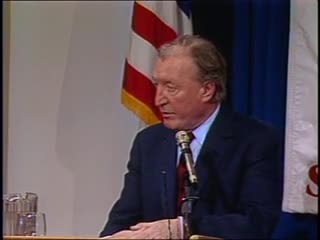
Description: Charles Haughey, prime minister of Ireland, visits Boston and speaks at Kennedy School. Protesters outside Ritz-Carlton.
Collection: Ten O'Clock News
Date Created: 04/22/1988
Description: JERRY FALWELL AT HARVARD LAW SCHOOL SPEAKS ON RELIGION AND POLITICS, MORAL MAJORITY
Collection: Ten O'Clock News
Date Created: 09/20/1984
Description: JERRY FALWELL AT HARVARD LAW SCHOOL SPEAKS ON RELIGION AND POLITICS, MORAL MAJORITY
Collection: Ten O'Clock News
Date Created: 09/20/1984
Description: MEMORIAL DRIVE and street sign, HARVARD KENNEDY SCHOOL side view, JFK PARK, TRAFFIC, CHARLES RIVER
Collection: Ten O'Clock News
Date Created: 05/02/1984
Description: As James O'Leary leaves job as MBTA general manager, a look at his successful 8-year tenure yielding many public transit improvements. Eugene Brune, Somerville mayor. Barry Locke file. Alewife T.
Collection: Ten O'Clock News
Date Created: 02/07/1989
Description: David Boeri reports that Jesse Jackson will travel to Iraq to interview Saddam Hussein for the Jesse Jackson Show. Previously, Jackson has met with both the Iraqi ambassador and Prince Turki bin Abdul Aziz of Saudi Arabia, the brother of King Faad. Prince Aziz considers Jackson's trip to be a diplomatic mission to cool hostilities between Iraq and the United States. Boeri's report includes footage of Prince Aziz and his entourage. Interview with Mustafa Aziz, an advisor to Prince Aziz, who says that Jackson is well regarded in the Middle East. Boeri notes that George Bush does not support Jackson's trip. Jackson traveled to Syria in 1984 to secure the release of US Navy pilot Robert Goodman, Jr.. Footage from a press conference with Goodman and Jackson and footage of Ronald Reagan, who didn't like Jackson's 1984 trip. Many suspect Jackson of using guise of a journalist carry out a diplomatic mission to Iraq. Boeri's report features footage from the Jesse Jackson Show.
1:00:07: Visual: Footage of Jesse Jackson (African American political leader) from the Jesse Jackson Show on October 5, 1989. Jackson talks about his goal of discussing a broad range of ideas and viewpoints on his show. David Boeri reports that Jackson has found controversial ideas to discuss on his show. Boeri reports that Saddam Hussein (leader of Iraq) will be a guest star on Jackson's show; that Jackson's producers hope to be in Baghdad by the weekend. Boeri notes that Jackson's show will be syndicated. V: Shot of Hussein speaking on a telephone; of Hussein exiting a vehicle and being greeted by a few soldiers. Shot of an Iraqi military soldier in a bunker; of Iraqi military soldiers standing at attention. Footage of Jackson in Syria in January of 1984. Jackson sits beside Lieutenant Robert Goodman, Jr. (US Navy pilot) at a press conference. Jackson expresses gratitude for religious leaders and people who prayed and fasted for Goodman's release. Boeri reports that Jackson visited Syria in 1984; that Jackson went on a mission to free a US Navy pilot shot down by the Syrians. V: Footage of Jackson greeting an official in January of 1984. Footage of Goodman at the press conference with Jackson. Goodman says that he is happy to be going home; that Jackson is respected in the Middle East. Boeri reports that George Bush (US President) has not commented publicly on Jackson's trip to Iraq. Boeri reports that Ronald Reagan (former US President) did not appreciate Jackson's efforts in Syria in 1984; that Reagan did not return Jackson's pre-trip phone calls. V: Shot of Reagan speaking at a press conference during his presidency. Boeri reports that permission for Jackson's upcoming trip to Iraq was granted after a meeting with the Iraqi ambassador. Boeri reports that Jackson has been involved in a round of meetings; that Jackson recently traveled to Boston to meet Prince Turki bin Abdul Aziz of Saudi Arabia (brother of King Faad of Saudi Arabia). V: Shot of Jackson speaking. Footage of Prince Aziz and his entourage entering a luncheon room. Aziz greets US officials and members of the press, including Boeri. Boeri reports that Prince Aziz is fifth in the line of succession to the Saudi throne; that Aziz is a former deputy defense minister; that Aziz has been staying at the Charles Hotel in Cambridge. Boeri notes that Dr. Mustafa Aziz (advisor to Prince Aziz) believes that Jackson's upcoming trip to Iraq may be the last chance for a peaceful solution. V: Footage of Dr. Mustafa Aziz being interviewed by Boeri. Mustafa Aziz says that Jackson is seen in the Middle East as an honest politician and a civil rights champion. Boeri reports that Prince Aziz considers Jackson's trip to be a diplomatic mission instead of a journalistic mission. Boeri notes that Prince Aziz considers violent hostilities to be imminent. V: Footage of Mustafa Aziz being interviewed by Boeri. Mustafa Aziz says that the situation is tense and explosive. Boeri stands in front of the Charles Street Hotel. Boeri reports that the Bush administration told Jackson that they do not want him to go to Iraq; that the Bush administration said that they would not stop Jackson; that the Bush administration wished Jackson good luck. Boeri reports that Jackson's producers see the trip as an opportunity for Jackson to prove himself as a world-class journalist with international connections. Boeri notes that many suspect Jackson of taking cover as a journalist while on diplomatic mission to Baghdad. Boeri reports that Prince Aziz has installed a satellite on the roof of the Charles Hotel; that Prince Aziz will be watching Jackson's broadcast from Baghdad.
Collection: Ten O'Clock News
Date Created: 08/23/1990
Description: Meg Vaillancourt reports that Jesse Jackson visited Harvard Law School to join student protests over the school's minority hiring practices. Vaillancourt notes that Jackson supports Derrick Bell (Professor, Harvard Law School), who has announced that he will leave his post to protest the school's poor affirmative action record. Derrick Bell is Harvard's first African-American tenured professor. Vaillancourt reports that there are only five tenured female professors and three tenured African American male professors out of sixty-one tenured professors at the school. Vaillancourt's report includes footage of Jackson addressing students at the school. Barack Obama is seen among students in the background. Jackson shakes hands with Bell and condemns the school's affirmative action record. Vaillancourt notes that the school administration has refused Jackson's offer to act as a mediator on the issue. Vaillancourt reports that Jackson accused Harvard Law School of institutional racism and sexism. She adds that Robert Clark (Dean, Harvard Law School) issued a statement defending the school's hiring practices. Vaillancourt's report features footage of Bell at a student demonstration at Harvard Law School in April 1990 and footage of Jackson at a student demonstration. This tape includes additional footage of Jackson addressing demonstrators at Harvard Law School.
1:00:05: Visual: Footage of Jesse Jackson (African American political leader) speaking at Harvard Law School. Jackson says that affirmative action is a response to years of denial by law. Shots of the audience listening to Jackson in a lecture hall at the school. Meg Vaillancourt reports that Jackson's visit to Harvard Law School attracted national attention to the controversy over the school's minority hiring practices. V: Footage of Jackson addressing the audience. Jackson says that it is an error and an insult to say that there is no African American woman qualified to be a tenured professor at Harvard Law School. Shots of the audience. Vaillancourt reports that Jackson visited the school to support Derrick Bell (Professor, Harvard Law School). Vaillancourt notes that Bell was the first African American to be granted tenure at Harvard Law School. Vaillancourt reports that Bell has announced that he will leave his post to protest the school's poor affirmative action record. V: Shot of Jackson and Bell shaking hands in the conference hall. Footage from April 24, 1990 of Bell at a demonstration on the campus of Harvard Law School. Bell addresses student demonstrators. Bell says that he he has urged students to take risks to further their beliefs; that he must now do the same. Shot of demonstrators holding a sign reading, "Where are our tenured black women professors?" Vaillancourt reports that Bell will take a leave of absence until the school adds a woman of color to the faculty. Vaillancourt notes that there are 61 tenured professors at the school; that three of those professors are African American; that the African American professors are all male. Vaillancourt reports that half of the students at Harvard Law School are women; that there are only five tenured female professors; that there are no Latino or Asian law professors at the school. V: Shots of Bell and Jackson entering the lecture hall; of students standing and applauding for Bell and Jackson. Shots of white and African American female students in the audience. Shot of Jackson, Bell and a white woman raising linked arms at the front of the lecture hall. The students applaud. Vaillancourt reports that the school seems ready to accept Bell's departure; that Robert Clark (Dean of Harvard Law School) declined to speak on camera about the school's hiring practices. Vaillancourt reports that Clark issued a statement in which he defended the slow pace of change at Harvard Law School. Vaillancourt reports that Jackson has accused Harvard of institutional racism and sexism. V: Shot of students demonstrators on the Harvard Law School campus on April 24, 1990. Footage of Jackson addressing student demonstrators outside on the campus of Harvard Law School. Student supporters stand behind him. Jackson says that Harvard should negotiate with Bell and the student demonstrators. The demonstrators applaud Jackson. Vaillancourt stands outside of a building on the Harvard Law School campus. Vaillancourt reports that Jackson met briefly with Clark today; that the school has refused Jackson's offer to act as a mediator on the issue of faculty diversity. Vaillancourt reports that Jackson called for a reexamination of race relations in the US during his speech at Harvard Law School. V: Footage of Jackson addressing an audience in a lecture hall at Harvard Law School. Jackson says that most people in the world are not white nor are they males. Jackson says that these people cannot wait for some archaic standard to allow them to be appraised as worthy by white males. Shots of students in the audience. Shot of Jackson entering a room. Jackson shakes hands and embraces Bell. Jackson shakes hands with other Harvard Law School professors and officials. Vaillancourt reports that Jackson has called for a new Kerner Commission; that the Kerner Commission issued a study twenty years ago which concluded that white America and black America were separate and unequal. Vaillancourt reports that Jackson praised Bell for his courage; that Jackson called on Harvard Law School faculty to support Bell. V: Footage of Jackson addressing an audience in the lecture hall. Jackson talks about the sacrifices made by Rosa Parks (civil rights activist) and Martin Luther King (civil rights leader). Jackson says that Bell is taking a principled stand; that Bell is drawing attention to the problem of racism and sexism at Harvard. Shots of Bell at a demonstration on the Harvard Law School campus on April 24, 1990. Shots of Bell addressing a demonstration outside of a building on the Harvard Law School campus today. Jackson stands beside Bell. Student demonstrators stand behind them. The demonstrators raise their linked arms. A demonstrator holds a sign reading, "diversity now." Vaillancourt reports that faculty were scheduled to vote today on a resolution encouraging diversity. Vaillancourt notes that Harvard officials say that a personal matter forced the dean to end the meeting before the resolution came to a vote. Vaillancourt notes that the vote was not rescheduled.
Collection: Ten O'Clock News
Date Created: 05/09/1990
Description: Christy George reports that Jesse Jackson spoke about leadership in a speech at the John F. Kennedy School of Government at Harvard University. George reports that Jackson is very active in this non-election year. George's report includes footage of Jackson walking a picket line with striking Eastern Airline employees and footage of Jackson visiting an Armenian earthquake zone. George talks about Jackson's activities since the 1988 election. George's report also features footage from Jackson's speech at Harvard. Jackson talks about voter cynicism in the 1988 election and the qualities of a good leader. Jackson says that the US must invest in itself in order to flourish. He explains a metaphorical term: "honeybee sense." George's report also includes footage from Jackson's 1988 presidential campaign. This edition of the Ten O'Clock News also included the following item: Lee Atwater visits Massachusetts for a Republican Party fundraiser
1:00:07: Visual: Footage of Jesse Jackson (African American political leader) as he enters an auditorium at the John F. Kennedy School of Goverment at Harvard University. The audience applauds for Jackson. Shot of a man in the crowd. Footage of Jackson addressing the audience. Jackson jokes about his speech being televised on C-Span. Jackson waves to his mother. Christy George reports that Jackson talked about the scarcity of good leaders in American politics during his speech at the Kennedy School of Government. V: Footage of Jackson delivering his speech. Jackson says that public cynicism won more voters than Bush did in the 1988 campaign. Jackson notes that 50% of the eligible voters did not vote; that 70% of voters expressed a desire for a different choice. Jackson says that Bush's campaign won while the country lost. Footage of Jackson at a campaign rally in New Hampshire on February 16, 1988. The crowd chants, "Win, Jesse, Win." George notes that Jackson travels the country regularly in non-election years. V: Shots of Jackson doing a television interview; of Jackson picketing with striking Eastern Airline employees. George reports that Jackson has walked with striking Eastern Airline employees across the nation; that Jackson turned a tour of an Armenian earthquake zone into a Soviet-American people's summit. V: Shot of a Soviet news anchor reading the news; of Jackson kissing a baby in Armenia. Footage of Jackson looking out of a window while riding on a bus in Armenia. Jackson speaks to the media, saying that human beings must care for one another. Footage of Jackson at a 1988 campaign rally. George calls Jackson a "perpetual candidate" and a "peripatetic preacher." V: Footage of Jackson speaking at the Kennedy School. Jackson says that he is a "liberal" who fights for change. Jackson says that pollsters and pundits are looking for a manufactured candidate. Jackson says that great leaders do not follow opinion polls; that great leaders mold public opinion. Jackson says that John F. Kennedy (former US President) was not following opinion polls when he reached out to Martin Luther King, Jr. (civil rights leader). Jackson says that Kennedy's actions were based on courage and principles. Jackson says that the US needs bold leadership to deal with the nation's "structural crisis." Jackson talks about "honeybee sense." Jackson says that honeybees know to drop pollen when they pick up nectar; that honeybees know the importance of keeping the flowers alive. Jackson says that the US needs to invest in itself in order to stay alive and flourish. The crowd rises to its feet and applauds for Jackson.
Collection: Ten O'Clock News
Date Created: 04/25/1989