Description: Sam Fleming reports that Jesse Jackson is campaigning in New Hampshire. Some consider Jackson to be the frontrunner for the Democratic nomination, but many political observers doubt Jackson's chances of winning the nomination. Jackson addresses supporters at a campaign rally, including about his support for the gay and lesbian community. Interviews with enthusiastic Jackson supporters in New Hampshire. Jackson tells reporters that his race is not as important as his credentials. He addresses another rally on the need for national affordable health care. Interview with Joe Grandmaison the Chairman of the New Hampshire Democratic Party, who says that it would not be wise to underestimate Jackson and his campaign. This edition of the Ten O'Clock News also included the following item: Ray Flynn, Michael Dukakis, and Bruce Bolling discuss linkage between Chinatown development and Parcel 18 in Roxbury
1:00:54: Visual: Footage of Jesse Jackson (Democratic candidate for US President) getting his picture taken in front of the fall foliage in New Hampshire. Jackson walks into a rustic building. Sam Fleming reports that Jackson is trying to secure voter support in New Hampshire; that Jackson is considered to be the frontrunner for the Democratic nomination. V: Shots of Jackson shaking hands with New Hampshire voters. Shot of Jackson addressing the crowd. The crowd applauds. Fleming reports that many political observers doubt Jackson's chances of winning the nomination; that Jackson is not paying attention to the "conventional wisdom" of the political observers. V: Footage of Jackson addressing the crowd. Shots of members of the crowd. Jackson talks about speaking at last weekend's rally for gays and lesbians in Washingon D.C. Jackson says that the voices of gays and lesbians deserve to be heard. Fleming notes that Jackson is reaching out to the dispossesed. V: Footage of Jackson talking about his efforts to build a diverse coalition of supporters. Jackson says that his leadership will put the nation on a course for jobs, peace, and justice. The crowd applauds. Shots of individual audience members. Footage of an older white female voter saying that Jackson is "energizing"; of a white female voter saying that she hopes that Jackson has a chance at the nomination. Footage of an older white male voter saying that some critics are trying to create a negative image of Jackson; that Jackson is "electable." Footage of Jackson speaking to reporters. A reporter asks Jackson if an African American can win the Democratic nomination. Jackson says that the issue of his race should be left to "God"; that the issue of his credentials should be left up to the voters. Fleming notes that Jackson has been questioned about the state of his marriage. V: Footage of Jackson telling reporters that he will not speculate about rumors; that he is fighting to win the nomination. Fleming reports that Jackson opened his campaign office in Manchester, N.H. V: Footage of a crowd gathered in front of Jackson's campaign office. Shot of a white female voter holding a hand-made Jackson campaign sign. The crowd begins to chant, "We want Jesse." Jackson shakes hands with voters outside of the office. Shots of an older white man; of a young African American boy in the crowd. Jackson addresses the crowd. Jackson talks about the need for a national health care system. Jackson says that he will provide "bold leadership." Fleming notes that Jackson did well with white Democratic voters in New Hampshire in 1984. Fleming reports that one Jackson campaign supporter said that the Jackson campaign lacked an organized structure; that fundraising so far has been minimal. Fleming adds that some voters see Jackson as a candidate supported mainly by African Americans. V: Shots of Jackson addressing a crowd; of individual members of the crowd. Footage of Joe Grandmaison (Chairman, New Hampshire Democratic Party) saying that no one underestimates the strength of Jackson and his message. Footage of Jackson addressing the crowd about the need to save jobs, schools, farms, and the environment, and to "give peace a chance." The crowd chants along with Jackson and applauds for him. Shot of an elderly woman at the Jackson campaign rally.
Collection: Ten O'Clock News
Date Created: 10/12/1987
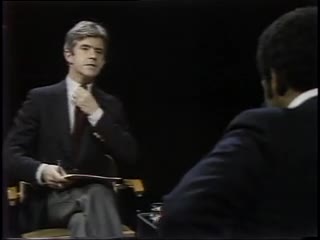
Description: A Ten O'Clock News special features an interview with Jesse Jackson (Democratic candidate for US President). Christopher Lydon (WGBH), Dennis Farney (Wall Street Journal), and Ken Bode (NBC News) interview Jackson. Lydon notes that the goal of the interview is to discover how Jackson's character would shape his presidency. Jackson jokes about the psychoanalytic nature of the interview. Jackson talks about growing up in a segregated society and participating in the civil rights movement. He answers questions about his childhood. He talks about his campaign and the support he has received so far. Jackson talks about the challenges faced by young African Americans, and says that young African Americans must work twice as hard as whites in order to succeed. Jackson says that some conservative African Americans may not support his candidacy; he adds that people of all races are finding common ground in his candidacy. Jackson reviews the accomplishments of his political organization and talks about his experiences in shaping political policy during the 1960s and the 1970s. He names the politicians whom he admires. He talks about his relationship to the Democratic Party leadership and about his efforts to open up the Democratic Party to minority voters. Jackson says that he would like to establish better relations between the African American community and the Jewish community. He names the people to whom he turns for advice. Jackson says that he regrets the splintering of the civil rights movement in the 1970s. He talks about the Rainbow Coalition as a means to reunite those groups. Tape 1 of 2.
1:00:37: Visual: WGBH logo. Christopher Lydon introduces an "extended conversation" with Jesse Jackson (candidate for US President). Lydon notes that the half hour show was planned in cooperation with the John F. Kennedy School of Government at Harvard University. Lydon adds that the goal of the interview is to discover how Jackson's character would shape his presidency. Lydon introduces in-studio guests Dennis Farney (Wall Street Journal) and Ken Bode (NBC News). Lydon reviews biographical facts about Jackson including date of birth, education, and his career in the civil rights movement. Lydon asks Jackson which actor he would choose to portray Jesse Jackson in a movie about his life, and what Jackson would tell the actor about his character. Jackson jokes about the psychoanalytic nature of this interview. Jackson talks about growing up in a segregated society. Jackson says that he is sensitive to the needs of the poor and the disenfranchised; that he participated in the civil rights movement and has seen great changes. Jackson says that he has not grown bitter about US society because he has seen such great changes. 1:04:28: V: Farney asks Jackson about his childhood and whether he felt rejected by his father. Jackson talks about feeling a sense of rejection as a child; that he was called a "bastard." Jackson says that his athletic and academic success were his way of fighting back against those who rejected him or laughed at him. Jackson says that he has grown accustomed to adversity and to the "double standard" which exists in society. Bode asks Jackson if the US is ready for an African American president. Bode mentions that Bill Lucy (African American union leader) has said that the US is not ready. Jackson notes that he has been received warmly in New Hampshire. Jackson says that no one will know if the US is ready for an African American president until the nation is given the chance to elect one. Jackson says that an African American candidate may get support from women, Hispanics and American Indians; that many groups in society can identify with his candidacy. Jackson mentions the Rainbow Coalition. Jackson notes that he is running second or third out of eight candidates in New Hampshire. Lydon asks Jackson about his success in life and about his belief in self-reliance. Jackson says that the "triangle" of family, church, and school allowed him to grow up with a sense of confidence; that he was insulated from some of the ill effects of segregation. Jackson mentions the closeness of his family to a particular white family, despite living in a segregated society. 1:11:19: V: Lydon asks Jackson how to foster good support networks for young African Americans growing up today. Jackson says that young African Americans need to work harder than whites to succeed; that their hard work will pay off in the end; that those who work hard to succeed develop an inner strength and character. Bode notes that the Alabama Democratic Conference endorsed Walter Mondale's candidacy for US President. Bode adds that Jackson's political organization said that their endorsement of Mondale was the equivalent of "putting another bullet into the body of Martin Luther King." Jackson denies characterizing the endorsement in that manner. Jackson talks about the reluctance of the African American community to upset the status quo. Jackson says that some of the resistance to the civil rights movement came from conservative African Americans. Bode asks Jackson what percentage of the vote he expects to receive in the Alabama primary. Jackson says that he will not speculate on percentages. Jackson talks about the endorsements and support he has received. Jackson says that he has received support from white voters in the south; that whites, African Americans, and other minorities are finding common ground in his candidacy. 1:15:38: V: Farney asks why Jackson sometimes refers to himself as a "prophet" instead of a "politician." Jackson explains that his role is prophetic in that he tries to change the structure of society. Farney notes that Jackson has been criticized for a lack of administrative experience. Jackson reviews the accomplishments of his political organization. Jackson notes the limited budget under which his campaign operates. Farney asks about Jackson's political legacy. Jackson says that his candidacy has forced the Democratic Party to open up; that his candidacy has forced both political parties to understand the importance of minority voters. Lydon asks about Jackson's spiritual life. Jackson says that he tries to seek common ground between people of different religions; that certain values are held in common by all religions. Jackson says that he is committed to the poor, the elderly and the young. Lydon asks Jackson why Ralph Abernathy (African American leader) said that Jackson could be his president but not his pastor. Jackson says that he does not know why Abernathy said that. Bode comments that Jackson has not held political office, but that he has had a lot of contact with politicians. Jackson notes that he was the first African American delegate to the Democratic Party in 1962. Jackson reviews his leadership experience and his role in shaping public policy in the 1960s and 1970s. 1:20:55: V: Bode asks Jackson which politicians he admires, aside from Martin Luther King. Jackson talks about Hubert Humphrey (US Senator), Ron Dellums (US Representative), and Adam Powell (US Representative). Bode notes that Jackson has criticized Tip O'Neill (Speaker, US House of Representatives) and Lane Kirkland (President, AFL-CIO). Bode asks how Jackson will deal with the Democratic leadership. Jackson says that he will conduct business with these leaders on the basis of "mutual respect." Jackson says that the Democratic Party needs a more articulate spokesman than O'Neill; that he respects O'Neill. Jackson notes that the labor movement needs to commit itself to providing equal access to jobs for African Americans, Hispanics, and women. Lydon asks Jackson about how his candidacy is viewed by American Jews. Jackson says that he would like to establish better relations between African American and Jewish leaders. Jackson says that he regrets the conflicts between African Americans and Jews in the past; that he supports the right of Israel to exist; that he also supports the rights of Palestinians. Jackson talks about his view of the Middle Eastern conflict. Farney notes that Jimmy Carter (former US President) was elected as an "outsider." Farney asks if Jackson would be more successful than Carter in operating in politics as an "outsider." Jackson says that Carter remained on the "outside" as president; that Carter did not use the power of the presidency to its full extent. Jackson says that he disagrees with the critics who call the Carter administration a "failure." Jackson criticizes the foreign policy of Ronald Reagan (US President). 1:26:29: V: Bode asks Jackson about his advisors. Jackson says that he consults with his wife and his children. Jackson names a list of people with whom he consults including Dellums, Marion Barry (mayor of Washington D.C.), Walter Fauntroy (US Congressman), Edward Bennett Williams (attorney), Dr. Al Pitcher (University of Chicago), and Dr. Jack Mendelsohn (minister). Lydon asks Jackson to disclose any major failures or flaws in his character. Jackson says that he does not dwell on his failures, but that he has learned a lot from them. Jackson says that he regrets how the civil rights movement broke up in the 1970s; that he is trying to bring back together the groups involved in the civil rights movement through his coalition. Jackson says that he is concerned with the conflict between African Americans and American Jews. Jackson talks about the importance of communication in resolving conflict. Lydon thanks Jackson, Farney and Bode. End credits roll.
Collection: Ten O'Clock News
Date Created: 02/03/1984
Description: David Boeri reports that Jesse Jackson spoke at the Massachusetts State House about the importance of access to higher education. Boeri notes that some students cannot afford higher education because of the increasing costs of higher education and federal cuts in student aid. Many supporters turned out to listen to Jackson. Jackson talks to the audience about the importance of education. Jackson addresses the media after his speech.
1:00:10: Visual: Footage of Kevin Sheehan (State Student Association of Massachusetts) talking about college students who must work forty hours per week on top of taking classes. Footage of Mike Ferrigno (State Student Association of Massachusetts) addressing a crowd at the State House about the debt incurred by many students in college. David Boeri reports that many low- and middle-income college students are incurring heavy debt in colleges; that some students can not afford to go to college. V: Shot of students walking on a campus. Boeri reports that speakers at a State House rally attacked federal cuts in federal aid to students. Boeri notes that the cuts come at a time when tuition and the cost of living are increasing; that grants are less easy to obtain. V: Shot of speakers and the audience inside the State House. Footage of Jesse Jackson (African American political leader) speaking about the importance of access to education. Boeri reports that Jackson said that universities have let the enrollment numbers fall for African American, minority, and low-income students. V: Shots of the members of the audience, including Mel King (community activist), Bill Owens (former state senator) and Shirley Owens Hicks (state representative). Footage of Jackson urging students to protest cuts in student aid. Jackson condemns the priorities of Ronald Reagan (US President). Jackson says that Reagan is "embarking on a trillion dollar misadventure in space." Jackson tells students that they need to stay sober, fight the Star Wars program and to "vote with Red Sox fever." The audience applauds as members rise to their feet. Footage of Jackson speaking to the media after his speech. Jackson uses the parable of Jesus Christ to illustrate society's obligation to cater to the needs of the poor and needy. Jackson says that many children are "locked out and living in the manger." Bruce Bolling (Boston City Council) is visible behind Jackson. Boeri reports that the State Student Association has registered over 5,000 new student voters; that the students will vote for more affordable education in November.
Collection: Ten O'Clock News
Date Created: 10/17/1986
Description: During informal conversation prior to an interview with Christopher Lydon, Dennis Farney (Wall Street Journal) and Ken Bode (NBC News), Jesse Jackson uses expletives to describe how his parents disciplined him as a child.
1:00:00: Visual: Jesse Jackson (US presidential candidate) sits in the WGBH studio with Christopher Lydon, Dennis Farney (Wall Street Journal) and Ken Bode (NBC News) before an interview. A crew member adjusts Jackson's lapel microphone. The four men joke lightheartedly about the interview. Lydon tells a story about another reporter's 1972 interview with George McGovern (Democratic nominee for US president). Lydon says that McGovern was asked if his father beat him as a child. Jackson uses slang and expletives to describe how his parents disciplined him as a child. Visual: Video cuts out. Audio of Lydon asking Jackson about his favorite ministers in the Boston area. Jackson mentions Reverend Charles Stith. Video returns. Lydon runs his hands through his hair and prepares for the interview.
Collection: Ten O'Clock News
Date Created: 02/03/1984
Description: First seven minutes are shots of photographs of community activist Mel King throughout his life. Then Christopher Lydon interviews his wife Joyce King in the kitchen of their home. Joyce says that Mel's parents taught him the importance of sharing with others, and adds that he was very proud of his father, who was active in a union. Joyce talks about Mel's generosity. Lydon asks about the West Indian background of Mel's family, and about his formative years. She says that Mel's family was proud of their West Indian heritage and discusses his experiences while attending college in South Carolina. Joyce says that he learned about racism and oppression while living in South Carolina.
1:00:02: Visual: Shots of black and white photographs of Mel King throughout his life; of Mel King's high school yearbook photograph. 1:06:55: V: Christopher Lydon interviews Joyce King (wife of Mel King) in the kitchen of her home. Lydon asks Joyce King about Mel King's family. Joyce King says that Mel King's family always shared what they had with others; that Mel King's mother was able to make do with the few resources she had. Joyce King says that Mel King's father was active in a union; that Mel King is very proud of his father. Joyce King tells a story about the generosity of Mel King's father. Joyce King says that Mel King has an "open door policy"; that Mel King is not protective of his privacy. Joyce King says that Mel King often brings people to their home. Joyce King says that Mel King often gives clothing or money to those in need; that he does it in a quiet manner. 1:15:06: V: Lydon asks about the West Indian culture of Mel King's family. Joyce King says that Mel King's family is proud of their heritage; that his parents grew up in Barbados; that the family has strong connections to their heritage. Lydon asks about Mel King's formative years. Joyce King says that Mel King's membership in the Church of All Nations was important in his younger years; that Mel King attended a church-sponsored school in South Carolina; that the public school system discouraged African Americans from attending university. Joyce King says that Mel King learned a lot about race and oppression when he was at college in South Carolina; that Mel King traveled through the South as a member of the sports teams at his college. Joyce King says that Mel King returned from South Carolina with ideas about race and the fight against oppression.
Collection: Ten O'Clock News
Date Created: 11/06/1983
Description: Christopher Lydon interviews cultural historian Kiku Adatto (Harvard University) about Jesse Jackson as a presidential candidate. Lydon's interview with Adatto is accompanied by footage of Jackson throughout his political career. The footage illustrates Jackson's dynamic style of speaking. Adatto notes that Jackson is a religious figure in the political arena. She notes that Jackson's energy and moral fervor are more suited to a preacher than a politician. She says that Jackson's strength lies in his ability to articulate social criticism. Adatto says that many voters see Jackson as an outsider or a social critic instead of as a politician; she adds that some voters may not be able to envision him as president. Lydon's report also includes footage of Martin Luther King, Jr. (American civil rights leader) and Andrew Young (Mayor of Atlanta).
1:00:02: Christopher Lydon interviews Kiku Adatto (Harvard University) about Jesse Jackson (candidate for the Democratic nomination for US President). Adatto talks about the tradition of preachers in American history. She says that many of these preachers, including Martin Luther King (civil rights leader) and Jackson, have become political leaders. Visual: Shot of a black and white photo of Jackson on a balcony with King. Black and white footage of King giving a speech. Shot of a black and white photo of Jackson in a crowd, raising his arm in the black power salute. Adatto says that Jackson has tried to pick up the mantle of King; that Jackson has tried to be the "conscience of America" in the way that King was. V: Footage of Jackson addressing a crowd at Harvard University on April 4, 1985. Jackson talks about the evils of apartheid. Adatto says that there is a tradition in the US of the preacher staying outside of politics; that Jackson has tried to move into the political system in order to effect change. V: Footage of Jackson passing a lobby of a building. He shakes hands with African American bystanders. Jackson enters a room full of supporters. Adatto says that Jackson is concerned with equality and civil rights; that Jackson has been caught exhibiting prejudice against Jews; that Jackson was linked with Reverend Louis Farrakhan (African American Muslim leader). V: Shots of newspaper articles detailing the controversy surrounding Jackson's remarks about Jews in 1984. Adatto adds that the preacher must remain "morally sound" when entering the political arena. V: C-Span footage of Jackson addressing the Democratic Convention in 1984. Adatto says that Jackson has an "insider-outside dilemma"; that Jackson finds it difficult to make the compromises required by electoral politics. Adatto notes that Andrew Young (Mayor of Atlanta) made an easy transition into electoral politics. V: Shot of Young at a press conference in Boston in 1983. Adatto notes that Jackson has lost none of his energy or "moral fervor"; that Jackson still criticizes society from an outsider's point of view. Adatto adds that Young is an "insider." V: Shot of Young at a press conference. Adatto says that Jackson strength lies in his ability to articulate social criticism. V: C-Span footage of Jackson addressing the Democratic Convention in 1984. Shots of audience members. Adatto says that Jackson stirs the emotions of voters in his "outsider" role; that Jackson troubles many voters in his "insider" role. Adatto notes that Jackson's role as social reformer and critic undermines his strength as a presidential candidate; that many voters cannot envision Jackson as president. Adatto notes that many of the nation's great presidents have been calm and quietly strong; that some see Jackson as too much of a preacher; that Jackson's energy and moral fervor are more suited to preacher than politician. V: C-Span footage of Jackson addressing the Democratic Convention in 1984. Adatto says that some see voters as too much of an outsider, social critic or civil rights leader; that some white voters are turned off by Jackson. Adatto quotes statistics from a study which found that 23% of American voters are not ready to vote for any African American for president. V: C-Span footage of Jackson addressing the Democratic Convention in 1984. Adatto says that Jackson has the ability to stir the emotions of the American people; that he is most powerful in his role as "outsider" or critic. Adatto says that many voters are stirred by his message, but cannot envision him as president because he is an outsider. V: Footage of Jackson announcing his candidacy for president in 1988. His supporters stand behind him, cheering. Jackson promises "bold leadership."
Collection: Ten O'Clock News
Date Created: 10/16/1987
Description: Mayoral candidates Mel King and Ray Flynn participate in a forum on education sponsored by the Citywide Education Coalition (CWEC) at English High School. Flynn talks about his experience in government and his commitment to the public schools. He notes his familiarity with the city and school budgets, and he discusses the importance of public education and public housing. King stresses the importance of early childhood education programs and a "child-centered" school system. King speaks of the need for the mayor to work together with the Boston School Committee. King says that the city must continue to demonstrate its support of integrated schools. King and Flynn respond to a question about requiring students to pass a standardized test in order to graduate. Tape 1 of 2.
1:00:05: Visual: Four members of the Citywide Education Coalition (CWEC) sit at a table on stage at English High School. A member of the CWEC welcomes mayoral candidates Ray Flynn and Mel King to the annual meeting of the CWEC. Flynn and King are seated at a table at the center of the stage. Shots of Flynn and King. The CWEC member says that the candidates and the audience will discuss the future of public education in Boston. 1:01:55: V: Flynn thanks the moderator and the CWEC. Flynn mentions his experience as a state legislator and a member of the Boston City Council. He says that he was a student in the Boston Public Schools. Flynn congratulates the CWEC for their commitment ot public education. Flynn stresses the importance of public education and a good school system. Flynn says that he has a Master's Degree in education from Harvard; that he is committed to education. Flynn says that he would visit a few public schools and a few public housing projects on his first day as mayor; that education and public housing will be major concerns for his administration. Flynn says that the mayor should be involved in public education; that politicians in Boston have distanced themselves from the public schools since desegregation. Flynn says that the mayor should serve as an ex-officio member of the Boston School Committee; that the mayor needs to be aware of the situation in the schools. Flynn says that he is familiar with the city and school budgets. Flynn says that fiscal stability and predictable student placements are important for the schools. The audience applauds. 1:07:56: V: King thanks the audience and the CWEC. King says that the students in the school system must be served from birth to graduation; that early childhood education programs are important. King says that resources must be allocated to support Head Start programs and other early childhood education programs. King says that "child-centered" school system must guarantee education for all students; that the school system must believe that all children can be educated. King says that the mayor must work with the Boston School Committee; that the members of the School Committee will be newly elected; that the mayor and the Boston School Committee must determine the problems and the needs of the school system. King says that the newly elected School Committee must be unified in support of integrated schools. Jump cut in videotape. King says that he would provide leadership on the issue of education; that he would work to create a good climate and to end divisiveness on the issue of education. King says that the Boston Public School System must demonstrate its commitment to integrated education. The audience applauds. 1:14:52: V: An audience member asks if students should pass a standardized test in order to graduate from high school. King says that standards need to be established in the early grades as well as upon graduation. King says that the school administration must be held responsible for the education of the students; that diagnostic testing and evaluation is needed at every grade level, not just upon graduation.
Collection: Ten O'Clock News
Date Created: 10/13/1983
Description: Mayoral candidates Ray Flynn and Mel King participate in a forum on education sponsored by the Citywide Education Coalition (CWEC) at English High School. Flynn says that students graduating from Boston public schools must be prepared to compete in the workplace. He adds that there must be a working relationship between parents, teachers, administrators, and the community. King speaks about the workings of the school administration and advocates the inclusion of parents in the process. King and Flynn respond to questions about how they would have handled school desegregation if they had been mayor at the time. Both candidates answer questions about the role of the mayor upon the court's withdrawal from its supervisory role over the school system and about the school budget. Audience members include John O'Bryant of the Boston School Committee. Tape 2 of 2.
1:00:00: Visual: Ray Flynn (candidate for mayor of Boston) speaks at a forum on education sponsored by the Citywide Education Coalition (CWEC) at English High School. The candidates' forum is held in conjuction with their annual meeting. Flynn says that students graduating from Boston public schools must be able to compete in the workplace. Long shot of candidates on stage from the back of the auditorium. Flynn says that there must be a working relationship between parents, teachers, administrators and the community. The audience applauds. 1:00:56: V: King speaks about the workings of the school administration. Jump cut in the videotape. Shots of John O'Bryant (Boston School Committee); of members of the audience. King says that parents must be included in the workings of the school system. Shot of the candidates on stage. An audience member asks what each candidate would have done about school desegregation if he had been mayor at the time. The audience member also asks about the role of the mayor when the court pulls withdraws from its supervisory role over the school system. King says that community control over schools is important; that community accountablility is an important aspect of community control; that members of the community must be held accountable for the state of neighborhood schools. King says that he had suggested a community approach to schools which could have prevented the kind of sweeping court order imposed by the federal court to accomplish school desegregation. King says that he would have tried to bring people together in support of school desegregation if he had been mayor at the time; that there were many people acting in opposition to the court order at the time of school desegregation. King says that he would provide leadership on the issue of quality, integrated education upon the withdrawal of the court. 1:05:08: V: Flynn responds to the same question about school desegregation. Flynn notes that the State Department of Education will continue to oversee the Boston Public School System after the withdrawal of the court. Flynn says that he will work with the State Department of Education to protect the Constitutional rights of public schoolchildren in Boston. Flynn says that political and moral leadership was absent during school desegregation in Boston. Flynn says that he would have defended the rights and the safety of Boston schoolchildren as mayor, even if he disagreed with the court order. Flynn notes that he was a state legislator at the time of school desegregation; that he was criticized at the time for standing up for his beliefs; that he was criticized for living in a certain community; that he acted responsibly on behalf of all of Boston's schoolchildren at the time. 1:07:15: V: An audience member asks about the school budget. Flynn says that it is important to educate children; that it is more expensive to remedy social problems resulting from poor education. Flynn says that he supported funding for Boston schools even when it was politically unpopular to do so; that he is committed to providing the necessary funds to assure a good school system. Flynn says that accountability is as important as funding; that the school system has too many administrators. King responds to the same question. King says that he is aware of the lack of resources available to teachers and students in the Boston Public School System; that the lack of resources is embarrassing for a school system with a large budget; that the school administrators must make a commitment to provide resources for students and teachers.
Collection: Ten O'Clock News
Date Created: 10/13/1983
Description: Douglas Wilder, the Democratic candidate for Governor of Virginia, visits the African Meeting House in Boston. Wilder speaks to Director Ruth Batson. Reporter Marcus Jones notes that Wilder is expected to win the election; he adds that Wilder will become the first African American governor of any state in the nation. Jones reviews Wilder's career. Interview with Wilder at the African Meeting House. He talks about his campaign for governor. Wilder downplays speculation that he could be a presidential candidate in 1992. Jones notes that Wilder is visiting Boston to meet supporters and to raise funds for his campaign. Following the edited story is additional footage of Wilder visiting the Meeting House and footage of Jones's interview with Wilder.
1:00:03: Visual: Footage of L. Douglas Wilder (Democratic candidate for governor of Virginia) autographing his picture for an admirer outside of the African Meeting House on Joy Street in Boston. Shots of Wilder entering the Meeting House; of a group of people following Wilder into the Meeting House. Shot of the exterior of the Meeting House. Marcus Jones reports that Wilder is not a familiar face to Massachusetts voters. V: Footage of Ruth Batson (Director, African Meeting House) speaking informally to Wilder and a small group of people. Batson tells Wilder that he joins a long list of illustrious African Americans to pass through the Meeting House. Wilder says that he was named for Frederick Douglass (Nineteenth-century abolitionist). Shots of Wilder in the Meeting House; of the media in the Meeting House. Jones reports that Wilder is the current Lieutenant Governor of Virginia; that Wilder will become the Democratic nominee for governor of Virginia next month. Jones reports that Wilder is attracting national attention because he is expected to win the election. V: Shot of Wilder examing an exhibit in the Meeting House. Shot of a newspaper headline reading, "Black Virginia Politician rests at brink of history." The article is accompanied by a photo of Wilder. Jones reports that no African American has been elected governor of any state in the US. V: Footage of Wilder being interviewed by Jones at the Meeting House. Wilder says that he had high aspirations when he was young; that he never expected to be in this position when he entered politics in 1969. Wilder says that it is significant for an African American to be the Democratic nominee for governor of Virginia. Jones reports that Wilder is in Boston to meet supporters and to raise money for his campaign. Jones notes that Wilder has tried to remain neutral on racial issues; that 80% of Virginia's electorate is white. V: Shots of a black and white photo in an exhibit at the Meeting House; of Wilder talking to an African American woman as he stands near an exhibit at the Meeting House. Jones reports that Wilder entered politics as a state senator in 1969; that Wilder represented the city of Richmond. Jones notes that Wilder has become more conservative on some issues since 1969; that Wilder has run unopposed for the gubernatorial nomination in Virginia. Jones adds that Wilder is a highly respected member of the Democratic establishment in Virginia; that some predict that Wilder could move into national politics. V: Shot of the newspaper article about Wilder. Footage of Wilder being interviewed by Jones. Jones asks Wilder if he could see himself as president in 1992. Wilder says that he hopes to be enjoying his post as governor of Virginia in 1992. Wilder says that he is concentrating on the gubernatorial race in Virginia; that he thinks he is the most qualified candidate to become governor of Virginia. Shot of Wilder with supporters outside of the African Meeting House.
Collection: Ten O'Clock News
Date Created: 05/18/1989
Description: Stanley Forman's Herald American photographs of Theodore Landsmark being attacked on City Hall plaza by Joseph Rakes and teenage boys from South Boston. Sen. Bill Owens addresses crowd, withdrawing vote of confidence for Kevin White's ability to ease Boston's racial tension and saying that Boston is not a safe city for people of color. Report of the reactions of Robert DiGrazia (police commissioner), Mayor Kevin White, and James Kelly (head of Home and School Association of South Boston).
1:00:17: Steve Nevas reads the news the set of The Ten O'Clock News. Behind Nevas is a photo of Ted Landsmark, after he was attacked at City Hall Plaza. Nevas reports that Boston police have identified four of the men who attacked Landsmark; that one of the youths from South Boston has been arrested for assault and battery; that police have issued a warrant for Joseph Rakes and two others involved in the attack yesterday. Nevas reports that the Massachusetts House of Representatives has passed a resolution condemning the attack; that Governor Michael Dukakis has issued a similar statement. 1:00:57: Pam Bullard reports that a group of white youths attacked Theodore Landsmark (attorney) as he passed through City Hall Plaza on his way to a meeting at City Hall yesterday. Bullard reports that the youths were at City Hall Plaza to protest busing with a group of 250 South Boston and Charlestown students. Visual: Still photographs of the attack on Landsmark at City Hall Plaza by Stanley Forman of the Boston Herald American. Bullard reports that the students involved in the protest were demanding an end to school desegregation; that several people were harassed by the youths at City Hall Plaza; that Landsmark suffered a broken nose and facial lacerations. Bullard reports that the African American community gathered today at City Hall Plaza; that African American leaders condemned police for failing to respond effectively to the attack; that leaders condemned the city's leadership for encouraging the growing violence. V: Footage of a crowd of African Americans and whites gathered at City Hall Plaza. State Senator William Owens addresses the crowd, saying that people of color are not safe in Boston; that people of color from other parts of the nation should stay away from Boston; that people of color must unite against the climate of racism in the city; that people of color in Boston should ask for federal protection because the city has failed to protect them. Bullard reports that African American leaders have accused Kevin White (Mayor, City of Boston) of encouraging violence by tolerating disruptions in the schools; that African American leaders have condemned the use of City Hall for anti-busing rallies. V: Footage of Owens saying that he is withdrawing his support of White. Bullard reports that African American leaders appear united in the belief that White and Robert DiGrazia (Police Commissioner, City of Boston) have broke their promises to the African American community. V: Footage of White on September 3, 1975, saying that no breach of public safety will be tolerated by the city. Footage of DiGrazia on February 16, 1976, saying that violent behavior will not be tolerated; that those participating in violent behavior will be arrested and prosecuted. Bullard reports that White and DiGrazia say that they have not broken any promises; that DiGrazia is confident that Landsmark's attackers will be apprehended; that White had no comment on calls for his resignation by the African American community. Bullard reports that James Kelly (South Boston Home and School Association) blamed the violence on the liberal press. Bullard comments that the racial tension in Boston is worse than it has been in several months; that little effort is being made to ease the tension in the city.
Collection: Ten O'Clock News
Date Created: 04/06/1976