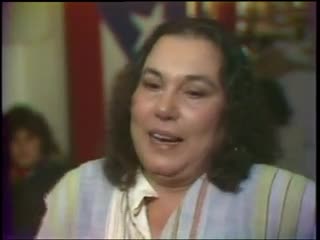
Description: Hope Kelly reports that more than a dozen students at Harvard Law School have filed a lawsuit which charges the school with discriminatory hiring practices. Kelly notes that Derrick Bell (Professor, Harvard Law School) supports the lawsuit, but thinks it will be difficult to win. Kelly reports that Bell has taken an unpaid leave of absence from the school to protest the lack of diversity among the faculty. Kelly interviews Bell. Bell talks about the culture at Harvard Law School and about the need for a diverse faculty. Bell says that he has taken a leave of absence because it is important to make sacrifices in order to advance one's beliefs. Kelly reports that Bell is teaching a seminar called "Civil Rights at the Crossroads." She notes that Bell is not paid for the course and that the students receive no credit. Kelly's report includes footage of Bell and his students in class. The students discuss the importance of diversity at the school. Kelly notes that there are three African Americans and five females among the sixty-six tenured professors at Harvard Law School. Kelly reports that the school has failed to provide a set of role models reflecting the diversity of the student body.
1:00:10: Visual: Footage of Derrick Bell (Professor, Harvard Law School) teaching a class. Hope Kelly reports that Derrick Bell is one of sixty-six tenured professors at Harvard Law School; that only two of Bell's colleagues are also African American. Kelly notes that there are no Asian, Latino or Native American professors at the school; that there are no African American female professors at the school. V: Footage of Bell's class. A white female student says that the school needs a woman of color on the faculty in order to provide a wider perspective on issues of women in international development and on issues of human rights. Shots of students in the class. Kelly reports that more than a dozen Harvard Law School students have signed on to a lawsuit which charges the school with discriminatory hiring practices. Kelly reports that many experts think the lawsuit will be difficult to win. V: Footage of Bell being interviewed by Kelly. Bell says that US courts only understand race discrimination if it is obvious. Bell says that Harvard Law School has not prohibited African American women and other minorities from being hired onto the faculty. Bell says that Harvard Law School will not hire a professor who does not share the Harvard culture. Kelly reports that the culture at Harvard Law School is overwhelmingly white and male.. Kelly notes that only five of the sixty-six tenured professors are women. V: Shots of students in Bell's class; of Bell's hands as he makes gestures while speaking. Footage of Bell being interviewed by Kelly. Bell says that all professors teach a perspective; that all professors have a worldview. Kelly reports that students in Bell's class think that their perspectives are being "whitewashed." V: Shots of students in the class. Footage of an African American male student saying that diversity and quality do not have to be mutually exclusive. Shots of Bell at the front of the class. Kelly reports that Bell's seminar is called "Civil Rights at the Crossroads." Kelly reports that students have flocked to the class. Kelly notes that the students receive no credit for the course; that Bell receives no salary for teaching the course. Kelly reports that Bell is on unpaid leave. Kelly reports that Bell says that he will stay on leave until a woman of color is hired onto the faculty. V: Shots of Bell and the students in class. Footage of Bell being interviewed by Kelly. Bell says that he is a teacher; that teachers teach best by example. Bell says that he has always tried to teach law students about the importance of taking risks and making sacrifices. Bell says that real success stems from standing up for one's beliefs. Bell says that he must practice what he teaches. Kelly reports that Bell is passing up a salary of more than $100,000 per year. Kelly notes that Harvard Law School has continued to provide him with his office, a secretary and a classroom in which to teach. Kelly reports that Harvard Law School has failed to provide a set of role models which reflect the diversity of the student body. V: Shots of students walking on the campus of Harvard Law School. Shots of Bell in the classroom; of an African American female student in Bell's class.
Collection: Ten O'Clock News
Date Created: 12/03/1990
Description: Meg Vaillancourt reports that Derrick Bell (Professor, Harvard Law School) has announced that he will take a voluntary leave of absence from Harvard Law School until an African American female is granted tenure. Vaillancourt notes that Harvard Law School has only five tenured female professors and three tenured African American male professors on staff. She adds that the student body is 25% minority and 40% female. Vaillancourt's report includes footage of Bell speaking at a student demonstration. Bell makes his announcement. Bell adds that it is necessary to make sacrifices to advance one's beliefs. Students applaud Bell. Many students hold protest signs. Three students address the demonstrators. They talk about the lack of minority faculty. Vaillancourt's report also includes footage of Louis Kaplow (Associate Dean, Harvard Law School) speaking at a press conference. Kaplow defends the school's record of minority hiring. Vaillancourt notes that Bell does not know if his act of conscience will have any effect on the school administration. Vaillancourt's report includes footage from May 1988, of Harvard Law School students occupying the dean's office to protest the lack of minority faculty. Following the edited story is additional footage of the demonstration, including law student Barack Obama introducing Derrick Bell.
1:00:09: Visual: Footage of Harvard Law School students at a demonstration outside of Harvard Law School. Meg Vaillancourt reports that Harvard Law School counts fifteen Supreme Court Justices among its alumni; that tenure is granted only to the academic elite. Vaillancourt reports that Derrick Bell (Professor, Harvard Law School) is a tenured professor who has announced his departure. V: Shot of a student at the demonstration. Footage of Bell at the demonstration. Bell says that he will remove himself from the Harvard payroll as a "sacrificial financial fast." Bell says that he is not trying to coerce his colleagues; that he is trying to honor a commitment to those responsible for his presence at Harvard. The students applaud. Shots of the media and students at the demonstration. Vaillancourt reports that Bell was the first African American to be granted tenure at Harvard; that he was granted tenure in 1969. Vaillancourt reports that Bell has decided to take a leave of absence until an African American female is granted tenure. V: Footage of Bell saying that students have already enrolled in his classes; that he can ill afford to live for a year without his salary. Bell says that he he has urged students to take risks to further their beliefs; that he must do the same. Shots of students holding a sign reading, "Where are our tenured black women professors?" Shots of students applauding for Bell; of female students holding signs reading, "Come out of the ivory tower" and "No education without representation." Vaillancourt reports that approximately 500 students are supporting Bell's decision; that student are urging alumni to boycott Harvard's current fundraising drive. V: Footage of an African American female student addressing the crowd of demonstrators. She says that Robert Clark (Dean of Harvard Law School) has plans to improve the school by building a new library; that he should instead improve the school by making the faculty more diverse. The students applaud. A white male student holds a sign reading, "reflect reality." Footage of a Latina female student saying that Bell has set an example for all of the students. The student says that she has not role model at the school; that there are no Latino or Latina professors on the faculty. Footage of an African American female student addressing the demonstrators. The student says that people must make sacrifices to advance their cause. Shot of Bell outside of a Harvard Law School building, with chanting demonstrators. Vaillancourt reports that Bell is giving up a salary of more than $100,000 per year. Vaillancourt notes that students have staged sit-ins to protest the lack of minority faculty; that the issue has been contested for nearly twenty years. V: Footage from May, 1988 of a student sit-in at the dean's office in the administration building of Harvard Law School. Students study textbooks as they occupy the office. Vaillancourt stands on the campus of Harvard Law School. Vaillancourt reports that there are 1600 students at Harvard Law School; that nearly 25% are minority students; that nearly 40% are women. Vaillancourt notes that the Harvard Law School faculty has 5 tenured female professors and three tenured African American male professors. V: Footage of Louis Kaplow (Associate Dean, Harvard Law School) speaking at a press conference. Kaplow says that Harvard Law School only hires a few people each year; that some years they do not hire anyone. Kaplow says that positions at Harvard Law School are often permanent; that hiring decisions are made carefully and cautiously. Vaillancourt reports that Kaplow spoke at a press conference after Bell's announcement. Vaillancourt notes that Kaplow does not believe that Harvard Law School will make any significant changes to its hiring practices. V: Shots of student demonstrators in the audience of the press conference. The demonstrators stand together, raising linked arms. Some demonstrators hold protest signs. Footage of Kaplow saying that Harvard's hiring has been fully 50% minority and women over the past eight to ten years; that Harvard's job offers have been fully 50% minority and women over the past eight to ten years. Kaplow says that Harvard is making an effort; that Harvard has kept some positions empty in an effort to locate minority and women candidates. Shots of the students at the press conference. Shots of student demonstrators marching outside a Harvard Law School building. Vaillancourt reports that Bell does not know if his act of conscience will have any effect on the school's hiring record; that Harvard will have only two tenured African American professors if Bell leaves. V: Shots of student demonstrators with linked arms upraised. Footage of Bell addressing the demonstrators. Bell says that he hopes that student persistence will prevail for those minority candidates who deserve to be on the faculty. Bell says that hopes to be able to remain on staff if the students succeed.
Collection: Ten O'Clock News
Date Created: 04/24/1990
Description: The Commerce and Labor Committee of the Massachusetts State Legislature holds a hearing on proposed legislation barring sexual harassment and discrimination on the grounds of sexual orientation. Royal Bolling Sr. (State Senator) testifies in favor of the legislation. Bolling says that legislators must guarantee protection and equal rights for all citizens. Suzanne Bumps (State Representative) testifies in favor of legislation barring sexual harassment. Bumps defines sexual harassment and talks about the its effect on women in the workplace. John Olver (State Senator) and Thomas Vallely (State Representative) testify in favor of the legislation. Vallely says that legislators must fight one of the last remaining civil rights battles by banning discrimination on the grounds of sexual preference. Vallely talks about a proposed amendment barring religious organizations from some aspects of civil rights law; he says that such an amendment is unnecessary. Peter Morin (State Representative) asks Vallely a question about language used in the legislation. Vallely talks about other exceptions granted under the proposed legislation. John Businger (State Representative) testifies in favor of the legislation. Businger talks about the need to make citizens aware of their civil rights by posting anti-discrimination policy and legislation. George Bachrach (State Senator) testifies in favor of the legislation.
1:00:00: Visual: The Commerce and Labor Committee of the Massachusetts State Legislature sits at the front of a room. The committee prepares to hear testimony on proposed legislation barring sexual harassment and discrimination on the grounds of sexual orientation. The room is crowded with audience members and members of the press. Audience members stand and seat themselves on the floor. The committee chairman invites Royal Bolling Sr. (State Senator) to testify. 1:00:28: V: Bolling thanks the committee members. Bolling notes that the Senate could not vote on this legislation during the previous year; that the vote was held up until the Massachusetts Supreme Judicial Court ruled on the constitutionality of the legislation. Bolling talks about discrimination against gays and lesbians. Bolling says that opponents of legislation barring discrimnation on the grounds of sexual orientation have ignored ugly incidents involving discrimination against gays and lesbians. Bolling makes reference to a television show which depicted the absurdity of society's prejudices against gays and lesbians. Bolling notes that gay and lesbians make up 10% of the population. Bolling says that many citizens will be positively affected by the passage of legislation barring discrimination on the grounds of sexual orientation. Bolling says that gays and lesbians will be denied equal protection under the law unless this legislation is passed; that there cannot be exceptions to the government's guarantee of equal access to all citizens. Bolling says that the legislators must guarantee protection for all citizens, even if legislators disagree with those citizens' way of life. Bolling says that Massachusetts must be a safe haven from discrimination. Bolling says that this legislation reaffirms the dignity and integrity of our democracy; that legislators must be willing to take risks to assure civil rights for all citizens. Bolling says that legislators must speak out against discrimination in all forms. Bolling reaffirms the right of citizens to live free from fear. Bolling says that he hopes the law will be passed this year. 1:11:11: V: The committee chairman thanks Bolling and calls the next speaker. Suzanne Bump (State Representative from Braintree) speaks on behalf of the Massachusetts Caucus of Women Legislators. She notes that the caucus strongly supports legislation barring sexual harassment. Bumps defines sexual harassment and talks about the ill effects of sexual harassment on students and female employees. Bump adds that surveys show that 75% to 95% of women have been harassed at some point in their working lives. Bumps says that sexual harassment is a form of sexual discrimination; that sexual harassment is degrading and humiliating to women. Bumps notes that women who quit their jobs because of sexual harassment are unable to collect unemployment benefits. Bumps says that grievance procedures for victims of sexual harassment are non-existant; that victims who complain about sexual harassment often receive little support. Bumps says that sexual harassment is often perpetrated by men in positions of power who go unpunished; that the perpetrators are often the bosses or professors of these women. Bumps notes that federal courts have upheld the use of Title VII of the civil rights act in some sexual harassment cases; that Title VII bars discrimination in the work place; that there are limits to the application of Title VII in sexual harassment cases. Bumps talks about the importance of the current legislation barring sexual harassment. Bumps notes that the legislation defines sexual harassment, puts cases of sexual harassment under the jurisdiction of the Massachusetts Commission Against Discrimination and establishes a uniform grievance procedure for cases of sexual harassment within state government. Bumps notes that the legislation allows for the prompt resolution of complaints. She urges legislators to support the bill. 1:15:05: V: The committee chairman thanks Bumps and calls the next speaker. John Olver (State Senator) says that he is testifying as a Democratic state senator and on behalf of the Massachusetts State Democratic Party. Olver urges the Massachusetts state legislature to ban discrimination on the grounds of sexual orientation. Olver says that discrimination against gays and lesbians must be ended in housing, employment, public accomodation, and in the consumer marketplace. Olver thanks the Congressional committee. 1:17:06: V: Tom Vallely (State Representative) speaks to the committee about his support for legislation barring discrimination on the grounds of sexual orientation. Vallely notes that he has been one of the principal sponsors of this legislation in the Massasachusetts House of Representatives. Vallely reviews the history of the legislation. Vallely notes that the legislation allows for the protection of gays and lesbians under the state civil rights law. Vallely says that legislators are not condoning homosexuality by offering protection for gays and lesbians under the civil rights law; that legislators need to allow citizens a form of redress against widespread discrimination. Vallely notes that this legislation has been debated by the legislature for more than a decade. Vallely says that the debate about the "gay lifestyle" is inappropriate; that the lifestyles of gays and lesbians is the same as the lifestyle of straight people. Vallely says that gays and lesbians are looking for equal protection, not "special treatment." Vallely refers to the controversy about Mark Twain's book, Huckleberry Finn. Vallely says that the book is a moving exploration of discrimination in American society; that the book is not racist. Vallely says that discrimination on the grounds of race or sexual preference is not acceptable in our society; that discrimination on the grounds of sexual orientation is one of the "last civil rights battles" to be fought. Vallely says that opponents to the legislation will try to add an amendment exempting religious organizations from some aspects of the civil rights law. Vallely says that this amendment is unnecessary because the separation of church and state already exists. Vallely says that religious groups do not need to be exempted from legislation about the ERA (Equal Rights Amendement) or from legislation barring discrimination on the grounds of sexual orientation. Vallely offers to speak to the members of the committee individually about why special legislation exempting religious groups from the civil rights law would be a "grave error." Vallely says that the legislation is important and worth the fight to get it passed. 1:25:44: V: Peter Morin (State Representative) asks a question about the language used in the legislation. Morin points out that there is an exemption to the discrimination law in the case of "bona fide occupational qualifications." Vallely says that the exemption grants authority to the Massachusetts Commission Against Discrimination (MCAD) to consider the qualifications necessary for a certain occupation before deciding a discrimination case. Vallely says that it is important to give the MCAD some leeway in its decisions; that he cannot name a list of these "occupational qualifications." Vallely thanks the Congressional committee. 1:28:11: V: John Businger (State Representative from Brookline) notes that he has co-sponsored legislation in the Massachusetts House of Representatives barring sexual harassment and discrimination on the grounds of sexual orientation. Businger says that government has a role in protecting its citizens from discrimination and harassment. Businger says that sexual harassment and discrimination against gays and lesbians are "unreasonable" and "arbitrary" forms of harassment. Businger talks about the need to make citizens aware of this legislation; that he has sponsored a bill to increase the posting requirements for anti-discrimination legislation; that the people affected by the legislation must be well informed in order to take advantage of it. Businger says that anti-discrimination policy and legislation must be posted on applications for credit, for employment, for services and for membership in organizations. Businger urges the legislators to pass this bill so that people can be made aware of their civil rights. Businger urges the legislators to pass the bills barring sexual harassment and discrimination of the basis of sexual orientation. 1:31:29: V: George Bachrach (State Senator) makes a lighthearted joke. The members of the panel laugh. Bachrach says that he is testifying in support of the Senate bill which bars discrimination against gays and lesbians in housing, employment, and credit. Bachrach says that he is sorry that this legislation has not already been passed into law.
Collection: Ten O'Clock News
Date Created: 03/28/1985
Description: Discrimination hearing before Joint Committee on Commerce and Labor. Rep. Denis Lawrence, Rep. Morin. Alex Rodriguez, Rep. John McDonough, Rep. Palumbo, gay advocates testify on behalf of gay civil rights.
Collection: Ten O'Clock News
Date Created: 03/28/1985
Description: Hope Kelly reports on a legislative hearing in Boston on alleged redlining practices by Boston banks. Kelly reports that the Federal Reserve Bank released a study finding evidence of redlining practices. Kelly notes that the banking industry reacted strongly to the accusations. Kelly's report includes footage from the legislative hearings. Barney Frank (US Congressman) and Benjamin Hooks (Executive Director, NAACP) condemn redlining practices. Richard Pollard (Chairman, Massachusetts Banking Association) and Richard Syron (President, Federal Reserve Bank) say that they do not believe that the banks are engaged in redlining. Kelly reviews the findings of the study. She adds that the study does not conclude if the findings reflect redlining or discrimination on the part of lenders. Kelly quotes Ray Flynn (Mayor of Boston), Michael Dukakis (Governor of Massachusetts), and Joseph Kennedy (US Congressman) as saying the redlining practices cannot be tolerated. Kelly interviews Pollard. Pollard says that banks are not engaged in redlining. He adds that banks need to better serve the needs of minority communities. Kelly notes that the legislative hearing addressed solutions to the problem of redlining, but did not talk about the problem of racism. This tape includes additional footage of the legislative hearing, with various speakers both in agreement and disagreement with the study.
1:00:05: Visual: Footage of Barney Frank (US Congressman) at a congressional hearing in Boston. Franks says that people of color are being denied their rights because of their skin color. Hope Kelly reports that Frank and other officials said that there is irrefutable evidence showing that Boston banks are engaged in discriminatory lending practices. V: Footage of Benjamin Hooks (Executive Director, NAACP) saying that banks across the nation are engaged in discriminatory lending practices. Kelly reports that the banking industry reacted strongly to the comments. V: Footage of Richard Pollard (Chairman, Massachusetts Banking Association) saying that he does not think that Hooks read the study. Kelly reports that the Federal Reserve Bank issued a study on August 31, 1988. Kelly quotes the study as finding that "the number of mortgage loans. . .is 24% lower in black neighborhoods than in white, even after taking into account economic and other non-racial neighborhood characteristics that might contribute to such disparities." V: Shot of Hooks, Michael Dukakis (Governor of Massachusetts), Richard Syron (President, Federal Reserve Bank), and Ray Flynn (Mayor of Boston) at the congressional hearing. Shot of Syron speaking. On-screen text and visuals detail the study findings. Kelly notes that the study does not conclude whether the findings reflect redlining or discrimination on the part of lenders. V: Footage of Syron speaking at the hearing. Syron says that he does not believe that Boston banks are engaged in redlining or discriminatory practices. Footage of Hooks saying that the African American community often knows through experience what the white community must find out through studies. Kelly reports that city and state officials were sympathetic to Hooks's viewpoint. Kelly quotes Flynn as saying that the findings are disturbing; that discriminatory practices cannot be tolerated. Kelly quotes Joseph Kennedy (US Congressman) as saying that "there is a serious problem of racially discriminatory lending in this city." Kelly quotes Dukakis as saying that "racial bias in any form is contrary to the very principles upon which this nation and Commonwealth were founded." V: Shot of Flynn, Syron, and Dukakis at the hearing. Quotes by Flynn, Kennedy and Dukakis appear written in text on-screen. Kelly reports that the bankers disagreed with the officials. V: Footage of Pollard being interviewed by Kelly. Pollard says that the study contains no evidence showing that banks are involved in the practice of redlining. Pollard admits that people in disadvantaged neighborhoods are ill-served by the financial community. Pollard says that bankers are part of the larger financial community; that bankers will be part of the solution to the problem. Shots of the congressional hearing; of Kennedy at the congressional hearing. Shots of Kweisi Mfume (State Representative) at the hearing; of attendees at the hearing; of Bruce Bolling (Boston City Council) at the hearing. Kelly reports that speakers at the hearing focused on solutions to the problem; that few talked about the larger issue of racism at the heart of the problem. V: Shots of Flynn; of attendees at the hearing.
Collection: Ten O'Clock News
Date Created: 09/29/1989
Description: Christy George reports that a lawsuit has been filed against the Boston Housing Authority (BHA) to protest its discriminatory housing policies. It charges that the BHA has discouraged minorities from moving into all-white housing projects. The city is planning to voluntarily integrate its housing projects by next year. Interview with Tanya Boman and Annie Hailey, who are among the plaintiffs in the lawsuit. Boman and Hailey talk about their experience with the BHA. Both women were told that their families would be unsafe in white housing projects and that the BHA would not provide them with protection. Interview with Doris Bunte of the BHA, who denies any discriminatory practices on the part of BHA employees. Interview with City Councilor James Kelly, who defends the BHA and denounces public housing integration. Kelly has proposed an alternative public housing integration plan that eliminates preferences for minority families applying for apartments in white housing projects. Interview with Dianne Wilkerson of the NAACP. Wilkerson criticizes the city's record on public housing integration and the slow pace of change. This edition of the Ten O'Clock News also included the following item: David Boeri reports that midwives at Boston City Hospital have been locked out by the hospital administration in a dispute over hospital policy
1:00:19: Visual: Footage of Tanya Boman (plaintiff) sitting with her children. Boman says that people should have the right to live wherever they want to live. Christy George reports that Boman applied for public housing in 1985; that she was told to apply for an apartment in Charlestown or South Boston because the city would give preference to minorities requesting apartments in white housing projects. V: Shots of parochial school students walking toward a public housing project; of white residents in front of a housing project in South Boston. Footage of Boman saying that she asked the Boston Housing Authority (BHA) if they would provide protection for her family if they moved to a white housing project. Boman says that she was told that she would need to call the Boston Police Department if she ran into any problems. Boman says that she was told that she would be moved to the bottom of the waiting list if she moved out of the apartment for a "racial reason." George reports that a discrimination suit has been filed against the BHA on behalf of Boman, Annie Hailey (plaintiff), and unnamed parties. V: Footage of Hailey saying that she applied for an apartment in the McCormack Housing Development in 1987. Hailey says that the BHA told her that she would need to see the Civil Rights Board before she could move into the project. Hailey says that the BHA told her that the project would be unsafe for her teenage son. Footage of Doris Bunte (BHA) saying that the situation needs to be examined. Bunte says that she will not tolerate employees of the BHA who discourage minorities from living in white housing developments. George reports that the city is planning to voluntarily integrate its public housing projects. V: Shots of a broken-down wall near a housing project in South Boston; of parochial school students walking toward the housing project. George reports that African Americans may be the victims of harassment and violence when they move into white housing projects. V: Footage of Bunte saying that BHA employees can tell the truth; that BHA employees cannot use tactics designed to discourage African American families from moving to white housing projects. Footage of James Kelly (Boston City Council) in his office. Kelly says that people in private housing call the police for protection; that the BHA did not discriminate by telling an African American family to call the police for protection. George reports that Kelly has proposed a plan to integrate public housing in Boston very slowly; that Kelly's proposal eliminates minority preference. George says that Kelly believes that reverse discrimination causes racial hostility. V: Shots of a white woman looking out of a window of a project apartment; of a white woman and children in front of a project building in South Boston. Footage of Kelly being interviewed by George. Kelly says that there are South Boston residents who have been on the waiting list for years; that those residents are not being treated fairly. George reports that the suit suggests that many of Boston's housing projects are still segregated. George notes that Ray Flynn (Mayor of Boston) has been praised for his efforts to integrate the public housing projects in Charlestown. V: Footage of Dianne Wilkerson (NAACP) saying that there were 200 vacancies open in Charlestown; that over 600 African American families had requested apartments in Charlestown; that the BHA actively recruited white families to fill the vacancies in the Charlestown projects. Shot of housing project buildings in Charlestown. George reports that there are only six African American families in Charlestown; that Flynn has announced plans to integrate the housing projects in South Boston. V: Shots of signs for the Old Colony Housing Project and the Mary Ellen McCormack Housing Development. Shots of a white female resident standing at the entrance to a housing project in South Boston. Footage of Bunte saying that the mayor and the BHA want to move forward with integration. Bunte says that she hopes that the lawsuit does not hold back plans for integration.
Collection: Ten O'Clock News
Date Created: 05/17/1988
Description: Hope Kelly reports on the removal of Judge Paul King, who was a former Chief Justice in the Dorchester District Court, from his position at Dorchester District Court. The State Supreme Court demoted King for misconduct in and out of court, including sexist remarks, racist standards for setting bail, and for public drunkenness. Kelly reviews the incidents leading to King's demotion. King was transferred to Stoughton District Court, where he is only allowed to sit on civil cases. Kelly's report includes shots of newspaper articles covering the story and footage of lawyers, clerks, and defendants in a courtroom.
0:59:53: Visual: Shot of the exterior of Dorchester District Court. Hope Kelly reports that Paul King (judge) was a judge for nearly twenty years at Dorchester District Court. Kelly notes that the Dorchester District Court is the busiest court in the system; that King was chief justice at the court for eleven years. Kelly reports that the State Supreme Court removed King in 1987; that King was transferred to Stoughton District Court. Kelly notes that King is only allowed to sit on civil cases at Stoughton District Court. V: Shots of a newspaper article with a photo of King. The headline reads, "Dorchester court has a history of trouble." Shot of another newspaper article with a photo of King. The headline reads, "Judge banned from Hub court." The article lists incidents of objectionable behavior by King. Kelly stands in front of the Dorchester District Court. Kelly notes that King made objectionable comments to battered women and Vietnam veterans in the courtroom. Kelly reports that King engaged in offensive behavior outside of the courtroom. V: Shots of a sign for Nanina's restaurant; of the exterior of Nanina's restaurant; of the parking lot of the restaurant. Kelly reports that King often went to Nanina's restaurant in Dorchester in the late 1970s and early 1980s. Kelly reports that the Judicial Conduct Commission found that King became visibly intoxicated regularly at Nanina's restaurant. Kelly notes that witnesses told the Commission that King frequently and openly urinated in the parking lot of the restaurant. Kelly reports that a court clerk testified that King set an unusually high bail amount for four African American defendants in 1982; that the clerk testified to King saying that African Americans deserve high bails for voting against his brother. Kelly notes that Michael Dukakis (former governor of Massachusetts) beat Ed King (brother of Paul King and former governor of Massachusetts) in the 1982 gubernatorial election. V: Shots of a clerk looking through court paperwork; of an audience in a courtroom; of lawyers, clerks, and defendants in a courtroom. Shot of a police officer and a clerk going through paperwork. Kelly reports that the media has covered the story intensely; that some judges say that King is a victim of the system. Kelly reports that some judges says that King's behavior is a sad reflection of the stresses under which the judges work.
Collection: Ten O'Clock News
Date Created: 04/01/1991
Description: INTERVIEW WITH HISPANIC TENANT EVICTED WITHOUT CAUSE FROM TOWNHOUSE, MOVING OUT, CARTONS
Collection: Ten O'Clock News
Date Created: 12/16/1982
Description: Meg Vaillancourt reports that Mayor Ray Flynn has promised to integrate public housing projects in South Boston and to put a stop to discriminatory practices by the Boston Housing Authority (BHA). African American families have been passed over on the waiting list for apartments in South Boston housing projects. Flynn's plans to integrate public housing have angered his constituents in South Boston, who refer to housing integration as "forced housing." Vaillancourt's report is accompanied by footage of white residents of a South Boston housing project and by footage of South Boston residents during the busing crisis in 1974. Vaillancourt reports that Flynn and Doris Bunte of the BHA attended a community meeting in South Boston to talk about housing integration with South Boston residents. Flynn defends himself against the hostile comments of South Boston residents. City Councilor James Kelly addresses the meeting, denouncing housing integration. Interview with Neil Sullivan, policy advisor to Flynn who talks about public housing integration and Flynn's relationship with South Boston residents.
1:00:02: Visual: Shot of a white woman standing at the entrance to a housing project building in South Boston. Audio of Neil Sullivan (Policy Advisor to Mayor Ray Flynn) saying that the people of South Boston understand discrimination. Meg Vaillancourt reports that residents of South Boston may understand discrimination; that some residents of South Boston also practice discrimination. Vaillancourt reports that the Boston Housing Authority (BHA) discriminates against African American families; that no African American families live in any of the three public housing projects in South Boston. V: Shots of a white woman looking out of a window of an apartment in a housing project; of the Old Colony Housing Project in South Boston; of a sign reading, "Old Colony Public Housing Development." Shots of white project residents outside of a project building. Vaillancourt reports that African American families were passed over on the waiting list for project apartments in South Boston; that Ray Flynn (Mayor of Boston) has promised to integrate the public housing projects in South Boston. Vaillancourt notes that Flynn met with angry South Boston residents at a community meeting yesterday evening. V: Footage of Flynn addressing the crowd at the community meeting. South Boston residents are crowded into the room, seated at long tables. Doris Bunte (BHA) is on stage with Flynn. Flynn says that the issue is fair and equal access to public housing. Shot of a bumper sticker reading, "Stop 'forced' housing." Vaillancourt reports that the slogan, "Stop forced housing" evokes memories of the anti-busing protests in South Boston in the 1970s. V: Footage of school buses pulling up to South Boston High School in September of 1973. Angry South Boston residents yell and jeer at the buses. Vaillancourt reports that South Boston residents are angry about the integration of the area's three public housing projects. V: Shot of a white woman in the audience making an angry remark. Footage of James Kelly (Boston City Council) addressing the crowd. Kelly says that South Boston residents are going to be denied the right to live in public housing in their own neighborhood. Members of the crowd stand and cheer. Meg Vaillancourt reports that the controversy surrounding the integration of public housing projects creates an identity crisis for Flynn; that Flynn is in disagreement with his South Boston neighbors. V: Shot of Flynn walking to the stage at the community meeting. The crowd yells and boos Flynn. Vaillancourt notes that an audience member asked Flynn when he was moving to Roxbury. V: Shots of white female audience member standing to address Flynn; of another audience member raising her hand. Footage of Flynn saying that he and his family were born and raised in South Boston. The audience jeers. Footage of Sullivan saying that Flynn was probably hurt by the attitude of South Boston residents last night; that Flynn has never ducked this sort of confrontation. Sullivan says that Flynn could have refused to go to the meeting. Vaillancourt reports that Sullivan said that the public housing projects in South Boston could begin to be integrated by April. Vaillancourt notes that no whites will be forced to move out of the projects in order to achieve integration. V: Shot of an African American man raking leaves outside of a project building; of a white female project resident speaking to a reporter. Shots of a public housing project in South Boston; of Flynn at the community meeting; of Bunte addressing the community meeting. Footage of Flynn saying that no person will be displaced to serve the purposes of integration. Footage of Sullivan being interviewed by Vaillancourt. Sullivan says that the average Boston housing development has a turnover rate of 10% each year; that 10% is a higher turnover rate than most neighborhoods. Sullivan says that the goal of the Flynn administration is to sustain a good quality of life in the public housing projects. Shots of a white woman and white children in front of a project building; of a young white boy running around outside of a project building.
Collection: Ten O'Clock News
Date Created: 01/13/1988
Description: Gary Dotterman, gay aide to city councillor David Scondras, is reinstated after being fired for participation in defense group for victims of anti-gay discrimination. Dapper O'Neil.
Collection: Ten O'Clock News
Date Created: 11/18/1987