Description:
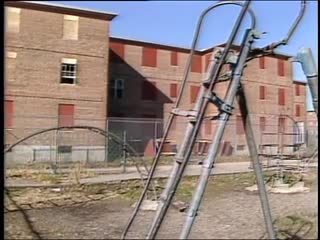
Building which houses the offices of the Boston Housing Authority in Charlestown. Rundown buildings in the Bunker Hill Housing Project in Charlestown. Many of the buildings have boarded up windows or broken windows. Trash is visible along the sidewalks and walkways in front of the buildings. Shots of a series of photographs of a meeting between Joseph Timilty and Jimmy Carter. Interview with John Vitagliano (Boston Housing Inspection Commissioner). He says that the city of Boston must renovate its existing public housing instead of building new public housing. Vitagliano believes that a program of private-housing subsidies would be superior to the present public housing program. He says that the disastrous environment in public housing developments contributes to a cycle of poverty; that public-housing tenants and private landlords would benefit from a private-housing subsidies program. Vitagliano suggests that public-housing projects be shut down and sold to private developers. He admits that Boston's public housing projects are de facto segregated
1:00:02: Visual: Footage of the exterior of the Boston Housing Authority (BHA) building on Bunker Hill Street in Charlestown. The building is brick and covered with ivy. There are a few, small broken windows on the building. An elderly white woman enters the building. Shots of Bunker Hill Street; of the housing project buildings on Bunker Hill Street. 1:02:58: V:Shots of boarded up windows in a housing project building in Charlestown; of other housing project buildings. A street sweeping vehicle passes slowly in the street. The cameraman jokes about the rarity of seeing a street sweeper in Boston. A police cruiser drives slowly down the street. Shot of a housing project building at 90 Decatur Street. Shot of a boarded up window on the building. Obscene graffiti is written on the board which covers the window. Shots of broken windows in an apartment in another housing project building. Shot of a young white boy playing with a garden hose outside of the building at 90 Decatur Street. The bottom windows of the building are all boarded up. Shots of a nearby housing project which looks to be in better condition. Shots of the housing project building with broken windows. Trash is visible on the ground around the housing project buildings. 1:07:41: V: Shots of black and white photos of a meeting between Jimmy Carter (US President) and Joseph Timilty (State Senator). 1:09:32: V: Footage of John Vitagliano (Boston Housing Inspection Commissioner) being interviewed by Marjorie Arons in his office. Arons notes that there are substantial numbers of substandard public housing units in Massachusetts. Arons asks how decent housing will be provided. Arons asks if new buildings will be built or if old buildings will be rehabilitated. Vitagliano says that many federal programs are geared toward building new housing in cities; that these programs are not geared to the needs of older cities like Boston. Vitagliano says that the city needs funds to rehabilitate existing housing. Vitagliano says that five or ten older buildings in the city could be rehabilitated for the same amount of money needed to build one new building. Vitagliano notes that the cost of new housing continues to increase. Arons asks if there are enough housing units being built, or if people are unable to afford to buy housing. Vitagliano says that most people cannot afford to buy newly built homes. Arons asks about providing tenants with subsidies which would allow them to buy a private home. Vitagliano says that subsidies for private housing purchases allows public-housing tenants to escape the "ghetto environment" of public housing projects. Vitagliano says that subsidies for private housing purchases put tenants in a "normal" neighborhood environment; that these subsidies allow tenants to break out of the cycle of poverty. Vitagliano says that the environment in public housing projects is a "disaster." Vitagliano says that subsidies for private housing purchases provide benefits for homeowners who rent to these tenants. Vitagliano says that public-housing tenants could be matched up with private homeowners to fill vacant apartments; that smaller landlords would not face vacancies. Arons asks if subsidies for private housing purchases would have an inflationary effect on rents. Arons notes that there may not be enough private housing options for public-housing tenants. Vitagliano says that a small inflationary trend could result. Vitagliano says that a program which subsidizes private housing purchases would cost no more than the present program. Vitagliano notes that 10% of the city's population is housed in public housing projects under the present program. Vitagliano says that a tremendous amount of money is spent on the maintenance of existing public-housing units. Vitagliano says that the public housing buildings occupy valuable land in the city; that the city could be receiving tax money on that land if it were held privately. Vitagliano says that the city could sell the land to private developers if the public housing units were shut down. Vitagliano says that private developers could develop commercial buildings or private housing; that the city would receive tax money on those buildings. Vitagliano says that he has no detailed analysis to prove that a subsidies would cost less than public housing. Vitagliano says that he suspects that subsidies would cost no more than public housing. Arons asks if a housing subsidy program would have a short-term inflationary effect on rents. Vitagliano says that it is difficult to predict what would happen. Vitagliano says that any negative short-term effects would be balanced out by long-term benefits. Arons comments that some middle-income tenants receive housing aid under the present program. Arons asks if the middle-income tenants would be left out if subsidies for private housing were only provided to welfare recipients. Vitagliano says that money should not be diverted from welfare to housing; that money from another program should be diverted to fund both welfare and housing. Arons asks if subsidies for private housing would provide a reason to extend the rent control program. Vitagliano says that the concept of private housing subsidies is still theoretical; that he does not want to guess at the effect of subsidies on rent control. Arons closes the interview. The crew takes cutaway shots of Arons and Vitagliano. Arons asks how minorities and large families would fare in the private housing market if they were provided with subsidies. Vitagliano says that the public housing developments in Boston are just as segregated as the private housing market. Vitagliano says that the court has criticized Boston's segregated housing projects. Vitagliano admits that there are very few racially mixed housing projects in Boston. Vitagliano says that minorities and large families would have no more trouble in the private housing market than they have in the BHA system. Arons talks with the cameraman.
1:00:02: Visual: Footage of the exterior of the Boston Housing Authority (BHA) building on Bunker Hill Street in Charlestown. The building is brick and covered with ivy. There are a few, small broken windows on the building. An elderly white woman enters the building. Shots of Bunker Hill Street; of the housing project buildings on Bunker Hill Street. 1:02:58: V:Shots of boarded up windows in a housing project building in Charlestown; of other housing project buildings. A street sweeping vehicle passes slowly in the street. The cameraman jokes about the rarity of seeing a street sweeper in Boston. A police cruiser drives slowly down the street. Shot of a housing project building at 90 Decatur Street. Shot of a boarded up window on the building. Obscene graffiti is written on the board which covers the window. Shots of broken windows in an apartment in another housing project building. Shot of a young white boy playing with a garden hose outside of the building at 90 Decatur Street. The bottom windows of the building are all boarded up. Shots of a nearby housing project which looks to be in better condition. Shots of the housing project building with broken windows. Trash is visible on the ground around the housing project buildings. 1:07:41: V: Shots of black and white photos of a meeting between Jimmy Carter (US President) and Joseph Timilty (State Senator). 1:09:32: V: Footage of John Vitagliano (Boston Housing Inspection Commissioner) being interviewed by Marjorie Arons in his office. Arons notes that there are substantial numbers of substandard public housing units in Massachusetts. Arons asks how decent housing will be provided. Arons asks if new buildings will be built or if old buildings will be rehabilitated. Vitagliano says that many federal programs are geared toward building new housing in cities; that these programs are not geared to the needs of older cities like Boston. Vitagliano says that the city needs funds to rehabilitate existing housing. Vitagliano says that five or ten older buildings in the city could be rehabilitated for the same amount of money needed to build one new building. Vitagliano notes that the cost of new housing continues to increase. Arons asks if there are enough housing units being built, or if people are unable to afford to buy housing. Vitagliano says that most people cannot afford to buy newly built homes. Arons asks about providing tenants with subsidies which would allow them to buy a private home. Vitagliano says that subsidies for private housing purchases allows public-housing tenants to escape the "ghetto environment" of public housing projects. Vitagliano says that subsidies for private housing purchases put tenants in a "normal" neighborhood environment; that these subsidies allow tenants to break out of the cycle of poverty. Vitagliano says that the environment in public housing projects is a "disaster." Vitagliano says that subsidies for private housing purchases provide benefits for homeowners who rent to these tenants. Vitagliano says that public-housing tenants could be matched up with private homeowners to fill vacant apartments; that smaller landlords would not face vacancies. Arons asks if subsidies for private housing purchases would have an inflationary effect on rents. Arons notes that there may not be enough private housing options for public-housing tenants. Vitagliano says that a small inflationary trend could result. Vitagliano says that a program which subsidizes private housing purchases would cost no more than the present program. Vitagliano notes that 10% of the city's population is housed in public housing projects under the present program. Vitagliano says that a tremendous amount of money is spent on the maintenance of existing public-housing units. Vitagliano says that the public housing buildings occupy valuable land in the city; that the city could be receiving tax money on that land if it were held privately. Vitagliano says that the city could sell the land to private developers if the public housing units were shut down. Vitagliano says that private developers could develop commercial buildings or private housing; that the city would receive tax money on those buildings. Vitagliano says that he has no detailed analysis to prove that a subsidies would cost less than public housing. Vitagliano says that he suspects that subsidies would cost no more than public housing. Arons asks if a housing subsidy program would have a short-term inflationary effect on rents. Vitagliano says that it is difficult to predict what would happen. Vitagliano says that any negative short-term effects would be balanced out by long-term benefits. Arons comments that some middle-income tenants receive housing aid under the present program. Arons asks if the middle-income tenants would be left out if subsidies for private housing were only provided to welfare recipients. Vitagliano says that money should not be diverted from welfare to housing; that money from another program should be diverted to fund both welfare and housing. Arons asks if subsidies for private housing would provide a reason to extend the rent control program. Vitagliano says that the concept of private housing subsidies is still theoretical; that he does not want to guess at the effect of subsidies on rent control. Arons closes the interview. The crew takes cutaway shots of Arons and Vitagliano. Arons asks how minorities and large families would fare in the private housing market if they were provided with subsidies. Vitagliano says that the public housing developments in Boston are just as segregated as the private housing market. Vitagliano says that the court has criticized Boston's segregated housing projects. Vitagliano admits that there are very few racially mixed housing projects in Boston. Vitagliano says that minorities and large families would have no more trouble in the private housing market than they have in the BHA system. Arons talks with the cameraman.
Collection:
Ten O'Clock News
Date Created:
07/21/1977