Description:
Some sound dropout at the beginning of the tape. Pam Bullard's 1978 review of school desegregation in Boston. The review focuses on the effects of desegregation on South Boston High School and the Joseph Lee School. Bullard reports that attendance is low at South Boston High School, but the school atmosphere and programs have improved. Bullard reports that the Joseph Lee School is a good example of a successfully integrated elementary school. The story includes footage of Kevin White (Mayor, City of Boston) and interviews with Ruth Batson (African American community activist), Jerome Wynegar (headmaster, South Boston High School), David Finnegan (Boston School Committee), Robert Peterkin (headmaster, English High School). Bullard also interviews teachers and students at the Lee School and South Boston High School. The report ends with footage of students at the Lee School performing in a play of "The Wizard of Oz."
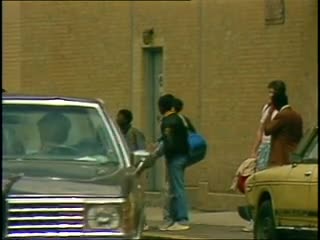
1:00:02: Visual: Shot of Boston skyline. Footage of Mayor Kevin White on September 9, 1974 calling on Boston residents to come together to make busing work. Footage of buses pulling up in front of South Boston High School on the first day of school in 1974. A crowd of antibusing protesters has gathered outside of the high school. The crowd jeers at the buses. Shots of the Boston Public Gardens. Footage of Ruth Batson (African American community activist) describing Boston as a "racist, violent city." She says that the violence stemming from school desegregation has spilled over into the streets and housing projects. Footage of police marching in formation on Bunker Hill Street in Charlestown. A large crowd is gathered outside of the Bunker Hill Housing Project. Pam Bullard reports that violence and racial hatred erupted in Boston when a federal court ordered the desegregation of schools in 1974. She notes that President Gerald Ford was forced to put the 82nd Airborne division on alert, in preparation for duty on the streets of Boston. Bullard reports that the toughest neighborhoods are quiet three years later; that African American and white children attend school together without incident. V: Shots of a lone police officer outside of South Boston High School; of African American and white children entering an elementary school.
1:01:39: Bullard reports that the effects of school desegregation will not be known for years; that some inconclusive studies have been made. V: Footage of African American and white students in an integrated elementary school classroom. Bullard notes that resistance to school desegregation in Boston has been overcome. V: Shots of a busy street in South Boston; of a young white boy outside of a church; of two elderly white residents sitting on a stoop in South Boston; of racist graffiti on a wall. Bullard reports that the fiercest opposition to court-ordered desegregation in the north took place in South Boston; that the opposition has calmed down since 1974. Bullard notes that school buses transporting students to and from South Boston High School are still accompanied by a police escort; that they are greeted by four police officers on duty at the high school. V: Shots of a police cruiser leading school buses up G Street to South Boston High School; of police officers outside South Boston High School; of African American students exiting the buses at South Boston High School. Bullard notes that metal detectors were installed at South Boston High School after the stabbing of a student three years ago. V: Footage of a student passing through a metal detector; of the halls of South Boston High School. Bullard reports that racial hatred and fear at South Boston High School have given way to a lingering uneasiness. V: Footage of a white teacher in a classroom in South Boston High School. He teaches to a classroom of eight African American and white students. Bullard notes that attendance is low at South Boston High School; that classes can be as small as four students. V: Shots of teachers teaching to very small classes at the high school. A teacher is heard saying that the official enrollment at South Boston High School is 600 students; that she estimates the enrollment to be 300 students. Shots of an African American teacher helping an African American female student at a desk; of students studying in classrooms; of teachers and students in sparsely populated classrooms. Bullard notes that the school was put under receivership by the federal court in 1975; that Jerome Wynegar (Headmaster, South Boston High School) was brought in by the court; that Wynegar and his staff have instituted many alternative programs at the school. V: Footage of Wynegar saying that there are fewer problems at South Boston High School because students are happy with the school programs. Shots of white and African American students studying in classrooms at the high school. Footage of a white female teacher saying that erratic attendance is the biggest problem at South Boston High School; that she finds herself repeating lessons for the benefit of students who were absent. Footage of Wynegar saying that South Boston High School ranks eleventh out of eighteen schools in attendance; that he though the school would rank last in attendance; that students appreciate the way they are treated at the school. Shots of students in classrooms; in the automotive shop. Footage of the white female teachers saying that alternative programs are attractive to students; that students also need to learn basic skills.
1:05:04: Bullard notes that there are divisions between those who support traditional classroom learning and those who support alternative programs. V: Shots of students in classrooms; of students in the lunchroom. Footage of an African American female student saying that South Boston High School is much better this year than in previous years; that students are getting along and are more focused on their classes. A white male student says that more students are attending school now. Another white male student says that students are getting along better. The white female teacher says that the atmosphere at the school has improved. Shots of the corridors in South Boston High School; of white and African American students playing basketball. Bullard says that there are no answers as to why the atmosphere at South Boston has improved; that innovative programs, low attendance and a wearing down of resistance to integration are all factors. V: Footage of white and African American students exiting South Boston High School; of school buses traveling down G Street away from the school. Footage of David Finnegan (Boston School Committee) saying that the community needs to realize that there are good solid programs in the Boston Public School System; that desegregation has added to the quality education provided by the schools; that the atmosphere in the schools is good, but can be improved. Bullard notes that even critics have conceded that the court-ordered magnet school programs have been good for the school system. V: Footage of African American and white students at a student art show; of the students' art projects. Bullard notes that there are opportunities in art and drama programs at the magnet schools; that there are opportunities for student internships; that there have been no racial problems at the magnet schools. Bullard reports that desegregation has been costly in financial and human terms; that the cost of the first year of desegregation was $20 million; that the second year of desegregation was $30 million; that police overtime ran up the cost of school desegregation. Bullard notes that costs have stabilized at $12 million over the past two years; that there is less of a need for police officers in the schools now. Bullard reports that Boston taxpayers have had to pay for expenses not covered by state and federal funds; that Boston taxpayers pay the highest property taxes in the nation. Bullard notes that the school budget remains at $175 million per year; that the city has lost 28,000 white students since 1972; that one expert says that 16,000 students were lost to desegregation. V: Shots of an empty classroom; of a teacher's attendance book; of a students in a sparsely populated classroom. Bullard adds that many students transferred to parochial schools, private academies and suburban schools; that many high school students dropped out. Bullard notes that the Lonegan family of South Boston refused to bus their children; that their daughter stayed out of school for a year. V: Footage of the Lonegan family. Mrs. Lonegan sits at a table in her home with her daughter Michelle and her son. Mrs. Lonegan says that she found a job making beds at a nursing home in order to pay her children's tuition at a private school.
1:09:07: Bullard reports that Christina Termini (student) lives in West Roxbury, but attends the Lee School in Dorchester. V: Footage of Termini leaving her home and walking to a bus stop. She boards the bus. Footage shot from the inside of the bus as it travels through the city. The white children on the bus sing songs. Audio of Termini's mother saying that the Lee School is ideal for Christina; that she has great confidence in the education her daughter receives at the Lee School. Shots of African American children walking to the Lee School from the Franklin Field Housing Project. Shots of a white student in French class at the Lee School; of integrated classrooms at the Lee School. Footage of a teacher saying that the children of the Lee School get along well; that racial differences are not important in the classroom. Bullard reports that attendance at the Lee School is low; that 600 students attend the school; that the school has 1,000 seats available; that white attendance could be higher. Bullard notes that the atmosphere at the school is excellent. V: Footage of the students performing "The Wizard of Oz" on stage. A young white female student says that she likes the facilities at the Lee School; that she has met a lot of friends. Footage of the white female teacher saying that she likes teaching at the Lee School. Footage of Robert Peterkin (headmaster, English High School) saying that many other urban school systems are experiencing the same problems as Boston; that desegregation has brought stability and strong programs to the system. Footage of Lee School students at their "Wizard of Oz" play. They sing "Ding, dong, the wicked witch is dead." Bullard reports that the Boston Public School System has made impressive progress since school desegregation began in 1974; that the system is no longer deliberately segregated and rife with political patronage. Bullard notes that parental involvement and stronger political leadership has improved the schools. V: Footage of Batson saying that the city has been forced to confront its racial problems through school desegregation. Shots of African American and white students entering an elementary school. Bullard reports that the federal court still runs the Boston Public School System. V: Footage of Batson saying that the process of desegregation has been valuable to some students. Shot of a Lee School student performing a song in the "Wizard of Oz" play. The audio of the student singing accompanies shots of a police officer in front of South Boston High School; of African American students entering South Boston High School; of Wynegar in front of South Boston High School; of a student passing through a metal detector; of African American and white students playing basketball; of an empty classroom; of the Lonegan family; of young African American and white students; of police cruisers leaving the school yard of South Boston High School. Children at the Lee School clap for the student performer on stage.
Date Created:
06/01/1978