1 - 5 of 5
Description:
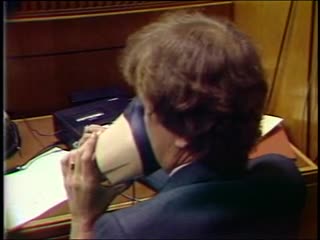
Atkinson Racial Violence. Before and after arraignment at Suffolk Superior Court. .
Collection:
Ten O'Clock News
Date Created:
06/15/1982

Description:
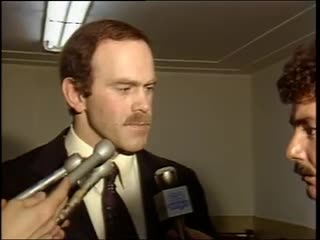
Press conference addressing Racial Violence in public housing in Boston, Harry Spence, Melbourne firebombing. .
Collection:
Ten O'Clock News
Date Created:
08/14/1982

Description:
Robert Spillane (Superintendent, Boston Public Schools) speaks to an audience in the chambers of the Boston School Committee. He is introduced by Jean Sullivan McKeigue (President, Boston School Committee), who notes that the School Committee will vote on March 5 about whether to keep Spillane in the post of Superintendent. Spillane addresses the issues of school desegregation and school violence. Spillane says past students in Boston Public Schools had been denied a good education due to segregated schools and cynicism among educators. Spillane talks about the continued involvement of Arthur Garrity (federal judge) in the supervision of the Boston Public Schools. Spillane says that the Boston School Department must begin to take responsibility for school desegregation. Spillane reminds the audience that racial discrimination will not be tolerated in the Boston Public School system; that the climate in the schools must be improved. Spillane stresses the importance of faculty integration. Spillane talks about school discipline and the fair implementation of the disciplinary code. Spillane says that a monitoring process will assure that minority students are no longer singled out for disciplinary action. Spillane promises to establish a task force to investigate school violence. Spillane says that school desegregation will have been a failure if quality education cannot be assured. Spillane also talks about additional programs for students, teacher training, teacher evaluation and community involvement in the schools. John O'Bryant (Boston School Committee) is interviewed by the media after the speech. O'Bryant says that Spillane has addressed school desegregation in a courageous manner; that he will vote for Spillane on March 5.
1:00:04: Press and members of the community are gathered in the Boston School Committee chambers. Jean Sullivan McKeigue (President, Boston School Committee) enters the room and announces that the vote on the office of school superintendent will take place on March 5. McKeigue introduces Robert Spillane (Superintendent, Boston Public Schools). Spillane enters the room and sits down. Spillane thanks McKeigue. He acknowledges the fact that the School Committee will be voting on whether to continue his superintendency. Spillane addresses the need for community involvement in Boston schools. Spillane says that he started as superintendent seven months ago; that he was aware of the social, fiscal and educational problems faced by Boston schools; that he has tried to provide constructive leadership. Spillane says that the schools are working with reduced resources; that he is trying to address the educational and social needs of nearly 60,000 students. Spillane refers to school desegregation across the nation. He says that Boston public school students had been denied a good education due to segregated schools and a cynicism among educators. Spillane says that he would like to address two problems today: school desegregation and school violence. Spillane talks about Judge Arthur Garrity's efforts to produce agreement among the parties in the Boston school desegregation case (Morgan v. Hennigan). He says that these agreements aim to secure the advances made by eight years of school desegregation; that these agreements would form the basis of a final set of court orders; that Garrity would cease to supervise the schools after these consent decrees were put in place. Spillane says that the consent decrees provide an opportunity to assess the progress made in school desegregation. Spillane reviews the state of the Boston Public School System before desegregation. Spillane says that he would like to eliminate racial inequality while improving educational quality. Spillane says that he would like to institute a long-range plan for the schools; that the plan would be presented to Garrity through the consent decree process. Spillane says that Boston schools must take responsibility for school desegregation; that equal educational opportunities must exist for all students; that the staff must be integrated as well as the students. Spillane says that the schools require strong leadership, a clear curriculum, conscientious teaching and a safe school climate. Spillane says that students must be prepared for higher education or the job market; that schools must work with parents to improve education. Spillane says that racial discrimination cannot be tolerated in and out of school; that he will not tolerate those who say that some children cannot learn. Spillane says that teachers must work hard to educate all children. Spillane says that he supports the integration of school faculty; that school staff must represent a cross-section of American society; that minority staff have been denied access to jobs in the past. Spillane says that African Americans and other minorities will be represented in key positions in the school administration. 1:10:44: Spillane says that youth violence is a problem in Boston's schools and neighborhoods. Spillane says that order must be kept in the schools; that alternative programs must be provided for all students in need of them. Spillane says that violence can stem from a lack of success in school; that school staff must help students to learn and achieve as best they can. Spillane says that fair and equitable disciplinary action must be assured; that minority students may have been singled out for disciplinary action in the past. Spillane says that he will set up a process to monitor disciplinary action and insure fair implementation of the disciplinary code. Spillane says that he will establish a task force to investigate school violence; that the task force can make recommendations on how to counter school violence. Spillane notes that students who are not taught to read and write are victims of another kind of violence; that some students are not encouraged to learn; that all students must be prepared to function as active and contributing members of society. Spillane says that desegregation will be rendered ineffective if quality education is not assured; that urban schools can make a difference in the lives of their students. Visual: Shot of a young African American boy who is fidgeting in the back of the room. Spillane says that teacher training is important. V: Jump cut in videotape. Spillane talks about alternative programs for students with special needs. V: Jump cut in videotape. Shots of audience from Spillane's perspective. Spillane says that a fair process of teacher evaluation will be implemented; that assistance and training must be given to teachers; that superior performance should be recognized and inferior performance should be addressed. V: Shot from the back of the room of Spillane addressing the audience. Spillane talks about the need for high academic standards. V: Jump cut in videotape. Spillane says that he will continue to work with the business community on employment and training programs for students. V: Jump cut in videotape. Spillane talks about the need for good vocational education programs. V: Jump cut in videotape. Spillane addresses the need for strong bilingual education programs. Spillane says that the programs must be assessed to assure that they are meeting the needs of the students. V: Jump cut in videotape. Spillane says that education must be a priority in the city; that civic leaders, parents and school administrators must work together to improve the schools; that all groups concerned about the schools must be listened to. V: Jump cut in videotape. The audience claps for Spillane. V: Jump cut in videotape. John O'Bryant (Boston School Committee) is interviewed by the media. He says that he is impressed with Spillane's growth since his stormy meeting with the school committee on February 8; that he will vote for Spillane. O'Bryant says that Spillane addressed school desegregation in a courageous manner; that very few high-profile officials talk about the beneficial effects of school desegregation in Boston; that few people give Garrity credit for instituting desegregation in Boston schools. O'Bryant says that he is optimistic about Spillane's ability to do the job. The media continues to question O'Bryant.
1:00:04: Press and members of the community are gathered in the Boston School Committee chambers. Jean Sullivan McKeigue (President, Boston School Committee) enters the room and announces that the vote on the office of school superintendent will take place on March 5. McKeigue introduces Robert Spillane (Superintendent, Boston Public Schools). Spillane enters the room and sits down. Spillane thanks McKeigue. He acknowledges the fact that the School Committee will be voting on whether to continue his superintendency. Spillane addresses the need for community involvement in Boston schools. Spillane says that he started as superintendent seven months ago; that he was aware of the social, fiscal and educational problems faced by Boston schools; that he has tried to provide constructive leadership. Spillane says that the schools are working with reduced resources; that he is trying to address the educational and social needs of nearly 60,000 students. Spillane refers to school desegregation across the nation. He says that Boston public school students had been denied a good education due to segregated schools and a cynicism among educators. Spillane says that he would like to address two problems today: school desegregation and school violence. Spillane talks about Judge Arthur Garrity's efforts to produce agreement among the parties in the Boston school desegregation case (Morgan v. Hennigan). He says that these agreements aim to secure the advances made by eight years of school desegregation; that these agreements would form the basis of a final set of court orders; that Garrity would cease to supervise the schools after these consent decrees were put in place. Spillane says that the consent decrees provide an opportunity to assess the progress made in school desegregation. Spillane reviews the state of the Boston Public School System before desegregation. Spillane says that he would like to eliminate racial inequality while improving educational quality. Spillane says that he would like to institute a long-range plan for the schools; that the plan would be presented to Garrity through the consent decree process. Spillane says that Boston schools must take responsibility for school desegregation; that equal educational opportunities must exist for all students; that the staff must be integrated as well as the students. Spillane says that the schools require strong leadership, a clear curriculum, conscientious teaching and a safe school climate. Spillane says that students must be prepared for higher education or the job market; that schools must work with parents to improve education. Spillane says that racial discrimination cannot be tolerated in and out of school; that he will not tolerate those who say that some children cannot learn. Spillane says that teachers must work hard to educate all children. Spillane says that he supports the integration of school faculty; that school staff must represent a cross-section of American society; that minority staff have been denied access to jobs in the past. Spillane says that African Americans and other minorities will be represented in key positions in the school administration. 1:10:44: Spillane says that youth violence is a problem in Boston's schools and neighborhoods. Spillane says that order must be kept in the schools; that alternative programs must be provided for all students in need of them. Spillane says that violence can stem from a lack of success in school; that school staff must help students to learn and achieve as best they can. Spillane says that fair and equitable disciplinary action must be assured; that minority students may have been singled out for disciplinary action in the past. Spillane says that he will set up a process to monitor disciplinary action and insure fair implementation of the disciplinary code. Spillane says that he will establish a task force to investigate school violence; that the task force can make recommendations on how to counter school violence. Spillane notes that students who are not taught to read and write are victims of another kind of violence; that some students are not encouraged to learn; that all students must be prepared to function as active and contributing members of society. Spillane says that desegregation will be rendered ineffective if quality education is not assured; that urban schools can make a difference in the lives of their students. Visual: Shot of a young African American boy who is fidgeting in the back of the room. Spillane says that teacher training is important. V: Jump cut in videotape. Spillane talks about alternative programs for students with special needs. V: Jump cut in videotape. Shots of audience from Spillane's perspective. Spillane says that a fair process of teacher evaluation will be implemented; that assistance and training must be given to teachers; that superior performance should be recognized and inferior performance should be addressed. V: Shot from the back of the room of Spillane addressing the audience. Spillane talks about the need for high academic standards. V: Jump cut in videotape. Spillane says that he will continue to work with the business community on employment and training programs for students. V: Jump cut in videotape. Spillane talks about the need for good vocational education programs. V: Jump cut in videotape. Spillane addresses the need for strong bilingual education programs. Spillane says that the programs must be assessed to assure that they are meeting the needs of the students. V: Jump cut in videotape. Spillane says that education must be a priority in the city; that civic leaders, parents and school administrators must work together to improve the schools; that all groups concerned about the schools must be listened to. V: Jump cut in videotape. The audience claps for Spillane. V: Jump cut in videotape. John O'Bryant (Boston School Committee) is interviewed by the media. He says that he is impressed with Spillane's growth since his stormy meeting with the school committee on February 8; that he will vote for Spillane. O'Bryant says that Spillane addressed school desegregation in a courageous manner; that very few high-profile officials talk about the beneficial effects of school desegregation in Boston; that few people give Garrity credit for instituting desegregation in Boston schools. O'Bryant says that he is optimistic about Spillane's ability to do the job. The media continues to question O'Bryant.
Collection:
Ten O'Clock News
Date Created:
03/02/1982

Description:
Christy George interviews Dorchester residents about the William Atkinson murder case. Reverend David Venator (United Church of Christ) says that the state could have filed more charges against the defendants; that violations of the civil rights of minorities have become commonplace. Venator says that the Dorchester community needs to deal with the racial prejudice which provoked the death of William Atkinson (Boston resident). Christy George (WGBH reporter) comments that Venator has condemned racial prejudice more severely than Francine Atkinson (William Atkinson's sister). Venator says that he can condemn racial prejudice because he is white; that he does not condone any kind of violence. Venator says that the Atkinson case is an example of a civil rights violation; that he has never experienced racial violence to that degree as a white man. A white male Dorchester resident says that Atkinson's death was not an isolated incident. The man notes that the Dorchester community has reacted strongly and quickly against Atkinson's death. The man says that the Dorchester community intends to see justice done in this case. George asks a white female Dorchester resident if she thinks that the media attention given to the Atkinson case helped bring about a more thorough investigation and the filing of stronger charges. The woman says that the media coverage is a result of the strong reaction against Atkinson's death by members of the Dorchester community. George comments that many white Dorchester residents are supporting the cause of William Atkinson. The woman says that Dorchester residents of all races are working together to fight racial violence and to make Dorchester a safer community. The tape includes footage of court proceedings in Suffolk Superior Court. George Hurd (Judge, Suffolk Superior Court) presides over the courtroom. The lawyers for the defendants identify themselves. The five defendants each plead not guilty to the charges against them. The charges are read out loud. John Kiernan (Assistant District Attorney) makes bail recommendations for the five defendants
0:00:32: Visual: Reverend David Venator (United Church of Christ) says that the state could have filed more charges against the defendants; that violations of the civil rights of minorities have become commonplace; that these violations are not always committed by the same individuals. Venator says that communities must face up to the disease of racial prejudice; that the Dorchester community needs to deal with the racial prejudice which provoked the death of William Atkinson (victim). Christy George (WGBH reporter) comments that Venator has condemned racial prejudice more severely than Francine Atkinson (William Atkinson's sister). Venator says that he can condemn racial prejudice because he is white; that he does not condone any kind of violence. Venator says that the Atkinson case is an example of a civil rights violation; that he has never experienced racial violence to that degree as a white man. A white male Dorchester resident says that Atkinson's death was not an isolated incident. The man wonders if there would have been arrests made in the case if the Dorchester community had not reacted strongly and quickly against Atkinson's death. The man says that the Dorchester community intends to see justice done in this case; that there has been harassment of some individuals involved in the Atkinson case. The man says that he hopes this case will call attention to the need for reform of the legal system. George asks a female Dorchester resident if she thinks that the media attention given to the Atkinson case helped bring about a more thorough investigation and the filing of stronger charges. The woman says that the media coverage is a result of the strong reaction against Atkinson's death by members of the Dorchester community. The woman says that members of the community want to see justice done in the Atkinson case. George comments that many white Dorchester residents are supporting the cause of William Atkinson. The woman says that Dorchester residents of all races are working together to fight racial violence and to make Dorchester a safer community. 0:07:06: V: Reporters and bystanders stand in a lobby. 0:07:13: V: Court proceedings in Suffolk Superior Court. Shots of Judge George Hurd (Suffolk Superior Court), the audience and the crowded courtroom. Hurd rules on a motion. 0:08:42: V: Court proceedings in the arraignments of Francis Devin, William Joyce, Paul MacGregor, Michael Nowacki and Edward Tuffo in the William Atkinson case. Hurd listens as the bailiff reads the names of the defendants. John Kiernan (Assistant District Attorney) speaks to the judge. Neil Connolly (attorney for MacGregor and Tuffo), Odin Anderson (attorney for Nowacki), Pamela Hattern (attorney for Devin) and George Donovan (attorney for Joyce) approach the podium to identify themselves. Audio is muffled. Devin, Joyce, MacGregor, Nowacki and Tuffo can be seen standing in the courtroom behind the lawyers. 0:11:06: V: MacGregor steps up to the microphone and pleads not guilty to five indictments. Nowacki steps up to the microphone and pleads not guilty to four indictments. Tuffo steps up to the microphone and pleads not guilty to four indictments. Devin steps up to the microphone and pleads not guilty to four indictments. Joyce steps up to the microphone and pleads not guilty to four indictments. Shot of all five defendants standing up in the courtroom. Kiernan makes bail recommendations for the defendants. Kiernan notes that Joyce is serving a suspended sentence for an incident in April of 1981. Donovan steps up to the microphone to confirm Kiernan's facts about Joyce. Kiernan makes recommendations on Joyce's bail.
0:00:32: Visual: Reverend David Venator (United Church of Christ) says that the state could have filed more charges against the defendants; that violations of the civil rights of minorities have become commonplace; that these violations are not always committed by the same individuals. Venator says that communities must face up to the disease of racial prejudice; that the Dorchester community needs to deal with the racial prejudice which provoked the death of William Atkinson (victim). Christy George (WGBH reporter) comments that Venator has condemned racial prejudice more severely than Francine Atkinson (William Atkinson's sister). Venator says that he can condemn racial prejudice because he is white; that he does not condone any kind of violence. Venator says that the Atkinson case is an example of a civil rights violation; that he has never experienced racial violence to that degree as a white man. A white male Dorchester resident says that Atkinson's death was not an isolated incident. The man wonders if there would have been arrests made in the case if the Dorchester community had not reacted strongly and quickly against Atkinson's death. The man says that the Dorchester community intends to see justice done in this case; that there has been harassment of some individuals involved in the Atkinson case. The man says that he hopes this case will call attention to the need for reform of the legal system. George asks a female Dorchester resident if she thinks that the media attention given to the Atkinson case helped bring about a more thorough investigation and the filing of stronger charges. The woman says that the media coverage is a result of the strong reaction against Atkinson's death by members of the Dorchester community. The woman says that members of the community want to see justice done in the Atkinson case. George comments that many white Dorchester residents are supporting the cause of William Atkinson. The woman says that Dorchester residents of all races are working together to fight racial violence and to make Dorchester a safer community. 0:07:06: V: Reporters and bystanders stand in a lobby. 0:07:13: V: Court proceedings in Suffolk Superior Court. Shots of Judge George Hurd (Suffolk Superior Court), the audience and the crowded courtroom. Hurd rules on a motion. 0:08:42: V: Court proceedings in the arraignments of Francis Devin, William Joyce, Paul MacGregor, Michael Nowacki and Edward Tuffo in the William Atkinson case. Hurd listens as the bailiff reads the names of the defendants. John Kiernan (Assistant District Attorney) speaks to the judge. Neil Connolly (attorney for MacGregor and Tuffo), Odin Anderson (attorney for Nowacki), Pamela Hattern (attorney for Devin) and George Donovan (attorney for Joyce) approach the podium to identify themselves. Audio is muffled. Devin, Joyce, MacGregor, Nowacki and Tuffo can be seen standing in the courtroom behind the lawyers. 0:11:06: V: MacGregor steps up to the microphone and pleads not guilty to five indictments. Nowacki steps up to the microphone and pleads not guilty to four indictments. Tuffo steps up to the microphone and pleads not guilty to four indictments. Devin steps up to the microphone and pleads not guilty to four indictments. Joyce steps up to the microphone and pleads not guilty to four indictments. Shot of all five defendants standing up in the courtroom. Kiernan makes bail recommendations for the defendants. Kiernan notes that Joyce is serving a suspended sentence for an incident in April of 1981. Donovan steps up to the microphone to confirm Kiernan's facts about Joyce. Kiernan makes recommendations on Joyce's bail.
Collection:
Ten O'Clock News
Date Created:
03/31/1982


