Description:
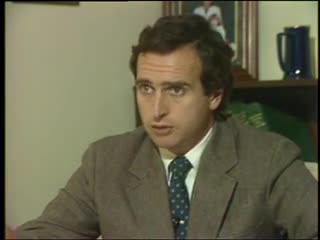
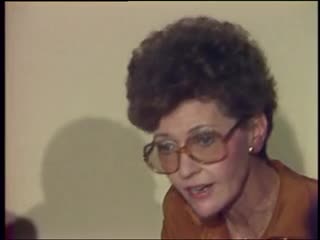
Christopher Lydon and Gail Harris host The Ten O'Clock News Election Night Special with in-studio guests Dennis Kearney (Suffolk County Sheriff), Dr. Alvin Poussaint (Harvard Medical School), Kirk Scharfenberg (The Boston Globe) and Michael Rezendes (The Boston Phoenix). Lydon, Harris and the guests analyze the voting results. Lydon calls the Flynn victory a "landslide." Poussaint talks about "ethnic voting" in the white precincts. Lydon and Harris read the news headlines. Harris reports on an agreement between WGBH and the Massachusetts House of Representatives, which allows WGBH to broadcast live coverage of House proceedings. A panel discusses Ray Flynn's victory over Mel King in Boston's mayoral elections Lydon, Harris and the in-studio guests talk about Flynn's victory. The guests discuss how Flynn will reach out to the African American community and how Flynn will deal with the business community. Scharfenberg notes that Flynn will need to appoint non-whites to some high-level positions in his administration. Rezendes criticizes the King campaign for not spending enough money on media advertising. The guests debate the role of race in the campaign. Poussaint believes that many white voters were frightened of King's appearance. The guests talk about whether the media downplayed racial issues during the campaign. They speculate about whether another African American candidate would have fared better than King.
0:59:59: The logo of The Ten O'Clock News underwriter New England Telephone is displayed. Gail Harris announces that Ray Flynn (candidate for mayor of Boston) has won the mayoral election. Visual: Shots of Flynn with his family; of campaign workers holding signs for Flynn and Mel King (candidate for mayor of Boston). The Ten O'Clock News logo. Christopher Lydon reports that Flynn received overwhelming support from the more conservative precincts of the city. Gail Harris talks about an upcoming report on the King campaign. Lydon asks in-studio guest Dennis Kearney (Suffolk County Sheriff) about the Flynn "landslide." Kearney says that the Flynn margin of victory was higher than expected. Kearney analyzes the Flynn victory. Kearney says that Flynn has been successful in cutting into King's base of support. Harris asks Dr. Alvin Poussaint (Harvard Medical School) if a more charismatic African American politician could have won the election. Poussaint cites the "ethnic voting" in some of Boston's white precincts. Poussaint says that any African American politician would have had difficulty overcoming the barrier of "ethnic voting"; that King ran a good campaign. Lydon asks Kirk Scharfenberg (The Boston Globe) how the Flynn administration will differ from the administration of Kevin White (Mayor of Boston). Scharfenberg says that Flynn will proceed slowly; that Flynn will put emphasis on the neighborhoods, on schools and on public housing. Harris asks Michael Rezendes (The Boston Phoenix) about complaints by the King campaign that the media focused too much on the similarities between the candidates. Rezendes says that the complaints are unjustified; that King chose not to use the media in his campaign; that there are indeed similarities between King and Flynn.
1:05:21: Report on the winning lottery numbers in Massachusetts, New Hampshire, and Rhode Island. WGBH promotion for the Sesame Street special, Don't Eat the Pictures.
1:06:23: Lydon and Harris read the news headlines. Lydon reports on protests in Great Britain against the shipment of nuclear missiles from the US into Great Britain. V: Shot of a US transport plane; of student protesters throwing red paint at Michael Heseltine (British defense minister). Shots of protesters outside of the British Parliament building. Lydon reports that the Geneva talks on the deployment of cruise missiles broke up when the Soviet delegation walked out. Harris reports on the murder of George Tsantes (US naval attache) by a terrorist in Athens, Greece. V: Shots of the car in which Tsantes was driving at the time of the murder. Harris reports on an escalation of tension between Greece and Turkey stemming from a declaration of independence by Turkish northern Cyprus. Harris reports on fierce fighting around a refugee camp in northern Lebanon between Yasser Arafat's supporters and PLO (Palestine Liberation Organization) dissidents. V: Shots of troops under fire at the Lebanese refugee camp. Lydon and Harris read the national news headlines. Lydon reports that on the death of a renewed ERA (Equal Rights Amendment) bill in Congress; that the debate centered on abortion rights and women in military combat. Lydon reports on the end of a strike by Greyhound bus drivers. Harris reports on an agreement between the Massachusetts House of Representatives and WGBH-TV to broadcast live, "gavel to gavel" coverage of floor debate in the House of Representatives. V: Footage of the signing of the agreement by David Ives (President, WGBH) and Thomas McGee (Speaker, Massachusetts House of Representatives). Footage of McGee talking about the benefits of the live coverage to Massachusetts residents.
1:09:59: Lydon gives the weather report. WGBH promotion for An Evening of Championship Skating.
1:11:13: Lydon opens a general discussion on the future Flynn administration with the in-studio guests. Scharfenberg talks about Flynn's progression from conservative candidate to liberal candidate. Kearney talks about the diverse coalition supporting his candidacy. Kearney questions how Flynn will deal with those competing interests as mayor. Lydon comments that Flynn is a progressive candidate with a fairly conservative constituency. Poussaint asks how Flynn will deal with racial issues. Kearney says that Flynn will be able to reach out to the African American community because he is a populist. Rezendes says that it is crucial for the next mayor to reach out to the African American community. Poussaint notes that Flynn won the election with little African American support; that Flynn might not feel as if he has to reach out to African Americans. Scharfenberg comments that Flynn will be tested by the imminent desegregation of housing projects in Charlestown. Lydon asks if there is a position for King in the Flynn administration. Scharfenberg says that he sees King in a volunteer position, but not as a paid employee. Poussaint asks how Flynn will involve the larger African American community in his administration. Kearney says that Flynn will reach out to African Americans. Harris asks how Flynn will deal with the downtown business community. Rezendes says that Flynn will face a great challenge in dealing with the city's economic crisis. Lydon asks if Flynn bears comparison to Dennis Kucinich (former mayor of Cleveland). Scharfenberg says that Flynn bears no comparison to Kucinich. Rezendes says that Flynn will bend to the pressure of the business community; that he may disappoint his liberal supporters. Kearney says that Flynn will have to balance the needs of competing interests in the city.
1:20:33: Stock report: the Dow Jones average is shown at 1,247.97; the volume of the New York Exchange is shown at 77,840,000.
1:20:54: Lydon asks about desegregation of public housing in Charlestown and other racial issues. Scharfenberg talks about the need for Flynn to appoint non-whites to high-level positions in his administration. Lydon asks how the King campaign could have been more successful. Rezendes says that the King campaign made a mistake in imposing a spending cap of $150,000; that King was not able to get his message out through television ads. Kearney says that King has done most of his work in the South End; that Flynn has come into contact with voters city-wide through his election to the Boston City Council. Poussaint notes that white voters see King as a "radical;" that many voters are frightened by his appearance as a tall, bald, bearded African American man. Kearney notes that there were "anti-Semitic" comments from King before the election. Poussaint says that the media have been playing down racial issues in the campaign; that some white voters would not vote for Mel King because he is African American. Harris asks if the race question was played down by the media because of the lack of racial tension between the two candidates. Harris asks if the city has not been given "too much credit" in overlooking the race of King. Kearney says that voters were not afraid of King's appearance at a debate in South Boston before the primary election. Lydon notes that many white voters were not given a chance to see beyond the stereotype of King as a "radical." Rezendes says that there is no denying the role played by race in the election. Rezendes adds that King's "radical" statements about Fidel Castro (leader of Cuba) and Yasser Arafat (PLO leader) prevented him from reaching conservative white voters. Scharfenberg says that another African American candidate may have fared better than King. Scharfenberg notes the John O'Bryant (Boston School Committee) is running first in the race for seats on the Boston School Committee. Poussaint wonders if King's defeat will affect the outcome of other city electoral races involving African American candidates. Lydon notes that King received more than 20% of the white vote. Lydon asks if the results will affect Boston's national reputation as a racist city. Kearney says that there was an air of conciliation rather than confrontation during the campaign; that the city has moved forward.
1:28:54: Lydon and Harris thank the in-studio guests and close the show. End credits roll. The logos of The Ten O'Clock News underwriters New England Telephone and Shawmut Brokerage Services are displayed.
Date Created:
11/15/1983