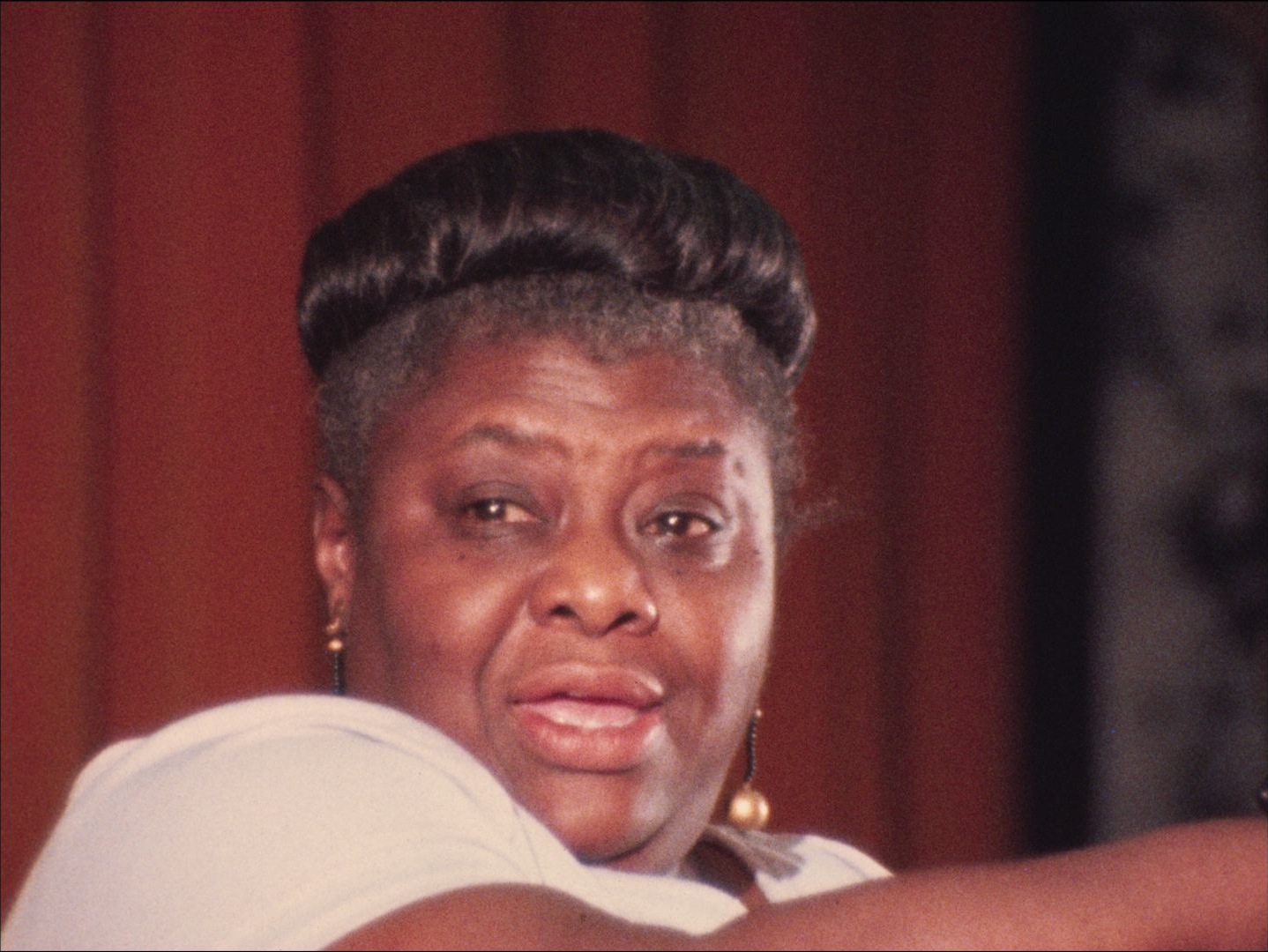
Description: Compilation of stories and loose footage on the problem of racism in American and related issues. Bill Harrington 09/07/1967 air piece on the closing of two Roxbury schools, which resulted in the busing of students. Interviews with Massachusetts State Commissioner of Education Owen Kiernan and Boston Superintendent Ohrenberger. Cuts from unidentified panel discussion. Jim Pansullo 12/03/1967 air piece on anti-Semitism of Black Nationalists. He reports on a meeting of the American Jewish Congress, led by President Rabbi Arthur Lelyveld, who spoke on fighting poverty especially along racial lines. He also reports on Kenneth Clark's remarks on the tension. Series of interviews on 08/05/1967 with African American pedestrians on African American leaders and the Black Power movement, riots, and specifically Stokely Carmichael. More cuts from panel discussion. 12/14/1967 footage of Reverend James Groppi speaking at a church in Durham. N.H., on the current state of race relations in American. More cuts from panel discussion. Interview with a Richard Hatcher, the first African American mayor of Gary, Indiana, on metropolitan race relations.
Collection: WHDH
Date Created: 1967
Description: Evening Compass special. In-studio operators take phone calls from parents with questions about school assignments and busing for the next school year. Ed Baumeister gives the answers to several true-or-false questions regarding the state plan to achieve racial balance in Boston schools. Judy Stoia gives statistics for the maximum travel distance of students and the racial makeup of schools in each elementary and intermediate school district. Paul deGive reports on a plan proposed by the Boston School Department to hire aids to help care for children and locate parents in case of sickness or family emergency. Baumeister and Pam Bullard (Boston Herald American) interview John Coakley (Boston School Department) and Dr. Charles Glenn (Massachusetts State Department of Education) about implementation of the racial balance plan. Both men respond to questions about the busing of kindergarten students. Judy Stoia explains the term geocode. Stoia and Bob Murray (Boston School Department) give on-air answers to some of the most common questions received by the operators. In studio Bullard, Baumeister and Dr. John Finger of Rhode Island College discuss plan developed to integrate schools. WGBH reporter and Bob Murray have question-and-answer session with questions from callers. Joan Buckley, representative from Boston Teachers Union, discusses plan for teachers with Bullard and Baumeister.
0:02:11: Visual: Introduction to A Compass Special: September in April, a special broadcast concerning the state racial balance plan for the Boston schools. Ed Baumeister is in the studio, along with several volunteers covering the phones. Baumeister introduces the program as informational, designed to answer parents' questions about the plan and its implementation. Baumeister gives out a number for parents to call to reach volunteers in the studio. Baumeister provides true/false answers to basic questions about the plan. Questions touch on the reimbursement of transportation costs, general travel distances for students of various ages and numbers of white and non-white students to be bused. 0:06:08: V: Paul deGive reports on parents who worry about being able to reach their child at a distant school in the case of sickness or emergency. He reports that the Boston School Department will propose a plan to hire transitional aids at each school to contact parents and to care for children in an emergency. 0:09:15: V: Baumeister encourages parents to call studio for information. Volunteers answer the phones. 0:09:55: Report on the Boston elementary school districts under the racial balance plan. Narrator describes the standardization of grade structure in elementary schools and the changes to various elementary school districts. The districts are as follows: Hennigan Kennedy, Bacon Dearborn, Tobin Farragut, Washington Park, Sumner-Conley, Tileston Chittick Greenwood, Lee, Murphy, Marshall Dever Mason, Mendell-Parkman, Paine-Audobon, Milmore, Prince, Faneuil, Lincoln Quincy, Hurley-Bates, Carter, Eliot, South Boston, Hyde Park, Cannon, Ohrenburger, Parker Longfellow. V: Shot of a map of Boston's elementary school districts. Narrator gives information for each district, including district boundaries, names of schools within the district, maximum travel distance for any student in the district and projected non-white enrollment for each school in the district. A map of each district is shown as the narrator reads the information for that district. 0:20:11: V: Judy Stoia encourages parents to call the studio for information concerning their child's school assignment. Shots of telephone volunteers. Stoia mentions that the volunteers are from the Citywide Education Coalition, the Teachers Union and the Boston School Department. Stoia talks to volunteer Lee Grant and explains the term "geocode." Stoia talks to volunteer Scott Campbell about what kind of information he can give to parents over the phone. 0:23:30: V: Baumeister introduces Pam Bullard (Boston Herald American) and John Coakley (Education Planning Center of the Boston School Department). Baumeister refers to Coakley as the man charged with making the racial balance plan work. Coakley refutes the claim that he is in charge of the plan, but discusses preparation for implementation of the plan. Baumeister asks Coakley if the School Department has any flexibility in implementing the plan. Bullard asks Coakley to respond to parental complaints about kindergarten assignments. Bullard presses kindergarten issue, asking if kindergarten children will be bused to the Martha Baker School or to kindergarten centers. Coakley summarizes School Department efforts to minimize busing of kindergarten students and cites the inadequacies of state plan concerning kindergarten students. Baumeister asks Coakley how he would change plan if he could. Coakley cites preliminary plans for integration by the Boston School Department and the Boston School Committee. Coakley says these plans were never developed. Baumeister thanks Coakley. 0:33:27: V: Baumeister provides answers to more true/false questions about the racial balance plan. Questions touch on the following issues: state reimbursement for travel under the desegregation plan, reimbursement of MBTA travel under the plan, major thoroughfares as school district boundaries, classification of Spanish-speaking students, overcrowding of Boston schools. 0:35:14: Report on intermediate school districts under the racial balance plan. Narrator talks about the redistricting of intermediate schools under the plan. Narrator gives the following information for each district: district boundaries, maximum travel distance for any student in the district and percentage of non-white students within each intermediate district school. Narrator reads the information for each district over a map of that district and a shot of the district school. The districts follow: Cleveland, Curley, Dearborn, Edison, Gavin, Holmes, Irving, King, Lewenberg, Lewis, Mackey, McCormack, Michelangelo, Roosevelt, Shaw, Taft, Thompson, Timilty, Wilson. V: Shot of a map of Boston's intermediate school districts. 0:44:41: V: An in-studio reporter asks a volunteer named Fran to describe the phone calls she has received. The reporter addresses a specific situation concerning the placement of 6th grade students in Hyde Park. 0:46:31: V: Baumeister and Bullard interview Dr. Charles Glenn (Office of Equal Education Opportunity of the State Department of Education). Baumeister asks Glenn how the plan determines which children will be bused at the high school level. Bullard asks Glenn about the busing of kindergarten students under the state plan. Glenn explains the intricacies of the plan and its implementation. Baumeister asks Glenn why the state plan to desegregate schools is better than any put forth by the Boston School Committee. Glenn explains that the state desegregation plan goes as far as it can under state law. Bullard questions Glenn about hurried implementation of the racial balance plan, and if the communities involved will be adequately prepared. Glenn responds that the plan has been implemented as well as can be expected in the time given. 0:55:15: V: Baumeister provides answers to more true/false questions. Questions touch on the following issues: definition of non-white students, school assignments and school assignment changes, Massachusetts state racial imbalance regulations, teacher assignments. 0:56:49: V: Stoia and Bob Murray (Education Planning Center of the Boston School Department) answer the most difficult questions received by phone volunteers. Questions involve travel distance within a school district, whether Dr. Glenn lives in Boston, the assignment of students in sub-system schools (Trotter school, Lewis school and Copley High School), and the assignment of seniors in the high schools.
Collection: Evening Compass, The
Date Created: 04/22/1974
Description: Frank Power (Headmaster, Charlestown High School) holds a press conference at foot of Bunker Hill Monument. Power answers questions about opening day preparations, school attendance, and programs at Charlestown High School. He will not comment on any racial tension or incidents. Power insists that the opening day was "routine" and that he has no knowledge of any happenings outside of the building. Power compliments his staff on their performance. Power says that projected enrollment statistics are high; that he will contact students who did not attend school today. A large mass of police officers gather in front of Charlestown High School. Paul deGive interviews Power alone. Power says that he did not turn away students who were late if they had a note from their parents. Power says that he may reinstate the flexible campus program eventually. DeGive shoots cutaways. DeGive interviews parents Peggy King and Gertrude Harris in front of a building in the Bunker Hill Housing Project. King and Harris resent the police presence in Charlestown. King talks about sending her four children to schools outside of Boston in order to avoid busing assignments. Hayes says that young children should not be bused; that she will try to enroll her children in public schools in Somerville. King predicts that the situation in Charlestown will grow worse if busing continues.
0:53:59: Visual: Media crews surround Frank Power (Headmaster, Charlestown High School) as he responds to questions at the foot of the Bunker Hill Monument, across the street from Charlestown High School. On the defensive, Power insists that the opening day was routine and refuses to comment on the police presence. He reports that 315 students out of 873 attended school. He insists that the school and the teachers were ready for opening day; that he didn't feel any tension in the building. Powers reports that the school will contact all students who were not present and request that they attend school. Shot of an MDC police officer on horseback outside of Charlestown High School. Power insists again that the opening was routine. Power responds in a hostile manner to a reporter asking about relations between African American and white students; he says that he did not spend the day in the classrooms with the students. 0:56:36: V: Power insists that he was inside the school all day and was not aware of happenings outside of the building. He reports that seven buses brought students to the school; that some white students are bused in from Forest Hills; that the projected enrollment figure is high and includes students who may have finished school over the summer. On the defensive, Power responds that he does not know how many Charlestown students boycotted school; that he will count the number of Charlestown students attending school only if it is required of him. Power notes that he has been headmaster for eight years. Shot of police officers lined up outside of Charlestown High School. 0:58:42: V: Power asks the reporters why they don't ask more good questions. He happily responds to a "good" question about how he prepared the teachers for opening day. He says that the teachers at the school performed magnificently; that he would like to thank them through the media. Power responds that he has suspended the flexible campus program due to safety concerns; that there is no lunchroom at the school; that the students eat lunch in their homerooms. He insists again that the opening was routine, but with fewer students. Shot of three men tending to broken fence on Monument Square. Power reminds the media that the Public Information Center has attendance statistics; that he estimates racial breakdown to be 235 white students, 66 African Americans and 14 other minorities; that he will work to bring attendance numbers up. Power explains again why the projected enrollment figure is high. 1:02:07: V: Shot of a large crowd of helmeted police officers outside of Charlestown High School. Paul deGive interviews Power. Power responds to complaints that he turned away students by explaining the school's late policy. He insists that he did not turn away students who arrived late if they had a note from their parents; that parents could call and alert him that their students were arriving late. Power says that the opening day was routine and insists that he noticed no tension; that the flexible campus program would be suspended for safety reasons; that the flexible campus program and other programs might be reinstated eventually; that the racial breakdown was 235 white students, 66 African Americans and 14 other minorities; that the projected enrollment figure was high; that he will try to bring attendance numbers up by contacting absentee students. Power refuses to make guesses as to whether more whites or more African Americans stayed out of school. DeGive thanks Power and ends interview. 1:06:54: V: DeGive and Power speak to one another informally. Power speaks to other reporters. The crew does extra takes of deGive. 1:09:11: V: DeGive prepares to interview Peggy King and Gertrude Hayes (residents, Bunker Hill Housing Project) as they sit with some children outside of a building in the Bunker Hill Housing Project. King does not want her children bused out of Charlestown because a new school has been built there. Both women resent the police presence. They do not believe that the police should be allowed inside the housing project. King has four children who were to be bused; she sent them to schools in Wakefield, Lynn and Dorchester to avoid busing. The crew does several takes of this exchange. King says that she cannot afford parochial schools, but knows they are an option. She believes the situation in Charlestown will get worse. Hayes does not believe that younger children should be bused at all. The children become noisy; the crew tells them to quiet down. King thinks that more families will send their students out of Boston. Hayes has three children who were to be bused; she is going to try to send them to school in Somerville. The women agree that the busing plan primarily affects poor families from the housing project; that the plan discriminates against them. The crew does extra takes of deGive interviewing the women. Hayes talks about her efforts to enroll her students in Somerville schools; King talks about fighting the court order.
Collection: Evening Compass, The
Date Created: 09/08/1975
Description: David Boeri reports that E.W. Jackson is the manager of WLVG radio station in Cambridge and the pastor of the New Corner Baptist Church in Roxbury. Jackson addressed a community meeting in South Boston last night about the city's public housing desegregation plan. He attacked atheism, school busing, and seat belt laws in his speech, and called the city's housing desegregation plan a form of "social engineering." Interview with Jackson in the studios of WLVG. He discusses public housing integration and says that "freedom of choice" is more important than integrated developments. Boeri reports that Boston City Councilors James Kelly and Dapper O'Neil are leading the fight against the desegregation plan, but that interest in the issue is waning among South Boston residents. Interview with Neil Sullivan, policy advisor to mayor Ray Flynn, who helped develop the housing desegregation plan. Sullivan says that elements of choice have been preserved in the city's new public housing policy.
1:00:13: Visual: Shots of a light outside of the studio door at WLVG radio station; of a record by Amy Grant spinning on a turntable inside of the studio. Music plays on the soundtrack. David Boeri reports that E.W. Jackson is the manager of WLVG, a gospel radio station in Cambridge. V: Shots of Jackson in the offices of WLVG. Shots of a record spinning on a turntable; of the WLVG logo on a piece of paper. Audio of Jackson talking to a disc jockey about the playlist. Shot of Jackson in the studio. Boeri reports that Jackson is also the pastor of the New Corner Baptist Church in Roxbury; that Jackson visited a community meeting in South Boston last night; that 350 white residents attended the meeting. V: Shot of Jackson addressing a community meeting in South Boston on July 12, 1988. Members of the audience stand to applaud for him. Footage of Jackson ad dressing the meeting. Jackson says that South Boston residents have been "dumped on" by city leaders. Footage of Jackson sitting behind a desk, being interviewed by Boeri. Jackson chuckles when Boeri asks him if he had ever imagined bringing an audience of South Boston residents to their feet. Shots of Jackson addressing the community meeting. Boeri reports that Jackson attacked atheism, school busing, and seat belt laws in his speech at the meeting in South Boston. Boeri says that Jackson called the city's plan to desegregate public housing is an example of "social engineering." V: Shots of audience members at the community meeting. Footage of Jackson addressing the meeting. Jackson says that he can understand why the people of South Boston do not want bureaucrats telling them how to live their lives. The audience applauds. Boeri reports that James Kelly (Boston City Council) and Dapper O'Neil (Boston City Council) are leading the fight against the city's desegregation plan for public housing; that interest in the struggle may be waning among South Boston residents. V: Shot of Jackson addressing the meeting. O'Neil sits beside the podium. Kelly is visible behind Jackson. Shot of empty seats at the back of the room. Footage of Boeri asking Jackson if he thinks he might have been "used" by Kelly and O'Neil. Jackson quotes the Bible as saying that it is good to be used for a good cause. Footage of Neil Sullivan (Policy Advisor to Mayor Ray Flynn) being interviewed by Boeri. Sullivan says that the attending the community meeting is a good way to get on television. Boeri reports that Sullivan says that Jackson has confused the issues. V: Footage of Jackson saying that tenants must be able to choose where they want to live; that freedom of choice is more important than integrated developments. Footage of Sullivan saying that the city's plan tries to preserve elements of choice in the new housing plan. Footage of Jackson saying that affordable and adequate housing is needed in every neighborhood. Footage of Sullivan saying that the city of Boston is working harder than any other major city on the issue of affordable housing. Footage of Jackson leaving the stage at the community meeting. Jackson shakes hands with several attendees of the meeting. Boeri reports that Jackson may have forged a new alliance with South Boston residents.
Collection: Ten O'Clock News
Date Created: 07/13/1988
Description: Carmen Fields interviews Dr. Kenneth Clark (psychologist). Fields reports that Clark and his Mamie Phipps Clark (psychologist) performed studies using dolls to gauge ego and self-esteem in young African American children. Fields notes that the Clarks' research influenced the Supreme Court's 1953 landmark decision on school desegregation. Clark talks about his research, saying that African American children rejected the brown dolls because they had internalized society's negative stereotypes of African Americans. Clark discusses the use of the study by NAACP lawyers in the 1953 school desegregation case. Clark talks about the importance of school desegregation and the need for white and African American children to grow up with self-respect and respect for others. He says that children must be taught to act humanely toward others. Fields' report includes footage from the 1959 film Imitation of Life and footage from Eyes on the Prize. Fields' report also includes footage of school desegregation in South Boston and shots of dolls. Sound cuts out at the very end of the video.
1:00:10: Visual: Shot of a display of dolls and toys. Carmen Fields reports that Dr. Kenneth Clark (psychologist) and the late Mamie Phipps Clark (psychologist) used dolls in a 1939 psychological experiment; that the Clarks used dolls to gauge ego and self esteem in young African American children. Fields notes that the results of the experiments shocked the nation. V: Shots of Kenneth Clark being interviewed by Fields. Shots of a white doll; of an African American doll. Footage of Clark talking about how African American children internalize society's negative stereotypes of African Americans. Clark says that two out of three African American children rejected the brown dolls. Footage from the 1959 film, Imitation of Life. Footage of Clark saying that the children were forced to identify with the brown dolls they had rejected. Fields reports that the Supreme Court's 1953 decision on school desegregation was influenced by the Clarks' research. V: Shot of the exterior of the Supreme Court Building in Washington D.C. Footage of Clark saying that NAACP lawyers were interested in the study; that NAACP found parallels between the results of the study and the effects of segregated schools on African American chiildren. Fields reports that school desegregation has been accomplished in both southern and northern cities. V: Black and white footage from Eyes On the Prize. Shots of an African American girl being accompanied into a school; of the National Guard running in formation; of African American students entering a school; of an African American female student in a classroom; of an African American man walking with two white men. Shots of school buses pulling up to the front of South Boston High School in 1974; of South Boston residents jeering at the buses. Shots of police officers lined up on a streeet outside of a Charlestown Housing Project. Fields notes that Clark blames low self-esteem for many of today's educational problems including high drop-out rates and violence. V: Footage of Clark being interviewed by Fields. Clark says that society's problems cannot be solved by laws and court cases; that churches have not influenced people to act more humanely toward others. Clark says that children must be educated to act in a humane manner. Fields asks Clark how he responds to people who believe that desegregation did not work. Clark says that desegregation has never really been tried; that schools are still organized along racial lines. Clark says that schools are not set up to teach children to respect others. Fields asks if the doll study is still relevant today. Clark says that both white African American children need help in developing positive self-images in today's society. Shots of students in an integrated classroom; of white students in the classroom. Footage of Clark saying that racism is indicative of a lack of self-respect. Clark says that dolls can be used to communicate a sense of humanity and decency. Shots of white and African American dolls. Footage of Clark saying that some African American children in his doll study had good role models; that those children did not reject the brown dolls. Clark says that children can be taught to respect themselves and others.
Collection: Ten O'Clock News
Date Created: 10/18/1988
Description: Pam Bullard interviews Marion Fahey (Superintendent, Boston Public Schools). Fahey talks about the assignment of bus monitors and school aides for the coming school year. Fahey explains the roles of transitional aides, security aides and instructional aides. She says that there will also be more special needs aides and bilingual aides in the schools. Fahey comments on the need for all students to attend school in order to learn basic skills. She says that parents should be confident in the educational programs at the Boston public schools. Tape 2 of 2.
0:00:13: Visual: Pam Bullard interviews Marion Fahey (Superintendent, Boston Public Schools) in her office. Fahey sits behind her desk. Fahey says that bus monitors will ride the buses with students again this year; that parents have made it clear that they want bus monitors on the buses with their children. Fahey says that there will be just as many aides this year as in previous years; that there will be fewer transitional aides in the school buildings; that transitional aides will perform duties assigned to them by the headmasters of the schools. Fahey says that the transitional aides will be supplemented by security aides from the Safety and Security Department; that the security aides have additional training in dealing with crises. Fahey says that there will be many instructional aides in the classrooms; that instructional aides will be funded under Title I of the Emergency School Assistance Act; that instructional aides will work with elementary and middle school students in reading and math. Fahey says that there will be bilingual aides as well as aides for the special needs programs in the schools. Bullard asks Fahey what she would tell parents who are skeptical about the quality of the Boston Public Schools. Fahey says that it is important for parents to send their children to school; that parents who keep their children out of school are condemning their children to an unproductive future. Fahey says that the Boston Public Schools have strong educational programs; that school faculty and staff are always working to improve school programs; that students in the Boston Public Schools receive good instruction in basic skills like reading, math and communication. Bullard closes the interview. 0:04:53: V: Bullard and Fahey speak informally. Fahey says that Boston schools are no longer in the "numbers game." Fahey notes that the focus is no longer on desegregation; that her staff is focusing on assessing the performance of students and teachers; that the tension caused by school desegregation hindered classroom learning. Shot of a spreadsheet on Fahey's desk. The spreadsheet gives the racial breakdown of students in each grade level.
Collection: Ten O'Clock News
Date Created: 09/07/1976
Description: Mix of sound and silent footage. Preparations for the Clamshell Alliance Seabrook Occupation, a protest of the Seabrook Nuclear Power Plant. Man reads list of rules for peaceful occupation. Closeups of license plates and bumper stickers. Cathy Wolff holds press conference on international support for the demonstration, the nonviolence civil disobedience training received by the protesters, and direct action that might take place after the occupation. Man speaks at press conference on the need to protect the salt marsh area being bulldozed by construction. Silent footage of crowds at occupation. Helicopter flies overhead. Silent footage of the salt marshes and wildlife. Protest march towards Seabrook site, singing and chanting. Interviews with protesters. Police officer directs protesters. Occupation site and activities. Interview with occupation organizer. Protesters talk publicly with police officers about the arrest procedure that is likely occur. Police announce over megaphone that protesters who don't vacate will be arrested and charged with trespassing. Protesters are peacefully arrested. Interviews with protesters on getting arrested. School buses drive away loaded with arrested protesters. Crowds applaud arrested protesters as bus drives by.
Collection: Ten O'Clock News
Date Created: 05/1977
Description: Day 3, year 2 of desegregation. Reporters on set give accounts of day's events in school system. Ed Baumeister opens with press conference in which Metropolitan Distric Commission Police (MDC) Superintendent Lawrence Carpenter and mayoral spokesperson Peter Meade comment on student safety and “minority white” school system. Clip of Robert Donahue of School Department on student suspensions. Reporter Pam Bullard presents statistical figures for racial makeup of schools. Clip of Cardinal Medeiros on white influx to parochial schools. WGBH reporters discuss political significance of majority African American schools. At police command center, officers monitor communications to spot trouble and coordinate efforts of State, MDC, and Boston police forces: George Landry of Boston Police Department comments on the professional rivalry between groups. Reporter Gary Griffith reports on South Boston residents who are less vocal in protest than in year 1. Stills of bandaged Michael Coakley, allegedly beaten by the Tactical Patrol Force (TPF). Claims against brutality of TPF. Reporter Paul deGive discusses Charlestown residents' resentment of media and threatened retaliation against media presence. Stills of peaceful Charlestown marchers filling street. Gloria Conway, editor of Charlestown Patriot comments on the peaceful demonstration. Pam Bullard reports on location about Joseph Lee elementary school in Dorchester (first busing site) exterior and open classrooms. Lee School Principal Frances Kelley talks about school's program. Children line up to board bus; wave goodbye from inside bus as it pulls away.
2:12:09: Ed Baumeister introduces the show. Opening credits. Baumeister gives summary of the day's events: no arrests related to the schools; an orderly demonstration in Charlestown. Visual: Footage of the day's press conference by city officials. Baumeister asks if there are plans to reduce police presence. Lawrence Carpenter (MDC Police Superintendent) replies that he does not know; Peter Meade (Mayor's Office) doubts that there will be a reduction. Baumeister notes the absence of top officials from daily press conference; that present attendance levels in Boston schools indicate that white students are in the minority. V: Footage of Robert Donahue (Boston School Department) reporting on discipline in the schools. Donahue gives information on new student registration for the following day. Baumeister reports that attendance was 52,109 (68,4%). 2:16:01: Pam Bullard reports on the percentages of white and minority children in Boston schools. Bullard reports that under the court-ordered desegregation plan, 60 of 162 Boston schools are projected to be predominantly African American; that 46 of 115 elementary schools are projected to be predominantly African American; that current attendance levels put 61 of 115 elementary schools predominantly African American. Bullard reports that school officials fear that white children will become a minority in Boston schools. V: Footage of Meade talking about desegregation leading to a white minority in other urban school systems. Meade says that one could project a non-white majority in the future based on elementary school enrollments; that racial imbalance in Boston schools is unfortunate. Bullard reports that elementary enrollment is down 18% from previous year; that 73 whites of 306 have attended the Lee School so far; that 85 of 145 whites have attended the Morris School so far; that 86 of 136 whites have attended the Ripley School so far; that 75 of 148 whites have attended the Kilmer School so far. Bullard reports that many white parents enrolled children in private schools to avoid eventual busing; that Catholic schools are serving as a haven for anti-busers despite a pledge to the contrary by Humberto Cardinal Medeiros (Archdiocese of Boston). V: Footage of Medeiros saying that he would examine enrollment numbers at Catholic schools before determining any punishment for those who enrolled to avoid busing. Bullard reports that school officials are uncertain if white students will return. 2:21:49: Baumeister asks Bullard about the significance of a majority non-white school system. Bullard replies that a majority non-white school system may not receive sufficient funds from a white city government; that the city risks losing its white population. Baumeister reports on a rivalry among state, MDC and Boston police forces during the 1974 school year. 2:22:33: Donovan Moore reports on coordination among state, MDC and Boston police forces. Moore reports that school desegregation requires 100 federal marshals, 250 MDC police officers, 350 state troopers and 1,000 Boston police officers. V: Footage of officers sitting in front of radios at communications center in Boston Police Headquarters. George Landry (Boston Police Department) explains how the communications center operates. Officers are shown looking at a map of the city and working the radios. Moore reports that the center can communicate instantly with officers on the streets. Moore lists the different police forces. V: Shots of an MDC officer on horseback; of state police in front of South Boston High School; of Boston police officers walking on the street. Footage of Landry admitting to a spirit of competiveness among the police forces. Landry denies any hostility. 2:25:49: Gary Griffith reports that South Boston remains a stronghold of the anti-busing movement; that South Boston has been relatively quiet since the opening of school three days ago. V: Shots of photographs of Nancy Yotts (South Boston Information Center); of students in front of a high school; of African American students boarding buses. Griffith reports that the SBIC has accused the police department's Tactical Patrol Force (TPF) of police brutality; that the SBIC has produced witnesses including Michael Coakley, who says he was beaten by police. Griffith reports that the SBIC has demanded the withdrawal of the TPF from South Boston; that Warren Zanaboni (South Boston Marshals) says he tries to get South Boston youth off the streets at night. V: Shots of photographs of an SBIC poster in a store window; of Michael Coakley, with bandaged head and arm in a sling. Shot of a photograph of Zanaboni. Griffith reports on small skirmishes between police and South Boston youth during the previous three nights; that the MDC police and the police in South Boston have a good working relationship with the South Boston Marshals; that the TPF does not have a good relationship with the marshals; that four arrests were made by the TPF the previous evening; that South Boston residents say the trouble would subside if the TPF withdrew. 2:28:55: Paul deGive reports that relations between between Charlestown residents, the police and the news media show slight improvement; that rumors circulated in the morning that residents would target the media; that the media tried not to antagonize the residents during the mother's march. V: Shots of photographs of mother's march in Charlestown; of prayer meeting at the St. Francis de Sales church; of camerapeople covering the march; of peaceful street scenes in Charlestown; of police patrolling streets. DeGive reports that the police did not crowd the marchers; that Superintendent Joseph Jordan (Boston Police Department) was calmly watching events develop; that police were quietly patrolling the streets. V: Footage of Gloria Conway (Editor, Charlestown Patriot) interviewed by deGive. Conway says that the police were wise to allow a peaceful demonstration because it allowed residents to vent their frustrations; that the police presence today seemed less aggressive and threatening; that many officers were covering their regular beats. DeGive reports that Conway, Dennis Kearney (State Representative) and community leaders requested that the TPF not be deployed in Charlestown. [ V: Shot of a photograph of Kearney in street. DeGive reports that Mon O'Shea (Associate Dean, Bunker Hill Community College) accused the TPF of creating a military-like atmosphere; that community leaders agree that some police presence is needed; that Kearney is seeking a way to keep Charlestown youth in check. 2:34:16: Baumeister adds that the atmosphere was calm and attendance was low at Charlestown High School. Bullard reports from the Joseph Lee School in Dorchester. Bullard notes that the Boston School Committee's decision to ignore the racial imbalance at the Lee School's opening provoked the lawsuit leading to court-ordered desegregation in Boston; that four years later, the Lee School is still racially imbalanced. V: Shots of photographs of the Lee School; of groups African American kids outside of Franklin Field Housing Project; of school classrooms. Bullard notes that the Lee School is located in an inner city neighborhood; that white students from West Roxbury were to be bused into the Lee School; that 73 whites out of 306 have attended the Lee School so far; that the school is an excellent but underutilized facility. V: Footage of Bullard interviewing Frances Kelley (Principal, Joseph Lee School). Kelley talks about enrichment programs at the Lee School. She says that the school opened with no problems; that white parents may be staying away due to safety concerns; that in the past, parents have been very satisfied with the Lee School. Footage of children exiting school and boarding buses. Bullard notes that children assigned to the Lee this year will stay for subsequent grades; that desegregation has failed so far at the Lee. V: Footage of African American children outside of Lee School; of white children leaving the school on a bus. 2:40:07: Baumeister talks about the evening's late newscast and closes show. Credits roll.
Collection: Evening Compass, The
Date Created: 09/10/1975
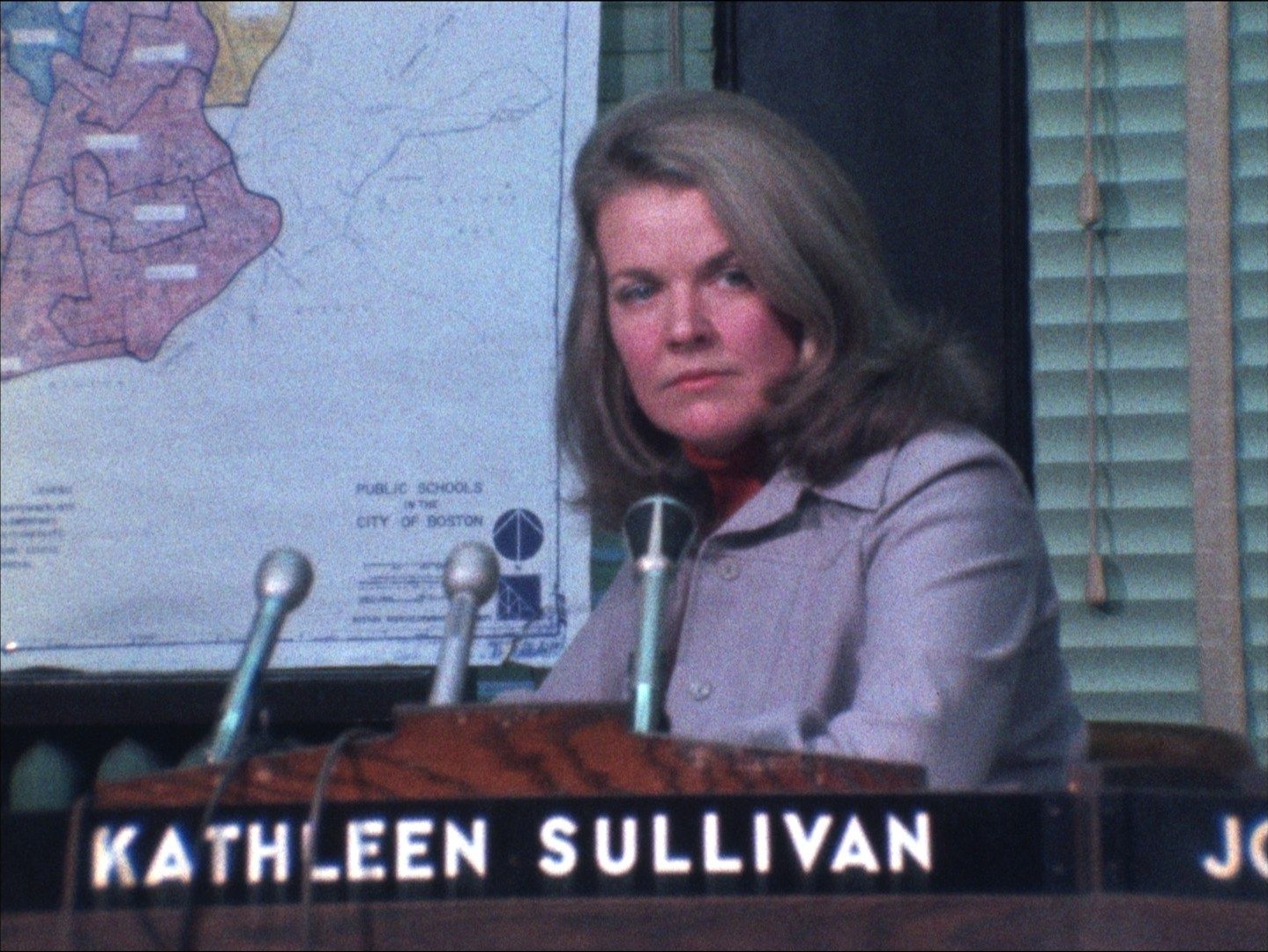
Description: Pam Bullard interviews Kathleen Sullivan (Boston School Committee) about the quality of education in Boston. Sullivan says that she is frustrated because Boston schools have not improved since court-ordered desegregation began in 1974. Sullivan calls Arthur Garrity (federal judge) a "crazy judge." Sullivan says that the desegregation plans since 1974 have been disruptive. She says that neither African American nor white students have benefitted from school desegregation; that students should not be assigned to different schools each year. Sullivan and her assistant discuss Judge Garrity's latest order concerning the Boston schools. Bullard explains to Sullivan that she is putting together a piece which contrasts Sullivan's views on schools and court-ordered desegregation with the views of African American leader Melnea Cass
0:59:44: V: Pam Bullard interviews Kathleen Sullivan in her office. Bullard comments that Sullivan was elected to the School Committee because voters were impressed with her commitment to quality education and better schools. Bullard asks Sullivan how she would have fared if voters were less concerned with the state of the schools and more concerned with politics as usual. Sullivan says that she could have been re-elected. Sullivan says that parents are concerned about education; that a difficult economy coupled with the costs of school desegregation has made school improvement difficult. Sullivan says that the quality of education has not improved in the city since she was elected to the School Committee; that she feels frustrated in her efforts to improve the schools. 1:03:48: V: Bullard asks if it would damage Sullivan politically to admit that desegregation has improved Boston schools. Sullivan says that voters in Boston are beginning to accept desegregation as a fact; that the anti-busing movement has lost steam because people are tired; that voters would be happy to hear that schools have improved, even if the improvement was a direct result of desegregation and a "crazy judge on the scene." Sullivan says that there has been little improvement except in a few schools. Sullivan mentions that Roxbury High School, the Lewenberg School and the Curley School have seen improvement. Bullard asks why Sullivan never mentions the positive impact that desegregation has had on African American students, who now have access to an equal education. Sullivan says that she has been preoccupied with the budget this year; that she visited last year with African American students who had been assigned to three different schools in three years, and had not benefitted from the experience. Sullivan says that the school situation has begun to stabilize this year; that one can begin to talk about better education for African American students this year; that police presence in schools and community hostility to busing prevented a healthy school situation for African American students in 1974 and 1975; that she understands why African American parents might disagree with her because they wanted access to better schools for their children. Sullivan says that she hopes schools can be improved for all students; that she is worried because only 51,000 children attended Boston Public Schools last year, out of a school-age population of 117,000. Sullivan says that she taught African American students in Dorchester; that she thinks desegregation has been disruptive for those students; that the desegregation of Boston schools could have been beneficial for African American students and white students in 1974 and 1975 if it had been implemented differently. 1:10:34: V: An administrative assistant enters Sullivan's office to go over some papers with her. The assistant points out that Judge Garrity has ordered the School Committee to appoint a new Transitional Director of Program Development at South Boston High School. Sullivan and the assistant discuss Garrity's instructions. Sullivan and her assistant tell Bullard that Judge Garrity has approved 160 transfers out of 1,782 requests. Sullivan alludes to Garrity's heavy involvement in managing the Boston schools. 1:12:57: V: Bullard explains to Sullivan how she will edit the final piece. Shots of Sullivan's office. Bullard explains that she has also interviewed Melnea Cass (African American community leader) and wants the final piece to reflect the positions of the two women. Bullard says that both women are leaders, but that their positions on school desegregation reflect their ethnic heritage; that their positions are as far apart as the communities they represent. Sullivan points out that she has done a lot of work with African American students. Bullard says that Sullivan and Cass have a good working relationship because neither harbors strong racial prejudices; that both have friends of other races and backgrounds.
Collection: Ten O'Clock News
Date Created: 09/28/1976
Description: Evening Compass newscast during the first week of Phase II integration of Boston schools. Ed Baumeister reads school attendance statistics and reports on the stoning of a bus in Jamaica Plain. Pam Bullard reports on resistance to busing among Hyde Park parents. She interviews Hyde Park residents Paul Murphy, Ginny McCarthy, William Wager, Sylvia Connaughton, Pauline Haley, and Eddie Remondi. Remondi invokes the civil disobedience of Martin Luther King as a model for the antibusing movement. Gary Griffith reports on complaints of police brutality by Tactical Patrol Force officers in South Boston, Charlestown and Roxbury. Bill MacDonald, Joseph Rowan, William Johnston, Val Williams, and Kathy Fitzpatrick (all of the Boston Police Department) talk about the TPF and respond to the charges of brutality. Baumeister reports on how busing has affected East Boston. He interviews East Boston residents Rose DiScisio, Mina DeFilippo, Mrs. Jay DiGiangregorio and Evelyn Babin about busing. Judy Stoia interviews Dennis Kearney (State Representative), Gloria Conway (Editor, Charlestown Patriot) and Mon O'Shea (Associate Dean, Bunker Hill Community College) about youth violence in Charlestown. Conway, Kearney and O'Shea complain that the media has exaggerated the violence in Charlestown; that youth violence is a problem across the city. Greg Pilkington reports on his conversation with James Nabrit (attorney for the plaintiffs, Brown v. Board of Education) about busing as a means to achieve school desegregation. Pilkington reports that Nabrit says that busing is a necessary remedy for school desegregation.
19:30:00: Ed Baumeister introduces the Evening Compass broadcast. Opening credits roll. Baumeister reports that today's school attendance was 52,631 out of 76,127; that school attendance has risen each day since school opened; that a bus carrying white students was stoned in Jamaica Plain. Baumeister comments that coverage of the busing crisis has moved from daily statistics to larger issues of resistance and a white minority school population. Baumeister reports that Bob Schwartz (Educational Advisor to the Mayor) fears that a minority white school system in Boston will lead to a decline in the quality of education; that Kevin White (Mayor, City of Boston) favors a metropolitan desegregation plan. Baumeister reports that Thomas Atkins (President, NAACP) is not worried about a white minority population in the schools. 19:32:22: Pam Bullard reports on resistance to busing in Hyde Park. Bullard reports that over 600 African American students attend Hyde Park High School with 900 white students; that the school has been calm this year; that police are stationed outside of the school; that there was a heavy police presence in the school last year due to trouble between African American and white students; that residents of Hyde Park are still heavily opposed to busing. Visual: Footage of buses pulling up to Hyde Park High School; of white students walking toward the school; of African American and white students entering the school. Footage of Paul Murphy (Hyde Park parent) saying that he will never support busing; that the school appears calm but there is great tension within. Ginny McCarthy (Hyde Park parent) says that there is very strong antibusing sentiment in Hyde Park; that residents are not able to vent their feelings because of the strong police presence. William Wager (Hyde Park parent) says that he resents seeing police officers lining the streets. Sylvia Connaughton (Hyde Park parent) says that the antibusing movement has been silenced; that all forms of antibusing protest have been outlawed; that she will continue to fight the court order nonviolently. Pauline Haley (Hyde Park parent) says that the strong police presence does not allow for any form of protest. McCarthy says that antibusing residents will fight the court order through political means; that the antibusing movement must stay united and visible; that people should fight the court order, not leave the city. Connaughton agrees that the antibusing movement must stay active and visible; that the antibusing movement will not give up and accept busing. Eddie Remondi (Hyde Park parent) says that the antibusing movement must fight the court order through civil disobedience, citing the example of Martin Luther King; that the movement must fight in the courts and in the political arena. Wager says that the antibusing movement must create turmoil throughout the city through marches and lawful demonstrations; that the movement must avoid violence. 19:37:26: Baumeister introduces Gary Griffith's report on complaints lodged against the Tactical Patrol Force (TPF) by residents of Charlestown, South Boston and Roxbury. V: Footage Bill MacDonald (Boston Police Department) saying that the TPF is a well-disciplined and effective unit with expertise in crowd control. Griffith reports that the TPF are the elite corps of the Boston Police Department; that residents of South Boston and Charlestown have charged the TPF with police brutality. V: Footage of TPF officers gathered at the side of a street in Charlestown. A traveling shot follows one officer to his car. Footage of Joseph Rowan (Deputy Superintendent, Boston Police Department) saying that the TPF reacts to violence directed at them by residents; that there may be isolated cases of brutality; that residents are encouraged to file complaints; that all complaints are investigated. Griffith reports that many TPF officers were previously regular duty police officers; that the TPF includes an emergency services unit, a canine unit, and an anti-crime unit; that TPF officers do not get paid more than regular police officers; that TPF officers may make additional money working overtime. V: Footage of Rowan saying that the TPF officers are carefully selected; that they are trained to work as a group; that TPF officers are stable, hardworking and are not afraid to perform their duties. Griffith reports that TPF officers have been called "drug-crazed animals." V: Footage of William Johnston (Boston Police Department) saying that that TPF officers are not "mean." Val Williams (Boston Police Department) says that the TPF has to deal with difficult situations; that rumors of TPF behavior have been exaggerated. Griffith asks Kathy Fitzpatrick (Boston Police Department) if she is involved in crowd control. She responds that she performs the same job as the men; that residents of South Boston and Charlestown are venting their frustration on the TPF. Griffith reports that TPF officers do not work in the neighborhoods; that they are called into difficult situations in which they must act quickly and forcefully. Baumeister asks Griffith if the TPF cultivates their fierce reputation in the city. Griffith says that the TPF officers like to play up their roles as "the hard guys"; that the TPF officers do not appreciate the rumors that circulate about TPF brutality; that he did not ask the officers about the allegations against TPF in the Rabbit Inn case or other cases. 19:43:16: Baumeister reports that East Boston has been the neighborhood least affected by court-ordered busing; that under Phase II desegregation, the East Boston district remains 95% white, 3% African American and 2% other minority; that the geographical isolation of the neighborhood makes the busing of students difficult; that the district high school will be open to students city-wide next year; that other East Boston schools will be unaffected next year. V: Footage of the entrance of the Callahan Tunnel. Traveling shot from a car driving through the tunnel. Baumeister reports that African American students have been bused into East Boston under Phase II desegregation; that buses are quietly escorted to the schools; that most students bused out of East Boston have chosen to attend city-wide magnet schools. V: Footage of a bus passing through toll booth. Footage of a white male student saying that he chose to attend Boston English High School because of its academic reputation; that he does not mind being bused; that his friends in East Boston tell him not to attend school. A white female student at a bus stop says that people tell her not to go to school. Shots of students boarding a bus in East Boston. Baumeister reports that many residents of East Boston strongly oppose busing. V: Footage of Rose DiScisio (East Boston resident) saying that many in East Boston will not allow their children to be bused; that there will be trouble in East Boston next year if students are bused out. Baumeister reports that DiScisio helps run the East Boston Information Center; that the East Boston Information Center is connected to ROAR (Restore Our Alienated Rights), the city-wide antibusing organization. Baumeister reports on the formation of two organizations formed to counter the antibusing movement in East Boston: EBQE (East Bostonians for Quality Education) and East Boston People Against Racism. V: Footage of Mina DeFilippo (East Boston resident) saying that she sends her children to Martin Luther King School in Dorchester; that her children are happy there; that she is a member of East Boston People Against Racism. Mrs. Jay DiGiangregorio (East Boston resident) says that her child has been sent to the Samuel Adams School in East Boston; that the school is overcrowded and lacks adequate facilities; that a nearby school is not overcrowded; that she will take her child out of the school system before the situation gets worse next year. DeFilippo says that her neighbors have insulted her in the streets for allowing her children to be bused; that she will continue to put her children on the bus. Evelyn Babin (East Boston resident) says that the antibusing movement is not causing trouble; that the other side tries to make the antibusing movement look bad. Baumeister reports that the organizations on both sides of the busing issue have support among East Boston residents; that many residents will wait until next year before getting involved in the busing debate. 19:50:16: Judy Stoia reports that the past two days have been relatively peaceful in Charlestown; that community leaders think reports of violence may have been exaggerated by the media. V: Footage of police officers lined up at an ice cream truck outside of Charlestown High School. Footage of Stoia interviewing Dennis Kearney (State Representative), Gloria Conway (Editor, Charlestown Patriot) and Mon O'Shea (Associate Dean, Bunker Hill Community College) on the steps of the Bunker Hill Monument. O'Shea says that it is normal for adolescents to act up; that the youth violence in Charlestown may not be related to race issues. Conway says that it is easy for kids to get caught up in the action of the moment. O'Shea says that very young children were caught up in an angry crowd on Monday evening; that it is dangerous for children to get caught up in violence. Conway says that racism is present in Charlestown, but not overwhelming; that one racist person can paint most of the graffiti in a neighborhood; that most people are concerned with the safety of their children. Kearney says that the majority of residents are shocked when they hear someone yell racial epithets at a bus of African American schoolchildren. Conway says that she has been active in the antibusing movement; that the antibusing movement has repudiated violence and has conducted peaceful demonstrations. Stoia comments that most people outside of Charlestown see it as a violent community. O'Shea says that violence is a problem in most urban environments; that there is violence in Charlestown, but it is still a good community. 19:55:07: Baumeister reports that the court case which brought desegregation to Boston schools is related to the landmark Brown v. Board of Education case; that 17 lawyers worked to bring the Brown case to the US Supreme Court. Greg Pilkington reports that five of the lawyers from the Brown case have died; that four of those lawyers are now judges (Thurgood Marshall, Spotswood Robinson, Constance Baker Motley and Robert Carter). Pilkington reports on a conversation about busing with another one of the lawyers, James Nabrit, who is retired and living in Washington D.C. Pilkington reports that Nabrit said that quality education is not possible in a segregated school system; that Nabrit believes the antibusing movement is not sincere when they claim that the quality of education suffers under busing; that in a segregated system, African American schools will be of lesser quality than white schools; that both whites and African Americans suffer from the adverse effects of segregation; that busing is necessary remedy if it is the only way to desegregate schools. 19:57:36: Baumeister closes the show. He makes a joke about getting reading lessons before the next show to improve his delivery of the news. Credits roll.
Collection: Evening Compass, The
Date Created: 09/11/1975