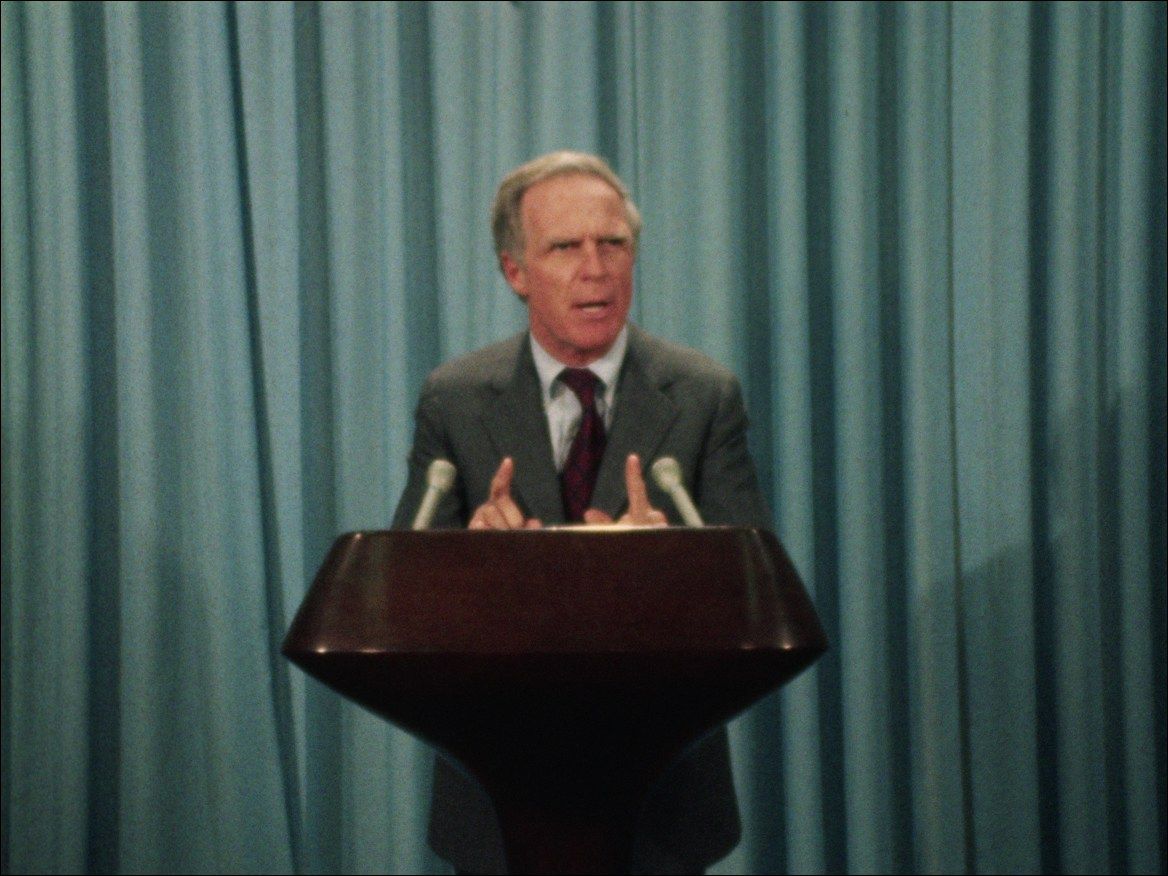
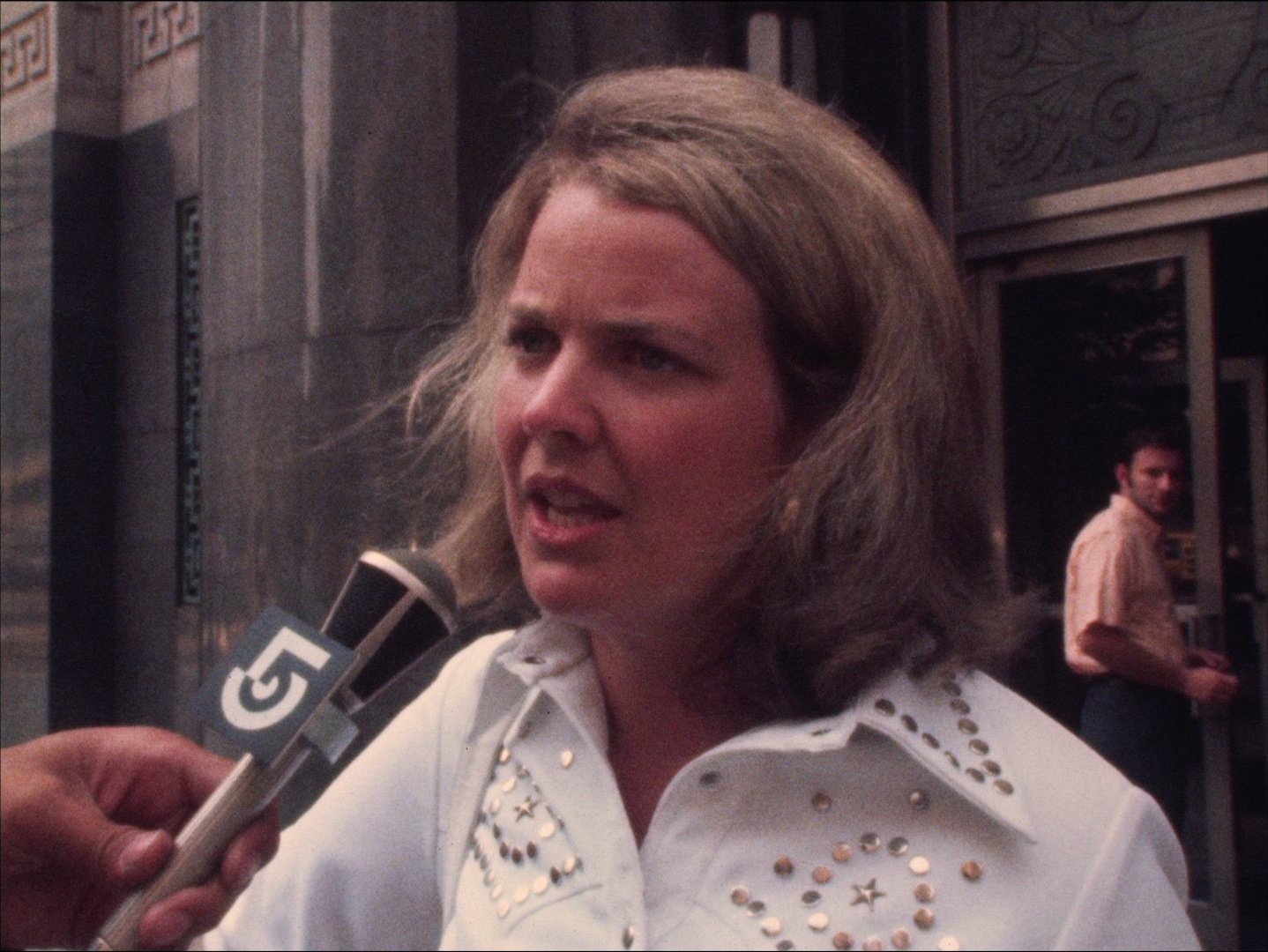
Description: W. Arthur Garrity (federal judge) speaks at a meeting of the Citywide Educational Coalition (CWEC). Jane Margulis (CWEC) introduces Garrity. Laval Wilson (Superintendent, Boston Public Schools), Sidney Smith (Headmaster, English High School), and Ellen Guiney (CWEC) sit on stage. Garrity talks about his efforts to wrap up the school desegregation case. He says that there are a few lingering matters to be handled before he withdraws. Garrity thanks the CWEC for providing factual and reliable information about school desegregation. Garrity talks about a "sea of misinformation" surrounding school desegregation. He refutes rumors that he was involved in hiring teachers and buying supplies. Garrity compliments John Coakley (Boston School Department) on his career in the Boston School Department; he mentions Coakley's integrity and dedication to his job. Garrity sums up the challenges facing the Boston Public Schools; he says that school integration is an ongoing process. Reel 1
0:59:59: Visual: Arthur Garrity (federal judge) speaks at English High School at the annual meeting of the Citywide Education Coalition (CWEC). Garrity is at the end of his involvement in the Boston school desegregation case. Jane Margulis (CWEC) introduces Garrity. Garrity sits on stage, with a group of officials including Laval Wilson (Superintendent of Boston Public Schools), Sidney Smith (Headmaster, English High School), and Ellen Guiney (CWEC). Margulis tells a few anecdotes as she introduces Garrity. Garrity shakes her hand and kisses her on the cheek as he approaches the podium. 1:02:17: V: Garrity thanks Margulis. Garrity tells a story about how he and Margulis spoke at a seminar about school desegregation in Virginia. Garrity says that members of the audience were so impressed with Margulis that she received a job offer on the spot from a school system in Texas. Garrity says that he has not come to talk about the final court orders that he handed down on September 3. Garrity reads from the canon of judicial conduct, which instructs a judge not to comment publicly on court proceedings. Garrity reminds the audience that the court case is not entirely over; that the Boston Teacher's Union has filed an appeal of the court orders issued on September 3. Garrity says that he has extended the time period in which other appeals may be filed. Garrity adds that there is another court hearing on Friday to discuss support services for the Boston Latin School. Garrity talks about a motion filed by the city of Boston to modify one of the court orders dealing with emergency school repairs. 1:07:57: V: Garrity says that he has come to thank the Citywide Education Coalition (CWEC). Garrity commends the CWEC for gathering and disseminating factual information since the beginning of desegregation. Garrity says that there was "a sea of misinformation" during that time period. Garrity cites an article from The New York Times written on September 6. The article says that Garrity was involved in hiring teachers and buying supplies. Garrity says that it is "laughable" to think that he was involved in those areas of the school system. Garrity notes that he was only involved in the hiring of one person; that he helped to hire Jerome Wynegar (Headmaster, South Boston High School). Garrity says that he wanted to acknowledge the debt owed to the CWEC by the court. Garrity adds that he wanted to meet Laval Wilson; that Wilson has a good reputation as a school administrator. Garrity says that he wanted to be present to honor John Coakley (Boston School Department). Garrity says that the Boston school desegregation case "is nothing else if not a hundred stories." Garrity talks about referring to one of the school desegregation plans filed in court as "the Coakley plan," because it was written by Coakley. He adds that a friend counseled him to stop calling it the "Coakley plan" so as not to ruin Coakley's future in the Boston School Department. Garrity says that he had recently written a a memo connected to one of the court orders, in which he commended Coakley's conscientious job performance. Garrity talks about Coakley's integrity and dedication to his job. Garrity says that there never would have been a student assignment system without Coakley. 1:12:56: V: Garrity says that school desegregation is an ongoing process. Garrity talks about the many tasks facing the Boston Public School System. Garrity talks about differences between the city of Boston and the state over the budget for facilities and school repair. Garrity talks about the need to determine which schools will get money to improve facilities. Garrity talks about the question of the Latin Schools. Garrity notes that the Boston Globe recently printed a letter from Robert Dentler (Dean of Education, Boston University) on the subject of the Latin Schools. Garrity denies charges printed in the newspapers that he vetoed a plan to improve the Latin Schools. Garrity adds that no plan has been filed to improve the Latin Schools. Garrity says that critics have misread the court orders; that planning must be undertaken for the Latin Schools. Garrity talks about the challenges involved in plans to improve vocational and occupational education. Garrity notes that the Boston School Committee faces some deadlines in its plans to improve vocational education. Garrity stresses that there is much work remaining to be done in the schools; that "the challenges of the future are greater than the challenges of the past." Garrity commends Rita Walsh-Tomasini (Boston School Committee) for advocating the formation of a committee to work with parents' organizations in the schools.
Collection: Ten O'Clock News
Date Created: 09/23/1985
Description: Christopher Lydon and Gail Harris host a Ten O'Clock News broadcast. Christy George reports on a campaign debate between Republican US Senate candidates Elliot Richardson and Ray Shamie. The report includes footage of their debate at Faneuil Hall. Charles Bennett reports on the race between Democratic US Senate candidates Jim Shannon and John Kerry. Bennett reports that Shannon held a press conference to announce the endorsement of his candidacy by several leaders of Vietnam Veterans' groups. The report includes footage from the press conference featuring Shannon and Vietnam veterans Charles Harris and Sam Mullen. Bennett reviews Kerry's history as a Vietnam veteran and talks about Kerry's relations with veterans' groups. Bennett's report also includes footage from a campaign advertisement for Kerry. Lydon and Harris read headlines about Greg Bemis (arsonist) and a hepatitis outbreak in Worcester. Lydon reports on addresses to the B'Nai Brith convention by Ronald Reagan (US president) and Walter Mondale (Democratic candidate for US president). The report includes footage of both candidates addressing the convention. Harris reports on a power-sharing agreement between Israeli leaders Shimon Peres and Yitzhak Shamir. Harris's report features footage of Peres and Shamir at a press conference. Loretta Roach talks about school desegregation ten years later Christopher Lydon interviews in-studio guests Kim Marshall (Director for Curriculum, Boston Public Schools) and Loretta Roach (parent activist) about the state of Boston Public Schools ten years after the beginning of school desegregation. Marshall talks about the educational agenda for the schools; he says that the schools are beginning to improve. Roach says that she is more concerned about quality education than she is about integrated schools. Roach and Marshall say that the schools must concentrate on serving the present student population, which is poor and minority. Harris reads a news brief about school bus safety standards in the aftermath of a school bus accident in Rehoboth, Mass. Donna Hodge reports on Congressional efforts to protect the striped bass population in the Northeast. Hodge notes that there are disagreements between those who support a moratorium on striped bass fishing and those who are opposed to any quotas on striped bass fishing. Hodge's report includes footage from interviews with Kenny Baker (fisherman), Philip Coates (Director, Massachusetts Marine Fisheries) and Owen DeLong (Emergency Striped Bass Council).
1:00:02: Christopher Lydon and Gail Harris introduce the newscast. The logos of The Ten O'Clock News underwriters Shawmut Bank, New England Telephone, and The Nimrod Press are displayed. 1:00:54: Christopher Lydon reports on the debate at Faneuil Hall between Republican candidates for the Senate seat of Paul Tsongas (US Senator). Christy George reports on the debate. George says that the candidates disagreed on most of the issues. Visual: Footage of Elliot Richardson (candidate for US Senate) and Ray Shamie (candidate for US Senate) debating tax increases and the ERA (Equal Rights Amendment). 1:04:15: Harris reports that Jim Shannon (candidate for US Senate) won the personal endorsement of a number of the leaders of Massachusetts' Vietnam Veterans groups; that opponent John Kerry (candidate for US Senate) is a Vietnam veteran. Charles Bennett reports that Shannon choreographed a "large-scale stunt;" that the media was invited to a press conference where the endorsement was announced. V: Footage from Vietnam- A Television History, of Kerry in Vietnam; of Vietnam protesters in Washington D.C.; of Kerry testifying about Vietnam before the US Congress; of a sign reading "Vietnam Vets against the war." Bennett reviews Kerry's history as a Vietnam veteran and as an activist protesting against the war. V: Footage of Charles Harris (Vietnam veteran) endorsing Shannon at the press conference with other leaders from Vietnam Veterans of Massachusetts Incorporated. Harris wears a pin reading "Vietnam Vets for Shannon." Harris talks about Shannon's sponsorship of a bill declaring a national POW-MIA recognition day. Footage of Shannon talking about the need to provide compensation to the victims of Agent Orange; about the need to improve treatment for veterans who suffer from post-traumatic stress disorder. Bennett reports that Shannon made no mention of Kerry; that Sam Mullen (Vietnam veteran) seemed to represent the sentiment of some anti-Kerry veterans. V: Footage of Mullen saying that Kerry had an outstanding record of service; that he finds Kerry's political commercials offensive; that Kerry's performance was not "above and beyond the call" of duty. Footage of Kerry saying that he has a lot of support from veterans; that different veterans have different beliefs. Bennett reports that the veterans' endorsement of Shannon was intended as a rejection of Kerry. V: Footage of Shannon saying that he did not serve in the military. Bennett stands in front of the South Boston Vietnam Memorial. Bennett reports that some veterans may not support Kerry because he was a fierce opponent of the Vietnam War, as well as a war hero. V: Footage of a Kerry political advertisement focusing on the Vietnam War. Bennett reports that some veterans think that Kerry is denouncing the soldiers as well as the war in this political advertisement. V: Footage of Kerry saying that the soldiers were the victims of the Vietnam War; that he has fought to gain recognition for the contribution of the Vietnam veterans. Bennett reports that many veterans are conflicted by Kerry's dual roles as a war hero and an upper-middle class, well-educated war protester. V: Shot of the South Boston Vietnam Memorial. 1:08:39: Lydon and Harris read the news headlines. Harris reports that Kerry won the endorsement of the Black Political Task Force in Roxbury. Lydon reports that Greg Bemis (arsonist) pleaded guilty to 68 counts of arson; that Bemis admitted to setting more than 100 fires in the Boston area as a member of an arson ring in 1982 and 1983; that the arson ring included former Boston area police officers and fire fighters who were protesting the cutbacks resulting from Proposition 2 1/2. Harris reports that the outbreak of hepatitis in Worcester is being complicated by a rare Delta Virus; that this form of hepatitis is very serious; that city officials are trying to institute a program to vaccinate drug abusers who use needles. 1:10:08: Harris gives the weather report. WGBH promotions for the The Ten O'Clock News and Live From Lincoln Center. 1:11:34: Lydon reads the national news headlines. Lydon reports that Walter Mondale (candidate for US President) accused Ronald Reagan (US President) of "moral McCarthyism" and religious zealotry; that Mondale asked for respect of his religion, family values, and patriotism. V: Footage of Mondale and Reagan addressing the B'nai Brith convention in Washington DC. Lydon reports that Reagan talked about the importance of the separation of church and state. Lydon reports that Gerald Ford (former US President) said that Mondale never complained when Jimmy Carter (former US President) mixed religion and politics. Lydon reports on a humorous exchange between Geraldine Ferraro (Mondale's running mate) and a high school student in Independence, Missouri. 1:12:51: Harris reads the international headlines. Harris reports that Shimon Peres (leader, Israeli Labour Party) and Yitzhak Shamir (leader, Israeli Likud Party) have agreed on the details of a power-sharing agreement. V: Footage of Peres and Shamir at a press conference. Harris reports that the Labour Party will handle defense issues and the Likud Party will handle economic issues; that the parties are optimistic that the agreement will work. Harris reports that the US vetoed a resolution by the United Nations Security Council; that the resolution would have demanded that Israel lift restrictions on the movement of people in Southern Lebanon. Harris reports that the US representative rejected the resolution because it did not address the activities of Syrian and Palestinian forces in other parts of Lebanon. 1:14:13: Report on the winning lottery numbers in Massachusetts, New Hampshire, and Rhode Island. 1:14:34: Christopher Lydon reports on the opening of Boston Public Schools. Lydon notes that it has been ten years since the beginning of busing and school desegregation. Lydon introduces in-studio guests Kim Marshall (Director for Curriculum, Boston Public Schools) and Loretta Roach (parent activist). Lydon notes that Marshall called the 1974 court order a "disaster" because it did not integrate the city with the suburbs. Marshall says that he thought few educational advancements could be made without integrating students of diverse social classes as well as students of different races. Marshall says that integration with the suburbs will never happen; that he is more realistic now. Marshall says that he is now concentrating on addressing the important issues on the educational agenda of the Boston Public Schools. Marshall talks about the need for good school principals, for high expectations for all students, for clear curriculum objectives, for test data about student performance, and for a safe climate in the schools. Marshall says that he was not focused enough on the realities of urban classrooms and schools in 1974. Lydon asks Roach what she has learned as a parent since the beginning of school desegregation in 1974. Roach says that the school system has improved; that there are some administrators in place who are concerned with accountability in education and high expectations for students. Roach says that the schools still have a poor record in dealing with racism. Roach says that the integration of social classes is not possible in Boston Public Schools; that the majority of students are African American, Hispanic, and poor. Lydon asks Roach if the court order has tried to address the needs of white students who have left the school system. Roach and Lydon agree that no one knows the whereabouts of the white students who are assigned to integrated public schools and do not show up. Marshall mentions the Jeremiah Burke School as an example of a school which has shown great improvements since desegregation. Marshall says that school administrators are focused on serving the students who are attending the schools. Lydon quotes Hubie Jones (Dean, Boston University) as saying that the Boston Public Schools are a "disaster." Marshall says that the system has just begun to make improvements; that the system has a very long way to go. Marshall notes that a new policy requires students to have an attendance rate of 85% in order to be promoted to the next grade level. Lydon quotes Robert Spillane (Superintendent, Boston Public Schools) as saying that Robert Dentler (Dean of Education at Boston University and advisor to the federal court) is a "social engineer." Lydon quotes Spillane's predictions that the Boston Public School System will continue to lose white students until it is once again a segregated system. Marshall says that the Boston Public School System has moved beyond school desegregation; that the school system needs to improve in order to attract new students. Roach says that urban schools across the country are in trouble; that African American parents are very concerned with the quality of education in the schools. Roach says that she is more concerned about quality education than she is about integrated schools. Roach says that she has invested a lot of time and effort in the Boston Public Schools; that she feels good about the kind of education her children are receiving. Lydon thanks Marshall and Roach. 1:22:43: Stock report: the Dow Jones average is listed at 1218.86; the volume of the New York Exchange is listed at 91,920,000. 1:23:03: Harris reports reports on school bus safety standards. Harris says that a school bus crash in January in Rehoboth, Massachusetts, could have been much worse without the safety standards adopted in 1977; that the National Transportation Safety Board has determined that Mary Jane Noons (Rehoboth bus driver) could not have avoided the crash; that the board is looking into further safety measures to protect children riding on school buses. 1:23:46: Harris reports that a Congressional committee will force Atlantic states to reduce their catches of striped bass or face a ban on striped bass fishing; that Maryland and Virginia lawmakers oppose quotas on striped bass; that Gary Studds (US Congressman from Massachusetts) and others support the quotas. Donna Hodge reports that Kenny Baker (fisherman) once fished primarily for striped bass. V: Footage of Baker preparing to go out on his boat in Woods Hole, Massachusetts; of Baker piloting his boat out of the harbor. Footage of Baker talking about the challenges involved in fishing for striped bass. Baker says that he feels fortunate to have been able to make a living from fishing for striped bass. Footage of Baker fishing off of his boat. Hodge says that the striped bass population has declined precipitously in Massachusetts. V: Footage of Philip Coates (Director, Massachusetts Marine Fisheries) talking about the decline of the striped bass population due to a combination of overfishing and environmental phenomena. Footage of Baker fishing from his boat. Shots of the coastline and the ocean. Hodge reports that striped bass migrate from the Chesapeake Bay to the North Atlantic every year; that an eleven-state coastal commission has been formed to protect the fish. Hodge reports that regulations on striped bass fishing are very tough in Massachusetts; that some fisherman believe the regulations are excessive. V: Shots of a man fishing off of a boat. Footage of Baker saying that regulations should be equally tough in every state; that a moratorium on fishing for striped bass should be imposed in all of the states along the coast. Shots of a bass being caught on a fisherman's line. Hodge reports that fishermen on Martha's Vineyard are preparing for the annual Striped Bass Derby. V: Footage of Owen DeLong (Emergency Striped Bass Council) saying that an immediate moratorium on striped bass fishing should be imposed along the whole east coast; that the Striped Bass Derby is inappropriate and morally wrong at this time. Footage of workers at a fish processing plant. Hodge reports on the need for uniform regulations among all states involved in striped bass fishing. Hodge reports that Claudine Schneider (US Congresswoman from Rhode Island) has proposed a three-year moratorium on striped bass fishing. V: Footage of DeLong saying that Studds, Edward Kennedy (US Senator) and John Chafee (US Senator) have all filed bills to regulate striped bass fishing; that strict regulations must be imposed in the next few months in order to save the species. Shots of an aquarium exhibit of striped bass. Harris reports that Studds has defended his plan as a compromise between those pushing for a moratorium on fishing and those who want no regulation at all. Harris notes that the organizers of the Striped Bass Derby on Martha's Vineyard have said that the competition will proceed as planned. 1:29:05: Harris and Lydon close the newscast. End credits roll.
Collection: Ten O'Clock News
Date Created: 09/06/1984
Description: Police officers and members of the media are gathered on G Street in front of South Boston High School. Graffiti written in large white letters on the pavement of G Street reads, "Go home, Jerome. You failed." (Graffiti refers to South Boston High School headmaster Jerome Wynegar.) Police are stationed along G Street. A small crowd on the steps of a house jeers at police. News crews with ENG cameras and microphones approach. The crowd refuses to disperse. Police officers in riot helmets assemble in front of the house. Four women and two men are put into police vans. Two of the women struggle with the police, and one man is dragged into the van. The crowd retreats into the house on G Street. James Kelly (South Boston Information Center) talks to a woman about the conflict between the crowd and police. Joseph Jordan (Police Commissioner, City of Boston) confers with police officials outside of South Boston High School.
0:00:24: Visual: Exterior of South Boston High School. Shots of the front of the building; of the school name carved into the stone at the top of the building. Police officers and media are gathered on the sidewalk in front of the school. A fading green shamrock is painted on the pavement of the school yard. Police officers confer about logistics. Boston Police Department vehicles are parked in the school yard. A Boston Police Department truck pulls in front of the of the high school. 0:02:23: V: Police officers are stationed along G Street. Close-up shot of the Boston Police Department insignia on a police officer's uniform. A crowd of white residents is gathered on the on the steps of a house on G Street, not far from the school. White teenagers are gathered outside of the Hill Stop Delicatessen on G Street, near the school. A police officer directs traffic along G Street. A group of police officers are gathered on G Street, near the crowd on the steps of the house. A police officer exits a car parked in the school yard of the high school. A Boston Police Department truck passes by the high school with its lights flashing. The truck pulls to the side of G Street, near the house where the crowd has gathered. Members of the media follow the truck down the street. A police officer gestures to the truck to pull up closer. A woman sits on the hood of a car, surrounded by police officers. 0:05:15: V: The crowd gathered on the steps of the house yells and makes gestures at the police officers. The woman sitting on the car speaks angrily to the police officers. She refuses to move from the car and says that she is not creating a scene. Police officers try to disperse the crowd of media gathered on the street. The crowd on the steps of the house is heard jeering at police. Graffiti written in large white letters on the pavement in the middle of G Street reads, "Go home Jerome. You failed." (Graffiti refers to South Boston High School Headmaster, Jerome Wynegar.) A crowd of onlookers gathers outside of the delicatessen, across the street from the crowd. Police and the media remain in the street. The crowd on the steps of the house begins to sing. 0:06:48: V: A second Boston Police Department truck exits the school yard of South Boston High School and pulls up behind the first truck on G Street. A group of helmeted police officers walks down G Street from the school. The police officers spread out across the street as they walk toward the house where the crowd has gathered. The police instruct onlookers to move down the street, away from the scene. Police officers and officials watch as the helmeted officers disperse the crowd of onlookers. Police officers stand in front of the small crowd assembled on the steps of the house. The police put the woman who had been sitting on the hood of the car into the police truck. The crowd cheers for the woman. One man yells, "Where is the civil rights commission?" A woman runs from the crowd to stop police from putting a second woman into the police truck. Police force both women into the truck, and hold the doors closed. The women inside the truck beat on the doors from the inside. The crowd jeers at police. A young man yells, "Three girls!" 0:10:11: V: A police officer walks down G Street from the high school. Other police officers remain in front of the crowd on the steps of the house. The crowd and the police exchange remarks. The crowd refuses to go indoors. A man is led by police into the second police truck. Police drag a second man from the crowd into the police truck. A police officer pushes the crowd from the steps into the house as another woman is led to the truck by police officers. The woman says, "This is a violation of civil rights." 0:12:11: V: Most of the crowd on the steps has disappeared into the house on G Street. Members of the crowd look out of the window at the action on the street. James Kelly (South Boston Information Center) stands on the steps of the house, listening to a woman describe the conflict between the crowd and the police. The police truck drives slowly down G Street. Police line the sides of the street. A group of police officers confers in the middle of G Street. The media observes the police and the dwindling crowd from the sidewalks. There are still a few people gathered on the steps of the house on G Street. Shot of a quiet side street. Residents sit outside of their houses, enjoying the sun. 0:14:19: V: Joseph Jordan (Police Commissioner, City of Boston) confers with officers outside of South Boston High School. Shot of the exterior of South Boston High School. A few youth are gathered on the steps.
Collection: Ten O'Clock News
Date Created: 05/12/1977
Description: Footage of people addressing the Massachusetts legislature Racial Imbalance Hearing. School Committee President John Kerrigan speaks against forced busing and "snob zoning." He blames Governor Sargent and Senators Ted Kennedy and Ed Brooke, and also comments on the flip of Mayor Kevin White's support. Louise Day Hicks speaks against the Racial Imbalance Law. State Rep. Royal Bolling, Sr. speaks against the procedure of having separate hearings for proponents and opponents, and gets in an argument with the Committee Chairman. Kevin White speaks in favor of integration, but against forced busing. B-roll of audience at the hearing. Mix of sound and silent.
Collection: WCVB Collection
Date Created: 04/03/1974
Description: A group of school bus drivers stand in the lobby of a building. They protest as police officers tell them to leave the building. One of the bus drivers demands to be let into a press conference to be given by Laval Wilson (Superintendent, Boston Public Schools). The bus driver negotiates with school officials, who decide to let him attend the press conference. The bus driver promises not to be disruptive. Wilson speaks at the press conference. Wilson says that school attendance was low because of a strike by school bus drivers. Wilson refers to a chart with school attendance figures. Wilson talks about the bus drivers' strike. He says that an agreement cannot be reached until the drivers rescind their outrageous economic demands. Wilson describes these economic demands. Wilson adds that the union members do not support the strike. He demands the union leaders to let the membership vote on the proposed contract by secret ballot. Wilson answers questions from the media about the strike. Wilson says that the Boston School Department will not hire substitutes to drive the buses. Wilson notes that the School Department cannot afford the economic demands of the bus drivers. He reviews the estimated costs of the bus drivers' demands. Wilson says that he is willing to negotiate with the drivers, but that he will not give into their economic demands. Wilson accuses the union leadership of introducing the demands after negotiations were already in progress. Wilson notes that school attendance may be down because it is the first day back after winter vacation
0:59:58: Visual: A group of school bus drivers stand in the lobby one of the school buildings. The drivers are asked to leave the building by uniformed police officers. The drivers contend that they have a right to be in a public building. A police officer tells them that the building is controlled by the superintendent of schools; that the superintendent has asked the police to escort the drivers from the building. One of the drivers demands to see either Dr. Laval Wilson (Superintendent, Boston Public Schools) or a representative of Wilson. Another police officer tells the drivers to pick a representative; that someone will meet with the representative. The officer tells the drivers to wait outside of the building. Members of the media watch the confrontation between the police officers and the bus drivers. One of the bus drivers is designated as the representative. The representative demands that he be able to attend Wilson's press conference. The representative asks why bus drivers are "second class citizens." A school official approaches the representative. He says that the bus drivers may choose one person to attend the press conference to represent the union's newspaper. The representative asks permission to have three bus drivers wait outside of the press conference room. The representative wants those bus drivers to talk to the media after the press conference. The school official denies his request. The representative negotiates permission to bring another bus driver into the press conference as his photographer. The representative promises not to disrupt the press conference. The school official confers with another official. The second official speaks to the representative of the school bus drivers. The representative tells the official that he has no intention of disrupting the press conference. He asks permission to speak to the media afterwards. 1:05:03: V: Wilson stands behind a table set up for the press conference. He is joined for a moment by the second official. Wilson comments on the "ruckus" outside of the room. Wilson sits down and begins to speak. Wilson reports that there was a strike by school bus drivers in the morning; that he visited several schools this morning; that attendance was low. Wilson indicates a chart detailing school attendance figures. Wilson says that attendance at the high schools was at 67%; that attendance was at 48.8% for the middle schools; that attendance was at 54% at the elementary schools. Wilson notes that district-wide attendance was down 24% from last year. Wilson says that he hopes that attendance will increase; that a settlement is reached with the bus drivers to end the strike. Wilson says that the bus drivers must rescind their three "outrageous economic demands" before a settlement can be reached; that these economic demands were not made until November; that their only demand before November was to resolve the issue of terminated drivers. Wilson says that the drivers have demanded a pension benefit, full coverage of medical benefits and an extra mid-day break; that a settlement can be easily reached outside of those three economic demands. Wilson says that the leaders of the union are supporting the strike; that the majority of bus drivers do not support the strike. Wilson urges the leadership to call a meeting of the union membership. Wilson says that the leadership should let the membership vote on a new contract by secret ballot; that the membership would support the contract put forth by the Boston School Department. Wilson notes that there have been no major disruptions in the schools. 1:10:58: V: A reporter asks Wilson about contingency plans to hire more drivers. Wilson says that the school department will not try to substitute other drivers for those on strike. Shot of the press conference from the side of the room. Members of the media are visible. Wilson sits in the center of a long table. A reporter asks if parents support the strike. Wilson says that parents would like to have their children in school. Shot of Meg Vaillancourt (WGBH reporter). Wilson adds that the school department cannot afford the economic demands of the bus drivers. A reporter asks if the timing of the strike has worked in favor of the school department. Wilson says that he does not know. Shots of members of the media; of the representatives of the school bus drivers. A reporter asks Wilson about his belief that the membership of the union does not support the strike. Wilson repeats his challenge to the union leadership to let the membership vote on a contract by secret ballot. Vaillancourt asks Wilson to comment statements by the union. She says that the union has noted that their economic demands are affordable and that Wilson is trying to negate benefits which are already in their contract. Wilson says that the union has never had pension benefits, full coverage of medical benefits, or an extended mid-day break. Wilson reviews the breaks to which the bus drivers are entitled according to the last contract. Wilson says that the new economic demands are not in the contract. Wilson adds that the school department has estimated costs to be $800,000 for medical insurance, $450,000 for pension benefits and $450,000 for the additional break time. A reporter asks if Wilson will tolerate a lengthy strike. Wilson says that he would like to resolve the issues; that the school department is willing to negotiate on all of the issues except the economic demands. Wilson says that he was shocked when the three economic demands were added at the last minute. Wilson says that he has not set a deadline for resolving the strike; that he wants to negotiate with the bus drivers. Wilson notes that negotiations were in their fifth month before the bus drivers added the economic demands. Wilson says that progress had been made on all of the issues before the economic demands were introduced. 1:17:34: V: A reporter comments that the union added the demands because the school department was trying to introduce "giveback issues." Wilson says that the "giveback issues" would have been resolved. A reporter asks why the leadership would want a strike. Shot of the attendance chart. Wilson says that the union leadership has a "credibility gap" because they introduced the economic demands after negotiations were in progress. Wilson accuses the union leadership of being "unreasonable." Wilson explains that the school department picks up costs in the contract which are not covered by the bus companies. A reporter asks how much money the school department is saving due to the strike. Wilson says that he does not know. A reporter asks about the costs of 11,000 MBTA passes handed out to students. Wilson says that it depends on how many MBTA passes are used. A reporter asks if he knows why some students did not attend school. Wilson says that he does not know. Wilson notes that it is the first day back after winter vacation.
Collection: Ten O'Clock News
Date Created: 01/02/1986
Description: Boston Police Department press conference with Police Commissioner Robert DiGrazia, Superintendent Joseph Jordan, Deputy Superintendent Lawrence Quinlan, Captain Morris Allen, and Captain Fred Conley. Steve Dunleavy (spokesperson for DiGrazia) is the moderator. The speakers are seated at a table featuring an array of street weapons used against police in a riot in South Boston on the previous day. DiGrazia says that violence and disruptions of public order will no longer be tolerated. He says that the police department is actively investigating participants in the violence at the previous day's demonstration in South Boston. DiGrazia says that the police are gathering evidence against the South Boston Marshals and others for engaging in violent actions. DiGrazia notes that the demonstrators in South Boston knowingly violated the restrictions of their parade permit. Some drop out in the middle of the video. Reel 2 of 2.
1:00:03: Visual: Press conference with Robert DiGrazia (Police Commissioner, City of Boston), Captain Morris Allen, Superintendent Joseph Jordan, Deputy Superintendent Lawrence Quinlan, and Captain Fred Conley. Steve Dunleavy (spokesperson for DiGrazia) is the moderator. DiGrazia and the police officers sit at a table displaying bottles, rocks, pipes and bricks which were used against police in a demonstration in South Boston the day before. DiGrazia takes questions from reporters. A reporter comments that one anti-busing organization has decided to take to the streets. DiGrazia replied that statements like that will be considered conspiratorial and could be used against the organization in court. DiGrazia says that the police will use whatever force is necessary to keep order. DiGrazia says that the police department has been working with the state police and the MDC police since 1974; that the Boston police will continue to rely on those police forces for support. DiGrazia says that he is compiling facts and evidence to be presented before a grand jury; that the police will arrest those who participate in violence or who violate the civil rights of others. DiGrazia says that a parade permit was granted to demonstrators in South Boston yesterday; that the demonstrators knowingly violated the permit when they marched up to the high school to confront police. 1:02:52: V: A reporter asks DiGrazia if the police department has the support of the mayor. DiGrazia says that the mayor supports police efforts to enforce the law and protect the community. DiGrazia says that he is concerned with the lack of prosecutions of those violating the court order; that he was pleased when the US Justice Department began investigating cases in 1975; that he is particularly dismayed at the lack of prosecutions in the South Boston District Court. DiGrazia says that he does not know where the demonstrators in South Boston procured tear gas. DiGrazia says that the police is now taking a more forceful approach against disruptors of public order. A reporter asks if past policies of tolerance were a mistake. DiGrazia says that they began with a low visibility policy in September of 1974; that the policy worked in all areas of the city except South Boston; that in 1975, they changed tactics and were more forceful; that the police have been tolerant of demonstrations up until now; that they will no longer tolerate violence during demonstrations. DiGrazia says that expenses are not an issue when city residents are injured and property is damaged; that the money will be made available to the police to deal with these problems. 1:06:02: V: A reporter asks DiGrazia about how the police handled demonstrators at the Citywide Coordinating Council (CCC) meeting. Shot of weapons on table. DiGrazia says that police tried to take their cues from Arthur Gartland (CCC), who ran the meeting; that from now on, police will act when they think it is necessary. DiGrazia says that he has not been in contact with Judge Garrity about the change in police deparment tactics. Dunleavy adds that a list will be made available of the 80 police officers injured in yesterday's demonstration in South Boston; that 13 arrests were made at the demonstration. DiGrazia says that the police department's new policy on demonstrations will not affect the way police handle their duties in and around the schools. DiGrazia says that he will not station more police in South Boston permanently; that he will send more officers there if it is necessary. A reporter comments that demonstrators were using radios to monitor police activity. A reporter asks if police department will change radio frequencies to avoid being monitored. DiGrazia says that police department may explore other means of communications in order to avoid radios altogether. 1:09:24: V: DiGrazia invites the reporters to question the other officers who were all present at the demonstration in South Boston on the previous day. A reporter asks if it is a small group of people who are actively participating in violence. DiGrazia replies that he has seen demonstrations with as few as 150 people; that 1,000 people were present at yesterday's demonstration; that there is a group of 300-400 "hoods" who are leading the violence; that the police department is gathering evidence on the participation of the South Boston Marshals in violent acts. DiGrazia says that the police department is actively investigating actions connected to yesterday's demonstration; that he will not put a time limit on the investigation. DiGrazia thanks the media and leaves. 1:10:41: V: DiGrazia exits. Members of the media talk among themselves. Jordan talks to members of the press informally. 1:12:07: V: Judy Stoia stands next to map of South Boston. Allen refers to the map as he charts out the course of the previous day's demonstration. Allen says that one group of marchers began at the Broadway MBTA station and proceeded up West Broadway to Perkins square; that the other group of marchers began at the Andrews MBTA station and marched up Dorchester Avenue to Perkins Square;that the marchers were supposed to proceed to the Dorchester Heights Monument. Allen says that the marchers chose to march up East Broadway to G Street, heading toward the front of the high school; that there were over 2,000 marchers gathered in Perkins Square. Stoia and crew prepare to leave.
Collection: Ten O'Clock News
Date Created: 02/16/1976
Description: Participants in the Procession Against Violence are assembled at City Hall Plaza. A WGBH camera crew records the event from the back of the crowd. Edward Brooke (US Senator), Michael Dukakis (Governor of Massachusetts), Kevin White (Mayor, City of Boston), and Kathryn White are visible at the front of a large crowd gathered on City Hall Plaza. Robert Golledge (Vicar, Old North Church) introduces the speakers and is heard leading the crowd in the Lord's Prayer. Michael Haynes (Twelfth Street Baptist Church) and Humberto Cardinal Medeiros (Archdiocese of Boston) lead the crowd in prayers. Michael Germinal Rivas (Chaplain, Boston University) and John Zanetos (Greek Orthodox Cathedral) are heard addressing the crowd. Paula Lyons (aide to Mayor Kevin White) leads the crowd in singing "God Bless America." The crowd breaks up and departs. Judy Stoia and Pam Bullard ask white, Asian American and African American attendees why they attended the Procession Against Violence. Interviewees speak out against violence and talk about the importance of the march. Tape 3 of 3.
0:58:46: Visual: Paricipants in the Procession Against Violence are gathered at City Hall Plaza. A WGBH crew is on the ground with the crowd. Audio of the police leading a man away from the crowd. The media and the members of the St. William's School band mix with the crowd. Shots of crowd members. 0:59:49: V: Michael Haynes (Twelfth Street Baptist Church) addresses the crowd from the podium. Shots of Haynes at podium; of assembled speakers behind him. Haynes leads the crowd in a prayer for peace. Shot of Edward Brooke (US Senator) from behind. The Reverend Robert Golledge (Vicar, Old North Church) leads the crowd in the Lord's Prayer. Shots of Kevin White (Mayor, City of Boston) and Kathryn White reciting the Lord's Prayer; of Michael Dukakis (Governor of Massachusetts) from behind; of Brooke. Golledge introduces Humberto Cardinal Medieros (Archdiocese of Boston), who leads the crowd in prayer. Shots of Medeiros at podium; of speakers assembled behind Medeiros; of marching band in front of podium; of crowd. Sirens wail during Medeiros' prayer. A fire truck is visible, passing by the plaza. Golledge announces Reverend Germinal Rivas (Chaplain, Boston University). Rivas leads the crowd in prayer. Shots of crowd; of police strolling through crowd; of media documenting the procession; of Kevin White and Kathryn White listening to Rivas. 1:08:21: V: John Zanetos (Greek Orthodox Cathedral) addresses the crowd. Traveling shot through assembled crowd. Shots of crowd at far edge of plaza, listening to the prayer. Golledge announces that Paula Lyons (aide to Mayor Kevin White) will lead the crowd in singing "God Bless America." Shots of crowd singing "God Bless America." The crowd applauds. The crowd breaks up and begins to leave the plaza. Shots of people leaving the plaza. Stoia is heard interviewing a man about why he marched. The man says he is concerned about the violence and he thinks it is important to support non-violent action. 1:13:41: V: The crowd breaks up. Pam Bullard interviews members of the crowd. An Asian American woman says that she is a student at the University of Massachusetts; that she is concerned about violence and felt it was important to support the march. A white male student says he is glad that a lot of people came out for the march; that he thinks it is important for the people of Boston to show that they do not support violence. A female student says that she came because she opposes violence; that the march was important. An older white male from Cambridge says that he came out to support peace. Bullard asks a young boy why he came to the march. He says that he came because his mother said so. A young African American man says that the march is "a black and white thing." A young white man says that he feels badly about the violence; that he hopes to help find a solution. Another young white man says that the march promotes unity; that he is glad that there was a good turnout. An African American woman says that she hopes the march helps to stop the violence; that she wants her nieces to be able to go to school safely; that she does not think the march will help the situation. Bullard interviews an African American family about the march. The mother says that she does not support violence. The father says that a lot of people attended the march; that it should help the situation; that he marched in order to express his objection to violence. One of their sons says that he marched because his parents did. 1:18:25: V: Bullard asks an older white man why he participated in the march. The man says that the city must be saved; that it is important for residents to show solidarity with one another; that the march will not solve the problem, but it can help. An older woman says that the violence in the city is getting worse; that the march was important because it brought citizens, city officials, and the clergy together; that the judicial system must be improved; that the courts must punish perpetrators of violence.
Collection: Ten O'Clock News
Date Created: 04/23/1976
Description: Reel 2 of 1983 Boston Mayoral Debate, held at Simmons College. Candidates are Larry DiCara, Ray Flynn, Robert Kiley, Dennis Kearney, David Finnegan and Mel King. The moderator is professor Carroll Miles. Journalists on the panel are Andy Hiller, Michael Rezendes, William Robinson, J. Jordan. Robert Kiley finishes his opening remarks. Mel King, Fred Langone and Eloise Linger maker their opening remarks. Robert Kiley talks about restoring the faith of residents in city government and making the city government work efficiently. He talks about the need to eliminate corruption, the need to establish sound fiscal management and the need to reduce crime. Kiley says that the Boston Public School System must be reformed. Mel King discusses his professional experience and long history of work within the community. King talks about the importance of crime prevention and the need to work with community youth. King states his intention to change the climate of fear in the city. King mentions his proposals for addressing unemployment in the city, including the "Boston jobs for Boston people" program. Fred Langone talks about his years of service to the city and his experience in dealing with the city's finances. Langone condemns the fiscal mismanagement of the present administration. Linger addresses US government foreign policy, school desegregation and racism, women's rights and the anti-abortion referendum. Linger talks about the housing shortage and other social problems. She advocates less spending on defense and more spending on housing and other social issues.
0:59:20: Robert Kiley (candidate for mayor) speaks at a mayoral debate at Simmons College. Kiley talks about restoring the faith of residents in city government; about making city government work efficiently. Kiley says that corrupt practices must be eliminated from city government; that sound fiscal management must be established. Kiley notes that crime must be reduced; that the school system needs reform; that the Boston Public School System has the highest dropout rate and absentee rate of any urban school system in the nation. Kiley says that he has the background, skills and experience to govern the city; that he has proven experience in government; that he has tackled difficult problems in the city like school desegregation and reform of the MBTA. Kiley says that the next mayor must adopt a system of government based on merit and professionalism. Kiley proposes that all candidates make a voluntary pledge not to accept contributions from city or county employees. Kiley notes that he has made a financial disclosure statement. He proposes that all candidates do the same. Kiley adds that the city needs a mayor with a sense of integrity, decency and a commitment to justice. The audience applauds. 1:03:55: Carroll Miles (professor, Simmons College) introduces Mel King (candidate for mayor). King says that he has been working in the Boston community for thirty years; that he is currently teaching at MIT (Massachusetts Institute of Technology); that he served as a state representative for ten years. King says that crime prevention is important; that he would put people on the streets to work with community youth; that he wants to change the climate of fear in the city. King says that he campaigned for mayor in 1979; that he advocated a "Boston jobs for Boston people program during that campaign; that the program guaranteed 50% of Boston jobs for Boston residents. King notes the high unemployment rates in East Boston, Charlestown, South Boston, Roxbury. King says that 85% of the jobs in Boston are now held by non-residents; that the Occupational Resource Center should serve as a training center for unskilled Boston workers; that this program would make a difference in the lives of city residents. The audience applauds. 1:08:55: Miles introduces Frederick Langone (candidate for mayor). Langone says that the present administration has had deficits exceeding $25 million per year; that the deficits persisted despite relief from the state government; that the state government has assumed welfare costs, half of the MBTA budget and the full costs of running the Suffolk County Court. Langone reminds voters that he was able to expose the fiscal mismanagement and extravagances of the present administration. Langone talks about his knowledge and experience in dealing with the city finances. Langone decries the sale of the Soren Water Commission. Langone talked about his involvement in resolving disputes about the Tregor Bill. Langone says that he was the first to speak out against the present proposal to defer tax breaks for real estate owners. Langone says that he has served the city for twenty years; that he has the courage to defend his positions. Langone notes that there is a movement to depress the Central Artery. He reminds voters that he made a suggestion to depress the Central Artery thirty years ago. Langone closes by saying that he has a strong record of service to the city. The audience applauds. Visual: Shot of Langone and Eloise Linger (mayoral candidate, Socialist Workers Party). 1:14:10: Miles introduces Linger. Linger says that she is familiar with the problems of working people; that she is a working mother employed as a stitcher in the garment industry; that she recently went off unemployment. Linger addresses US government foreign policy. She accuses the federal government of dragging the nation into a "new Vietnam" in Central America. She says that the "war machine" of the federal government puts a drain on resources; that these resources could be used to remedy social problems. Linger says that racism exists in Boston at the highest levels; that she is opposed to attempts to roll back gains made in school desegregation. Linger proposes to extend busing for school integration and to hire more teachers for the schools. Linger says that the present city administration has encouraged racist violence through its failure to publicly condemn the killers of William Atkinson. Linger says that there is growing opposition to women's rights at the highest levels; that she is opposed to the pending anti-abortion referendum; that opposition to women's rights at the highest levels encourages rapists and other violent attacks on women. Linger says that a government of working people could solve the problem of unemployment; that "the rich rule and rob Boston." Linger advocates less spending on defense and more spending on housing and other social issues. Linger advocates putting people to work to build affordable housing, public transportation, public health care clinics and new schools. Linger says that the elimination of the Pentagon budget could pay for needed programs. Linger says that banks, corporations and insurance companies in Boston enjoy huge tax breaks at the expense of working people; that the working people of the city have a right to know where the money is. Linger closes by urging everyone to attend the demonstration against US policy in Central American on May 14, and to attend her campaign rally on May 7 in Kenmore Square. Linger holds up a flyer for the campaign rally. The audience applauds.
Collection: Ten O'Clock News
Date Created: 04/25/1983
Description: Profile of Robert Spillane, superintendent of Boston Public Schools as he prepares to leave Boston for a post in Virginia. Vaillancourt reports on Spillane's accomplishments in improving the Boston Public School System and cutting the school budget deficit. Interview with Spillane where he compliments the teaching staff in the Boston Public Schools and talks about his opinion of Arthur Garrity. He says that Garrity's stewardship of the school system was a disaster. Interview with Peter McCormick, the President of the Bank of New England, about Spillane's good relationship with the business community. Vaillancourt speculates about whether Spillane will one day pursue a career in politics.
1:00:21: Visual: Footage of Robert Spillane (Superintendent, Boston Public Schools) speaking to an audience. Spillane says that the quality of every school must be improved in order for school desegregation to be considered a success. Meg Vaillancourt reports that Spillane took over as Superintendent of the Boston Public Schools four years ago; that Boston was undergoing school desegregation. V: Shot of a young African American boy watching an anti-busing march. White protesters chant, "Here we go, Southie." Shot of a police officer pushing an angry white man against a car. Vaillancourt reports that the quality of education was very low. Vaillancourt notes that school officials admitted that more than one-third of the graduates from Boston Public Schools could not read. V: Shots of students descending an elevator at English High School. Shot of an African American male student reading at a his desk; of two white male students sitting together in a classroom; of students in a classroom. Shots of a group of students sitting together in a study hall; of a teacher in the study hall. Vaillancourt reports that there were six superintendents during the first seven years of school desegregation in Boston. Vaillancourt reports that Spillane was committed to changing the schools in Boston. V: Shot of Spillane seating himself as he prepares to speak to an audience. The audience applauds. Vaillancourt reports that Spillane instituted the first changes to the school curriculum in fifteen years; that promotion standards were established; that students' test scores began to improve. V: Shot of two elementary school students seated in front of computers. A teacher looks over the shoulder of one of the students. Vaillancourt reports that Spillane shares credit for success with his staff. V: Footage of Spillane being interviewed. Spillane says that there is an excellent teaching staff in the Boston Public Schools. Spillane says that the rising levels of student achievement reflect the dedication of the teaching staff. Spillane says that he provided help and direction. Spillane says that he challenged the teachers by publishing the test scores of each school. Shots of Spillane in his office. Vaillancourt reports that Spillane is known as the "velvet hammer." V: Shot of a hammer with a velvet grip on display in Spillane's office. Vaillancourt reports that Spillane is credited with pushing Arthur Garrity (federal judge) aside; that Spillane allowed the Boston School Department to take charge of the schools once again. Vaillancourt notes that Garrity is slowly handing over his control of the Boston Public Schools. V: Shot of Garrity at a community meeting in January of 1976. Vaillancourt reports that Spillane has few kind words for Garrity. V: Footage of Spillane being interviewed by Vaillancourt. Spillane says that Garrity was a "disaster"; that Garrity was not a good manager of the schools. Spillane says that Garrity did what was necessary to desegregate the schools; that Garrity tried to manage the schools as well. Spillane says that a federal judge has no qualifications to manage a school system. Vaillancourt reports that Spillane considers his ability to manage the school system as his strength. Vaillancourt reports that the school budget had tripled in the decade before Spillane's arrival. Vaillancourt reports that Spillane cut the school deficit from $30 million to $3 million within one year. Vaillancourt notes that Spillane got Boston businesses involved in the schools; that Boston businesses have given over $5 million in additional funds to the schools. Vaillancourt adds that the Boston Public Schools have the largest private endowment in the nation. V: Footage of a woman introducing Spillane to an audience. Spillane rises from his seat, shakes the woman's hand and prepares to address the audience. The audience applauds. Shots of audience members. Footage of Spillane receiving an award in front of an audience. Footage of Peter McCormick (President, Bank of New England) being interviewed. McCormick says that Spillane is highly respected by the business community. McCormick says that Spillane understands the problems of the business community; that Spillane has been willing to be flexible. McCormick says that the business community responded in kind to Spillane. Vaillancourt reports that Spillane is leaving Boston for Virginia; that Spillane will make an additional $30,000 per year in his new job. Vaillancourt reports that Spillane made $70,000 per year in Boston; that his salary is considered low. V: Footage of Spillane talking with a small group of people. Spillane shakes hands with an Asian American woman. Footage of Spillane being interviewed by Vaillancourt. Spillane says that superintendents are like athletes in that they have a short span of time in which to perform well and make money. Spillane says that there is a good market for superintendents. Vaillancourt reports that some are speculating that Spillane is looking for a political appointment in Washington DC. in the future. Vaillancourt notes that Spillane is a former Deputy Commissioner of Education in New York. V: Shot of Spillane socializing with a group of people at a gathering. Footage of Spillane being interviewed by Vaillancourt. Spillane says that public service is a great opportunity; that he loves public service. Spillane says that he may enter politics in the future; that he might like to be a city councillor or school committee member someday.
Collection: Ten O'Clock News
Date Created: 06/28/1985
Description: Gail Harris and Meg Vaillancourt host a Ten O'Clock News broadcast. Harris reads the headlines. Eileen Jones reports that Laval Wilson (Superintendent, Boston Public Schools) has announced to the Boston School Committee that $1.2 million must be cut from the school budget. Jones notes that school administrators and staff will be affected by the cuts. Jones adds that the Boston School Committee has voted in favor of appointing a school official to oversee negotiations with the school bus drivers' union, with the goal of signing a contract before the beginning of school. Jones' report includes footage of Jim Barrett (President, Bus Drivers Union) and footage of Wilson and school committee members at a school committee meeting. Harris reports that Grace Romero (Boston School Committee) has been indicted for violating state election laws. The report includes footage of Romero speaking to the media. Vaillancourt reports on opposition by the Boston Police Detectives Union to a decision by Francis "Mickey" Roache (Commissioner, Boston Police Department) to reassign thirty detectives to street patrol duty. Vaillancourt's report includes footage from interviews with Michael Muse (attorney, Boston Police Detectives Union) and Dan Mahoney (President, Boston Police Detectives Union). James Robbins reports that the Reverend Allan Boesak (South African anti-apartheid leader) was detained by South African security forces after giving a speech at Capetown University. Robbins notes that Boesak had planned to lead a march on Pollsmoor Prison the next day. Vaillancourt reports that the US State Department has lodged a protest concerning the arrest of Boesak. Vaillancourt's report is accompanied by footage of Charles Redman (Spokesman for the US State Department) at a press conference. Tug Yourgrau interviews Janet Levine (South African journalist) about Nelson Mandela (jailed ANC leader). Levine talks about Mandela's arrest, his leadership, his opposition to apartheid and his wife, Winnie Mandela. The interview is accompanied by still photographs and footage of Nelson and Winnie Mandela. Vaillancourt reports on an army coup in Nigeria. Her report is accompanied by footage of Muhammadu Buhari (leader of Nigeria) delivering a speech. Harris reports that British Airways has grounded several jets due to possible engine problems. Her report is accompanied by footage of an exploded jet on a runway in Manchester, England. Vaillancourt reports that the Pentagon has canceled the production of an airgun designed to hit Soviet helicopters because it did not work properly. Her report is accompanied by shots of military weaponry and footage of Casper Weinberger (US Secretary of Defense) at a press conference. Harris reports on a decline in the US poverty rate and on a fine imposed on Crocker National Bank in San Francisco for a failure to report currency transactions. Vaillancourt reports on the racketeering trial of Gennaro Angiulo (alleged Mafia boss). The report is accompanied by court drawings of the trial. Harris reports on the ground-breaking ceremony for Roxbury Community College. The report includes footage of Bruce Bolling (Boston City Council) speaking at the ceremony. Harris interviews in-studio guest Brunetta Wolfman (President, Roxbury Community College) about the college. Wolfman talks about the new campus and the need to provide education and training to urban populations. Wolfman talks about a divide between the educated and uneducated populations in Massachusetts
1:00:06: Meg Vaillancourt introduces The Ten O'Clock News. 1:02:11: WGBH promotion for the evening newscast. The logos of The Ten O'Clock News underwriters Shawmut Bank, New England Telephone, and The Nimrod Press are displayed. Gail Harris introduces the show. Harris talks about an upcoming story about the groundbreaking for Roxbury Community College. 1:03:20: Meg Vaillancourt reads the headlines. Vaillancourt reports that the Reverend Allan Boesak (black South African leader) has been placed under house arrest by the South African government. Vaillancourt reports that Casper Weinberger (US Secretary of Defense) has canceled a new air defense gun because the weapon is not worth the cost of development. 1:03:38: Harris reads the headlines. Harris reports that the US poverty rate declined last year for the first time in ten years; that the auto insurance industry in Massachusetts wants to increase rates next year by at least 12%. Harris reports that the Boston School Committee has been forced to cut its budget by $1 million; that the Committee has cut two dozen administrative jobs; that the Committee has not cut any teaching jobs. Harris introduces a report by Eileen Jones. 1:04:06: Eileen Jones reports that tenured teachers and programs were spared by the Boston School Committee; that administrators and staff were subject to budget cuts by the committee. Visual: Shot of a white female teacher in a classroom with elementary school students. Jones reports that Dr. Laval Wilson (Superintendent, Boston Public Schools) announced that $1.2 million must be cut from the school budget; that that school administrators and staff will be hit hard by the cuts. V: Shots of Wilson, and School Committee members Kevin McCluskey and John Nucci at a Boston School Committee meeting; of a cameraman at the meeting; of the members of the School Committee at the front of the School Committee chambers. Jones reports that the jobs of thirteen administrators and seven members of the technical support staff will be eliminated. Jones reports that administration will be cut by 20% on the School Site Management Project; that the jobs of two members of the support staff for the School Site Management Project will be cut; that consultants will be eliminated from the School Site Management Project. V: On-screen text details the specific budget cuts. Jones reports that the mayor and the Boston City Council have forced the school budget cuts; that the Boston School Department will receive $5 to $7 million dollars less than they asked for in their initial budget. V: Shots of audience members at a School Committee meeting; of an audience member taking notes; of a stenographer's hands as she transcribes the meeting; of School Committee members Jean McGuire and John O'Bryant at the meeting; of Wilson at the meeting; of the members of the media at the meeting. Jones reports that Wilson and Ray Flynn (Mayor of Boston) made an agreement; that Wilson has agreed to eliminate $1.2 million from the budget; that Flynn has agreed to ask for $2.5 million in additional money for the schools. V: Shots of Shirley Owens Hicks (Boston School Committee); of Joseph Casper (Boston School Committee). Footage of John Grady (Boston School Committee) speaking at the meeting. Grady says that Flynn may not fight hard for additional money for the schools; that the City Council may not grant additional money. Grady says that Flynn should not determine the school budget. Footage of Wilson speaking at the meeting. Wilson says that he and Flynn made an agreement; that they will both do their best to stand by the agreement. Jones reports that the School Committee must also sign a contract with their bus drivers; that the contract needs to be signed before school begins in eight days. V: Shots of yellow school buses lined up on a street. Footage of Jim Barrett (President, Bus Drivers Union) speaking at a meeting. Barrett says that Wilson needs to appoint an overseer to negotiations with the bus company. Footage of Casper speaking at a meeting. Casper says that someone needs to take the lead on this issue. Casper says that Wilson should appoint a top official in the School Department to oversee contract negotiations with National Bus Service, Transcom, the Bus Drivers Union, and the Boston School Department. Casper says that an agreement must be reached before school starts. Jones reports that the School Committee voted in favor of cutting $1.2 million from the budget; that the Committee voted in favor of appointing a school official to oversee negotiations with the bus drivers. V: Shot of School Committee members at a meeting. Jones stands in front of the Boston School Committee headquarters. Jones reports that some administrators and staff may be bumped down to teaching positions instead of losing their jobs; that previsionary teachers will lose their jobs instead. Jones reports that the bus drivers are pleased to have a school official involved in negotiations; that the bus drivers want the school official to be able to give immediate approval of an agreement. 1:07:19: Harris reports that Grace Romero (Boston School Committee) has been indicted on four counts of violating state election laws; that Romero has been accused of perjury and filing false nomination papers; that Romero will appear in Suffolk Superior Court on Thursday. V: Footage of Romero speaking to the media. Romero says that she did not ask for a birth certificate or drivers license when asking voters to sign her nomination papers; that her volunteers only ask people if they are registered voters. She says that she filed the papers properly. Harris says that Romero could be sentenced to a year in prison or a $1,000 fine if found guilty of filing false nomination papers; that Romero could be sentenced to up to twenty years in prison and a $1,000 fine if found guilty of perjury. Harris notes that Romero's name will remain on the ballot in September. 1:08:18: Vaillancourt reports that Francis "Mickey" Roache (Commissioner, Boston Police Department) has recently decided to reassign city detectives to neighborhood patrol work; that members of the Boston Police Detectives Union have called the decision unfair and illegal. V: Shots of members of the Boston Police Detectives Union outside of their headquarters. Vaillancourt reports that the members of the union oppose the reassignment of thirty detectives. V: Footage of Michael Muse (attorney, Boston Police Detectives Union) being interviewed outside of the union headquarters. Muse says that the union will ask the State Labor Relations Commission to rule on the issue. Muse says that the city has violated the state's collective bargaining law by refusing to meet and confer with the union before transferring the detectives. Vaillancourt reports that 30 plainclothes investigators have been assigned to uniformed patrol duty. V: Shots of detective union members entering their headquarters; of a uniformed police officer walking down a street. Footage of Dan Mahoney (President, Boston Police Detectives Union) being interviewed. Mahoney says that the union was not consulted before the detectives were transferred. Vaillancourt reports that the union believes that the transfer is an unfair labor practice. V: Shot of union members outside of union headquarters. Footage of Mahoney saying that morale has never been worse. Vaillancourt reports that Roache transferred the detectives in order to increase police visibility and to decrease crime. V: Shot of Roache standing at a podium. Vaillancourt reports that the union believes that the transfers will have the opposite effect. V: Footage of Muse being interviewed. Muse says that visibility does not reduce crime; that successful investigations deter crime. Muse says that patrolling officers cannot deter crime. Shots of union members outside of union headquarters. Vaillancourt reports that Roache says that he is willing to discuss the issue. Vaillancourt reports that the State Labor Relations Board is expected to rule on the case within a few days. 1:10:23: Winning lottery numbers for Massachusetts, New Hampshire, and Rhode Island are displayed. 1:10:39: Harris reports that the South African government announced that it will suspend trade in krugerrands for a month; that the South African government is trying to stop the flight of capital from the country. Harris notes that the value of one krugerrand has decreased to thirty-five cents; that one krugerrand was valued at one dollar a three years ago. Harris reports that a march to Pollsmoor Prison is planned for tomorrow by apartheid opponents in South Africa. Harris notes that Nelson Mandela (black South African leader) has been held at the prison for over twenty years. Harris notes that Reverend Allan Boesak (black South African leader) will not lead the march as planned. Harris reports that Boesak was detained by South African Security Forces after giving a speech today. 1:11:30: James Robbins reports that Boesak was arrested after giving a speech to students at the University of Capetown. V: Shots of students outside of a building at the University of Capetown; of a sign advertising a mass meeting with Boesak as speaker. Shot of a banner reading, "Stop the call-up." Shot of Boesak walking on a campus. Robbins reports that Boesak is involved in an effort to mobilize 20,000 people; that Boesak had planned to lead the people in a march on Pollsmoor prison tomorrow. Robbins notes that the march is a plea for the release of Mandela. V: Footage of Boesak addressing an audience. Boesak talks about his vision for the future. Shot of Boesak leaving a mass meeting. Robbins reports that Boesak's car was stopped at a roadblock after leaving the university. Robbins notes that Boesak had time to tell a companion that he had been arrested under Section 29 of the Internal Security Act. V: Shots of Boesak walking with members of the media. Shot of Boesak speaking to another man as he walks. Robbins notes that the act allows for indefinite detention without trial; that Boesak's wife does not know where he is being held. V: Shot of Dorothy Boesak (wife of Allan Boesak). Robbins reports that South African police raided another university where Boesak was due to speak; that twenty-one students were arrested. Robbins notes that these arrests are an attempt to thwart the march on Pollsmoor Prison. V: Shots of a group of black South Africans watching police activity in the distance; of a broken door at a university; of a student attempting to repair a broken door. Robbins reports that P.W. Botha (South African President) has warned that his government has greater powers in reserve. V: Shot of a military vehicle. Shot of Botha exiting a vehicle. Footage of Botha at a press conference. Botha says that the South African government has not yet used all of the forces at its disposal to fight opponents. Botha says that he will take further steps if necessary. Robbins notes that the marchers had planned to assemble at the Athlone Stadium; that the government has closed all access routes to the stadium. V: Shots of armed South African Security Force members; of the exterior of the Athlone Stadium. 1:13:10: Vaillancourt reports that Ronald Reagan called the South African government "reformist" earlier this week. Vaillancourt notes that Reagan says that the South African government has eliminated segregation in hotels and restaurants. Vaillancourt reports that the US State Department has lodged a protest concerning the arrest of Boesak. V: Footage of Charles Redman (Spokesman, US State Department) speaking at a press conference. Redman says that the US State Department has formally protested the arrest of Boesak; that the detention of Boesak and others will exacerbate the current situation in South Africa. 1:13:40: Harris reports that Mandela is the head of the African National Congress (ANC); that the ANC is the largest black national organization. Harris notes that Mandela has been in jail since 1964; that Mandela is still present in the minds of black and white South Africans. 1:14:04: Janet Levine (South African journalist and opposition politician) is interviewed by Tug Yourgrau. Levine says that Mandela was jailed in 1964 for being the leader of the ANC; that Mandela has been waiting in prison for the unrest which is enveloping South Africa at the present. Yourgrau asks Levine about Mandela's past. V: Shots of a black and white photo of Mandela as a young man; of a young Nelson Mandela speaking into a microphone. Levine says that Mandela was a practicing lawyer in Johannesburg; that Mandela was a lieutenant of Chief Albert Luthuli (Nobel Peace Prize winner). Levine says that Mandela is an articulate, charismatic man. Levine says that Mandela was arrested in a white suburb of Johannesburg called Rivonia; that Mandela was put on trial for treason. V: Black and white footage from the South African Embassy. The footage shows South Africans gathered outside of a government building. Levine says that Mandela conducted his own defense; that he gave a stirring speech. Levine says that Mandela's speech marks the point when the ANC turned from nonviolence to violence. Levine says that Mandela said in the speech that passive resistance and nonviolent struggle was no longer an option. V: Shot of a newspaper articles with a photo of Mandela. The headline reads, "Mandela's Defence." Black and white footage from South African Essay. Shots of a crowd gathered in South Africa. Shots of members of the South African Security Forces. Shot of an African-American man standing at the front of a crowd. The man makes gestures with his hands. Yourgrau asks how Mandela is seen by different groups in South Africa. Levine says that Mandela represents "black terror" to the Afrikaaners. Levine says that black South Africans across the political spectrum see Mandela as their greatest leader. V: Shot of a black and white photo of black South Africans demonstrating for Mandela's release. Yourgrau remarks that Mandela recently said that he would prefer communism to apartheid; that Mandela recently said that he will not renounce violence as a means to fight against apartheid. Yourgrau says that these comments could undermine Mandela's support in the US. Levine says that apartheid is linked with capitalism in the minds of many black South Africans. Levine says that it is absurd for the South African government to make nonviolence a condition of Mandela's release. Levine says that the South African government has created the violent atmosphere within the country. Yourgrau asks about Winnie Mandela (wife of Nelson Mandela) and the "Mandela legend." Levine says that the "Mandela legend" is strong in South Africa. Levine says that Winnie Mandela is strikingly beautiful; that she is committed to Nelson Mandela and to the ANC. Levine says that there is a mystique surrounding the Mandela family. V: Shot of a black and white photo of Nelson and Winnie Mandela on their wedding day. Black and white footage of Winnie Mandela speaking. Color footage of Winnie Mandela giving an interview. Levine says that Zinzi Mandela (daughter of Nelson and Winnie Mandela) is a leader of the anti-apartheid movement; that people stop Zinzi Mandela on the street to talk to her about her father. Yourgrau comments that Winnie Mandela has said that it may be too late to negotiate the release of Nelson Mandela. Levine says that the tide has turned in favor of black South Africans; that the government must now negotiate with Nelson Mandela about the future of the country. 1:17:58: Vaillancourt reads the international headlines. Vaillancourt reports that there was an army coup in Nigeria today; that the government of Muhammadu Buhari (leader of Nigeria) was overthrown by army officers. Vaillancourt notes that Buhari was accused of abusing power and failing to revive the economy. V: Shots of soldiers on a street in Nigeria; of Buhari making a speech. Shots of Nigerians at a street market. Vaillancourt reports that Nigeria has now had six coups since declaring independence from Great Britain in 1960. Vaillancourt notes that the US State Department says that there is no indication of danger to Americans in Nigeria. 1:18:22: Stock report: the Dow Jones is listed at 1322.47 and the volume is listed at 82,140,000. 1:19:49: Harris reports that British aviation officials have ordered the grounding of several jets due to possible engine problems; that the jets have engines similar to the one which blew up in Manchester, England, last week. Harris notes that the explosion killed 54 people. Harris reports that British Airways found extensive cracking in the precautionary checks of the engines of the grounded jets. V: Shots of firefighters surrounding the remains of an exploded jet on a runway in Manchester, England. Harris reports that planes owned by four other airlines are being investigated; that some have been ordered to fly back to Great Britain with no passengers on board. V: Shot of a jet airliner in the sky. Harris reports that the Jose Napoleon Duarte (El Salvadoran president) says that arrests have been made for the murders of four marines and two American businessmen in June; that three guerillas have been arrested and a fourth is dead. Harris notes that the six Americans were killed in a cafe massacre in San Salvador; that a rebel group claimed responsibility for the attack. 1:20:34: Vaillancourt reports that the Pentagon canceled an air gun designed to hit Soviet helicopters because the weapon did not work properly. Vaillancourt reports that the weapon is called "The Sergeant York System;" that the weapon has been in production since 1981; that the weapon has cost the army $1.8 billion dollars. Vaillancourt reports that the targeting mechanism is inaccurate; that the gun mistakenly aimed at the exhaust fan of a latrine during a test. V: Shots of military weapons. Shot of a targeting system on a military weapon. Shot of a helicopter caught in the crosshairs of a weapon. Vaillancourt reports that the army had hoped to acquire 618 Sergeant York guns at a cost of $3 billion. V: Footage of Casper Weinberger (US Secretary of Defense) at a press conference. Weinberger says that the army needs air defense capability; that the army had invested time and money in the weapon. Weinberger says that the weapon will not perform as needed; that he has canceled the weapon. 1:21:41: Harris reports that the US poverty rate declined last year for the first time in ten years. Harris says that Ronald Reagan (US President) credits a low inflation rate and an economic recovery for the decline. Harris notes that the US Conference of Mayors says that the poverty rate remains high. Harris reports that the Crocker National Bank of San Francisco has agreed to pay a $2.25 million fine for a failure to report currency transactions. Harris notes that the Bank of Boston paid $500,000 for the same transgression earlier this year. Harris reports that the violations were uncovered during a routine audit of Crocker National Bank; that the bank did not intentionally launder money. Harris notes that $4 billion in unreported funds may have come from drug transactions. 1:22:38: Vaillancourt reports that Gennaro Angiulo (alleged Mafia boss) and his three brothers are on trial for racketeering; that government attorneys asked permission to present testimony from an FBI expert on the Mafia. Vaillancourt reports that defense attorneys objected to the testimony. Vaillancourt notes that defense attorneys say that there can be no expert on an organization which does not exist. Vaillancourt reports that David Nelson (federal judge) allowed the testimony; that Nelson will not allow the jury to hear testimony until the expert is questioned by attorneys in order to test his knowledge. Vaillancourt reports that today's trial session was cut short; that one juror complained of family problems. Vaillancourt notes that another juror was dismissed and replaced by an alternate. V: Shots of court room drawings of the Angiulo trial by Betty Wiberg (artist). 1:23:31: Vaillancourt reports on the weather. 1:24:41: Harris reports that there was a large crowd at the groundbreaking for Roxbury Community College today. Harris reports that Roxbury Community College was established in 1973; that money for the construction of a campus has been elusive. V: Shots of people gathered for the groundbreaking ceremony at Roxbury Community College. Shots of architectural drawings of the new campus. Harris reports that the Southwest Corridor of Roxbury will house a four-building college; that the construction of the campus will cost $40 million; that the project is expected to be completed by the fall of 1987. Harris reports that 1500 students are expected to enroll. V: Footage of the groundbreaking ceremony. Shots of Michael Dukakis (Governor of Massachusetts) and Ray Flynn (Mayor of Boston) seated next to one another in the audience. Shot of Mel King (community leader) in the audience. Footage of Bruce Bolling (Boston City Council) addressing the audience at the ceremony. Bolling says that Roxbury Community College now has a permanent home. Bolling says that a home for the school was needed; that the students at the college will need homes in Roxbury. Bolling says that Roxbury Community College will no longer be a "dream deferred." Shots of the audience; of Shirley Owens Hicks (State Representative) in the audience. Bolling says that he wants to make sure that Roxbury residents can afford to continue living in Roxbury. A banner with the seal of Roxbury Community College hangs from the podium where Bolling speaks. 1:26:12: Harris introduces Brunetta Wolfman (President, Roxbury Community College) as the in-studio guest. Harris notes that Wolfman was appointed in 1983; that the college is presently located on Huntington Avenue. Harris asks Wolfman if the new campus is the deliverance on a promise made fifteen years ago. Harris asks if the new campus is really needed. Wolfman says that people began pushing for a campus for Roxbury Community College twenty years ago. Wolfman notes that funds for a campus were approved by the State legislature in 1980. Wolfman says that there were groundbreakings with no commitment of funds in the 1970s. Wolfman says that the funds have been allocated and the contractor selected for this site. Wolfman says that construction is ready to begin. Wolfman says that the idea of open admission in higher education is a new one in Massachusetts; that there are a lot of private colleges in Massachusetts. Wolfman says that open-admission community colleges have a longer history in California and New York City. Harris asks why it took so long for Roxbury Community College to find a permanent home. Harris asks if politics or racism played a role. Wolfman says that both politics and racism played into the issue. Wolfman says that there is a lack of recognition of the need to provide higher education to the urban population. Wolfman says that there are a lot of poor people in Boston; that poor people need education and training in order to enter the mainstream workforce. Wolfman says that one out of every four adults in Boston is illiterate. Wolfman says that the needs of these people need to be addressed through illiteracy programs, GED programs and college-level programs. Wolfman says that Bostonians like to think of themselves as highly educated. Wolfman says that the population is split between highly educated people and uneducated people. Wolfman says that this split is economically and socially dangerous. Harris notes that some community colleges are having a hard time attracting students; that Bunker Hill Community College is running television advertisements. Wolfman says that Roxbury Community College has not had trouble filling seats at its Huntington Avenue location; that the college is stable and easily accessible. Wolfman says that poor people are reluctant to take out student loans. Wolfman notes that funding for higher education has moved from grants to loans. Wolfman says that the debt incurred by students is a problem for many. Harris closes the interview. 1:30:53: Report on baseball scores. The Red Sox beat Cleveland, 6 - 2. 1:31:10: Vaillancourt and Harris close the newscast. End credits roll. The logos of The Ten O'Clock News</i . underwriters Shawmut Bank, New England Telephone, and The Nimrod Press are displayed.
Collection: Ten O'Clock News
Date Created: 08/27/1985