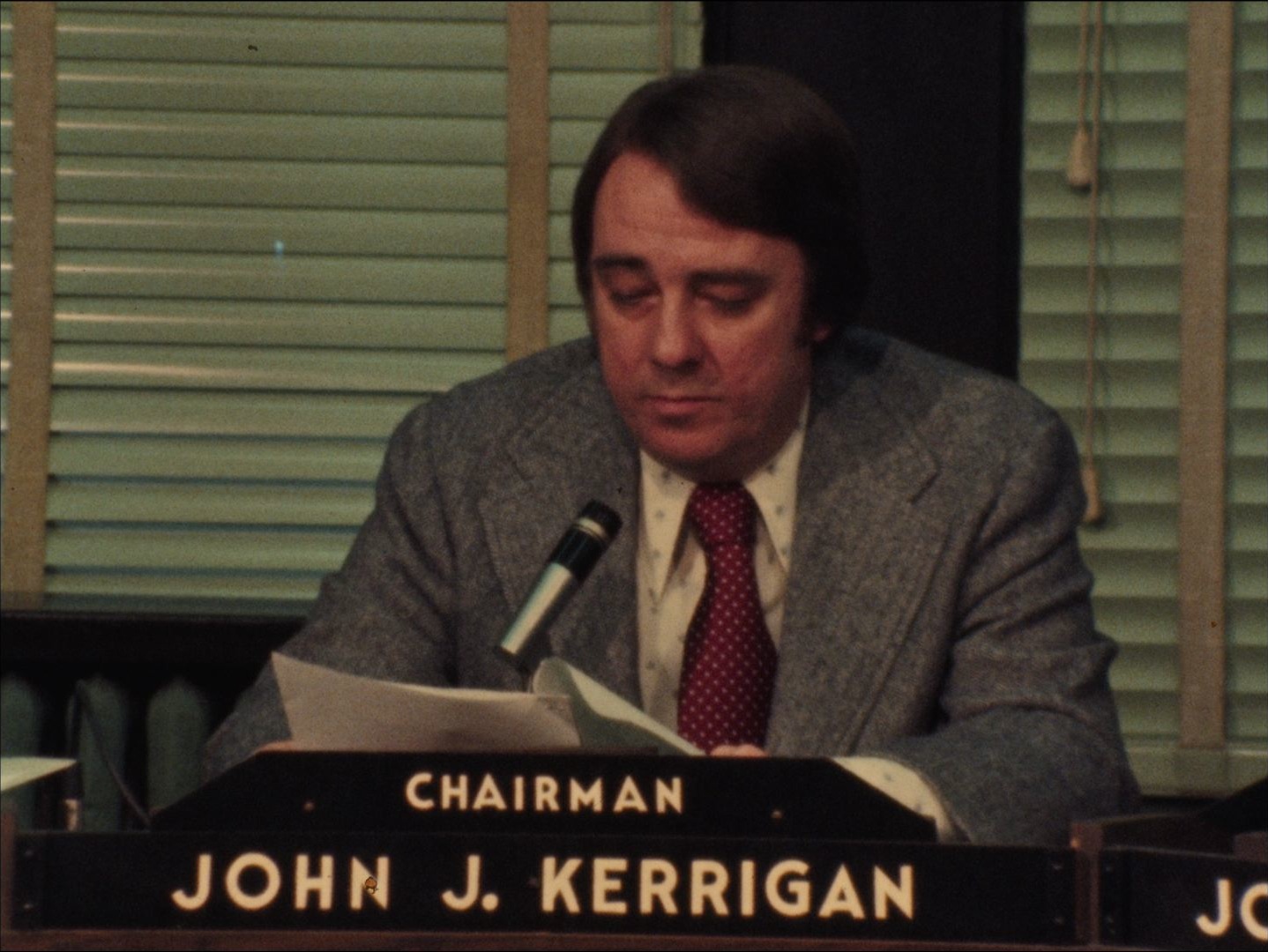
Description: Leader: F1 School Committee Kerrigan Plan #7010 1/14/74; Boston school committee meeting. Chairman John Kerrigan on busing plans and METCO. Silent b-roll of the meeting and more of Kerrigan's statement to the committee.
Collection: WCVB Collection
Date Created: 01/14/1974
Description: Pam Bullard reports on the Tobin Elementary School, which is located near the Mission Hill Housing Project.Bullard reports that 75 white children are bused into the Tobin school with no problems. Interviews with students and teachers talking about how much they like the school. Bullard reports that Charlie Gibbons, the principal, encourages teachers to develop innovative programs for students. During the report Principal Gibbons was in Puerto Rico learning about the schools there to better be able to serve the Latino students at his school. Bullard notes that the school has a good atmosphere and enjoys a good rapport with the community.
9:50:07: Visual: Shots of street sign for Tobin Ct.; of the Mission Hill Housing Project. Pam Bullard reports that the Mission Hill Housing Project is in one of Boston's toughest neighborhoods; that racial fighting occurred there two weeks before school opened; that the housing project is in the heart of a depressed neighborhood. Bullard reports that the Tobin Elementary School is located near the housing project. V: Footage of an African American male student (Derek) saying that he has attended the Tobin School for four years; that he knows all of the teachers and gets along with them; that the school is special because of the teachers, the kids, and the field trips. A white male student (Richard) says that Derek is his friend; that he likes the Tobin school; that he has fun taking the bus everyday; that he has met a lot of new people. Bullard reports that Charlie Gibbons (principal, Tobin School) and his assistant are in Puerto Rico; that they are learning about the Puerto Rican school system in order to understand the needs of Spanish-speaking students; that Gibbons and his assistant are paying for their own trips. V: Shots of Gibbons' office; of a button reading "I go to the best - Tobin School, Roxbury"; of a thank-you note written to Gibbons from the students. Bullard reports that the Tobin School has extensive reading and physical education programs set up with Boston University; that there is a program for dental care set up with the Harvard Dental school; that the Tobin School has one of the city's best bilingual programs; that the students receive a lot of individual attention. Bullard reports that Gibbons and the teachers at the Tobin set up most of these programs themselves. V: Footage of student reading Spanish; of a student writing on a chalkboard; of bilingual posters in a classroom. Footage of a teacher at a chalkboard; of students in classroom. A white female teacher says that the students respond well to the school's programs; that she tries to give the students individual attention; that she likes the students and the parents at the Tobin. Footage of children playing learning games. An African American female teacher says that she agrees with Gibbons that the Tobin is the best school in Boston; that the Tobin has a warm atmosphere, a good faculty and a lot of support from the community. An African American male student says that he likes the Tobin because he learns things. Bullard reports that the Tobin school is located in a predominantly African American neighborhood; that 75 white students have been bused in with no problems; that students and teachers like the school very much. V: Footage of children playing on a field outside of the school. The Church of Our Lady of Perpetual Help is visible.
Collection: Ten O'Clock News
Date Created: 03/26/1976
Description: Some sound dropout at the beginning of the tape. Pam Bullard's 1978 review of school desegregation in Boston. The review focuses on the effects of desegregation on South Boston High School and the Joseph Lee School. Bullard reports that attendance is low at South Boston High School, but the school atmosphere and programs have improved. Bullard reports that the Joseph Lee School is a good example of a successfully integrated elementary school. The story includes footage of Kevin White (Mayor, City of Boston) and interviews with Ruth Batson (African American community activist), Jerome Wynegar (headmaster, South Boston High School), David Finnegan (Boston School Committee), Robert Peterkin (headmaster, English High School). Bullard also interviews teachers and students at the Lee School and South Boston High School. The report ends with footage of students at the Lee School performing in a play of "The Wizard of Oz."
1:00:02: Visual: Shot of Boston skyline. Footage of Mayor Kevin White on September 9, 1974 calling on Boston residents to come together to make busing work. Footage of buses pulling up in front of South Boston High School on the first day of school in 1974. A crowd of antibusing protesters has gathered outside of the high school. The crowd jeers at the buses. Shots of the Boston Public Gardens. Footage of Ruth Batson (African American community activist) describing Boston as a "racist, violent city." She says that the violence stemming from school desegregation has spilled over into the streets and housing projects. Footage of police marching in formation on Bunker Hill Street in Charlestown. A large crowd is gathered outside of the Bunker Hill Housing Project. Pam Bullard reports that violence and racial hatred erupted in Boston when a federal court ordered the desegregation of schools in 1974. She notes that President Gerald Ford was forced to put the 82nd Airborne division on alert, in preparation for duty on the streets of Boston. Bullard reports that the toughest neighborhoods are quiet three years later; that African American and white children attend school together without incident. V: Shots of a lone police officer outside of South Boston High School; of African American and white children entering an elementary school. 1:01:39: Bullard reports that the effects of school desegregation will not be known for years; that some inconclusive studies have been made. V: Footage of African American and white students in an integrated elementary school classroom. Bullard notes that resistance to school desegregation in Boston has been overcome. V: Shots of a busy street in South Boston; of a young white boy outside of a church; of two elderly white residents sitting on a stoop in South Boston; of racist graffiti on a wall. Bullard reports that the fiercest opposition to court-ordered desegregation in the north took place in South Boston; that the opposition has calmed down since 1974. Bullard notes that school buses transporting students to and from South Boston High School are still accompanied by a police escort; that they are greeted by four police officers on duty at the high school. V: Shots of a police cruiser leading school buses up G Street to South Boston High School; of police officers outside South Boston High School; of African American students exiting the buses at South Boston High School. Bullard notes that metal detectors were installed at South Boston High School after the stabbing of a student three years ago. V: Footage of a student passing through a metal detector; of the halls of South Boston High School. Bullard reports that racial hatred and fear at South Boston High School have given way to a lingering uneasiness. V: Footage of a white teacher in a classroom in South Boston High School. He teaches to a classroom of eight African American and white students. Bullard notes that attendance is low at South Boston High School; that classes can be as small as four students. V: Shots of teachers teaching to very small classes at the high school. A teacher is heard saying that the official enrollment at South Boston High School is 600 students; that she estimates the enrollment to be 300 students. Shots of an African American teacher helping an African American female student at a desk; of students studying in classrooms; of teachers and students in sparsely populated classrooms. Bullard notes that the school was put under receivership by the federal court in 1975; that Jerome Wynegar (Headmaster, South Boston High School) was brought in by the court; that Wynegar and his staff have instituted many alternative programs at the school. V: Footage of Wynegar saying that there are fewer problems at South Boston High School because students are happy with the school programs. Shots of white and African American students studying in classrooms at the high school. Footage of a white female teacher saying that erratic attendance is the biggest problem at South Boston High School; that she finds herself repeating lessons for the benefit of students who were absent. Footage of Wynegar saying that South Boston High School ranks eleventh out of eighteen schools in attendance; that he though the school would rank last in attendance; that students appreciate the way they are treated at the school. Shots of students in classrooms; in the automotive shop. Footage of the white female teachers saying that alternative programs are attractive to students; that students also need to learn basic skills. 1:05:04: Bullard notes that there are divisions between those who support traditional classroom learning and those who support alternative programs. V: Shots of students in classrooms; of students in the lunchroom. Footage of an African American female student saying that South Boston High School is much better this year than in previous years; that students are getting along and are more focused on their classes. A white male student says that more students are attending school now. Another white male student says that students are getting along better. The white female teacher says that the atmosphere at the school has improved. Shots of the corridors in South Boston High School; of white and African American students playing basketball. Bullard says that there are no answers as to why the atmosphere at South Boston has improved; that innovative programs, low attendance and a wearing down of resistance to integration are all factors. V: Footage of white and African American students exiting South Boston High School; of school buses traveling down G Street away from the school. Footage of David Finnegan (Boston School Committee) saying that the community needs to realize that there are good solid programs in the Boston Public School System; that desegregation has added to the quality education provided by the schools; that the atmosphere in the schools is good, but can be improved. Bullard notes that even critics have conceded that the court-ordered magnet school programs have been good for the school system. V: Footage of African American and white students at a student art show; of the students' art projects. Bullard notes that there are opportunities in art and drama programs at the magnet schools; that there are opportunities for student internships; that there have been no racial problems at the magnet schools. Bullard reports that desegregation has been costly in financial and human terms; that the cost of the first year of desegregation was $20 million; that the second year of desegregation was $30 million; that police overtime ran up the cost of school desegregation. Bullard notes that costs have stabilized at $12 million over the past two years; that there is less of a need for police officers in the schools now. Bullard reports that Boston taxpayers have had to pay for expenses not covered by state and federal funds; that Boston taxpayers pay the highest property taxes in the nation. Bullard notes that the school budget remains at $175 million per year; that the city has lost 28,000 white students since 1972; that one expert says that 16,000 students were lost to desegregation. V: Shots of an empty classroom; of a teacher's attendance book; of a students in a sparsely populated classroom. Bullard adds that many students transferred to parochial schools, private academies and suburban schools; that many high school students dropped out. Bullard notes that the Lonegan family of South Boston refused to bus their children; that their daughter stayed out of school for a year. V: Footage of the Lonegan family. Mrs. Lonegan sits at a table in her home with her daughter Michelle and her son. Mrs. Lonegan says that she found a job making beds at a nursing home in order to pay her children's tuition at a private school. 1:09:07: Bullard reports that Christina Termini (student) lives in West Roxbury, but attends the Lee School in Dorchester. V: Footage of Termini leaving her home and walking to a bus stop. She boards the bus. Footage shot from the inside of the bus as it travels through the city. The white children on the bus sing songs. Audio of Termini's mother saying that the Lee School is ideal for Christina; that she has great confidence in the education her daughter receives at the Lee School. Shots of African American children walking to the Lee School from the Franklin Field Housing Project. Shots of a white student in French class at the Lee School; of integrated classrooms at the Lee School. Footage of a teacher saying that the children of the Lee School get along well; that racial differences are not important in the classroom. Bullard reports that attendance at the Lee School is low; that 600 students attend the school; that the school has 1,000 seats available; that white attendance could be higher. Bullard notes that the atmosphere at the school is excellent. V: Footage of the students performing "The Wizard of Oz" on stage. A young white female student says that she likes the facilities at the Lee School; that she has met a lot of friends. Footage of the white female teacher saying that she likes teaching at the Lee School. Footage of Robert Peterkin (headmaster, English High School) saying that many other urban school systems are experiencing the same problems as Boston; that desegregation has brought stability and strong programs to the system. Footage of Lee School students at their "Wizard of Oz" play. They sing "Ding, dong, the wicked witch is dead." Bullard reports that the Boston Public School System has made impressive progress since school desegregation began in 1974; that the system is no longer deliberately segregated and rife with political patronage. Bullard notes that parental involvement and stronger political leadership has improved the schools. V: Footage of Batson saying that the city has been forced to confront its racial problems through school desegregation. Shots of African American and white students entering an elementary school. Bullard reports that the federal court still runs the Boston Public School System. V: Footage of Batson saying that the process of desegregation has been valuable to some students. Shot of a Lee School student performing a song in the "Wizard of Oz" play. The audio of the student singing accompanies shots of a police officer in front of South Boston High School; of African American students entering South Boston High School; of Wynegar in front of South Boston High School; of a student passing through a metal detector; of African American and white students playing basketball; of an empty classroom; of the Lonegan family; of young African American and white students; of police cruisers leaving the school yard of South Boston High School. Children at the Lee School clap for the student performer on stage.
Collection: Ten O'Clock News
Date Created: 06/01/1978
Description: Footage of the exterior of Wellesley High School and students coming out the doors and getting on the buses. Silent.
Collection: WCVB Collection
Date Created: 12/10/1974
Description: White students exit South Boston High. About 25 Massachusetts uniformed state troopers board Massachusetts State Police bus. Massachusetts State Police Cruiser exits school parking lot. Jerome Wynegar (Headmaster, South Boston High School) stands in the school yard and talks to students.
1:00:08: Visual: White students exit South Boston High School in small groups. Jerome Wynegar (Headmaster, South Boston High School) stands in front of the school, talking to passersby. The students walk down G Street, away from the school . Snow blankets the ground. A Massachusetts State Police bus is parked in front of the school. About 25 state police officers file onto the bus. A state police car pulls out from the front of the school, into the street. Small groups of students, police, and officials remain in front of the school.
Collection: Ten O'Clock News
Date Created: 02/15/1977
Description: Leader: P2 Hyde Park H.S. #10221 10/16/74; External footage of Hyde Park High School with state police on guard in the rain outside. Students arrive on buses; students leave the building and walk down the street; a student is escorted from the school by police officers and put in the back of a police van. Busses arrive and students wave at the camera.
Collection: WCVB Collection
Date Created: 10/16/1974
Description: Hope Kelly reviews the history of school desegregation in Boston. She notes that many critics cite the absence of middle-class and white students as a reason for the continued failure of the Boston Public Schools. She focuses on the Timilty Middle School in Boston, a magnet school with successful reading and math programs for its students. Kelly interviews teacher William Moran and principle Shirley Gonsalves about the school and its programs. Moran says that the students are successful. He adds that many come from disadvantaged backgrounds. Gonsalves talks about the benefits of school desegregation. Kelly reports that the Timilty School was named a National School of Excellence in 1989. Following the edited story is additional b-roll footage of students and teachers in classrooms at the Timilty School.
1:00:07: Visual: Shot of a school bus door closing. Shots of a school bus outside of the Timilty Middle School; of students on the bus; of white and African American students exiting the Timilty Middle School; of students boarding a bus outside of the school. Shots of African American and white students in a hallway of the school. Hope Kelly reports that busing for school desegregation began seventeen years ago in Boston; that busing was viewed as a way to bring equal opportunity to all students. Kelly notes that busing drove many middle-class white and African American parents away from the school system. Kelly reports that critics cite a lack of middle-class students as a reason for the continued failure of Boston Public Schools. V: Footage of William Moran (Timilty School) being interviewed. Moran says that all students can learn. Kelly reports that Moran grew up in the South End and Roxbury; that Moran attended Boston Public Schools and went to college. V: Shots of Moran walking through a corridor in the Timilty School; of Moran speaking to three students in the doorway of a classroom. Kelly reports that Moran is the seventh-grade coordinator at the Timilty Middle School; that Moran attended the Timilty School twenty years ago. Kelly reports that the Timilty Middle School ranks first city-wide in reading; that the Timilty Middle School is second city-wide in mathematics. Kelly notes that the students at the Timilty School do not come from advantaged backgrounds. V: Shots of a white teacher teaching students of diverse races in a well decorated classroom. Shots of the students in the classroom. Footage of Moran saying that students at the Timilty School low-income families; that many of the students live in housing projects. Moran says that the students come from disadvantaged neighborhoods across the city; that the school is a city-wide school. Kelly reports that most of the students at the Timilty School are non-white and poor. V: Shots of students walking in a corridor of the Timilty School. Footage of Shirley Gonsalves (Timilty School) being interviewed by Kelly. Gonsalves says that race and class are not the determining factors among the school's students. Gonsalves says that the school can do nothing about the relative poverty of its students. Kelly reports that Gonsalves is the assistant principal at the Timilty School; that she has worked in the Boston Public School System for seventeen years. V: Shot of Gonsalves walking through a corridor and up a set of stairs with a student. Kelly reports that Gonsalves began teaching in Boston during the first year of school desegregation. V: Footage of Gonsalves being interviewed. Gonsalves says that she grew up in the rural South where busing was used to maintain segregated schools. Gonsalves says that she rode a bus to school from the age of six to the age of eighteen. Shots of students walking in a corridor at the Timilty School. Kelly reports that there are low numbers of white students in the Boston Public School System; that 11% of students at the Timilty School are white. Kelly reports that Gonsalves believes that school integration has been a success. V: Shots of a white student entering a classroom at the Timilty School; of a white teacher standing with two African American students in a hallway. Footage of Gonsalves being interviewed by Kelly. Gonsalves says that students attended schools in their own neighborhoods with students of their own race before school integration. Gonsalves says that students were not exposed to other students of different backgrounds and from different neighborhoods. Gonsalves says that students need to learn about people of different backgrounds. Shots of a white teacher teaching to a class of middle school students; of an African American male student sitting at a desk in the classroom. Shots of other students in classrooms; of an African American female student writing on a chalkboard; of an African American boy reading a book at his desk. Shot of the white teacher teaching to students in the classroom. Kelly reports that the Timilty School is a magnet school; that classes are smaller at the Timilty School; that the schoolday at the Timilty School is 1.5 hours longer on four of five days per week. Kelly reports that the waiting list to enter the sixth grade class at the Timilty School had 200 names. Kelly reports that the Timilty School was named a National School of Excellence in 1989. V: Shot of Gonsalves and a student walking in the corridor.
Collection: Ten O'Clock News
Date Created: 03/22/1991
Description: Press conference at City Hall on day 3 of Phase I desegregation of Boston Schools. Frank Tivnan (Director of Communications for Mayor Kevin White) commends the performance of the police department and reports no serious injuries to residents or schoolchildren. John Coakley (Boston School Department) gives school attendance figures. Coakley reports that the atmosphere in the schools is reasonably calm. Joseph Jordan (Superintendent, Boston Police Department) reports on a liquor ban imposed in South Boston. Jordan notes that police made 20 arrests today. Leroy Chase (Deputy Superintendent, Boston Police Department) reports that Freedom House is helping to patrol streets in Roxbury/North Dorchester. Kevin White (Mayor, city of Boston) talks about antibusing sentiment in South Boston; answers questions about efforts by South Boston neighborhood leaders to calm the tension in the neighborhood; about the possible underworld and criminal background of some agitators in South Boston; about the school boycott by South Boston residents. William Leary (Superintendent, Boston School Department) and Robert Kiley (Deputy Mayor, City of Boston) are also present at the press conference. Anne O'Brien (Principal, John P. Holland School) gives a positive report on the opening of the Holland School.
0:03:46: Visual: Opening title reads Compass Special: Boston School Report. Paul deGive reports on the day's events from press conference at Boston City Hall: a ban on a protest march by South Boston residents; 20 arrests. Frank Tivnan (Director of Communications for Mayor Kevin White) thanks the media for the opportunity to report the day's events to the public. Tivnan reports no serious injuries to Boston residents or to children on school buses. Tivnan commends the police department for managing crowds in South Boston. Tivnan reports an increase in school attendance. 0:06:33: V: John Coakley (Boston School Department) reports that 57,000 students (69%) were in attendance: 66% at the high school level, 68% at the middle school level and 73% at the elementary school level. V: Video changes from color to black and white. Coakley notes a marked increase in attendance from the previous Friday. He adds that attendance is still very low in South Boston. Coakley reports a reasonably calm atmosphere at schools; that the superintendent visited schools in Hyde Park and Roslindale; that some scheduling difficulties remain to be worked out at the secondary school level (English High School, Roslindale High School, Jamaica Plain High School); that Robert Peterkin (Headmaster, English High School) is optimistic about the situation at his school. 0:12:31: V: Tivnan introduces Joseph Jordan (Superintendent, Boston Police Department). Jordan reports that crowds in South Boston gathered sporadically throughout the day and were broken up by police; that 20 arrests were made; that the ban on liquor during the day will continue; that the police will continue to deploy a maximum number of officers in South Boston. 0:14:30: V: Tivnan introduces Leroy Chase (Deputy Superintendent, Boston Police Department). Chase reports that Freedom House and members of the community are helping police monitor the streets of Roxbury and North Dorchester. 0:15:27: V: Kevin White (Mayor, City of Boston) joins the panel. He commends the performance of the police department, school officials, and Robert Kiley (Deputy Mayor, City of Boston). White talks about his goals of getting children back in school and withdrawing police from South Boston. He says he is prepared to increase police presence if necessary, but hopes to see a continued decrease in violence. 0:17:49: V: Tivnan invites reporters to ask questions. White answers questions about the afternoon's hearings in Judge Garrity's courtroom; about a possible decrease in the police presence in South Boston. V: Color video returns. White responds that police presence will decrease when the city can guarantee the safety of students. He again commends the performance of the police. Reporter asks the mayor how groups of people in South Boston managed to assemble if police were present in the neighborhood. White comments that children and young people were out on the streets despite a commitment by antibusing parents to keep children at home. 0:20:39: V: A reporter asks Mayor White if the city is getting cooperation from some moderates in South Boston. White responds that the moderate leaders must assert themselves over the groups causing disruption. A reporter asks Mayor White what it will take to end the white boycott of schools. White responds that it will take some time until emotions are cooled down. A reporter asks Mayor White when truancy laws will be enforced. White responds that the decision will be made by the School Department. A reporter asks Mayor White if Senator William Bulger, Councilor Louise Day Hicks, and other South Boston leaders will exert a calming influence on the neighborhood. White says that he has met with them and they are eager to resolve the situation. 0:25:41: V: A reporter asks Mayor White if he asked South Boston leaders to join him in an appeal to the people of South Boston. White says no. DeGive asks White how long the city can sustain the police presence in South Boston, and where the money comes from to pay overtime. Reporters ask White how bad the situation in South Boston will be allowed to get before outside help is sought; if he can confirm reports that agitators in South Boston are connected to the underworld. A reporter asks if a group of agitators in South Boston has been infiltrated by police. White says that all agitators are dealt with in the same manner. Jordan adds that the police will gather intelligence on anyone involved in the unrest. A reporter asks Jordan if he will identify any particular group associated with the unrest. Jordan confirms that police have identified agitators who have been involved in past criminal activity in South Boston. 0:29:31: V: A reporter asks Mayor White about comments by South Boston leaders which could be seen as supportive to the white boycott. White says he cannot control the opinions and comments of other leaders. He mentions that white students have been going to B.C. High School and other schools located in difficult neighborhoods for many years. Superintendent William Leary (Boston School Department) mentions Boston Technical High School in Roxbury. A reporter asks White about whether he will admit to isolating some groups in South Boston and failing to seek their input. White denies this charge. A reporter asks White if the liquor ban in South Boston will be enforced for the next day. White says that the decision is made by the police department. 0:32:53: V: A reporter asks Leary if he has information on increased discipline problems in the schools. Leary replies that he has visited several schools across the city and that the number of problems is no greater than normal. A reporter asks Jordan for a breakdown of arrests. White excuses himself and leaves the room. Jordan reads a list of arrest locations and charges. Tivnan asks Deputy Mayor Kiley if he has anything to add. Kiley says no. A reporter asks Tivnan how the city will pay for police overtime. Tivnan says that it will come from Police Department budget. A reporter asks Tivnan about the reaction of liquor store owners to the liquor ban. Tivnan responds that most stores complied with the ban. 0:36:52: V: A reporter asks Jordan if the liquor ban is effective. Jordan says yes. Leary breaks in to introduce Anne O'Brien (Principal, John P. Holland School). O'Brien reports a successful school opening; that teachers are prepared; that progress is good. Tivnan closes the press conference. Panelists and reporters rise and exit.
Collection: Evening Compass, The
Date Created: 09/16/1974
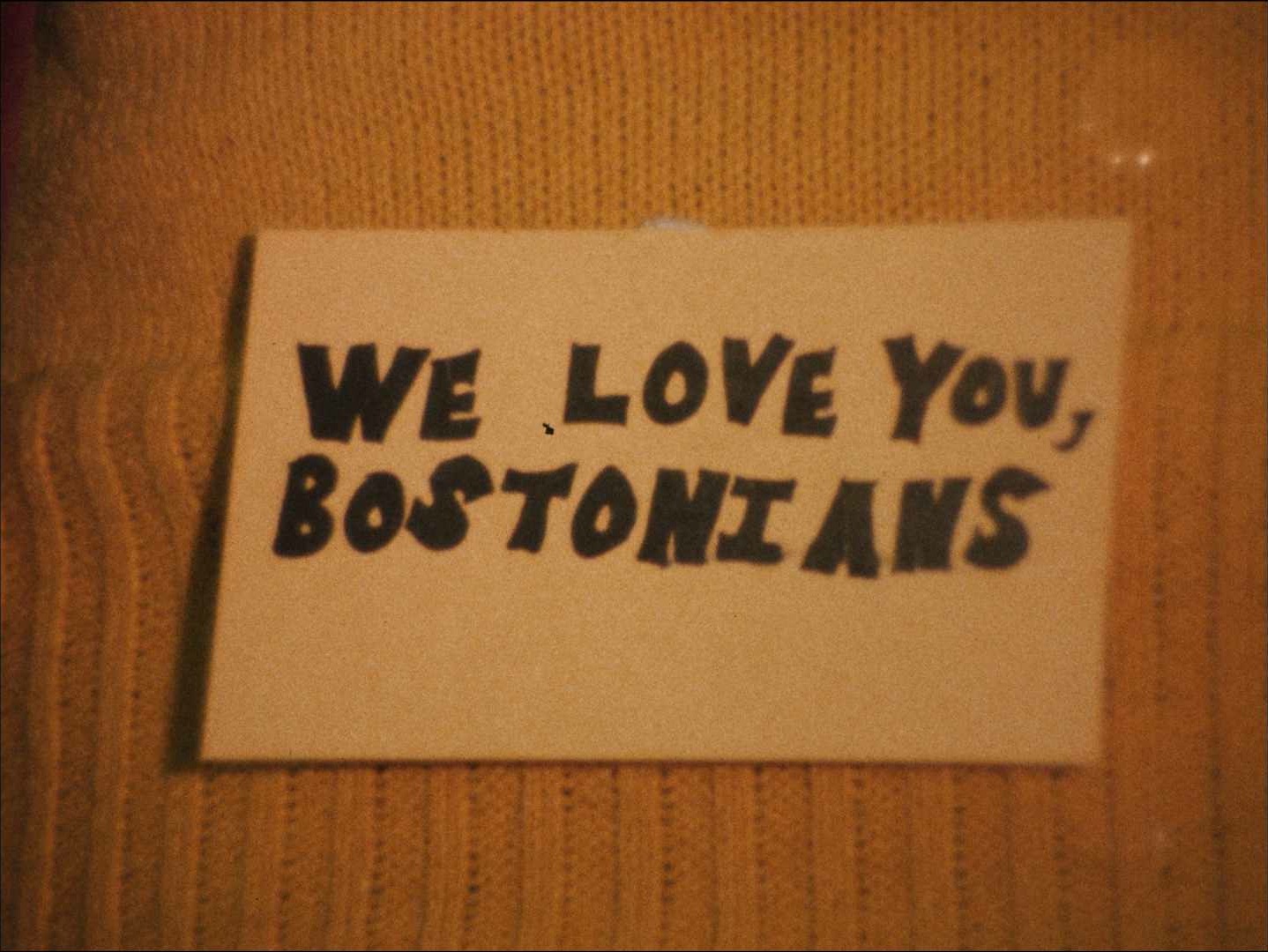
Description: Leader: P1 Boston School Committee #10693 12/6/74; Boston School Committee meeting [buzzing in the audio]. SIlent b-roll of parents in the audience wearing anti-busing buttons.
Collection: WCVB Collection
Date Created: 12/06/1974
Description: Press conference at City Hall. Boston Mayor Kevin White and Police Commissioner Robert DiGrazia read prepared statements about the following day's school opening in the third year of court-ordered busing. White expresses confidence in a peaceful opening of schools. DiGrazia says that police have been instructed to use minimum force, but to act decisively against any disruptions of public order. Both men hope that police can be removed from schools as soon as possible. White notes that the atmosphere seems calmer this year than during the previous two years. White says that he would like to remove police from the schools as soon as possible because their presence hinders the development of a healthy learning environment. Reporters question them on the school opening. Shots of Pam Bullard listening to the press conference.
2:09:33: Visual: Members of the press are assembled for a press conference at City Hall with Kevin White (Mayor, City of Boston) and Robert DiGrazia (Police Commissioner, City of Boston). White begins reading a statement, then stops because there is a problem with sound. 2:11:53: V: White reads a prepared statement. He says that school opens tomorrow; that fewer students face assignments to new schools this year; that more students are attending the schools of their choice; that many schools are benefitting from programs linked with universities and businesses; that three new schools are opening; that he is confident that the school year will be productive. White says that the city is prepared to guarantee the safety of all schoolchildren; that he hopes to reduce the police presence at the schools this year; that police will restore order if disruptions occur. White urges citizens to share in the responsibility for a peaceful school opening; that the city will focus on improving schools this year. 2:14:32: V: DiGrazia reads a prepared statement. He expresses confidence in a peaceful school opening. He reports that police have received instructions to allow peaceful demonstrations, but to maintain public order; that police officers have been instructed to use minimum force and to treat those arrested with respect and courtesy. DiGrazia says that police will not tolerate any acts of violence or disruption; that these acts are often committed by only a few citizens. 2:15:56: V: White invites questions from the reporters. A reporter asks DiGrazia what kind of preparations have been made for additional police support. DiGrazia says that Massachusetts State Police will be assigned to South Boston; that MDC Police will be assigned to Charlestown; that US Marshals will be present for the opening of schools. DiGrazia says that the atmosphere on the streets seems calm; that a few citizens are engaging in disruptive behavior; that the atmosphere seems calmer than in the previous two years; that police presence will be less visible than last year; that additional police will stand by for support. DiGrazia says that the police have not received any indication that there will be outside agitators at the schools. DiGrazia says that he hopes there will be little overtime for police officers this year. DiGrazia says that uniformed State Police officers will be assigned to South Boston High School; that community service officers and juvenile officers will be assigned to monitor the other schools. 2:18:52: V: A reporter asks about cooperative efforts between the School Department, the city of Boston, and the Police Department. White says that the three entities have been working together on school desegregaton for three years; that differences about the school budget have not affected efforts to achieve a successful school opening. DiGrazia says that police will continue to enforce ordinances forbidding the assembly of more than three people along a bus route, or assemblies within 100 yards of schools. Shot of Pam Bullard. White says that he would like to remove police from schools as soon as possible; that police presence hinders a healthy learning atmospheres; that police can be removed if citizens refrain from disrupting the schools. A reporter asks DiGrazia to clarify the term "minimum force" in police conduct. DiGrazia says that he hopes police can dissuade citizens from engaging in disruptive behavior; that he would like to see the police removed from the schools as soon as possible. DiGrazia refuses to elaborate on minimum tolerance policy guidelines, but says that warnings will be given to disruptors before action is taken. DiGrazia says that the school department instituted the use of metal detectors at the schools; that they will be used again this year. DiGrazia refuses to give out information on the number of police officers assigned to the schools
Collection: Ten O'Clock News
Date Created: 09/07/1976