Description:
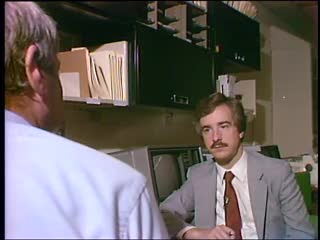
Deborah Wang reports that Boston City Hospital offers a weekly Failure to Thrive Clinic for malnourished children. A team of doctors, nurses and psychologists treat the children and talk to their families. Wang reviews the symptoms and effects of malnourishment. Health care workers treating patients at the Failure to Thrive Clinic. Interview with Dr. Deborah Frank of Boston City Hospital about malnourishment and its effect on children. Frank talks about the importance of the clinic to the lives of children. Frank examines children at the clinic. Wang reports that malnourished children are often victims of poverty and that some are neglected or abused. 80% of children attending the clinic have stabilized or improved their condition. Staff meeting of clinic employees. A health care worker talks about the improved condition of one of his patients. Wang reports that there are six Failure to Thrive Clinics, but that the clinics are underfunded. She adds that some families in Boston are not yet receiving the necessary care for malnourishment. Following the edited story is additional footage of health care workers and patients at the Failure to Thrive Clinic.
1:00:05: Visual: Shots of young children playing with toys and magic markers in the waiting room of a health clinic. Shot of an African American infant on an examination table in a health clinic. Deborah Wang reports that some children in Boston show signs of malnourishment. V: Footage of Dr. Deborah Frank (Boston City Hospital) saying that undernourished children become lethargic and apathetic. Frank notes that the children in the waiting room are very quiet. Shots of an African American health care worker weighing an African American infant on a scale. Wang notes that undernourished children are small for their age; that undernourished children are often ill. V: Footage of Frank saying that malnutrition impairs the body's ability to fight infection. Frank says that undernourished children become sick more often; that each infection contributes to the malnourishment. Shots of health care workers measuring an infant's height. The infant lies on an examining table. Shots of the infant; of the health care workers. Shot of a health care worker putting a diaper on an infant. Wang reports that some malnourished infants are neglected or abused; that most malnourished children are victims of poverty. V: Footage of Frank being interviewed by Wang. Frank talks about a malnourished boy who was admitted with a case of pneumonia. Frank talks about the poor conditions under which many poor families live. Wang reports that the Boston City Hospital offers a weekly Failure to Thrive Clinic for malnourished children; that a team of doctors, nurses, psychologists, social workers treat the children and talk to their families. V: Footage of a white female doctor in an examining room with an African American woman and a young African American girl. The doctor talks to the woman while filling out paperwork. The girl plays quietly in her chair. The doctor talks to the woman about meal times for the child. Footage of a meeting of employees at the Failure to Thrive Clinic. A white male health care worker talks about an infant who has gained weight after attending the clinic. Wang reports that the program has been a success; that 80% of the children attending the clinic have stabilized or improved their conditions. V: Shot of a Latina woman and young boy in an examining room. The woman wipes the boy's face. The boy draws with magic markers. Footage of Frank saying that the hospitals resources are stretched thin. Frank notes that there are families in Boston who are not receiving services. Wang reports that the Failure to Thrive Clinic has a $500,000 budget; that there are six Failure to Thrive Clinics. V: Shot of an African American health care worker taking the temperature of a young white boy. The boy sits on his mother's lap. Shots of an African American girl at the clinic; of a Latino boy drawing with a magic marker; of an African American infant on an examing table; of an African American child holding a stuffed doll. Audio of Frank saying that society needs to reassess its priorities; that these children are the next generation of US citizens. Frank says that society will pay a higher price in the future if these children are not treated now.
Date Created:
11/30/1988