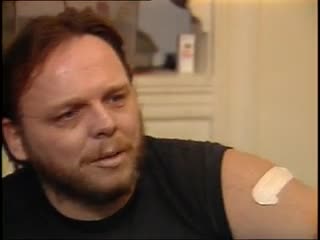
Description: Housing for mentally ill people falls far short of goal. Neighborhood opposition delays siting of community residences for discharged patients. Philip Johnston, Edward Murphy.
Collection: Ten O'Clock News
Date Created: 05/13/1988
Description: Demonstrators convene at State House to plead for strengthened funding for affordable housing rather than budget cuts. Catherine Dunham.
Collection: Ten O'Clock News
Date Created: 12/19/1988
Description: Two Hull selectwomen tell why they love their town and opposed the Horizons condo project. View of bay, planes overhead, Hull environs, older houses, ocean.
Collection: Ten O'Clock News
Date Created: 12/01/1988
Description: Tenants and landlords from Boston neighborhoods air opposing views at city council meeting on condo permits to limit conversions.
Collection: Ten O'Clock News
Date Created: 06/23/1988
Description: Malden couple struggles to keep up with housing costs but faces eviction because they are unable to meet rent increase. They cannot get public assistance because waiting list is so long.
Collection: Ten O'Clock News
Date Created: 12/06/1988
Description: Marcus Jones reports on the construction of modular townhouse condominiums in Roxbury. He notes that the condominiums are affordable housing developed by a private developer. Jones tours the condominiums with tenant Kay Williams. Interview with Williams and future tenant Wanda Wallace about the condominiums. Interview with Alan Harap of the Bergmeyer Development Company about the modular condominiums. Harap says that the condominiums are an economical approach to affordable housing in Roxbury. Interview with Shay Allan of the Boston Public Facilities Department about the affordability of the condominiums. Jones reviews the price of the condominiums and notes that mortgages are available through the state's home ownership program. Jones notes that private developers can profit from building modular units for affordable housing.
1:00:05: Visual: Shot of a modular housing unit being lowered onto a site by crane. Marcus Jones reports that modular homes are built in factories, loaded onto trucks and placed on plots of land. V: Shots of a driver operating a truck; of a modular housing unit on the back of a truck; of a worker supervising the descent of a modular housing unit onto a site. Footage of Wanda Wallace (future homeowner) holding her infant as she is interviewed by Marcus Jones. Wallace says that she never expected the condominiums to be ready so soon; that she thought the condominiums would be very expensive. Jones reports that Wallace's family and four other families will be moving into the modular condominium townhouses. V: Shot of the site of the condominium townhouses. The townhouses are being constructed. Shot of workers using a drill to put the buildings together. Shot of Kay Williams (future homeowner) and Marcus Jones touring the interior of one of the buildings. Footage of Williams saying that she is happy to be able to afford to stay in the neighborhood; that the neighborhood will be a desirable neighborhood in a few years. Shots of the interior of one of the condominiums; of the bathroom in one of the condominiums. Jones reports that the condominiums are affordable housing developed by a private developer; that the private developer approached the city with the idea for the project. V: Footage of Alan Harap (Bergmeyer Development Company) standing in front of the site. Harap says that the Roxbury condominiums are a pilot project for the company; that there are many vacant lots in Roxbury where affordable housing could be built. Shot of a man directing the driver of a truck. The truck has a modular housing unit loaded onto the back. Jones reports that the 2-bedroom townhouses range from $86,000 to $100,000; that low-interest mortgages are being provided through the state's home ownership program. V: Shot of the interior of one of the townhouses; of the street below from the window of one of the townhouses. Footage of Shay Allen (Boston Public Facilities Department) saying that the homeowners will only need to put down a 5% downpayment on the townhouses. Shot of a crane being used to place one the modular units on a site. Construction workers oversee the placement of the unit. Footage of Harap being interviewed by Jones. Harap says that constructing buildings on site is more economical for large developments; that modular housing is an economical way to put affordable housing on small, scattered sites. Jones stands in front of the townhouse site. Construction continues on behind him. Jones reports that the developers say that modular units can be used to provide affordable housing anywhere; that the demand is great for affordable housing; that the developers will profit from meeting the demand.
Collection: Ten O'Clock News
Date Created: 07/28/1988
Description: Urban mayors gather in Boston for National League of Cities conference. They focus on need for housing assistance and problem of homelessness. Ray Flynn, Tom Bradley, Henry Cisneros, William Hudnut III.
Collection: Ten O'Clock News
Date Created: 12/05/1988
Description: National Park Service does not want Provincetown dune shacks to be protected as “historic places.” Tenants plead for their refuges to be preserved. Cape Cod National Seashore.
Collection: Ten O'Clock News
Date Created: 08/26/1988
Description: Meg Vaillancourt reports on a protest by Cambridge activists against plans proposed by MIT to develop a parcel of land near Central Square. Protesters accuse MIT and the developer of misleading the public by underestimating the size and scope of the project planned for the Simplex site. Bill Cavellini from the Simplex Steering Committee and Ken Campbell of MIT discuss the plans for the site. Vaillancourt reviews the plans for the site. The protesters differ with MIT over the amount of low-income housing to be built on the site and on the definition of low-income housing. Bill Noble from the Simplex Steering Committee criticizes MIT's definition of low-income housing. Cambridge activists and the homeless community are at odds with one another over the most effective form of protest against the development. At a protest, a scuffle breaks out between one of the activists and a homeless man. Community activist Mel King tries to make peace between the two sides. The Cambridge City Council will soon vote on the planned development. Following the edited story is additional b-roll footage of students on the campus of MIT in warm weather.
1:00:05: Visual: Footage of a group of protesters marching through a snowy lot near Central Square in Cambridge, chanting "We say no to MIT." Meg Vaillancourt reports that a small band of Cambridge activists are protesting the development of 27 acres of land owned by MIT (Massachusetts Institute of Technology); that MIT is working with Forest City Developers to build a multi-million dollar research and development complex; that the proposed site is known as the Simplex site. V: Shots of protesters standing near a sign for University Park at MIT; of the sign for University Park. Footage of a protest leader addressing the crowd of demonstrators. The protesters carry signs. Vaillancourt reports that the activists claim that developers deliberately misled the public; that the developers underestimated the size and scope of the project. V: Footage of Bill Cavellini (Simplex Steering Committee) saying that the developers told the public that they would build a $250 million development; that the developers will build a $500 million development. Cavellini tells Vaillancourt that the activists received documentation about the development from a confidential source. Cavellini says that Forest City Developers have been deceptive and have breached the public's trust. Footage of Ken Campbell (MIT) saying that the activists got hold of documents from October of 1987; that the Cambridge City Council approved the plan for the site in December of 1987; that the plan approved by the Council includes 400,000 square feet of housing. Shot of documents and information distributed by the opponents of the plan. Vaillancourt reports that the University Park Development Plan includes housing, a hotel and a 12-screen cinema; that a four- to six-screen theater had been discussed by the developer in public. V: Shot of a vacant lot in Cambridge, covered with snow; of a group of people standing outside of a house in Cambridge. Vaillancourt reports that opponents say that numerous zoning changes will be required to build the project, including the widening of streets and the removal of the city fire station in Central Square. V: Shot of a group of protesters; of a sign reading, "Cambridgeport has decided to stop MIT expansion." Vaillancourt says that MIT and the Simplex Steering Committee differ on how much low-income housing will be built on the site. V: Footage of Campbell saying that MIT has doubled the amount of affordable housing in the original proposal; that MIT is proposing 100 low-income units and 50 moderate-income units. Footage of Bill Noble (Simplex Steering Committee) saying that MIT's definition of low- and moderate-income is not accurate; that MIT is really proposing moderate- and middle-income units. Vaillancourt reports that there are many homeless people in the area; that activists and the homeless do not always agree on how to oppose the development. Vaillancourt says that the homeless do not think that the protesters are representing the interests of the homeless. V: Footage of a female protest leader addressing the demonstrators and the press. A scuffle breaks out between Cavellini and Carlos (homeless man). Footage of Carlos addressing the demonstrators. Carlos says that affordable housing is not the same thing as housing for the homeless. A female protester yells that Carlos does not represent the views of the community. A shouting match ensues. Vaillancourt reports that Mel King (community activist) tried to bring the two sides together. V: Footage of King addressing the crowd. King says that the two sides must unite to fight against the greed of MIT. Members of the crowd cheer. Vaillancourt reports that the Cambridge City Council will vote on MIT's proposal on Monday.
Collection: Ten O'Clock News
Date Created: 01/07/1988
Description: State will assume the task of keeping federally subsidized rental housing affordable once the developers' obligation to HUD ends. Reps. John McDonough, Kevin Honan, Sen. John Kerry.
Collection: Ten O'Clock News
Date Created: 01/13/1988