Description: Boston Police Department press conference with Police Commissioner Robert DiGrazia, Superintendent Joseph Jordan, Deputy Superintendent Lawrence Quinlan, Captain Morris Allen, and Captain Fred Conley. Steve Dunleavy (spokesperson for DiGrazia) is the moderator. The speakers are seated at a table featuring an array of street weapons used against police in a riot in South Boston on the previous day. Press conference includes police department videotapes of a riot in South Boston on the previous day and of an unruly crowd at a Citywide Coordinating Council (CCC) meeting at English High School. DiGrazia announces that violence and disruptions of public order will no longer be tolerated by police.
0:00:16: Visual: Shot of bottles, baseball bats, pipes, bricks and other weapons lying on table. Some have exhibit tags attached to them. Microphones are also set up on the table for a press conference. Shot of a police map of the city of Boston. 0:03:31: V: Robert DiGrazia (Police Commissioner, City of Boston) and others sit down at the table displaying the weapons. Steve Dunleavy (spokesperson for DiGrazia) introduces the police officials on the panel: Captain Morris Allen, Superintendent Joseph Jordan, DiGrazia, Deputy Superintendent Lawrence Quinlan, Captain Fred Conley. Dunleavy announces that a short videotape will be shown. 0:05:02: V: A videotape plays on a television screen. The videotape shows a large crowd on a city street. Police officers in riot gear are stationed on the street. Dunleavy points out the weapons used by the crowd, and that the crowd has thrown tear gas at the police. The videotape shows a cloud of tear gas in the police ranks. Rioting crowd charges police, throwing bricks and other objects. Dunleavy says that the street on the videotape is East 6th Street in South Boston. V: The videotape shows crowd throwing rocks and other objects. The crowd retreats, still throwing objects, as police advance. Dunleavy announces that the next videotape was shot at English High School last Thursday at a meeting of the Citywide Coordinating Council (CCC). V: The videotape shows a noisy crowd seated in an auditorium. Members of the CCC are seated on stage. The crowd chants and claps its hands, disrupting the meeting. Arthur Gartland (CCC) threatens to call in the police to establish order. Shot of members of press watching videotape on the television. 0:14:03: V: Shot of DiGrazia. Dunleavy shows photos of the aftermath of violence yesterday in South Boston, including photo of a police cruiser with rear window missing. He says that the weapons on the table were used against police in South Boston yesterday. DiGrazia says that a demonstration in South Boston turned violent yesterday; that citizens of Boston have a legitimate right to stage demonstrations against busing; that the actions of some are denying the rights of others; that the governor's wife was denied her right to speak at Faneuil Hall; that a US Senator has been harassed and threatened; that a presidential candidate was denied the right to speak out last week; that parents are prevented from holding meetings. DiGrazia says that there is a conspiracy against public order in Boston; that the police will no longer be tolerant of those disrupting the rights of others. DiGrazia says that the police will protect the rights of anti-busers and pro-busers alike; that arrests will be made and violators of the law will be prosecuted. 0:18:44: V: Reporters ask questions to DiGrazia and other police officers. DiGrazia says that a small number of people in the city are using the busing issue as an excuse to pursue vandalism and mayhem. DiGrazia says that the police department took a low visibility approach to busing in 1974; that they acted more forcefully in 1975; that they have been attempting to let people demonstrate against the law; that they will be more forceful from now on. A reporter asks if there is evidence of a conspiracy against the police. DiGrazia replies that the weapons on the table are evidence of a conspiracy; that police were letting the demonstration proceed until they were attacked by the crowd.
Collection: Ten O'Clock News
Date Created: 02/16/1976
Description: Marcus Jones reports that anti-war activists protested across the nation to rally public opinion against the use of force in the Persian Gulf, including in downtown Boston. Jesse Jackson visited MIT to speak out against going to war in the Middle East on the birthday of Martin Luther King, Jr. Jones notes that the MIT Initiative for Peace in the Middle East brought Jackson to the campus. Jackson says that the US must not rush to war on January 15. Interviews with MIT graduate students Corrie Lathan and Steve Penn, who oppose the war. Interview with Jesse Jackson, who says that the US and Iraq should negotiate because war is inevitable if talking is impossible. Jones' report includes footage from Inside Edition of Jackson in Iraq. Following the edited story is additional b-roll of anti-war demonstrations and of Jackson at MIT talking about Martin Luther King, Jr.
1:00:36: Visual: Footage of anti-war protesters on Winter Street in downtown Boston. The protesters carry signs protesting the Gulf War. They chant together, "We remember Vietnam. We won't go." Shot of two police officers standing in front of a building. Marcus Jones reports that a group of anti-war protesters demonstrated outside of the Army recruiting headquarters in Boston. V: Shot of a protesters carrying a sign reading, "U.S. Troops out of the Gulf." The protesters chant, "We won't fight for Texaco." Shot of a protester handing out leaflets. Jones reports that anti-war activists took to the streets across the country today; that the protesters are trying to rally public opinion against the use of force in the Persian Gulf. V: Shot of an older white woman wearing a sign around her neck. The sign reads, "Bring our troops home." Shot of two white children standing among the protesters. Jones reports that Jesse Jackson (African American political leader) visited MIT (Massachusetts Institute of Technology) tonight; that the members of the MIT Initiative for Peace in the Middle East brought Jackson to the campus. Jones reports that Jackson spoke out against going to war in the Middle East on the birthday of Martin Luther King Jr. (civil rights activist). V: Shots of Jackson greeting an MIT student; of Jackson greeting students as he walks to the podium. Shots of students in the audience. Footage of Jackson addressing the students. Jackson says that the US must not rush to war on January 15. Jackson says that efforts toward peace must be made on King's birthday. Footage of Corrie Lathan (MIT graduate student) being interviewed. Lathan says that she is opposed to the war; that the situation should be resolved in a non-violent manner. Footage of Steve Penn (MIT graduate student) being interviewed by Jones. Penn says that decision-makers in the US understand pressure; that the voice of the people must speak out against the war. Jones reports that Jackson's call for restraint may reflect a change in his thinking. Jones notes that Jackson met with Saddam Hussein (Iraqi leader) last year. Jones reports that Jackson said last year that war would be inevitable if talking proved impossible. V: Footage from Inside Edition of Jackson entering a building in Iraq; of Jackson speaking to Hussein. Jones questions whether Jackson has changed his position. V: Footage of Jackson speaking at MIT. Jones asks Jackson if he has changed his position. Jackson says that he has kept the same position. Jackson says that war is inevitable if talking is impossible. Jackson says that the US and Iraq should "talk"; that the two countries must choose negotiation over confrontation. The audience applauds for Jackson as he walks away from the podium.
Collection: Ten O'Clock News
Date Created: 01/14/1991
Description: Sound footage of demonstrators walking in a circle and carrying signs in front of the Boston Public Library. An interview with one of the protesters. Heavy amount of popping in the soundtrack. Sound. Additional description from the Original WCVB Rundown for this story reads: "Library workers walkout - The union folk considered to be non-pros are upset with their employers. So they walk out of the library during the noon hour and picket."
Collection: WCVB Collection
Date Created: 09/23/1977
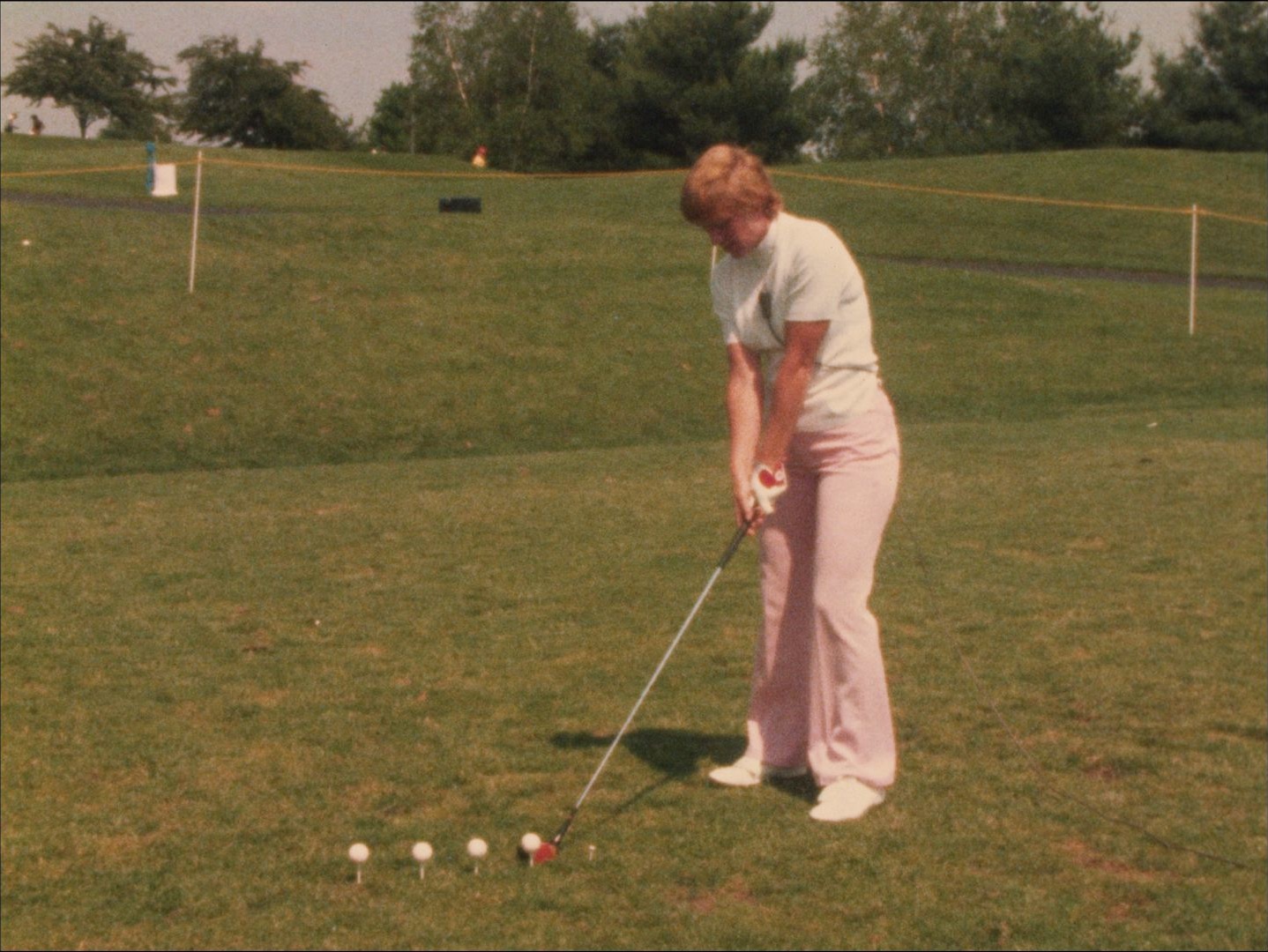
Description: "Leader: "P1 Blalock L.P.G.A.[Ladies Professional Golf Association] #9102A 6/19/74"; "Sports Joanne Carner 6/19/74"; "P2 Kathy Whitworth LPGA 6/18/74"; "Laura Baugh 6/18/74"; Interview with several golfers before the start of the LPGA Championship at Pleasant Valley Country Club in Sutton, Massachusetts. Silent footage of Jane Blalock putting followed by an interview with Blalock about the up coming tournament. Interview with Joanne Carner while she demonstrates her swing and gives golfing advise. Interview with Kathy Whitworth. Silent footage of Laura Baugh talking with a reporter and golfing followed by an interview."
Collection: WCVB Collection
Date Created: 06/19/1974
Description: Story on the seeming rise of racism and racial incidents the last few years. Historical footage of a Ku Klux Klan march and a protest during the civil rights moment. Overview of different racial incidents that have occurred recently all over the country and in Boston. Modern day footage of African Americans protesting and Ku Klux Klan demonstrations. Interview with regional director of the Justice Department's Community Relations Service Martin Walsh. Some video problems. Reporter voice over through reel. Sound.
Collection: WCVB Collection
Date Created: 01/07/1987
Description: Salem Harbor Station of New England Power Co. participates in one-year $10.2 million demonstration project for US Department of Energy. Goal is to show that a coal oil mixture is more efficient and as clean burning as no. 6 oil alone to produce steam to generate electricity. Interview with Mr. Kennedy of New England Power. Smokestacks and exterior of plant, oil storage tanks.
Collection: Ten O'Clock News
Date Created: 07/26/1979
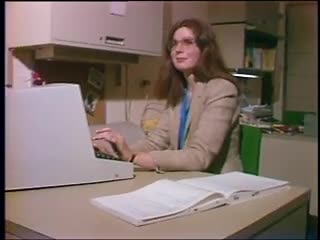
Description: Computer medicine lab at Beth Israel Hospital. Demonstration of test program asking questions on screen in French or Spanish of patient visiting clinic for certain medical problems. Patient would answer via keyboard. If no complications, computer issues prescription appropriate for diagnosis. Printout of examples of computer generated dialogue. Inside computer room -- CPUs labelled “Sherlock” and “Mycroft,” tapes on shelves, teletype-like printer. Outside main entrance to hospital.
Collection: Ten O'Clock News
Date Created: 06/29/1983
Description: Upon his release, Carmen Fields interviews South African exiles Themba Vilakazi and Janet Levine about the life and political development of Nelson Mandela. Vilakazi and Levine discuss Mandela's beginnings as a lawyer, his arrest and imprisonment, and his refusal to renounce armed struggle as a means to end apartheid. They talk about the importance of Mandela as a symbol. Levine talks about Winnie Mandela and her role in the struggle against apartheid. Vilakazi says that apartheid laws are still in place and that black South Africans are still struggling against the white regime. Fields notes that the figure of Nelson Mandela embodies the struggle of a nation. Fields's report includes footage and photographs of Nelson Mandela and Winnie Mandela from the 1950s to the present and footage of events in South Africa from the 1950s to the present.
1:00:10: Visual: Footage of Nelson Mandela (black South African leader) in South Africa after his release from prison. Mandela waves to supporters. Shots of a large demonstration in a South African stadium on February 13, 1990; of Mandela arriving at the demonstration. Footage of Themba Vilakazi (South African exile) being interviewed by Carmen Fields. Vilakazi says that he would not have predicted the recent turn of events in South Africa. Fields reports that Vilakazi left South African twenty-five years ago; that Vilakazi remembers when Mandela was imprisoned in June of 1964. Fields reports that Mandela was sentenced to life imprisonment on charges of high treason and sabotage. V: Black and white footage of a prison truck leaving a South African government building. A crowd stands outside of the building. Shot of a black and white photograph of Mandela surrounded by government officials. Fields reports that Janet Levine (South African exile) has been in the US for six years. V: Footage of Levine being interviewed by Fields. Levine says that Mandela disappeared and the African National Congress (ANC) was banned by the South African government. Levine says that she feared that Mandela would die in prison; that she was thrilled when he was released. Shots of Mandela at the demonstration in the South African stadium; of an upraised fist. Fields reports that Mandela is a living legend who embodies the struggle of a nation; that Mandela carries great moral authority. V: Shot of a black and white photo of Mandela before he went to prison. Shot of traffic passing by police in South Africa the late 1950s or early 1960s. Shot of a black and white photo of Mandela among a large group of people; of a black and white portrait of Mandela. Fields reports that Mandela was 25 when he joined the ANC; that Mandela became the ANC's national president six years after he joined the organization. Fields reports that Mandela was banned; that Mandela was arrested by South African police at a protest in Sharpeville in 1960. Fields notes that Sharpeville was the scene of a police attack which left 67 people dead. V: Black and white footage of a black demonstrators at Sharpeville; of two men holding protest signs. Shots of a body lying on the ground; of police dragging a body along the ground. Shots of black men running along a street; of black men waving from a departing bus. Shots of white police officers checking the identity papers of a black man; of a black man lying on the ground with his hands over his eyes; of the body of a black man lying on a street; of another body lying on the ground. Fields reports that Mandela fled to Algiers after his arrest; that Mandela received training in guerilla warfare in Algiers. Fields reports that Mandela no longer believed in 1960 that the fight against apartheid could be non-violent. V: Black and white footage of Mandela delivering a speech in 1961. Mandela says that it is useless to preach peace and non-violence against a government which engages in savage attacks on its defenseless citizens. Fields reports that Mandela was captured a year later; that Mandela's diary was used as evidence in his nine-month trial for treason. Fields reports that Mandela's diary contained notes on guerilla warfare tactics. V: Black and white shot of men handcuffed together. One man flips through a small notebook. Black and white shots of South African Security Forces outside of a government building; of a crowd in a street; of a prison truck moving along a street. Footage of Levine being interviewed by Fields. Levine says that it was a crime to have a photograph of Mandela; that it was a crime to have read Mandela's writings. Levine says that Winnie Mandela (wife of Nelson Mandela) was also an important figure; that Winnie Mandela was constantly protesting and defying the South African police. Black and white shot of Winnie Mandela in the 1960s. Color footage of Winnie Mandela arguing with white officials in the street. Winnie Mandela is led away. Fields notes that Winnie Mandela maintained her defiance while Nelson Mandela was in prison. V: Audio of Levine saying that Winnie Mandela kept Nelson Mandela's name alive while he was in prison. Shot of a black and white photo of Mandela in prison. Black and white shots of South African Security Forces; of a demonstration in South Africa; of demonstrators. Black and white shot of a park bench bearing a "whites only" sign. Fields reports that the South African government made conditional offers to set Mandela free; that Mandela refused to accept their conditions. V: Footage of Vilakazi being interviewed by Fields. Vilakazi says that Mandela has great appeal; that many would like to associate themselves with Mandela. Footage of Mandela at the demonstration in a South African stadium on February 13, 1990. Mandela addresses the crowd. Mandela raises his fist as he speaks. Fields reports that Mandela is uncompromising; that Mandela has never renounced armed struggle as a means to end apartheid. Fields notes that Mandela advocates peace. V: Footage of Mandela addressing the crowd at the demonstration. Mandlela says that the movement will move forward to achieve freedom and justice. Footage of Levine being interviewed by Fields. Levine says that Mandela is no longer a politician; that Mandela has been ennobled. Footage of Vilakazi being interviewed by Fields. Vilakazi says that South Africa has not changed a lot since Mandela was put in jail. Vilakazi says that there are more repressive laws now than in 1964.Vilakazi says that there is still reason to fight. Shots of a large group of people filling up a road in South Africa; of demonstrators at the stadium; of Mandela walking with an upraised fist; of a small black child with his hand held up.
Collection: Ten O'Clock News
Date Created: 06/20/1990
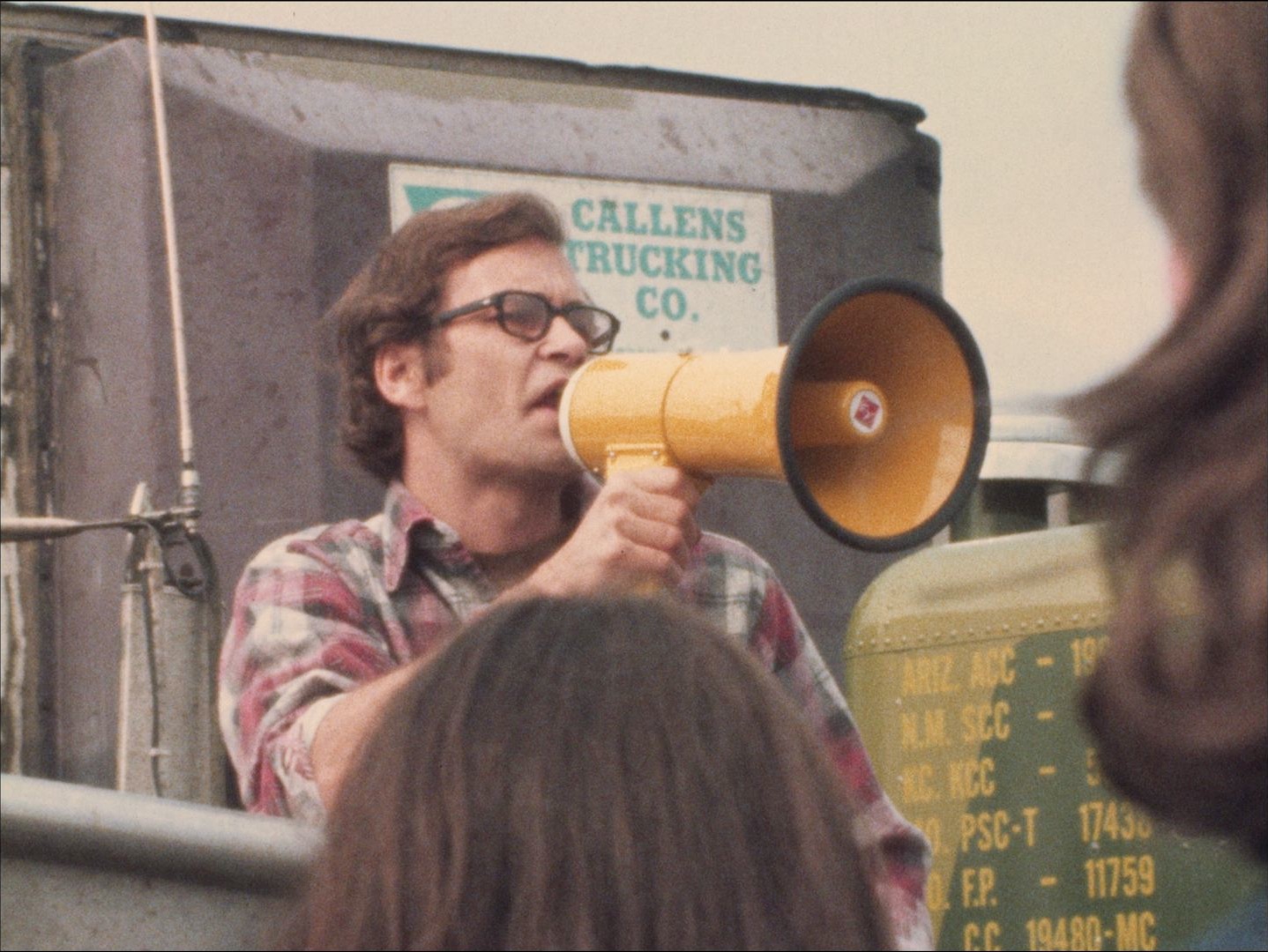
Description: "Leader: "P2 Grape Pickers Demo #8391 5/30/74"; Interview with a man (Nick) about boycott against grapes in support of the United Farm Workers strike. Jim Boyd reporter standup on the demonstration at the New England Produce Center in Chelsea in support of the United Farm Workers to keep non-union lettuce and grapes off of shelves. Footage of the protesters marching and singing protest songs. Outtakes include reporter outtakes, more footage of the protesters marching and chanting, trucks and workers, protesters handing out flyers, more of the interview with Nick (sound issues)."
Collection: WCVB Collection
Date Created: 05/30/1974
Description: Press conference for opening of Mass General burn center featuring clustered but isolated environment for each patient to prevent cross-infection and take advantage of team nursing and mechanical efficiencies. Demonstration of climate control inside plastic tent-like cubicle. Hospital bed manipulated by electronically controlled hydraulics. Occupational therapist shows formation of thermoplastic splint to preserve function of healing hand.
Collection: Ten O'Clock News
Date Created: 05/23/1984